🍝 Spaghetti Serving Size Calculator
Calculate exactly how much spaghetti you need per person for any meal or group size
| Serving Style | Dry (oz) | Dry (g) | Cooked (oz) | Cooked (g) |
|---|---|---|---|---|
| Appetizer / Starter | 1 | 28 | 2.25 | 63 |
| Side Dish | 1.5 | 42 | 3.4 | 95 |
| Buffet | 1.5 | 42 | 3.4 | 95 |
| Regular Main Course | 2 | 56 | 4.5 | 126 |
| Hearty Main Course | 3 | 85 | 6.75 | 191 |
| Extra Hungry / Athlete | 4 | 113 | 9 | 255 |
| Guests | Side Dish | Regular Main | Hearty Main |
|---|---|---|---|
| 5 | 7.5 oz (213g) | 10 oz (283g) | 15 oz (425g) |
| 10 | 15 oz (425g) | 1.25 lb (567g) | 1.9 lb (850g) |
| 15 | 1.4 lb (638g) | 1.9 lb (850g) | 2.8 lb (1.3 kg) |
| 20 | 1.9 lb (850g) | 2.5 lb (1.1 kg) | 3.75 lb (1.7 kg) |
| 25 | 2.3 lb (1.1 kg) | 3.1 lb (1.4 kg) | 4.7 lb (2.1 kg) |
| 50 | 4.7 lb (2.1 kg) | 6.25 lb (2.8 kg) | 9.4 lb (4.3 kg) |
| 100 | 9.4 lb (4.3 kg) | 12.5 lb (5.7 kg) | 18.75 lb (8.5 kg) |
| Pasta Type | Cooked Yield Multiplier | 1 lb Dry Yields (Cooked) |
|---|---|---|
| Regular Semolina Spaghetti | 2.25x | 2.25 lb (1,020g) |
| Whole Wheat Spaghetti | 2.10x | 2.10 lb (953g) |
| Gluten Free Spaghetti | 2.00x | 2.00 lb (907g) |
| Fresh Spaghetti | 1.50x | 1.50 lb (680g) |
| Age Group | Portion vs Adult | Dry oz | Dry g |
|---|---|---|---|
| Children (4–12) | 55% | 1.1 | 31 |
| Teens (13–17) | 85% | 1.7 | 48 |
| Adults (18–64) | 100% | 2.0 | 56 |
| Seniors (65+) | 75% | 1.5 | 42 |
| Mixed Group (avg) | 80% | 1.6 | 45 |
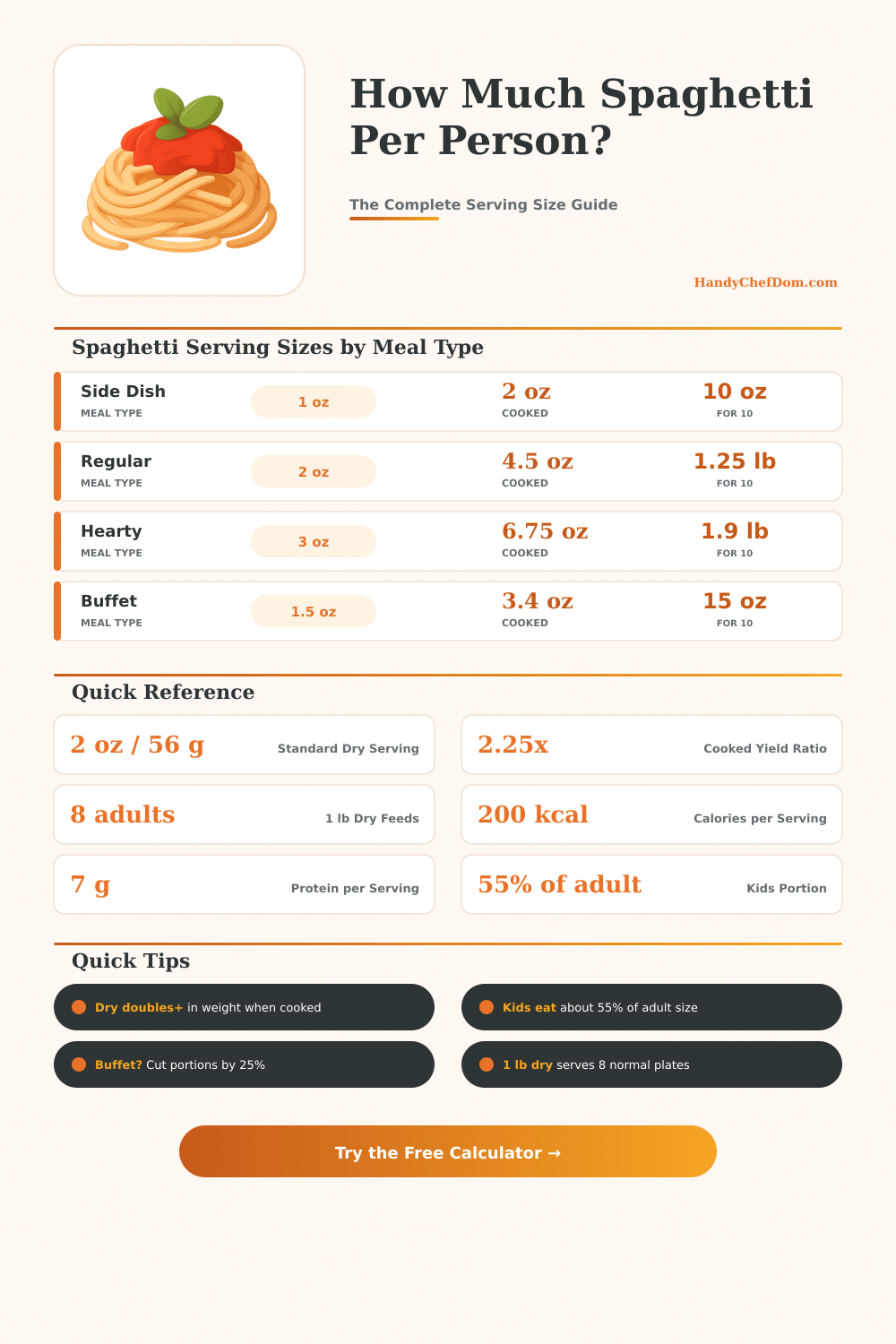
The standard portion of dry spaghetti weighs 2 ounces or 56 grams per adult plate. When cooked, it increases to 4.5 ounces (approximately 125 grams). Those who eat more might prefer 3 ounces or 85 grams of dry pasta, which equates to 6.75 ounces of cooked pasta.
For a meal for 10 guests, order 1.25 pounds of dry pasta.
Spaghetti Portions and Easy Cooking Tips
Spaghetti is a long, thin noodle used in classical Italian cooking. Like all pasta, spaghetti is made from ground wheat and water.
The Italian version of spaghetti uses durum wheat and sometimes added vitamins and minerals for nutritional value. Spaghetti is a good way to consume carbohydrates from wheat, eggs, and water.
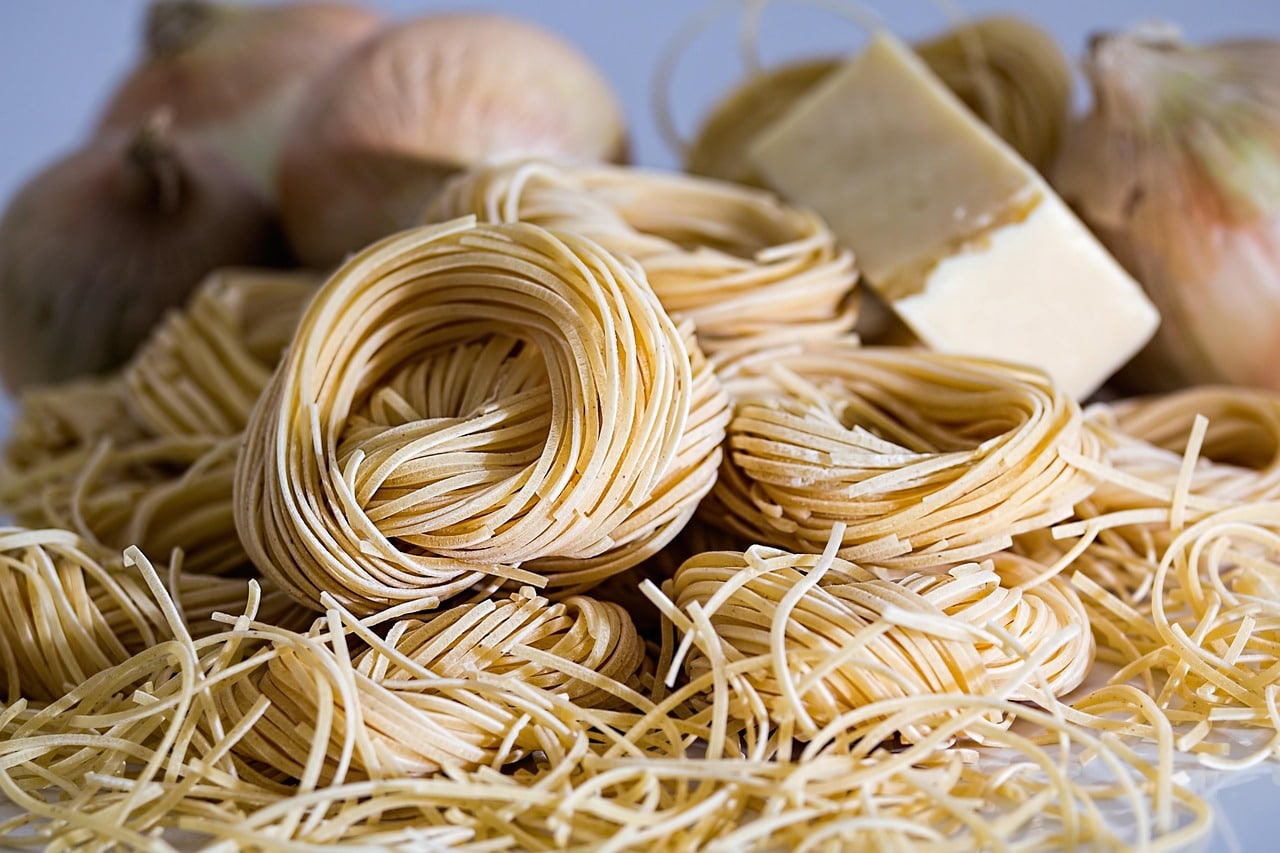
In the United States, spaghetti is the most popular form of pasta. It is relatively cheap and cooks quickly. A weeknight spaghetti dish with meat and tomato sauce takes around 45 minutes to cook. Use whatever ground meat you like for this recipe.
For a fancier version, sauté ground beef, onions, garlic, and canned tomatoes. Cook for 10 minutes and toss in spaghetti with tomato sauce, garlic, oregano, and parmesan cheese for another 10 minutes.
For an even easier recipe, fry garlic in olive oil and add fresh tomatoes to the pan. Simmer for around 10 minutes then mix in parsley before pouring over the spaghetti.
Tomato-based sauces are the most common for spaghetti sauce, marinara, and pizza sauce. Marinara sauce simmers slowly on a low flame with fresh tomatoes, garlic, and various herbs. Add fresh roasted tomatoes and basil then simmer for one or two hours to produce a delicious sauce.
A spicier version of marinara sauce starts with chopped onion and sliced garlic. Warm olive oil in a pan and fry the onion with garlic along with salt and pepper. Stir in crushed red pepper flakes to give it a spicy kick.
Nothing is wrong with using jarred, ready-to-use tomato sauce for spaghetti. Many store-bought sauces lack the thickness and flavor of the fresh ingredients used to make sauce from scratch.
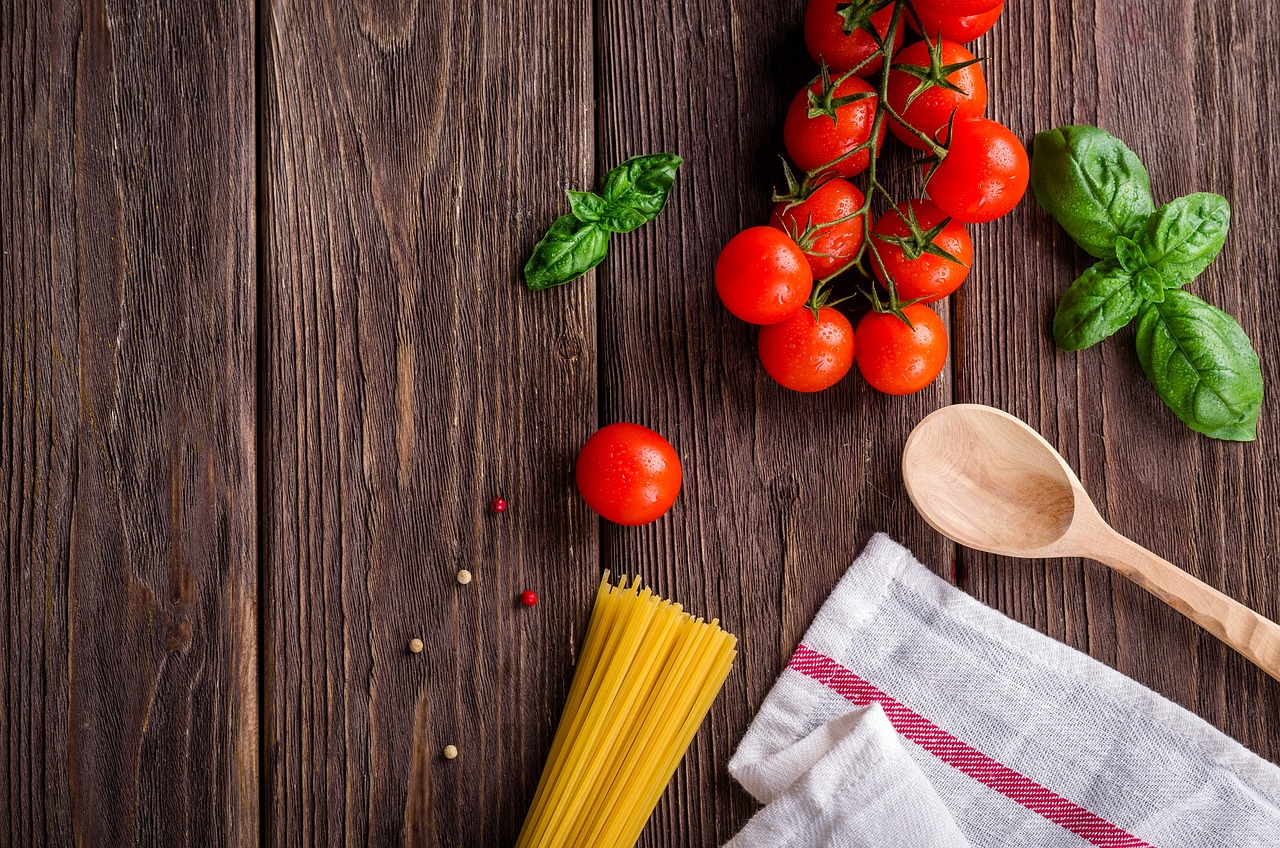
Two bundles of dry spaghetti equal one serving. Each bundle should be the same thickness as a United States quarter coin. For two servings, take four bundles of spaghetti.
A kitchen scale is helpful for cooking spaghetti. The standard serving of dry spaghetti weighs around 100 grams. For those with bigger appetites, 150 grams of dry spaghetti per person is the way to go. One serving of spaghetti sauce is around half a cup.
Freezing half portions of spaghetti sauce in containers allows for fast meals to be prepared. Cooked spaghetti can be divided into muffin tins and refrigerated or frozen.
Baked spaghetti takes the effort of preparing the pasta and sauce and then baking it into a hot meal. Layer spaghetti and sauce in a baking dish and bake until hot serving.
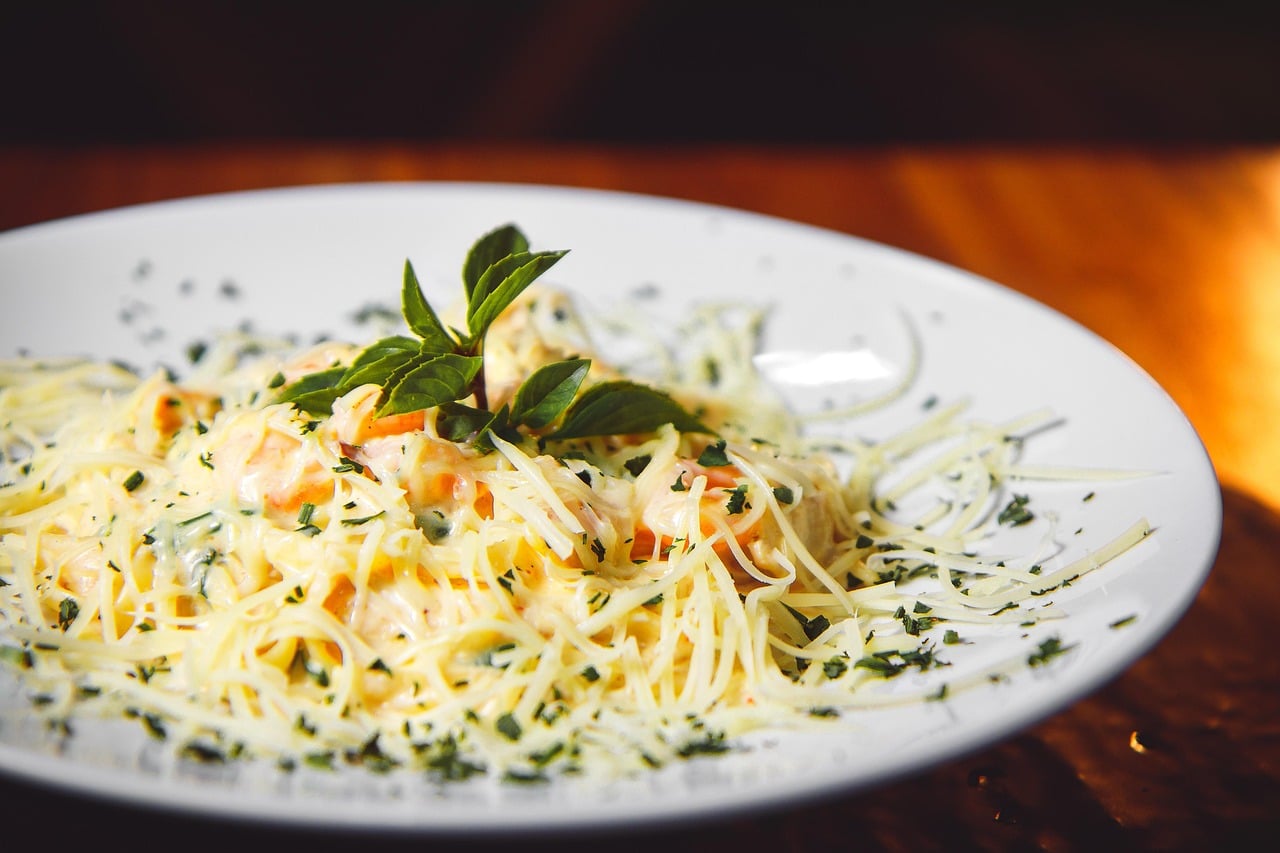
Spaghetti contains a lot of carbohydrates and, accordingly, a lot of calories. In addition to the carbohydrates, it also includes a source of healthy fat from olive oil and a source of nutritional value from the tomato sauce.
To eat spaghetti with a fork, pick up two or three strands and roll them into a tight ball so there are no loose strands. Place the ball of pasta into your mouth without letting it touch your lips. Whole wheat spaghetti is another option but requires the appropriate cooking method.