Brix Calculator
Set target sweetness, sugar type, loss, and yield to estimate sugar mass, water mass, and specific gravity for reliable syrup batches.
Brix Batch Presets
Input Setup
Choose one of seven topic labels, then tune Brix and yield. The calculator estimates solids from target Brix and adjusts pre-loss volume for simmer evaporation.
Brix Comparison Grid
Reference Tables
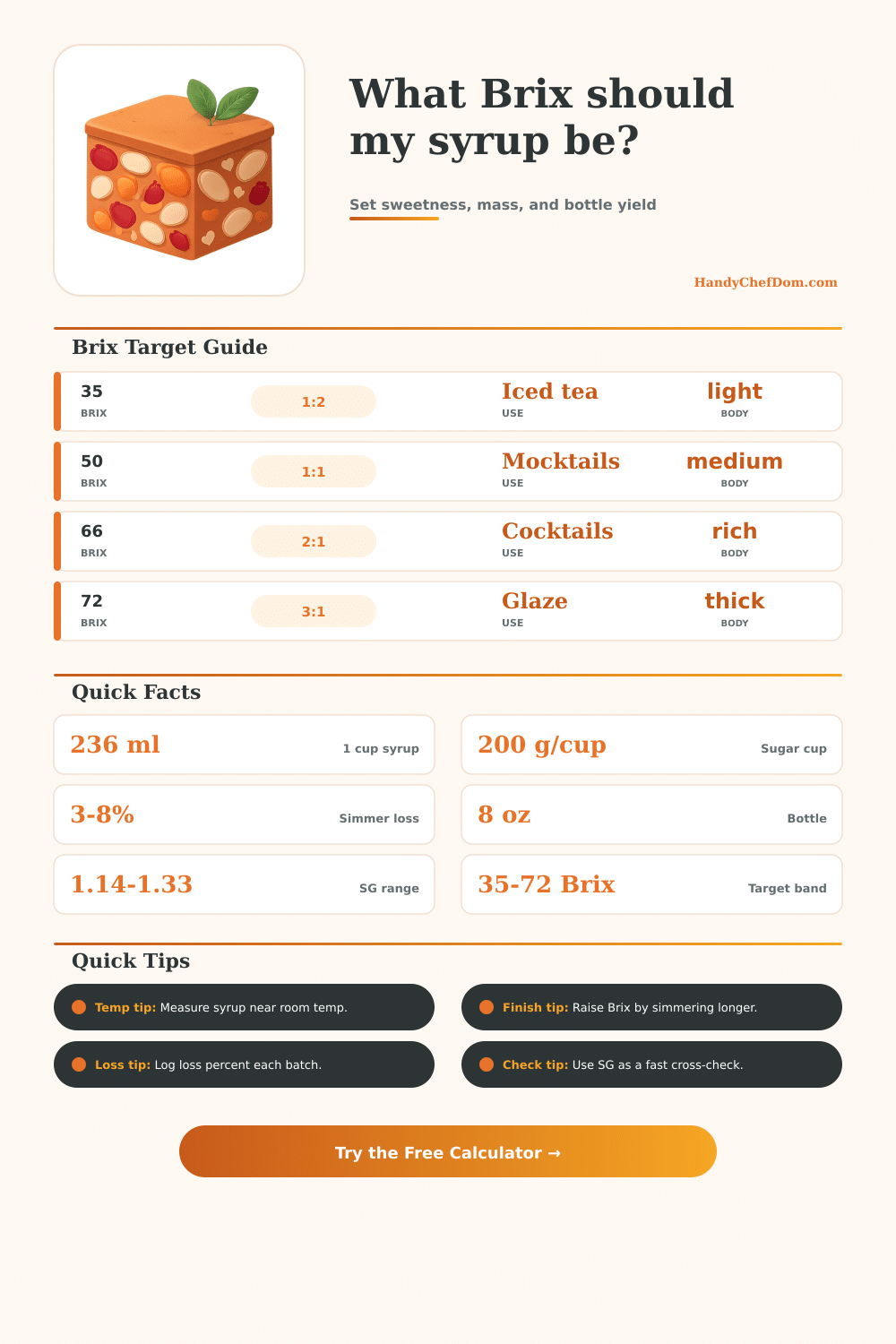
| Brix Band | SG | Flow | Use |
|---|---|---|---|
| 35-44 | 1.14-1.19 | Fast | Iced tea |
| 45-56 | 1.19-1.25 | Steady | Mocktails |
| 57-68 | 1.25-1.32 | Slow | Cocktails |
| 69-74 | 1.32-1.35 | Very slow | Glaze |
| Ratio | Solids % | Typical Brix | Body |
|---|---|---|---|
| 1:2 | 33.3 | 33-38 | Light |
| 1:1 | 50.0 | 48-52 | Classic |
| 5:3 | 62.5 | 60-64 | Rich |
| 2:1 | 66.7 | 64-68 | Bar rich |
| Final Yield | 8 oz | 12 oz | 16 oz |
|---|---|---|---|
| 2 cups | 2.0 | 1.3 | 1.0 |
| 3 cups | 3.0 | 2.0 | 1.5 |
| 4 cups | 4.0 | 2.7 | 2.0 |
| 6 cups | 6.0 | 4.0 | 3.0 |
| Sugar Type | Factor | Note | Color |
|---|---|---|---|
| White | 1.00x | Neutral | Clear |
| Caster | 0.99x | Quick dissolve | Pale |
| Demerara | 0.97x | Round body | Gold |
| Brown | 0.95x | Molasses edge | Dark |
This tool estimates syrup mass from target Brix and density equations. Use your refractometer as the final verification point before bottling.
Making syrup requires precision because a change in one component of the recipe can have a huge effect on the syrups that is produced. For instance, using a half cup of water instead of the expected amount will change the body of the syrup; using extra minutes of simmer will change the sweetness of the syrup. To account for these variables, a brix calculator is used to calculate the variables needed for producing syrup that reaches the desired brix.
The brix calculator accounts for the starting ratio of the syrup, the evaporation of water during simmering, and the type of sugars to be used. The inputs for the brix calculator is each associated with a decision that must be made prior to heating the syrup. The finished yield is the amount of syrup that is desired at the end of the simmering process; it is important to account for the fact that many cooks will either overestimate or underestimate the amount of syrup that they will produce.
How to Use a Brix Calculator to Make Syrup
The target brix is the sweetness of the syrup that is to be produced; the syrup can be measured with a refractometer. The starting ratio field is used to indicate the amount of sugar that is to be used in relation to the amount of water. These two variables will determine the percentage of solids in the syrup prior to simmering.
The syrup maker must select the type of sugar to be used in the syrup; each type of sugar will have a different density. Simmer loss percentage is used to account for the fact that water will evaporate during simmering; the loss of water will increase the brix of the syrup. Temperature at reading accounts for the fact that refractometers will read differently if the syrup is measured at different temperatures; room temperature syrup will have a more higher brix reading than hot syrup.
Finally, the bottle size input will calculate how many bottles of syrup will be produced. Each of these variables will determine the numbers that are outputted from the brix calculator. Sugar mass and water mass is the amounts of each that should be weighed.
Specific gravity is another method of measuring the brix of the syrup, and pre-loss and actual loss volume will allow the syrup maker to determine whether the estimated loss of water during simmering was realistic. If the brix calculator calculates the numbers and they do not match the outcome of the simmering of the syrup, it is likely that one or more of the variables that are entered into the calculator did not match the actual simmering process that took place in the kitchen. The number of brix that is produced by simmering sugar and water is a number that corresponds to the amount of dissolved solids in the syrup; the solids in syrup are mostly sugar.
A brix reading of 50 means that the syrup contains 50% sugar and 50% water. Syrups with lower brix numbers are considered light syrups; light syrups are useful in the sweetening of large volumes of iced tea. Syrups with higher brix numbers will cling to the side of the spoon; cocktails bars often use a syrup with 66 brix because syrups at that brix are considered to be rich.
The higher the brix number for syrup, the longer that the syrup will last in the refrigerator; high brix syrups will slow the growth of microbes in the syrup. The reference tables on the page indicate the brix numbers for various types of syrups. For instance, tea houses use light syrups that range from 30-39 brix.
Syrups with a brix value of around 50 work well in coffee or mocktails. Syrups with a brix value of 60 or above are dense syrups and are used in cocktails and desserts. The tables also indicate the different starting ratios of sugar and water that will produce syrup at the different brix numbers.
These tables will allow the syrup maker to decide if they would like to begin with a one-to-one ratio or a richer ratio of sugar to water. New problems can arise when cooks use the batch of syrup that they prepared for the first time as if it were the recipe that is to be used in all batches of syrup. For instance, evaporation rates can change when the size of the pot changes, when the heat level is changed, or with changes in the humidity level in the kitchen.
The type of sugar that is used will change the rate at which the syrup reaches the boiling point; different types of sugar will darken at different rates. For instance, syrups made with demerara sugar will have a gold color and a rounder taste. These variables cannot be calculated with the brix calculator but are important to account for.
One of the most common problems with syrup makers is with the temperature at which the syrup syrup is measured. A refractometer will register a different value if the syrup is measured while hot compared to when the syrup is measured at room temperature. For instance, the value will be lower if the syrup is hot.
If syrup makers use this measurement tool to measure hot syrup, they will have to simmer the syrup for longer to reach the desired brix value. Should syrup makers simmer the syrup for too long, the brix value will be higher than the target brix value for the syrup. In this case, syrup makers can take a sample of the syrup, allow it to cool to the room temperature, and measure the brix of the syrup.
The field for the temperature at which the syrup is measured to the brix calculator is used to remind syrup makers to measure the syrup at the actual temperature of the syrup. Another use for the brix calculator is to plan for events. It is easy for syrup makers to create a batch of syrup that they intend to use for an event but find that they need twice as much syrup for that event.
The size of the batch of syrup that is simmered will change the rate of evaporation of the water in the syrup. Therefore, the percentage of loss of syrup that is calculated for a batch of two cups of syrup may not be the same as the percentage of loss for a batch of six cups of syrup. Therefore, syrup makers should use the brix calculator with the size of batch that they would like to create.
The comparison grid on the page groups the brix ratings of syrup into four categories. Tea and coffee houses use the light build range, which is the lowest range of brix values. The classic range of brix values is the middle of the brix scale and is used for mocktails and cocktails.
Bars use the bar rich range for the production of syrups that will be used in spirits; syrups in this range also have a longer shelf life. Finally, the glaze dense syrup range is used for glazing pastries and fruits with the syrup. These ranges are not strict; syrup makers can create syrup with any brix value but these suggestions allow syrup makers to become familiar with the syrup making process.
One method for improving the skills of syrup makers is to create a log of the batches of syrup that are created. Each batch can be logged with the target brix number for the syrup, the type of sugar that was used, the loss of syrup during simmering, and the taste of the syrup. After three or four batches of syrup are logged, the syrup maker will begin to recognize patterns in the syrup; for instance, the kitchen may be especially hot in the kitchen so the loss of syrup percentage will have to be changed.
Similarly, batches of syrup that use brown sugar may have a higher loss of volume due to the moisture in the brown sugar. The brix calculator can be used to determine how many bottles of syrup will be produced once the syrup is simmered. All that must be done is to input the size of the bottles into the brix calculator; the syrup maker will be able to determine how many bottles will be filled with syrup.
The brix calculator can also indicate how many bottles will be filled with syrup with a certain amount of time investment. For instance, creating a two cup batch of syrup may seem like a lot of time investment but it will be able to fill six small bottles of syrup that will last for several weeks. The brix calculator exists to assist the syrup maker in both the chemistry of the making of syrup and in the habits that must be developed in the kitchen to produce syrup with the same results each time.
The syrup maker easily understands the chemistry components of syrup making. However, there are habits related to heat and time that will affect the outcome of the syrup; the syrup maker can only develop these habits with experience. By using the brix calculator to determine the chemistry of the syrup that is to be created, the syrup maker can focus on developing the habits needed in the kitchen to create syrup with consistent results.
Thus, using the brix calculator and developing the proper habits in the kitchen will allow cooks to produce syrup with the same taste each year, regardless of which cook is responsible for making the syrup. Making syrup requires precision because a change in one component of the recipe can have a huge effect on the syrups that is produced. For instance, using a half cup of water instead of the expected amount will change the body of the syrup; using extra minutes of simmer will change the sweetness of the syrup.
To account for these variables, a brix calculator is used to calculate the variables needed for producing syrup that reaches the desired brix. The brix calculator accounts for the starting ratio of the syrup, the evaporation of water during simmering, and the type of sugars to be used. The inputs for the brix calculator is each associated with a decision that must be made prior to heating the syrup.
The finished yield is the amount of syrup that is desired at the end of the simmering process; it is important to account for the fact that many cooks will either overestimate or underestimate the amount of syrup that they will produce. The target brix is the sweetness of the syrup that is to be produced; the syrup can be measured with a refractometer. The starting ratio field is used to indicate the amount of sugar that is to be used in relation to the amount of water.
These two variables will determine the percentage of solids in the syrup prior to simmering. The syrup maker must select the type of sugar to be used in the syrup; each type of sugar will have a different density. Simmer loss percentage is used to account for the fact that water will evaporate during simmering; the loss of water will increase the brix of the syrup.
Temperature at reading accounts for the fact that refractometers will read differently if the syrup is measured at different temperatures; room temperature syrup will have a more higher brix reading than hot syrup. Finally, the bottle size input will calculate how many bottles of syrup will be produced. Each of these variables will determine the numbers that are outputted from the brix calculator.
Sugar mass and water mass is the amounts of each that should be weighed. Specific gravity is another method of measuring the brix of the syrup, and pre-loss and actual loss volume will allow the syrup maker to determine whether the estimated loss of water during simmering was realistic. If the brix calculator calculates the numbers and they do not match the outcome of the simmering of the syrup, it is likely that one or more of the variables that are entered into the calculator did not match the actual simmering process that took place in the kitchen.
The number of brix that is produced by simmering sugar and water is a number that corresponds to the amount of dissolved solids in the syrup; the solids in syrup are mostly sugar. A brix reading of 50 means that the syrup contains 50% sugar and 50% water. Syrups with lower brix numbers are considered light syrups; light syrups are useful in the sweetening of large volumes of iced tea.
Syrups with higher brix numbers will cling to the side of the spoon; cocktails bars often use a syrup with 66 brix because syrups at that brix are considered to be rich. The higher the brix number for syrup, the longer that the syrup will last in the refrigerator; high brix syrups will slow the growth of microbes in the syrup. The reference tables on the page indicate the brix numbers for various types of syrups.
For instance, tea houses use light syrups that range from 30-39 brix. Syrups with a brix value of around 50 work well in coffee or mocktails. Syrups with a brix value of 60 or above are dense syrups and are used in cocktails and desserts.
The tables also indicate the different starting ratios of sugar and water that will produce syrup at the different brix numbers. These tables will allow the syrup maker to decide if they would like to begin with a one-to-one ratio or a richer ratio of sugar to water. New problems can arise when cooks use the batch of syrup that they prepared for the first time as if it were the recipe that is to be used in all batches of syrup.
For instance, evaporation rates can change when the size of the pot changes, when the heat level is changed, or with changes in the humidity level in the kitchen. The type of sugar that is used will change the rate at which the syrup reaches the boiling point; different types of sugar will darken at different rates. For instance, syrups made with demerara sugar will have a gold color and a rounder taste.
These variables cannot be calculated with the brix calculator but are important to account for. One of the most common problems with syrup makers is with the temperature at which the syrup syrup is measured. A refractometer will register a different value if the syrup is measured while hot compared to when the syrup is measured at room temperature.
For instance, the value will be lower if the syrup is hot. If syrup makers use this measurement tool to measure hot syrup, they will have to simmer the syrup for longer to reach the desired brix value. Should syrup makers simmer the syrup for too long, the brix value will be higher than the target brix value for the syrup.
In this case, syrup makers can take a sample of the syrup, allow it to cool to the room temperature, and measure the brix of the syrup. The field for the temperature at which the syrup is measured to the brix calculator is used to remind syrup makers to measure the syrup at the actual temperature of the syrup. Another use for the brix calculator is to plan for events.
It is easy for syrup makers to create a batch of syrup that they intend to use for an event but find that they need twice as much syrup for that event. The size of the batch of syrup that is simmered will change the rate of evaporation of the water in the syrup. Therefore, the percentage of loss of syrup that is calculated for a batch of two cups of syrup may not be the same as the percentage of loss for a batch of six cups of syrup.
Therefore, syrup makers should use the brix calculator with the size of batch that they would like to create. The comparison grid on the page groups the brix ratings of syrup into four categories. Tea and coffee houses use the light build range, which is the lowest range of brix values.
The classic range of brix values is the middle of the brix scale and is used for mocktails and cocktails. Bars use the bar rich range for the production of syrups that will be used in spirits; syrups in this range also have a longer shelf life. Finally, the glaze dense syrup range is used for glazing pastries and fruits with the syrup.
These ranges are not strict; syrup makers can create syrup with any brix value but these suggestions allow syrup makers to become familiar with the syrup making process. One method for improving the skills of syrup makers is to create a log of the batches of syrup that are created. Each batch can be logged with the target brix number for the syrup, the type of sugar that was used, the loss of syrup during simmering, and the taste of the syrup.
After three or four batches of syrup are logged, the syrup maker will begin to recognize patterns in the syrup; for instance, the kitchen may be especially hot in the kitchen so the loss of syrup percentage will have to be changed. Similarly, batches of syrup that use brown sugar may have a higher loss of volume due to the moisture in the brown sugar. The brix calculator can be used to determine how many bottles of syrup will be produced once the syrup is simmered.
All that must be done is to input the size of the bottles into the brix calculator; the syrup maker will be able to determine how many bottles will be filled with syrup. The brix calculator can also indicate how many bottles will be filled with syrup with a certain amount of time investment. For instance, creating a two cup batch of syrup may seem like a lot of time investment but it will be able to fill six small bottles of syrup that will last for several weeks.
The brix calculator exists to assist the syrup maker in both the chemistry of the making of syrup and in the habits that must be developed in the kitchen to produce syrup with the same results each time. The syrup maker easily understands the chemistry components of syrup making. However, there are habits related to heat and time that will affect the outcome of the syrup; the syrup maker can only develop these habits with experience.
By using the brix calculator to determine the chemistry of the syrup that is to be created, the syrup maker can focus on developing the habits needed in the kitchen to create syrup with consistent results. Thus, using the brix calculator and developing the proper habits in the kitchen will allow cooks to produce syrup with the same taste each year, regardless of which cook is responsible for making the syrup. Making syrup requires precision because a change in one component of the recipe can have a huge effect on the syrups that is produced.
For instance, using a half cup of water instead of the expected amount will change the body of the syrup; using extra minutes of simmer will change the sweetness of the syrup. To account for these variables, a brix calculator is used to calculate the variables needed for producing syrup that reaches the desired brix. The brix calculator accounts for the starting ratio of the syrup, the evaporation of water during simmering, and the type of sugars to be used.
The inputs for the brix calculator is each associated with a decision that must be made prior to heating the syrup. The finished yield is the amount of syrup that is desired at the end of the simmering process; it is important to account for the fact that many cooks will either overestimate or underestimate the amount of syrup that they will produce. The target brix is the sweetness of the syrup that is to be produced; the syrup can be measured with a refractometer.
The starting ratio field is used to indicate the amount of sugar that is to be used in relation to the amount of water. These two variables will determine the percentage of solids in the syrup prior to simmering. The syrup maker must select the type of sugar to be used in the syrup; each type of sugar will have a different density.
Simmer loss percentage is used to account for the fact that water will evaporate during simmering; the loss of water will increase the brix of the syrup. Temperature at reading accounts for the fact that refractometers will read differently if the syrup is measured at different temperatures; room temperature syrup will have a more higher brix reading than hot syrup. Finally, the bottle size input will calculate how many bottles of syrup will be produced.
Each of these variables will determine the numbers that are outputted from the brix calculator. Sugar mass and water mass is the amounts of each that should be weighed. Specific gravity is another method of measuring the brix of the syrup, and pre-loss and actual loss volume will allow the syrup maker to determine whether the estimated loss of water during simmering was realistic.
If the brix calculator calculates the numbers and they do not match the outcome of the simmering of the syrup, it is likely that one or more of the variables that are entered into the calculator did not match the actual simmering process that took place in the kitchen. The number of brix that is produced by simmering sugar and water is a number that corresponds to the amount of dissolved solids in the syrup; the solids in syrup are mostly sugar. A brix reading of 50 means that the syrup contains 50% sugar and 50% water.
Syrups with lower brix numbers are considered light syrups; light syrups are useful in the sweetening of large volumes of iced tea. Syrups with higher brix numbers will cling to the side of the spoon; cocktails bars often use a syrup with 66 brix because syrups at that brix are considered to be rich. The higher the brix number for syrup, the longer that the syrup will last in the refrigerator; high brix syrups will slow the growth of microbes in the syrup.
The reference tables on the page indicate the brix numbers for various types of syrups. For instance, tea houses use light syrups that range from 30-39 brix. Syrups with a brix value of around 50 work well in coffee or mocktails.
Syrups with a brix value of 60 or above are dense syrups and are used in cocktails and desserts. The tables also indicate the different starting ratios of sugar and water that will produce syrup at the different brix numbers. These tables will allow the syrup maker to decide if they would like to begin with a one-to-one ratio or a richer ratio of sugar to water.
New problems can arise when cooks use the batch of syrup that they prepared for the first time as if it were the recipe that is to be used in all batches of syrup. For instance, evaporation rates can change when the size of the pot changes, when the heat level is changed, or with changes in the humidity level in the kitchen. The type of sugar that is used will change the rate at which the syrup reaches the boiling point; different types of sugar will darken at different rates.
For instance, syrups made with demerara sugar will have a gold color and a rounder taste. These variables cannot be calculated with the brix calculator but are important to account for. One of the most common problems with syrup makers is with the temperature at which the syrup syrup is measured.
A refractometer will register a different value if the syrup is measured while hot compared to when the syrup is measured at room temperature. For instance, the value will be lower if the syrup is hot. If syrup makers use this measurement tool to measure hot syrup, they will have to simmer the syrup for longer to reach the desired brix value.
Should syrup makers simmer the syrup for too long, the brix value will be higher than the target brix value for the syrup. In this case, syrup makers can take a sample of the syrup, allow it to cool to the room temperature, and measure the brix of the syrup. The field for the temperature at which the syrup is measured to the brix calculator is used to remind syrup makers to measure the syrup at the actual temperature of the syrup.
Another use for the brix calculator is to plan for events. It is easy for syrup makers to create a batch of syrup that they intend to use for an event but find that they need twice as much syrup for that event. The size of the batch of syrup that is simmered will change the rate of evaporation of the water in the syrup.
Therefore, the percentage of loss of syrup that is calculated for a batch of two cups of syrup may not be the same as the percentage of loss for a batch of six cups of syrup. Therefore, syrup makers should use the brix calculator with the size of batch that they would like to create. The comparison grid on the page groups the brix ratings of syrup into four categories.
Tea and coffee houses use the light build range, which is the lowest range of brix values. The classic range of brix values is the middle of the brix scale and is used for mocktails and cocktails. Bars use the bar rich range for the production of syrups that will be used in spirits; syrups in this range also have a longer shelf life.
Finally, the glaze dense syrup range is used for glazing pastries and fruits with the syrup. These ranges are not strict; syrup makers can create syrup with any brix value but these suggestions allow syrup makers to become familiar with the syrup making process. One method for improving the skills of syrup makers is to create a log of the batches of syrup that are created.
Each batch can be logged with the target brix number for the syrup, the type of sugar that was used, the loss of syrup during simmering, and the taste of the syrup. After three or four batches of syrup are logged, the syrup maker will begin to recognize patterns in the syrup; for instance, the kitchen may be especially hot in the kitchen so the loss of syrup percentage will have to be changed. Similarly, batches of syrup that use brown sugar may have a higher loss of volume due to the moisture in the brown sugar.
The brix calculator can be used to determine how many bottles of syrup will be produced once the syrup is simmered. All that must be done is to input the size of the bottles into the brix calculator; the syrup maker will be able to determine how many bottles will be filled with syrup. The brix calculator can also indicate how many bottles will be filled with syrup with a certain amount of time investment.
For instance, creating a two cup batch of syrup may seem like a lot of time investment but it will be able to fill six small bottles of syrup that will last for several weeks. The brix calculator exists to assist the syrup maker in both the chemistry of the making of syrup and in the habits that must be developed in the kitchen to produce syrup with the same results each time. The syrup maker easily understands the chemistry components of syrup making.
However, there are habits related to heat and time that will affect the outcome of the syrup; the syrup maker can only develop these habits with experience. By using the brix calculator to determine the chemistry of the syrup that is to be created, the syrup maker can focus on developing the habits needed in the kitchen to create syrup with consistent results. Thus, using the brix calculator and developing the proper habits in the kitchen will allow cooks to produce syrup with the same taste each year, regardless of which cook is responsible for making the syrup.
Making syrup requires precision because a change in one component of the recipe can have a huge effect on the syrups that is produced. For instance, using a half cup of water instead of the expected amount will change the body of the syrup; using extra minutes of simmer will change the sweetness of the syrup. To account for these variables, a brix calculator is used to calculate the variables needed for producing syrup that reaches the desired brix.
The brix calculator accounts for the starting ratio of the syrup, the evaporation of water during simmering, and the type of sugars to be used. The inputs for the brix calculator is each associated with a decision that must be made prior to heating the syrup. The finished yield is the amount of syrup that is desired at the end of the simmering process; it is important to account for the fact that many cooks will either overestimate or underestimate the amount of syrup that they will produce.
The target brix is the sweetness of the syrup that is to be produced; the syrup can be measured with a refractometer. The starting ratio field is used to indicate the amount of sugar that is to be used in relation to the amount of water. These two variables will determine the percentage of solids in the syrup prior to simmering.
The syrup maker must select the type of sugar to be used in the syrup; each type of sugar will have a different density. Simmer loss percentage is used to account for the fact that water will evaporate during simmering; the loss of water will increase the brix of the syrup. Temperature at reading accounts for the fact that refractometers will read differently if the syrup is measured at different temperatures; room temperature syrup will have a more higher brix reading than hot syrup.
Finally, the bottle size input will calculate how many bottles of syrup will be produced. Each of these variables will determine the numbers that are outputted from the brix calculator. Sugar mass and water mass is the amounts of each that should be weighed.
Specific gravity is another method of measuring the brix of the syrup, and pre-loss and actual loss volume will allow the syrup maker to determine whether the estimated loss of water during simmering was realistic. If the brix calculator calculates the numbers and they do not match the outcome of the simmering of the syrup, it is likely that one or more of the variables that are entered into the calculator did not match the actual simmering process that took place in the kitchen. The number of brix that is produced by simmering sugar and water is a number that corresponds to the amount of dissolved solids in the syrup; the solids in syrup are mostly sugar.
A brix reading of 50 means that the syrup contains 50% sugar and 50% water. Syrups with lower brix numbers are considered light syrups; light syrups are useful in the sweetening of large volumes of iced tea. Syrups with higher brix numbers will cling to the side of the spoon; cocktails bars often use a syrup with 66 brix because syrups at that brix are considered to be rich.
The higher the brix number for syrup, the longer that the syrup will last in the refrigerator; high brix syrups will slow the growth of microbes in the syrup. The reference tables on the page indicate the brix numbers for various types of syrups. For instance, tea houses use light syrups that range from 30-39 brix.
Syrups with a brix value of around 50 work well in coffee or mocktails. Syrups with a brix value of 60 or above are dense syrups and are used in cocktails and desserts. The tables also indicate the different starting ratios of sugar and water that will produce syrup at the different brix numbers.
These tables will allow the syrup maker to decide if they would like to begin with a one-to-one ratio or a richer ratio of sugar to water. New problems can arise when cooks use the batch of syrup that they prepared for the first time as if it were the recipe that is to be used in all batches of syrup. For instance, evaporation rates can change when the size of the pot changes, when the heat level is changed, or with changes in the humidity level in the kitchen.
The type of sugar that is used will change the rate at which the syrup reaches the boiling point; different types of sugar will darken at different rates. For instance, syrups made with demerara sugar will have a gold color and a rounder taste. These variables cannot be calculated with the brix calculator but are important to account for.
One of the most common problems with syrup makers is with the temperature at which the syrup syrup is measured. A refractometer will register a different value if the syrup is measured while hot compared to when the syrup is measured at room temperature. For instance, the value will be lower if the syrup is hot.
If syrup makers use this measurement tool to measure hot syrup, they will have to simmer the syrup for longer to reach the desired brix value. Should syrup makers simmer the syrup for too long, the brix value will be higher than the target brix value for the syrup. In this case, syrup makers can take a sample of the syrup, allow it to cool to the room temperature, and measure the brix of the syrup.
The field for the temperature at which the syrup is measured to the brix calculator is used to remind syrup makers to measure the syrup at the actual temperature of the syrup. Another use for the brix calculator is to plan for events. It is easy for syrup makers to create a batch of syrup that they intend to use for an event but find that they need twice as much syrup for that event.
The size of the batch of syrup that is simmered will change the rate of evaporation of the water in the syrup. Therefore, the percentage of loss of syrup that is calculated for a batch of two cups of syrup may not be the same as the percentage of loss for a batch of six cups of syrup. Therefore, syrup makers should use the brix calculator with the size of batch that they would like to create.
The comparison grid on the page groups the brix ratings of syrup into four categories. Tea and coffee houses use the light build range, which is the lowest range of brix values. The classic range of brix values is the middle of the brix scale and is used for mocktails and cocktails.
Bars use the bar rich range for the production of syrups that will be used in spirits; syrups in this range also have a longer shelf life. Finally, the glaze dense syrup range is used for glazing pastries and fruits with the syrup. These ranges are not strict; syrup makers can create syrup with any brix value but these suggestions allow syrup makers to become familiar with the syrup making process.
One method for improving the skills of syrup makers is to create a log of the batches of syrup that are created. Each batch can be logged with the target brix number for the syrup, the type of sugar that was used, the loss of syrup during simmering, and the taste of the syrup. After three or four batches of syrup are logged, the syrup maker will begin to recognize patterns in the syrup; for instance, the kitchen may be especially hot in the kitchen so the loss of syrup percentage will have to be changed.
Similarly, batches of syrup that use brown sugar may have a higher loss of volume due to the moisture in the brown sugar. The brix calculator can be used to determine how many bottles of syrup will be produced once the syrup is simmered. All that must be done is to input the size of the bottles into the brix calculator; the syrup maker will be able to determine how many bottles will be filled with syrup.
The brix calculator can also indicate how many bottles will be filled with syrup with a certain amount of time investment. For instance, creating a two cup batch of syrup may seem like a lot of time investment but it will be able to fill six small bottles of syrup that will last for several weeks. The brix calculator exists to assist the syrup maker in both the chemistry of the making of syrup and in the habits that must be developed in the kitchen to produce syrup with the same results each time.
The syrup maker easily understands the chemistry components of syrup making. However, there are habits related to heat and time that will affect the outcome of the syrup; the syrup maker can only develop these habits with experience. By using the brix calculator to determine the chemistry of the syrup that is to be created, the syrup maker can focus on developing the habits needed in the kitchen to create syrup with consistent results.
Thus, using the brix calculator and developing the proper habits in the kitchen will allow cooks to produce syrup with the same taste each year, regardless of which cook is responsible for making the syrup. Making syrup requires precision because a change in one component of the recipe can have a huge effect on the syrups that is produced. For instance, using a half cup of water instead of the expected amount will change the body of the syrup; using extra minutes of simmer will change the sweetness of the syrup.
To account for these variables, a brix calculator is used to calculate the variables needed for producing syrup that reaches the desired brix. The brix calculator accounts for the starting ratio of the syrup, the evaporation of water during simmering, and the type of sugars to be used. The inputs for the brix calculator is each associated with a decision that must be made prior to heating the syrup.
The finished yield is the amount of syrup that is desired at the end of the simmering process; it is important to account for the fact that many cooks will either overestimate or underestimate the amount of syrup that they will produce. The target brix is the sweetness of the syrup that is to be produced; the syrup can be measured with a refractometer. The starting ratio field is used to indicate the amount of sugar that is to be used in relation to the amount of water.
These two variables will determine the percentage of solids in the syrup prior to simmering. The syrup maker must select the type of sugar to be used in the syrup; each type of sugar will have a different density. Simmer loss percentage is used to account for the fact that water will evaporate during simmering; the loss of water will increase the brix of the syrup.
Temperature at reading accounts for the fact that refractometers will read differently if the syrup is measured at different temperatures; room temperature syrup will have a more higher brix reading than hot syrup. Finally, the bottle size input will calculate how many bottles of syrup will be produced. Each of these variables will determine the numbers that are outputted from the brix calculator.
Sugar mass and water mass is the amounts of each that should be weighed. Specific gravity is another method of measuring the brix of the syrup, and pre-loss and actual loss volume will allow the syrup maker to determine whether the estimated loss of water during simmering was realistic. If the brix calculator calculates the numbers and they do not match the outcome of the simmering of the syrup, it is likely that one or more of the variables that are entered into the calculator did not match the actual simmering process that took place in the kitchen.
The number of brix that is produced by simmering sugar and water is a number that corresponds to the amount of dissolved solids in the syrup; the solids in syrup are mostly sugar. A brix reading of 50 means that the syrup contains 50% sugar and 50% water. Syrups with lower brix numbers are considered light syrups; light syrups are useful in the sweetening of large volumes of iced tea.
Syrups with higher brix numbers will cling to the side of the spoon; cocktails bars often use a syrup with 66 brix because syrups at that brix are considered to be rich. The higher the brix number for syrup, the longer that the syrup will last in the refrigerator; high brix syrups will slow the growth of microbes in the syrup. The reference tables on the page indicate the brix numbers for various types of syrups.
For instance, tea houses use light syrups that range from 30-39 brix. Syrups with a brix value of around 50 work well in coffee or mocktails. Syrups with a brix value of 60 or above are dense syrups and are used in cocktails and desserts.
The tables also indicate the different starting ratios of sugar and water that will produce syrup at the different brix numbers. These tables will allow the syrup maker to decide if they would like to begin with a one-to-one ratio or a richer ratio of sugar to water. New problems can arise when cooks use the batch of syrup that they prepared for the first time as if it were the recipe that is to be used in all batches of syrup.
For instance, evaporation rates can change when the size of the pot changes, when the heat level is changed, or with changes in the humidity level in the kitchen. The type of sugar that is used will change the rate at which the syrup reaches the boiling point; different types of sugar will darken at different rates. For instance, syrups made with demerara sugar will have a gold color and a rounder taste.
These variables cannot be calculated with the brix calculator but are important to account for. One of the most common problems with syrup makers is with the temperature at which the syrup syrup is measured. A refractometer will register a different value if the syrup is measured while hot compared to when the syrup is measured at room temperature.
For instance, the value will be lower if the syrup is hot. If syrup makers use this measurement tool to measure hot syrup, they will have to simmer the syrup for longer to reach the desired brix value. Should syrup makers simmer the syrup for too long, the brix value will be higher than the target brix value for the syrup.
In this case, syrup makers can take a sample of the syrup, allow it to cool to the room temperature, and measure the brix of the syrup. The field for the temperature at which the syrup is measured to the brix calculator is used to remind syrup makers to measure the syrup at the actual temperature of the syrup. Another use for the brix calculator is to plan for events.
It is easy for syrup makers to create a batch of syrup that they intend to use for an event but find that they need twice as much syrup for that event. The size of the batch of syrup that is simmered will change the rate of evaporation of the water in the syrup. Therefore, the percentage of loss of syrup that is calculated for a batch of two cups of syrup may not be the same as the percentage of loss for a batch of six cups of syrup.
Therefore, syrup makers should use the brix calculator with the size of batch that they would like to create. The comparison grid on the page groups the brix ratings of syrup into four categories. Tea and coffee houses use the light build range, which is the lowest range of brix values.
The classic range of brix values is the middle of the brix scale and is used for mocktails and cocktails. Bars use the bar rich range for the production of syrups that will be used in spirits; syrups in this range also have a longer shelf life. Finally, the glaze dense syrup range is used for glazing pastries and fruits with the syrup.
These ranges are not strict; syrup makers can create syrup with any brix value but these suggestions allow syrup makers to become familiar with the syrup making process. One method for improving the skills of syrup makers is to create a log of the batches of syrup that are created. Each batch can be logged with the target brix number for the syrup, the type of sugar that was used, the loss of syrup during simmering, and the taste of the syrup.
After three or four batches of syrup are logged, the syrup maker will begin to recognize patterns in the syrup; for instance, the kitchen may be especially hot in the kitchen so the loss of syrup percentage will have to be changed. Similarly, batches of syrup that use brown sugar may have a higher loss of volume due to the moisture in the brown sugar. The brix calculator can be used to determine how many bottles of syrup will be produced once the syrup is simmered.
All that must be done is to input the size of the bottles into the brix calculator; the syrup maker will be able to determine how many bottles will be filled with syrup. The brix calculator can also indicate how many bottles will be filled with syrup with a certain amount of time investment. For instance, creating a two cup batch of syrup may seem like a lot of time investment but it will be able to fill six small bottles of syrup that will last for several weeks.
The brix calculator exists to assist the syrup maker in both the chemistry of the making of syrup and in the habits that must be developed in the kitchen to produce syrup with the same results each time. The syrup maker easily understands the chemistry components of syrup making. However, there are habits related to heat and time that will affect the outcome of the syrup; the syrup maker can only develop these habits with experience.
By using the brix calculator to determine the chemistry of the syrup that is to be created, the syrup maker can focus on developing the habits needed in the kitchen to create syrup with consistent results. Thus, using the brix calculator and developing the proper habits in the kitchen will allow cooks to produce syrup with the same taste each year, regardless of which cook is responsible for making the syrup. Making syrup requires precision because a change in one component of the recipe can have a huge effect on the syrups that is produced.
For instance, using a half cup of water instead of the expected amount will change the body of the syrup; using extra minutes of simmer will change the sweetness of the syrup. To account for these variables, a brix calculator is used to calculate the variables needed for producing syrup that reaches the desired brix. The brix calculator accounts for the starting ratio of the syrup, the evaporation of water during simmering, and the type of sugars to be used.
The inputs for the brix calculator is each associated with a decision that must be made prior to heating the syrup. The finished yield is the amount of syrup that is desired at the end of the simmering process; it is important to account for the fact that many cooks will either overestimate or underestimate the amount of syrup that they will produce. The target brix is the sweetness of the syrup that is to be produced; the syrup can be measured with a refractometer.
The starting ratio field is used to indicate the amount of sugar that is to be used in relation to the amount of water. These two variables will determine the percentage of solids in the syrup prior to simmering. The syrup maker must select the type of sugar to be used in the syrup; each type of sugar will have a different density.
Simmer loss percentage is used to account for the fact that water will evaporate during simmering; the loss of water will increase the brix of the syrup. Temperature at reading accounts for the fact that refractometers will read differently if the syrup is measured at different temperatures; room temperature syrup will have a more higher brix reading than hot syrup. Finally, the bottle size input will calculate how many bottles of syrup will be produced.
Each of these variables will determine the numbers that are outputted from the brix calculator. Sugar mass and water mass is the amounts of each that should be weighed. Specific gravity is another method of measuring the brix of the syrup, and pre-loss and actual loss volume will allow the syrup maker to determine whether the estimated loss of water during simmering was realistic.
If the brix calculator calculates the numbers and they do not match the outcome of the simmering of the syrup, it is likely that one or more of the variables that are entered into the calculator did not match the actual simmering process that took place in the kitchen. The number of brix that is produced by simmering sugar and water is a number that corresponds to the amount of dissolved solids in the syrup; the solids in syrup are mostly sugar. A brix reading of 50 means that the syrup contains 50% sugar and 50% water.
Syrups with lower brix numbers are considered light syrups; light syrups are useful in the sweetening of large volumes of iced tea. Syrups with higher brix numbers will cling to the side of the spoon; cocktails bars often use a syrup with 66 brix because syrups at that brix are considered to be rich. The higher the brix number for syrup, the longer that the syrup will last in the refrigerator; high brix syrups will slow the growth of microbes in the syrup.
The reference tables on the page indicate the brix numbers for various types of syrups. For instance, tea houses use light syrups that range from 30-39 brix. Syrups with a brix value of around 50 work well in coffee or mocktails.
Syrups with a brix value of 60 or above are dense syrups and are used in cocktails and desserts. The tables also indicate the different starting ratios of sugar and water that will produce syrup at the different brix numbers. These tables will allow the syrup maker to decide if they would like to begin with a one-to-one ratio or a richer ratio of sugar to water.
New problems can arise when cooks use the batch of syrup that they prepared for the first time as if it were the recipe that is to be used in all batches of syrup. For instance, evaporation rates can change when the size of the pot changes, when the heat level is changed, or with changes in the humidity level in the kitchen. The type of sugar that is used will change the rate at which the syrup reaches the boiling point; different types of sugar will darken at different rates.
For instance, syrups made with demerara sugar will have a gold color and a rounder taste. These variables cannot be calculated with the brix calculator but are important to account for. One of the most common problems with syrup makers is with the temperature at which the syrup syrup is measured.
A refractometer will register a different value if the syrup is measured while hot compared to when the syrup is measured at room temperature. For instance, the value will be lower if the syrup is hot. If syrup makers use this measurement tool to measure hot syrup, they will have to simmer the syrup for longer to reach the desired brix value.
Should syrup makers simmer the syrup for too long, the brix value will be higher than the target brix value for the syrup. In this case, syrup makers can take a sample of the syrup, allow it to cool to the room temperature, and measure the brix of the syrup. The field for the temperature at which the syrup is measured to the brix calculator is used to remind syrup makers to measure the syrup at the actual temperature of the syrup.
Another use for the brix calculator is to plan for events. It is easy for syrup makers to create a batch of syrup that they intend to use for an event but find that they need twice as much syrup for that event. The size of the batch of syrup that is simmered will change the rate of evaporation of the water in the syrup.
Therefore, the percentage of loss of syrup that is calculated for a batch of two cups of syrup may not be the same as the percentage of loss for a batch of six cups of syrup. Therefore, syrup makers should use the brix calculator with the size of batch that they would like to create. The comparison grid on the page groups the brix ratings of syrup into four categories.
Tea and coffee houses use the light build range, which is the lowest range of brix values. The classic range of brix values is the middle of the brix scale and is used for mocktails and cocktails. Bars use the bar rich range for the production of syrups that will be used in spirits; syrups in this range also have a longer shelf life.
Finally, the glaze dense syrup range is used for glazing pastries and fruits with the syrup. These ranges are not strict; syrup makers can create syrup with any brix value but these suggestions allow syrup makers to become familiar with the syrup making process. One method for improving the skills of syrup makers is to create a log of the batches of syrup that are created.
Each batch can be logged with the target brix number for the syrup, the type of sugar that was used, the loss of syrup during simmering, and the taste of the syrup. After three or four batches of syrup are logged, the syrup maker will begin to recognize patterns in the syrup; for instance, the kitchen may be especially hot in the kitchen so the loss of syrup percentage will have to be changed. Similarly, batches of syrup that use brown sugar may have a higher loss of volume due to the moisture in the brown sugar.
The brix calculator can be used to determine how many bottles of syrup will be produced once the syrup is simmered. All that must be done is to input the size of the bottles into the brix calculator; the syrup maker will be able to determine how many bottles will be filled with syrup. The brix calculator can also indicate how many bottles will be filled with syrup with a certain amount of time investment.
For instance, creating a two cup batch of syrup may seem like a lot of time investment but it will be able to fill six small bottles of syrup that will last for several weeks. The brix calculator exists to assist the syrup maker in both the chemistry of the making of syrup and in the habits that must be developed in the kitchen to produce syrup with the same results each time. The syrup maker easily understands the chemistry components of syrup making.
However, there are habits related to heat and time that will affect the outcome of the syrup; the syrup maker can only develop these habits with experience. By using the brix calculator to determine the chemistry of the syrup that is to be created, the syrup maker can focus on developing the habits needed in the kitchen to create syrup with consistent results. Thus, using the brix calculator and developing the proper habits in the kitchen will allow cooks to produce syrup with the same taste each year, regardless of which cook is responsible for making the syrup.
Making syrup requires precision because a change in one component of the recipe can have a huge effect on the syrups that is produced. For instance, using a half cup of water instead of the expected amount will change the body of the syrup; using extra minutes of simmer will change the sweetness of the syrup. To account for these variables, a brix calculator is used to calculate the variables needed for producing syrup that reaches the desired brix.
The brix calculator accounts for the starting ratio of the syrup, the evaporation of water during simmering, and the type of sugars to be used. The inputs for the brix calculator is each associated with a decision that must be made prior to heating the syrup. The finished yield is the amount of syrup that is desired at the end of the simmering process; it is important to account for the fact that many cooks will either overestimate or underestimate the amount of syrup that they will produce.
The target brix is the sweetness of the syrup that is to be produced; the syrup can be measured with a refractometer. The starting ratio field is used to indicate the amount of sugar that is to be used in relation to the amount of water. These two variables will determine the percentage of solids in the syrup prior to simmering.
The syrup maker must select the type of sugar to be used in the syrup; each type of sugar will have a different density. Simmer loss percentage is used to account for the fact that water will evaporate during simmering; the loss of water will increase the brix of the syrup. Temperature at reading accounts for the fact that refractometers will read differently if the syrup is measured at different temperatures; room temperature syrup will have a more higher brix reading than hot syrup.
Finally, the bottle size input will calculate how many bottles of syrup will be produced. Each of these variables will determine the numbers that are outputted from the brix calculator. Sugar mass and water mass is the amounts of each that should be weighed.
Specific gravity is another method of measuring the brix of the syrup, and pre-loss and actual loss volume will allow the syrup maker to determine whether the estimated loss of water during simmering was realistic. If the brix calculator calculates the numbers and they do not match the outcome of the simmering of the syrup, it is likely that one or more of the variables that are entered into the calculator did not match the actual simmering process that took place in the kitchen. The number of brix that is produced by simmering sugar and water is a number that corresponds to the amount of dissolved solids in the syrup; the solids in syrup are mostly sugar.
A brix reading of 50 means that the syrup contains 50% sugar and 50% water. Syrups with lower brix numbers are considered light syrups; light syrups are useful in the sweetening of large volumes of iced tea. Syrups with higher brix numbers will cling to the side of the spoon; cocktails bars often use a syrup with 66 brix because syrups at that brix are considered to be rich.
The higher the brix number for syrup, the longer that the syrup will last in the refrigerator; high brix syrups will slow the growth of microbes in the syrup. The reference tables on the page indicate the brix numbers for various types of syrups. For instance, tea houses use light syrups that range from 30-39 brix.
Syrups with a brix value of around 50 work well in coffee or mocktails. Syrups with a brix value of 60 or above are dense syrups and are used in cocktails and desserts. The tables also indicate the different starting ratios of sugar and water that will produce syrup at the different brix numbers.
These tables will allow the syrup maker to decide if they would like to begin with a one-to-one ratio or a richer ratio of sugar to water. New problems can arise when cooks use the batch of syrup that they prepared for the first time as if it were the recipe that is to be used in all batches of syrup. For instance, evaporation rates can change when the size of the pot changes, when the heat level is changed, or with changes in the humidity level in the kitchen.
The type of sugar that is used will change the rate at which the syrup reaches the boiling point; different types of sugar will darken at different rates. For instance, syrups made with demerara sugar will have a gold color and a rounder taste. These variables cannot be calculated with the brix calculator but are important to account for.
One of the most common problems with syrup makers is with the temperature at which the syrup syrup is measured. A refractometer will register a different value if the syrup is measured while hot compared to when the syrup is measured at room temperature. For instance, the value will be lower if the syrup is hot.
If syrup makers use this measurement tool to measure hot syrup, they will have to simmer the syrup for longer to reach the desired brix value. Should syrup makers simmer the syrup for too long, the brix value will be higher than the target brix value for the syrup. In this case, syrup makers can take a sample of the syrup, allow it to cool to the room temperature, and measure the brix of the syrup.
The field for the temperature at which the syrup is measured to the brix calculator is used to remind syrup makers to measure the syrup at the actual temperature of the syrup. Another use for the brix calculator is to plan for events. It is easy for syrup makers to create a batch of syrup that they intend to use for an event but find that they need twice as much syrup for that event.
The size of the batch of syrup that is simmered will change the rate of evaporation of the water in the syrup. Therefore, the percentage of loss of syrup that is calculated for a batch of two cups of syrup may not be the same as the percentage of loss for a batch of six cups of syrup. Therefore, syrup makers should use the brix calculator with the size of batch that they would like to create.
The comparison grid on the page groups the brix ratings of syrup into four categories. Tea and coffee houses use the light build range, which is the lowest range of brix values. The classic range of brix values is the middle of the brix scale and is used for mocktails and cocktails.
Bars use the bar rich range for the production of syrups that will be used in spirits; syrups in this range also have a longer shelf life. Finally, the glaze dense syrup range is used for glazing pastries and fruits with the syrup. These ranges are not strict; syrup makers can create syrup with any brix value but these suggestions allow syrup makers to become familiar with the syrup making process.
One method for improving the skills of syrup makers is to create a log of the batches of syrup that are created. Each batch can be logged with the target brix number for the syrup, the type of sugar that was used, the loss of syrup during simmering, and the taste of the syrup. After three or four batches of syrup are logged, the syrup maker will begin to recognize patterns in the syrup; for instance, the kitchen may be especially hot in the kitchen so the loss of syrup percentage will have to be changed.
Similarly, batches of syrup that use brown sugar may have a higher loss of volume due to the moisture in the brown sugar. The brix calculator can be used to determine how many bottles of syrup will be produced once the syrup is simmered. All that must be done is to input the size of the bottles into the brix calculator; the syrup maker will be able to determine how many bottles will be filled with syrup.
The brix calculator can also indicate how many bottles will be filled with syrup with a certain amount of time investment. For instance, creating a two cup batch of syrup may seem like a lot of time investment but it will be able to fill six small bottles of syrup that will last for several weeks. The brix calculator exists to assist the syrup maker in both the chemistry of the making of syrup and in the habits that must be developed in the kitchen to produce syrup with the same results each time.
The syrup maker easily understands the chemistry components of syrup making. However, there are habits related to heat and time that will affect the outcome of the syrup; the syrup maker can only develop these habits with experience. By using the brix calculator to determine the chemistry of the syrup that is to be created, the syrup maker can focus on developing the habits needed in the kitchen to create syrup with consistent results.
Thus, using the brix calculator and developing the proper habits in the kitchen will allow cooks to produce syrup with the same taste each year, regardless of which cook is responsible for making the syrup. Making syrup requires precision because a change in one component of the recipe can have a huge effect on the syrups that is produced. For instance, using a half cup of water instead of the expected amount will change the body of the syrup; using extra minutes of simmer will change the sweetness of the syrup.
To account for these variables, a brix calculator is used to calculate the variables needed for producing syrup that reaches the desired brix. The brix calculator accounts for the starting ratio of the syrup, the evaporation of water during simmering, and the type of sugars to be used. The inputs for the brix calculator is each associated with a decision that must be made prior to heating the syrup.
The finished yield is the amount of syrup that is desired at the end of the simmering process; it is important to account for the fact that many cooks will either overestimate or underestimate the amount of syrup that they will produce. The target brix is the sweetness of the syrup that is to be produced; the syrup can be measured with a refractometer. The starting ratio field is used to indicate the amount of sugar that is to be used in relation to the amount of water.
These two variables will determine the percentage of solids in the syrup prior to simmering. The syrup maker must select the type of sugar to be used in the syrup; each type of sugar will have a different density. Simmer loss percentage is used to account for the fact that water will evaporate during simmering; the loss of water will increase the brix of the syrup.
Temperature at reading accounts for the fact that refractometers will read differently if the syrup is measured at different temperatures; room temperature syrup will have a more higher brix reading than hot syrup. Finally, the bottle size input will calculate how many bottles of syrup will be produced. Each of these variables will determine the numbers that are outputted from the brix calculator.
Sugar mass and water mass is the amounts of each that should be weighed. Specific gravity is another method of measuring the brix of the syrup, and pre-loss and actual loss volume will allow the syrup maker to determine whether the estimated loss of water during simmering was realistic. If the brix calculator calculates the numbers and they do not match the outcome of the simmering of the syrup, it is likely that one or more of the variables that are entered into the calculator did not match the actual simmering process that took place in the kitchen.
The number of brix that is produced by simmering sugar and water is a number that corresponds to the amount of dissolved solids in the syrup; the solids in syrup are mostly sugar. A brix reading of 50 means that the syrup contains 50% sugar and 50% water. Syrups with lower brix numbers are considered light syrups; light syrups are useful in the sweetening of large volumes of iced tea.
Syrups with higher brix numbers will cling to the side of the spoon; cocktails bars often use a syrup with 66 brix because syrups at that brix are considered to be rich. The higher the brix number for syrup, the longer that the syrup will last in the refrigerator; high brix syrups will slow the growth of microbes in the syrup. The reference tables on the page indicate the brix numbers for various types of syrups.
For instance, tea houses use light syrups that range from 30-39 brix. Syrups with a brix value of around 50 work well in coffee or mocktails. Syrups with a brix value of 60 or above are dense syrups and are used in cocktails and desserts.
The tables also indicate the different starting ratios of sugar and water that will produce syrup at the different brix numbers. These tables will allow the syrup maker to decide if they would like to begin with a one-to-one ratio or a richer ratio of sugar to water. New problems can arise when cooks use the batch of syrup that they prepared for the first time as if it were the recipe that is to be used in all batches of syrup.
For instance, evaporation rates can change when the size of the pot changes, when the heat level is changed, or with changes in the humidity level in the kitchen. The type of sugar that is used will change the rate at which the syrup reaches the boiling point; different types of sugar will darken at different rates. For instance, syrups made with demerara sugar will have a gold color and a rounder taste.
These variables cannot be calculated with the brix calculator but are important to account for. One of the most common problems with syrup makers is with the temperature at which the syrup syrup is measured. A refractometer will register a different value if the syrup is measured while hot compared to when the syrup is measured at room temperature.
For instance, the value will be lower if the syrup is hot. If syrup makers use this measurement tool to measure hot syrup, they will have to simmer the syrup for longer to reach the desired brix value. Should syrup makers simmer the syrup for too long, the brix value will be higher than the target brix value for the syrup.
In this case, syrup makers can take a sample of the syrup, allow it to cool to the room temperature, and measure the brix of the syrup. The field for the temperature at which the syrup is measured to the brix calculator is used to remind syrup makers to measure the syrup at the actual temperature of the syrup. Another use for the brix calculator is to plan for events.
It is easy for syrup makers to create a batch of syrup that they intend to use for an event but find that they need twice as much syrup for that event. The size of the batch of syrup that is simmered will change the rate of evaporation of the water in the syrup. Therefore, the percentage of loss of syrup that is calculated for a batch of two cups of syrup may not be the same as the percentage of loss for a batch of six cups of syrup.
Therefore, syrup makers should use the brix calculator with the size of batch that they would like to create. The comparison grid on the page groups the brix ratings of syrup into four categories. Tea and coffee houses use the light build range, which is the lowest range of brix values.
The classic range of brix values is the middle of the brix scale and is used for mocktails and cocktails. Bars use the bar rich range for the production of syrups that will be used in spirits; syrups in this range also have a longer shelf life. Finally, the glaze dense syrup range is used for glazing pastries and fruits with the syrup.
These ranges are not strict; syrup makers can create syrup with any brix value but these suggestions allow syrup makers to become familiar with the syrup making process. One method for improving the skills of syrup makers is to create a log of the batches of syrup that are created. Each batch can be logged with the target brix number for the syrup, the type of sugar that was used, the loss of syrup during simmering, and the taste of the syrup.
After three or four batches of syrup are logged, the syrup maker will begin to recognize patterns in the syrup; for instance, the kitchen may be especially hot in the kitchen so the loss of syrup percentage will have to be changed. Similarly, batches of syrup that use brown sugar may have a higher loss of volume due to the moisture in the brown sugar. The brix calculator can be used to determine how many bottles of syrup will be produced once the syrup is simmered.
All that must be done is to input the size of the bottles into the brix calculator; the syrup maker will be able to determine how many bottles will be filled with syrup. The brix calculator can also indicate how many bottles will be filled with syrup with a certain amount of time investment. For instance, creating a two cup batch of syrup may seem like a lot of time investment but it will be able to fill six small bottles of syrup that will last for several weeks.
The brix calculator exists to assist the syrup maker in both the chemistry of the making of syrup and in the habits that must be developed in the kitchen to produce syrup with the same results each time. The syrup maker easily understands the chemistry components of syrup making. However, there are habits related to heat and time that will affect the outcome of the syrup; the syrup maker can only develop these habits with experience.
By using the brix calculator to determine the chemistry of the syrup that is to be created, the syrup maker can focus on developing the habits needed in the kitchen to create syrup with consistent results. Thus, using the brix calculator and developing the proper habits in the kitchen will allow cooks to produce syrup with the same taste each year, regardless of which cook is responsible for making the syrup. Making syrup requires precision because a change in one component of the recipe can have a huge effect on the syrups that is produced.
For instance, using a half cup of water instead of the expected amount will change the body of the syrup; using extra minutes of simmer will change the sweetness of the syrup. To account for these variables, a brix calculator is used to calculate the variables needed for producing syrup that reaches the desired brix. The brix calculator accounts for the starting ratio of the syrup, the evaporation of water during simmering, and the type of sugars to be used.
The inputs for the brix calculator is each associated with a decision that must be made prior to heating the syrup. The finished yield is the amount of syrup that is desired at the end of the simmering process; it is important to account for the fact that many cooks will either overestimate or underestimate the amount of syrup that they will produce. The target brix is the sweetness of the syrup that is to be produced; the syrup can be measured with a refractometer.
The starting ratio field is used to indicate the amount of sugar that is to be used in relation to the amount of water. These two variables will determine the percentage of solids in the syrup prior to simmering. The syrup maker must select the type of sugar to be used in the syrup; each type of sugar will have a different density.
Simmer loss percentage is used to account for the fact that water will evaporate during simmering; the loss of water will increase the brix of the syrup. Temperature at reading accounts for the fact that refractometers will read differently if the syrup is measured at different temperatures; room temperature syrup will have a more higher brix reading than hot syrup. Finally, the bottle size input will calculate how many bottles of syrup will be produced.
Each of these variables will determine the numbers that are outputted from the brix calculator. Sugar mass and water mass is the amounts of each that should be weighed. Specific gravity is another method of measuring the brix of the syrup, and pre-loss and actual loss volume will allow the syrup maker to determine whether the estimated loss of water during simmering was realistic.
If the brix calculator calculates the numbers and they do not match the outcome of the simmering of the syrup, it is likely that one or more of the variables that are entered into the calculator did not match the actual simmering process that took place in the kitchen. The number of brix that is produced by simmering sugar and water is a number that corresponds to the amount of dissolved solids in the syrup; the solids in syrup are mostly sugar. A brix reading of 50 means that the syrup contains 50% sugar and 50% water.
Syrups with lower brix numbers are considered light syrups; light syrups are useful in the sweetening of large volumes of iced tea. Syrups with higher brix numbers will cling to the side of the spoon; cocktails bars often use a syrup with 66 brix because syrups at that brix are considered to be rich. The higher the brix number for syrup, the longer that the syrup will last in the refrigerator; high brix syrups will slow the growth of microbes in the syrup.
The reference tables on the page indicate the brix numbers for various types of syrups. For instance, tea houses use light syrups that range from 30-39 brix. Syrups with a brix value of around 50 work well in coffee or mocktails.
Syrups with a brix value of 60 or above are dense syrups and are used in cocktails and desserts. The tables also indicate the different starting ratios of sugar and water that will produce syrup at the different brix numbers. These tables will allow the syrup maker to decide if they would like to begin with a one-to-one ratio or a richer ratio of sugar to water.
New problems can arise when cooks use the batch of syrup that they prepared for the first time as if it were the recipe that is to be used in all batches of syrup. For instance, evaporation rates can change when the size of the pot changes, when the heat level is changed, or with changes in the humidity level in the kitchen. The type of sugar that is used will change the rate at which the syrup reaches the boiling point; different types of sugar will darken at different rates.
For instance, syrups made with demerara sugar will have a gold color and a rounder taste. These variables cannot be calculated with the brix calculator but are important to account for. One of the most common problems with syrup makers is with the temperature at which the syrup syrup is measured.
A refractometer will register a different value if the syrup is measured while hot compared to when the syrup is measured at room temperature. For instance, the value will be lower if the syrup is hot. If syrup makers use this measurement tool to measure hot syrup, they will have to simmer the syrup for longer to reach the desired brix value.
Should syrup makers simmer the syrup for too long, the brix value will be higher than the target brix value for the syrup. In this case, syrup makers can take a sample of the syrup, allow it to cool to the room temperature, and measure the brix of the syrup. The field for the temperature at which the syrup is measured to the brix calculator is used to remind syrup makers to measure the syrup at the actual temperature of the syrup.
Another use for the brix calculator is to plan for events. It is easy for syrup makers to create a batch of syrup that they intend to use for an event but find that they need twice as much syrup for that event. The size of the batch of syrup that is simmered will change the rate of evaporation of the water in the syrup.
Therefore, the percentage of loss of syrup that is calculated for a batch of two cups of syrup may not be the same as the percentage of loss for a batch of six cups of syrup. Therefore, syrup makers should use the brix calculator with the size of batch that they would like to create. The comparison grid on the page groups the brix ratings of syrup into four categories.
Tea and coffee houses use the light build range, which is the lowest range of brix values. The classic range of brix values is the middle of the brix scale and is used for mocktails and cocktails. Bars use the bar rich range for the production of syrups that will be used in spirits; syrups in this range also have a longer shelf life.
Finally, the glaze dense syrup range is used for glazing pastries and fruits with the syrup. These ranges are not strict; syrup makers can create syrup with any brix value but these suggestions allow syrup makers to become familiar with the syrup making process. One method for improving the skills of syrup makers is to create a log of the batches of syrup that are created.
Each batch can be logged with the target brix number for the syrup, the type of sugar that was used, the loss of syrup during simmering, and the taste of the syrup. After three or four batches of syrup are logged, the syrup maker will begin to recognize patterns in the syrup; for instance, the kitchen may be especially hot in the kitchen so the loss of syrup percentage will have to be changed. Similarly, batches of syrup that use brown sugar may have a higher loss of volume due to the moisture in the brown sugar.
The brix calculator can be used to determine how many bottles of syrup will be produced once the syrup is simmered. All that must be done is to input the size of the bottles into the brix calculator; the syrup maker will be able to determine how many bottles will be filled with syrup. The brix calculator can also indicate how many bottles will be filled with syrup with a certain amount of time investment.
For instance, creating a two cup batch of syrup may seem like a lot of time investment but it will be able to fill six small bottles of syrup that will last for several weeks. The brix calculator exists to assist the syrup maker in both the chemistry of the making of syrup and in the habits that must be developed in the kitchen to produce syrup with the same results each time. The syrup maker easily understands the chemistry components of syrup making.
However, there are habits related to heat and time that will affect the outcome of the syrup; the syrup maker can only develop these habits with experience. By using the brix calculator to determine the chemistry of the syrup that is to be created, the syrup maker can focus on developing the habits needed in the kitchen to create syrup with consistent results. Thus, using the brix calculator and developing the proper habits in the kitchen will allow cooks to produce syrup with the same taste each year, regardless of which cook is responsible for making the syrup.
Making syrup requires precision because a change in one component of the recipe can have a huge effect on the syrups that is produced. For instance, using a half cup of water instead of the expected amount will change the body of the syrup; using extra minutes of simmer will change the sweetness of the syrup. To account for these variables, a brix calculator is used to calculate the variables needed for producing syrup that reaches the desired brix.
The brix calculator accounts for the starting ratio of the syrup, the evaporation of water during simmering, and the type of sugars to be used. The inputs for the brix calculator is each associated with a decision that must be made prior to heating the syrup. The finished yield is the amount of syrup that is desired at the end of the simmering process; it is important to account for the fact that many cooks will either overestimate or underestimate the amount of syrup that they will produce.
The target brix is the sweetness of the syrup that is to be produced; the syrup can be measured with a refractometer. The starting ratio field is used to indicate the amount of sugar that is to be used in relation to the amount of water. These two variables will determine the percentage of solids in the syrup prior to simmering.
The syrup maker must select the type of sugar to be used in the syrup; each type of sugar will have a different density. Simmer loss percentage is used to account for the fact that water will evaporate during simmering; the loss of water will increase the brix of the syrup. Temperature at reading accounts for the fact that refractometers will read differently if the syrup is measured at different temperatures; room temperature syrup will have a more higher brix reading than hot syrup.
Finally, the bottle size input will calculate how many bottles of syrup will be produced. Each of these variables will determine the numbers that are outputted from the brix calculator. Sugar mass and water mass is the amounts of each that should be weighed.
Specific gravity is another method of measuring the brix of the syrup, and pre-loss and actual loss volume will allow the syrup maker to determine whether the estimated loss of water during simmering was realistic. If the brix calculator calculates the numbers and they do not match the outcome of the simmering of the syrup, it is likely that one or more of the variables that are entered into the calculator did not match the actual simmering process that took place in the kitchen. The number of brix that is produced by simmering sugar and water is a number that corresponds to the amount of dissolved solids in the syrup; the solids in syrup are mostly sugar.
A brix reading of 50 means that the syrup contains 50% sugar and 50% water. Syrups with lower brix numbers are considered light syrups; light syrups are useful in the sweetening of large volumes of iced tea. Syrups with higher brix numbers will cling to the side of the spoon; cocktails bars often use a syrup with 66 brix because syrups at that brix are considered to be rich.
The higher the brix number for syrup, the longer that the syrup will last in the refrigerator; high brix syrups will slow the growth of microbes in the syrup. The reference tables on the page indicate the brix numbers for various types of syrups. For instance, tea houses use light syrups that range from 30-39 brix.
Syrups with a brix value of around 50 work well in coffee or mocktails. Syrups with a brix value of 60 or above are dense syrups and are used in cocktails and desserts. The tables also indicate the different starting ratios of sugar and water that will produce syrup at the different brix numbers.
These tables will allow the syrup maker to decide if they would like to begin with a one-to-one ratio or a richer ratio of sugar to water. New problems can arise when cooks use the batch of syrup that they prepared for the first time as if it were the recipe that is to be used in all batches of syrup. For instance, evaporation rates can change when the size of the pot changes, when the heat level is changed, or with changes in the humidity level in the kitchen.
The type of sugar that is used will change the rate at which the syrup reaches the boiling point; different types of sugar will darken at different rates. For instance, syrups made with demerara sugar will have a gold color and a rounder taste. These variables cannot be calculated with the brix calculator but are important to account for.
One of the most common problems with syrup makers is with the temperature at which the syrup syrup is measured. A refractometer will register a different value if the syrup is measured while hot compared to when the syrup is measured at room temperature. For instance, the value will be lower if the syrup is hot.
If syrup makers use this measurement tool to measure hot syrup, they will have to simmer the syrup for longer to reach the desired brix value. Should syrup makers simmer the syrup for too long, the brix value will be higher than the target brix value for the syrup. In this case, syrup makers can take a sample of the syrup, allow it to cool to the room temperature, and measure the brix of the syrup.
The field for the temperature at which the syrup is measured to the brix calculator is used to remind syrup makers to measure the syrup at the actual temperature of the syrup. Another use for the brix calculator is to plan for events. It is easy for syrup makers to create a batch of syrup that they intend to use for an event but find that they need twice as much syrup for that event.
The size of the batch of syrup that is simmered will change the rate of evaporation of the water in the syrup. Therefore, the percentage of loss of syrup that is calculated for a batch of two cups of syrup may not be the same as the percentage of loss for a batch of six cups of syrup. Therefore, syrup makers should use the brix calculator with the size of batch that they would like to create.
The comparison grid on the page groups the brix ratings of syrup into four categories. Tea and coffee houses use the light build range, which is the lowest range of brix values. The classic range of brix values is the middle of the brix scale and is used for mocktails and cocktails.
Bars use the bar rich range for the production of syrups that will be used in spirits; syrups in this range also have a longer shelf life. Finally, the glaze dense syrup range is used for glazing pastries and fruits with the syrup. These ranges are not strict; syrup makers can create syrup with any brix value but these suggestions allow syrup makers to become familiar with the syrup making process.
One method for improving the skills of syrup makers is to create a log of the batches of syrup that are created. Each batch can be logged with the target brix number for the syrup, the type of sugar that was used, the loss of syrup during simmering, and the taste of the syrup. After three or four batches of syrup are logged, the syrup maker will begin to recognize patterns in the syrup; for instance, the kitchen may be especially hot in the kitchen so the loss of syrup percentage will have to be changed.
Similarly, batches of syrup that use brown sugar may have a higher loss of volume due to the moisture in the brown sugar. The brix calculator can be used to determine how many bottles of syrup will be produced once the syrup is simmered. All that must be done is to input the size of the bottles into the brix calculator; the syrup maker will be able to determine how many bottles will be filled with syrup.
The brix calculator can also indicate how many bottles will be filled with syrup with a certain amount of time investment. For instance, creating a two cup batch of syrup may seem like a lot of time investment but it will be able to fill six small bottles of syrup that will last for several weeks. The brix calculator exists to assist the syrup maker in both the chemistry of the making of syrup and in the habits that must be developed in the kitchen to produce syrup with the same results each time.
The syrup maker easily understands the chemistry components of syrup making. However, there are habits related to heat and time that will affect the outcome of the syrup; the syrup maker can only develop these habits with experience. By using the brix calculator to determine the chemistry of the syrup that is to be created, the syrup maker can focus on developing the habits needed in the kitchen to create syrup with consistent results.
Thus, using the brix calculator and developing the proper habits in the kitchen will allow cooks to produce syrup with the same taste each year, regardless of which cook is responsible for making the syrup. Making syrup requires precision because a change in one component of the recipe can have a huge effect on the syrups that is produced. For instance, using a half cup of water instead of the expected amount will change the body of the syrup; using extra minutes of simmer will change the sweetness of the syrup.
To account for these variables, a brix calculator is used to calculate the variables needed for producing syrup that reaches the desired brix. The brix calculator accounts for the starting ratio of the syrup, the evaporation of water during simmering, and the type of sugars to be used. The inputs for the brix calculator is each associated with a decision that must be made prior to heating the syrup.
The finished yield is the amount of syrup that is desired at the end of the simmering process; it is important to account for the fact that many cooks will either overestimate or underestimate the amount of syrup that they will produce. The target brix is the sweetness of the syrup that is to be produced; the syrup can be measured with a refractometer. The starting ratio field is used to indicate the amount of sugar that is to be used in relation to the amount of water.
These two variables will determine the percentage of solids in the syrup prior to simmering. The syrup maker must select the type of sugar to be used in the syrup; each type of sugar will have a different density. Simmer loss percentage is used to account for the fact that water will evaporate during simmering; the loss of water will increase the brix of the syrup.
Temperature at reading accounts for the fact that refractometers will read differently if the syrup is measured at different temperatures; room temperature syrup will have a more higher brix reading than hot syrup. Finally, the bottle size input will calculate how many bottles of syrup will be produced. Each of these variables will determine the numbers that are outputted from the brix calculator.
Sugar mass and water mass is the amounts of each that should be weighed. Specific gravity is another method of measuring the brix of the syrup, and pre-loss and actual loss volume will allow the syrup maker to determine whether the estimated loss of water during simmering was realistic. If the brix calculator calculates the numbers and they do not match the outcome of the simmering of the syrup, it is likely that one or more of the variables that are entered into the calculator did not match the actual simmering process that took place in the kitchen.
The number of brix that is produced by simmering sugar and water is a number that corresponds to the amount of dissolved solids in the syrup; the solids in syrup are mostly sugar. A brix reading of 50 means that the syrup contains 50% sugar and 50% water. Syrups with lower brix numbers are considered light syrups; light syrups are useful in the sweetening of large volumes of iced tea.
Syrups with higher brix numbers will cling to the side of the spoon; cocktails bars often use a syrup with 66 brix because syrups at that brix are considered to be rich. The higher the brix number for syrup, the longer that the syrup will last in the refrigerator; high brix syrups will slow the growth of microbes in the syrup. The reference tables on the page indicate the brix numbers for various types of syrups.
For instance, tea houses use light syrups that range from 30-39 brix. Syrups with a brix value of around 50 work well in coffee or mocktails. Syrups with a brix value of 60 or above are dense syrups and are used in cocktails and desserts.
The tables also indicate the different starting ratios of sugar and water that will produce syrup at the different brix numbers. These tables will allow the syrup maker to decide if they would like to begin with a one-to-one ratio or a richer ratio of sugar to water. New problems can arise when cooks use the batch of syrup that they prepared for the first time as if it were the recipe that is to be used in all batches of syrup.
For instance, evaporation rates can change when the size of the pot changes, when the heat level is changed, or with changes in the humidity level in the kitchen. The type of sugar that is used will change the rate at which the syrup reaches the boiling point; different types of sugar will darken at different rates. For instance, syrups made with demerara sugar will have a gold color and a rounder taste.
These variables cannot be calculated with the brix calculator but are important to account for. One of the most common problems with syrup makers is with the temperature at which the syrup syrup is measured. A refractometer will register a different value if the syrup is measured while hot compared to when the syrup is measured at room temperature.
For instance, the value will be lower if the syrup is hot. If syrup makers use this measurement tool to measure hot syrup, they will have to simmer the syrup for longer to reach the desired brix value. Should syrup makers simmer the syrup for too long, the brix value will be higher than the target brix value for the syrup.
In this case, syrup makers can take a sample of the syrup, allow it to cool to the room temperature, and measure the brix of the syrup. The field for the temperature at which the syrup is measured to the brix calculator is used to remind syrup makers to measure the syrup at the actual temperature of the syrup. Another use for the brix calculator is to plan for events.
It is easy for syrup makers to create a batch of syrup that they intend to use for an event but find that they need twice as much syrup for that event. The size of the batch of syrup that is simmered will change the rate of evaporation of the water in the syrup. Therefore, the percentage of loss of syrup that is calculated for a batch of two cups of syrup may not be the same as the percentage of loss for a batch of six cups of syrup.
Therefore, syrup makers should use the brix calculator with the size of batch that they would like to create. The comparison grid on the page groups the brix ratings of syrup into four categories. Tea and coffee houses use the light build range, which is the lowest range of brix values.
The classic range of brix values is the middle of the brix scale and is used for mocktails and cocktails. Bars use the bar rich range for the production of syrups that will be used in spirits; syrups in this range also have a longer shelf life. Finally, the glaze dense syrup range is used for glazing pastries and fruits with the syrup.
These ranges are not strict; syrup makers can create syrup with any brix value but these suggestions allow syrup makers to become familiar with the syrup making process. One method for improving the skills of syrup makers is to create a log of the batches of syrup that are created. Each batch can be logged with the target brix number for the syrup, the type of sugar that was used, the loss of syrup during simmering, and the taste of the syrup.
After three or four batches of syrup are logged, the syrup maker will begin to recognize patterns in the syrup; for instance, the kitchen may be especially hot in the kitchen so the loss of syrup percentage will have to be changed. Similarly, batches of syrup that use brown sugar may have a higher loss of volume due to the moisture in the brown sugar. The brix calculator can be used to determine how many bottles of syrup will be produced once the syrup is simmered.
All that must be done is to input the size of the bottles into the brix calculator; the syrup maker will be able to determine how many bottles will be filled with syrup. The brix calculator can also indicate how many bottles will be filled with syrup with a certain amount of time investment. For instance, creating a two cup batch of syrup may seem like a lot of time investment but it will be able to fill six small bottles of syrup that will last for several weeks.
The brix calculator exists to assist the syrup maker in both the chemistry of the making of syrup and in the habits that must be developed in the kitchen to produce syrup with the same results each time. The syrup maker easily understands the chemistry components of syrup making. However, there are habits related to heat and time that will affect the outcome of the syrup; the syrup maker can only develop these habits with experience.
By using the brix calculator to determine the chemistry of the syrup that is to be created, the syrup maker can focus on developing the habits needed in the kitchen to create syrup with consistent results. Thus, using the brix calculator and developing the proper habits in the kitchen will allow cooks to produce syrup with the same taste each year, regardless of which cook is responsible for making the syrup. Making syrup requires precision because a change in one component of the recipe can have a huge effect on the syrups that is produced.
For instance, using a half cup of water instead of the expected amount will change the body of the syrup; using extra minutes of simmer will change the sweetness of the syrup. To account for these variables, a brix calculator is used to calculate the variables needed for producing syrup that reaches the desired brix. The brix calculator accounts for the starting ratio of the syrup, the evaporation of water during simmering, and the type of sugars to be used.
The inputs for the brix calculator is each associated with a decision that must be made prior to heating the syrup. The finished yield is the amount of syrup that is desired at the end of the simmering process; it is important to account for the fact that many cooks will either overestimate or underestimate the amount of syrup that they will produce. The target brix is the sweetness of the syrup that is to be produced; the syrup can be measured with a refractometer.
The starting ratio field is used to indicate the amount of sugar that is to be used in relation to the amount of water. These two variables will determine the percentage of solids in the syrup prior to simmering. The syrup maker must select the type of sugar to be used in the syrup; each type of sugar will have a different density.
Simmer loss percentage is used to account for the fact that water will evaporate during simmering; the loss of water will increase the brix of the syrup. Temperature at reading accounts for the fact that refractometers will read differently if the syrup is measured at different temperatures; room temperature syrup will have a more higher brix reading than hot syrup. Finally, the bottle size input will calculate how many bottles of syrup will be produced.
Each of these variables will determine the numbers that are outputted from the brix calculator. Sugar mass and water mass is the amounts of each that should be weighed. Specific gravity is another method of measuring the brix of the syrup, and pre-loss and actual loss volume will allow the syrup maker to determine whether the estimated loss of water during simmering was realistic.
If the brix calculator calculates the numbers and they do not match the outcome of the simmering of the syrup, it is likely that one or more of the variables that are entered into the calculator did not match the actual simmering process that took place in the kitchen. The number of brix that is produced by simmering sugar and water is a number that corresponds to the amount of dissolved solids in the syrup; the solids in syrup are mostly sugar. A brix reading of 50 means that the syrup contains 50% sugar and 50% water.
Syrups with lower brix numbers are considered light syrups; light syrups are useful in the sweetening of large volumes of iced tea. Syrups with higher brix numbers will cling to the side of the spoon; cocktails bars often use a syrup with 66 brix because syrups at that brix are considered to be rich. The higher the brix number for syrup, the longer that the syrup will last in the refrigerator; high brix syrups will slow the growth of microbes in the syrup.
The reference tables on the page indicate the brix numbers for various types of syrups. For instance, tea houses use light syrups that range from 30-39 brix. Syrups with a brix value of around 50 work well in coffee or mocktails.
Syrups with a brix value of 60 or above are dense syrups and are used in cocktails and desserts. The tables also indicate the different starting ratios of sugar and water that will produce syrup at the different brix numbers. These tables will allow the syrup maker to decide if they would like to begin with a one-to-one ratio or a richer ratio of sugar to water.
New problems can arise when cooks use the batch of syrup that they prepared for the first time as if it were the recipe that is to be used in all batches of syrup. For instance, evaporation rates can change when the size of the pot changes, when the heat level is changed, or with changes in the humidity level in the kitchen. The type of sugar that is used will change the rate at which the syrup reaches the boiling point; different types of sugar will darken at different rates.
For instance, syrups made with demerara sugar will have a gold color and a rounder taste. These variables cannot be calculated with the brix calculator but are important to account for. One of the most common problems with syrup makers is with the temperature at which the syrup syrup is measured.
A refractometer will register a different value if the syrup is measured while hot compared to when the syrup is measured at room temperature. For instance, the value will be lower if the syrup is hot. If syrup makers use this measurement tool to measure hot syrup, they will have to simmer the syrup for longer to reach the desired brix value.
Should syrup makers simmer the syrup for too long, the brix value will be higher than the target brix value for the syrup. In this case, syrup makers can take a sample of the syrup, allow it to cool to the room temperature, and measure the brix of the syrup. The field for the temperature at which the syrup is measured to the brix calculator is used to remind syrup makers to measure the syrup at the actual temperature of the syrup.
Another use for the brix calculator is to plan for events. It is easy for syrup makers to create a batch of syrup that they intend to use for an event but find that they need twice as much syrup for that event. The size of the batch of syrup that is simmered will change the rate of evaporation of the water in the syrup.
Therefore, the percentage of loss of syrup that is calculated for a batch of two cups of syrup may not be the same as the percentage of loss for a batch of six cups of syrup. Therefore, syrup makers should use the brix calculator with the size of batch that they would like to create. The comparison grid on the page groups the brix ratings of syrup into four categories.
Tea and coffee houses use the light build range, which is the lowest range of brix values. The classic range of brix values is the middle of the brix scale and is used for mocktails and cocktails. Bars use the bar rich range for the production of syrups that will be used in spirits; syrups in this range also have a longer shelf life.
Finally, the glaze dense syrup range is used for glazing pastries and fruits with the syrup. These ranges are not strict; syrup makers can create syrup with any brix value but these suggestions allow syrup makers to become familiar with the syrup making process. One method for improving the skills of syrup makers is to create a log of the batches of syrup that are created.
Each batch can be logged with the target brix number for the syrup, the type of sugar that was used, the loss of syrup during simmering, and the taste of the syrup. After three or four batches of syrup are logged, the syrup maker will begin to recognize patterns in the syrup; for instance, the kitchen may be especially hot in the kitchen so the loss of syrup percentage will have to be changed. Similarly, batches of syrup that use brown sugar may have a higher loss of volume due to the moisture in the brown sugar.
The brix calculator can be used to determine how many bottles of syrup will be produced once the syrup is simmered. All that must be done is to input the size of the bottles into the brix calculator; the syrup maker will be able to determine how many bottles will be filled with syrup. The brix calculator can also indicate how many bottles will be filled with syrup with a certain amount of time investment.
For instance, creating a two cup batch of syrup may seem like a lot of time investment but it will be able to fill six small bottles of syrup that will last for several weeks. The brix calculator exists to assist the syrup maker in both the chemistry of the making of syrup and in the habits that must be developed in the kitchen to produce syrup with the same results each time. The syrup maker easily understands the chemistry components of syrup making.
However, there are habits related to heat and time that will affect the outcome of the syrup; the syrup maker can only develop these habits with experience. By using the brix calculator to determine the chemistry of the syrup that is to be created, the syrup maker can focus on developing the habits needed in the kitchen to create syrup with consistent results. Thus, using the brix calculator and developing the proper habits in the kitchen will allow cooks to produce syrup with the same taste each year, regardless of which cook is responsible for making the syrup.
Making syrup requires precision because a change in one component of the recipe can have a huge effect on the syrups that is produced. For instance, using a half cup of water instead of the expected amount will change the body of the syrup; using extra minutes of simmer will change the sweetness of the syrup. To account for these variables, a brix calculator is used to calculate the variables needed for producing syrup that reaches the desired brix.
The brix calculator accounts for the starting ratio of the syrup, the evaporation of water during simmering, and the type of sugars to be used. The inputs for the brix calculator is each associated with a decision that must be made prior to heating the syrup. The finished yield is the amount of syrup that is desired at the end of the simmering process; it is important to account for the fact that many cooks will either overestimate or underestimate the amount of syrup that they will produce.
The target brix is the sweetness of the syrup that is to be produced; the syrup can be measured with a refractometer. The starting ratio field is used to indicate the amount of sugar that is to be used in relation to the amount of water. These two variables will determine the percentage of solids in the syrup prior to simmering.
The syrup maker must select the type of sugar to be used in the syrup; each type of sugar will have a different density. Simmer loss percentage is used to account for the fact that water will evaporate during simmering; the loss of water will increase the brix of the syrup. Temperature at reading accounts for the fact that refractometers will read differently if the syrup is measured at different temperatures; room temperature syrup will have a more higher brix reading than hot syrup.
Finally, the bottle size input will calculate how many bottles of syrup will be produced. Each of these variables will determine the numbers that are outputted from the brix calculator. Sugar mass and water mass is the amounts of each that should be weighed.
Specific gravity is another method of measuring the brix of the syrup, and pre-loss and actual loss volume will allow the syrup maker to determine whether the estimated loss of water during simmering was realistic. If the brix calculator calculates the numbers and they do not match the outcome of the simmering of the syrup, it is likely that one or more of the variables that are entered into the calculator did not match the actual simmering process that took place in the kitchen. The number of brix that is produced by simmering sugar and water is a number that corresponds to the amount of dissolved solids in the syrup; the solids in syrup are mostly sugar.
A brix reading of 50 means that the syrup contains 50% sugar and 50% water. Syrups with lower brix numbers are considered light syrups; light syrups are useful in the sweetening of large volumes of iced tea. Syrups with higher brix numbers will cling to the side of the spoon; cocktails bars often use a syrup with 66 brix because syrups at that brix are considered to be rich.
The higher the brix number for syrup, the longer that the syrup will last in the refrigerator; high brix syrups will slow the growth of microbes in the syrup. The reference tables on the page indicate the brix numbers for various types of syrups. For instance, tea houses use light syrups that range from 30-39 brix.
Syrups with a brix value of around 50 work well in coffee or mocktails. Syrups with a brix value of 60 or above are dense syrups and are used in cocktails and desserts. The tables also indicate the different starting ratios of sugar and water that will produce syrup at the different brix numbers.
These tables will allow the syrup maker to decide if they would like to begin with a one-to-one ratio or a richer ratio of sugar to water. New problems can arise when cooks use the batch of syrup that they prepared for the first time as if it were the recipe that is to be used in all batches of syrup. For instance, evaporation rates can change when the size of the pot changes, when the heat level is changed, or with changes in the humidity level in the kitchen.
The type of sugar that is used will change the rate at which the syrup reaches the boiling point; different types of sugar will darken at different rates. For instance, syrups made with demerara sugar will have a gold color and a rounder taste. These variables cannot be calculated with the brix calculator but are important to account for.
One of the most common problems with syrup makers is with the temperature at which the syrup syrup is measured. A refractometer will register a different value if the syrup is measured while hot compared to when the syrup is measured at room temperature. For instance, the value will be lower if the syrup is hot.
If syrup makers use this measurement tool to measure hot syrup, they will have to simmer the syrup for longer to reach the desired brix value. Should syrup makers simmer the syrup for too long, the brix value will be higher than the target brix value for the syrup. In this case, syrup makers can take a sample of the syrup, allow it to cool to the room temperature, and measure the brix of the syrup.
The field for the temperature at which the syrup is measured to the brix calculator is used to remind syrup makers to measure the syrup at the actual temperature of the syrup. Another use for the brix calculator is to plan for events. It is easy for syrup makers to create a batch of syrup that they intend to use for an event but find that they need twice as much syrup for that event.
The size of the batch of syrup that is simmered will change the rate of evaporation of the water in the syrup. Therefore, the percentage of loss of syrup that is calculated for a batch of two cups of syrup may not be the same as the percentage of loss for a batch of six cups of syrup. Therefore, syrup makers should use the brix calculator with the size of batch that they would like to create.
The comparison grid on the page groups the brix ratings of syrup into four categories. Tea and coffee houses use the light build range, which is the lowest range of brix values. The classic range of brix values is the middle of the brix scale and is used for mocktails and cocktails.
Bars use the bar rich range for the production of syrups that will be used in spirits; syrups in this range also have a longer shelf life. Finally, the glaze dense syrup range is used for glazing pastries and fruits with the syrup. These ranges are not strict; syrup makers can create syrup with any brix value but these suggestions allow syrup makers to become familiar with the syrup making process.
One method for improving the skills of syrup makers is to create a log of the batches of syrup that are created. Each batch can be logged with the target brix number for the syrup, the type of sugar that was used, the loss of syrup during simmering, and the taste of the syrup. After three or four batches of syrup are logged, the syrup maker will begin to recognize patterns in the syrup; for instance, the kitchen may be especially hot in the kitchen so the loss of syrup percentage will have to be changed.
Similarly, batches of syrup that use brown sugar may have a higher loss of volume due to the moisture in the brown sugar. The brix calculator can be used to determine how many bottles of syrup will be produced once the syrup is simmered. All that must be done is to input the size of the bottles into the brix calculator; the syrup maker will be able to determine how many bottles will be filled with syrup.
The brix calculator can also indicate how many bottles will be filled with syrup with a certain amount of time investment. For instance, creating a two cup batch of syrup may seem like a lot of time investment but it will be able to fill six small bottles of syrup that will last for several weeks. The brix calculator exists to assist the syrup maker in both the chemistry of the making of syrup and in the habits that must be developed in the kitchen to produce syrup with the same results each time.
The syrup maker easily understands the chemistry components of syrup making. However, there are habits related to heat and time that will affect the outcome of the syrup; the syrup maker can only develop these habits with experience. By using the brix calculator to determine the chemistry of the syrup that is to be created, the syrup maker can focus on developing the habits needed in the kitchen to create syrup with consistent results.
Thus, using the brix calculator and developing the proper habits in the kitchen will allow cooks to produce syrup with the same taste each year, regardless of which cook is responsible for making the syrup. Making syrup requires precision because a change in one component of the recipe can have a huge effect on the syrups that is produced. For instance, using a half cup of water instead of the expected amount will change the body of the syrup; using extra minutes of simmer will change the sweetness of the syrup.
To account for these variables, a brix calculator is used to calculate the variables needed for producing syrup that reaches the desired brix. The brix calculator accounts for the starting ratio of the syrup, the evaporation of water during simmering, and the type of sugars to be used. The inputs for the brix calculator is each associated with a decision that must be made prior to heating the syrup.
The finished yield is the amount of syrup that is desired at the end of the simmering process; it is important to account for the fact that many cooks will either overestimate or underestimate the amount of syrup that they will produce. The target brix is the sweetness of the syrup that is to be produced; the syrup can be measured with a refractometer. The starting ratio field is used to indicate the amount of sugar that is to be used in relation to the amount of water.
These two variables will determine the percentage of solids in the syrup prior to simmering. The syrup maker must select the type of sugar to be used in the syrup; each type of sugar will have a different density. Simmer loss percentage is used to account for the fact that water will evaporate during simmering; the loss of water will increase the brix of the syrup.
Temperature at reading accounts for the fact that refractometers will read differently if the syrup is measured at different temperatures; room temperature syrup will have a more higher brix reading than hot syrup. Finally, the bottle size input will calculate how many bottles of syrup will be produced. Each of these variables will determine the numbers that are outputted from the brix calculator.
Sugar mass and water mass is the amounts of each that should be weighed. Specific gravity is another method of measuring the brix of the syrup, and pre-loss and actual loss volume will allow the syrup maker to determine whether the estimated loss of water during simmering was realistic. If the brix calculator calculates the numbers and they do not match the outcome of the simmering of the syrup, it is likely that one or more of the variables that are entered into the calculator did not match the actual simmering process that took place in the kitchen.
The number of brix that is produced by simmering sugar and water is a number that corresponds to the amount of dissolved solids in the syrup; the solids in syrup are mostly sugar. A brix reading of 50 means that the syrup contains 50% sugar and 50% water. Syrups with lower brix numbers are considered light syrups; light syrups are useful in the sweetening of large volumes of iced tea.
Syrups with higher brix numbers will cling to the side of the spoon; cocktails bars often use a syrup with 66 brix because syrups at that brix are considered to be rich. The higher the brix number for syrup, the longer that the syrup will last in the refrigerator; high brix syrups will slow the growth of microbes in the syrup. The reference tables on the page indicate the brix numbers for various types of syrups.
For instance, tea houses use light syrups that range from 30-39 brix. Syrups with a brix value of around 50 work well in coffee or mocktails. Syrups with a brix value of 6