Oven Capacity Calculator
Measure cavity volume, usable fill, pan fit, and batch size without crowding the heat.
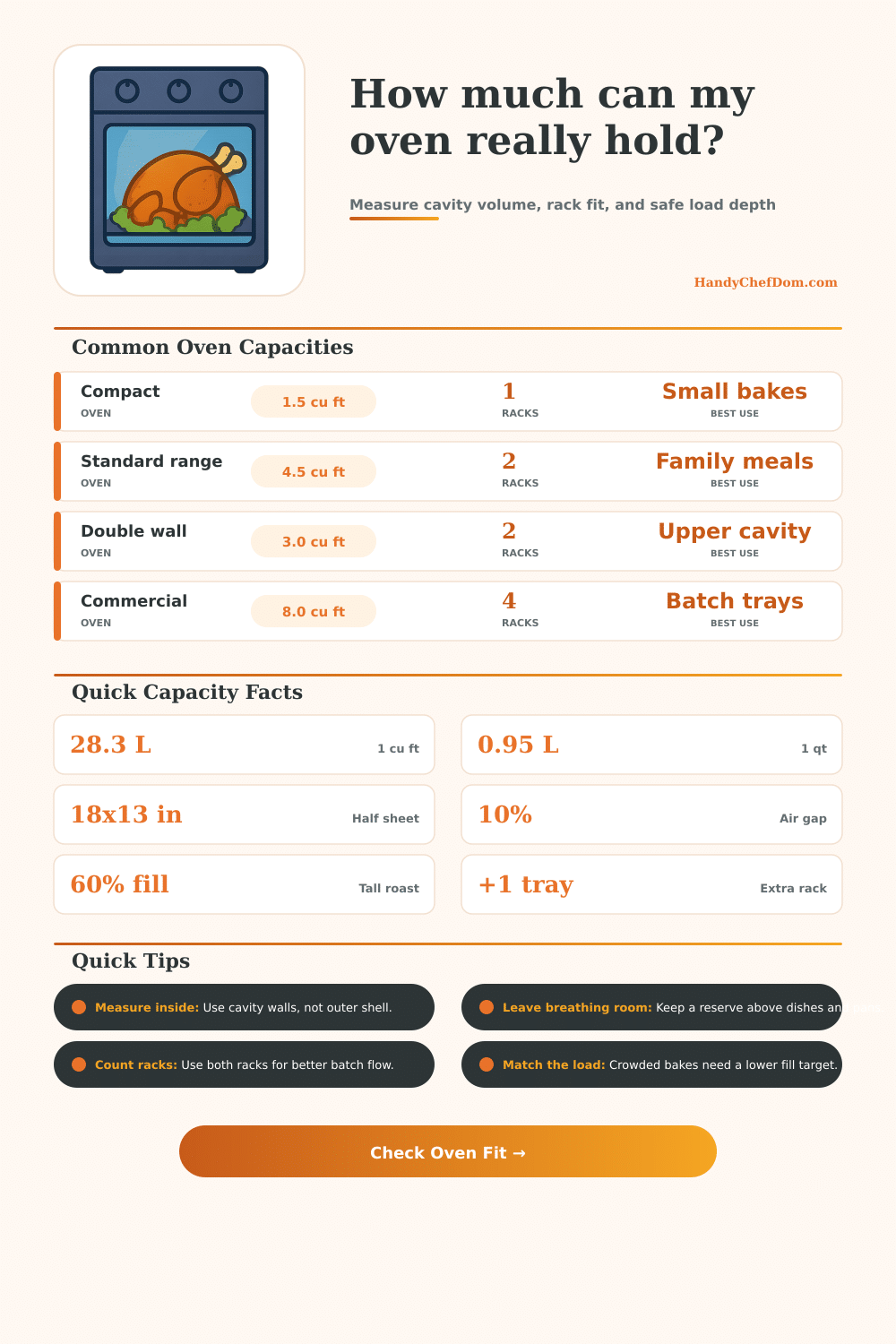
| Oven | Cavity | Racks | Best Use |
|---|---|---|---|
| Compact | 1.5 cu ft | 1 | Small bakes |
| Standard range | 4.5 cu ft | 2 | Family meals |
| Double wall | 3.0 cu ft | 2 | Upper cavity |
| Commercial | 8.0 cu ft | 4 | Batch trays |
| Pan | Size | Fits | Note |
|---|---|---|---|
| Quarter sheet | 9 x 13 in | Easy | Snack trays |
| Half sheet | 18 x 13 in | Common | Standard bake |
| 9 x 9 dish | 23 x 23 cm | Flexible | Brownies and sides |
| Roaster | 16 x 13 in | Tight | Holiday meat |
| Load | Fill | Headroom | Use |
|---|---|---|---|
| Airy bake | 35% | High | Crisp edges |
| Balanced tray | 55% | Medium | Most dinners |
| Crowded batch | 70% | Low | Multiple pans |
| Tall roast | 85% | Very low | Single centerpiece |
| Check | Minimum | Why | Risk |
|---|---|---|---|
| Top gap | 2 cm | Heat circulation | Burned tops |
| Side gap | 1 cm | Air movement | Hot spots |
| Front gap | 2 cm | Door clearance | Spill drag |
| Rack play | 1 slot | Safe slide | Jammed tray |
Oven capacities refers to the amount of food that an oven can holds. The capacity of the oven isnt the total volumes of the oven. Instead, oven capacity consider the space for the food and the space that the oven use for hot air to circulate around the food.
If there is too much food in the oven, the hot air cannot circulate around the food proper. As a result, some parts of the food will cook while others will steaming. When determining the oven capacity, there are several factor to consider.
How to Measure and Use Your Oven Capacity
The size of the air gaps within the oven and the food must be consider. The food must leave air gap at the top and the sides of the oven. Without these air gaps, the food will burn.
Additionally, you must consider the position of the oven rack. For heavy roasts, the oven racks should be positioned at the lower part of the oven. However, for food that require extra height, the oven racks should be at the upper part of the oven.
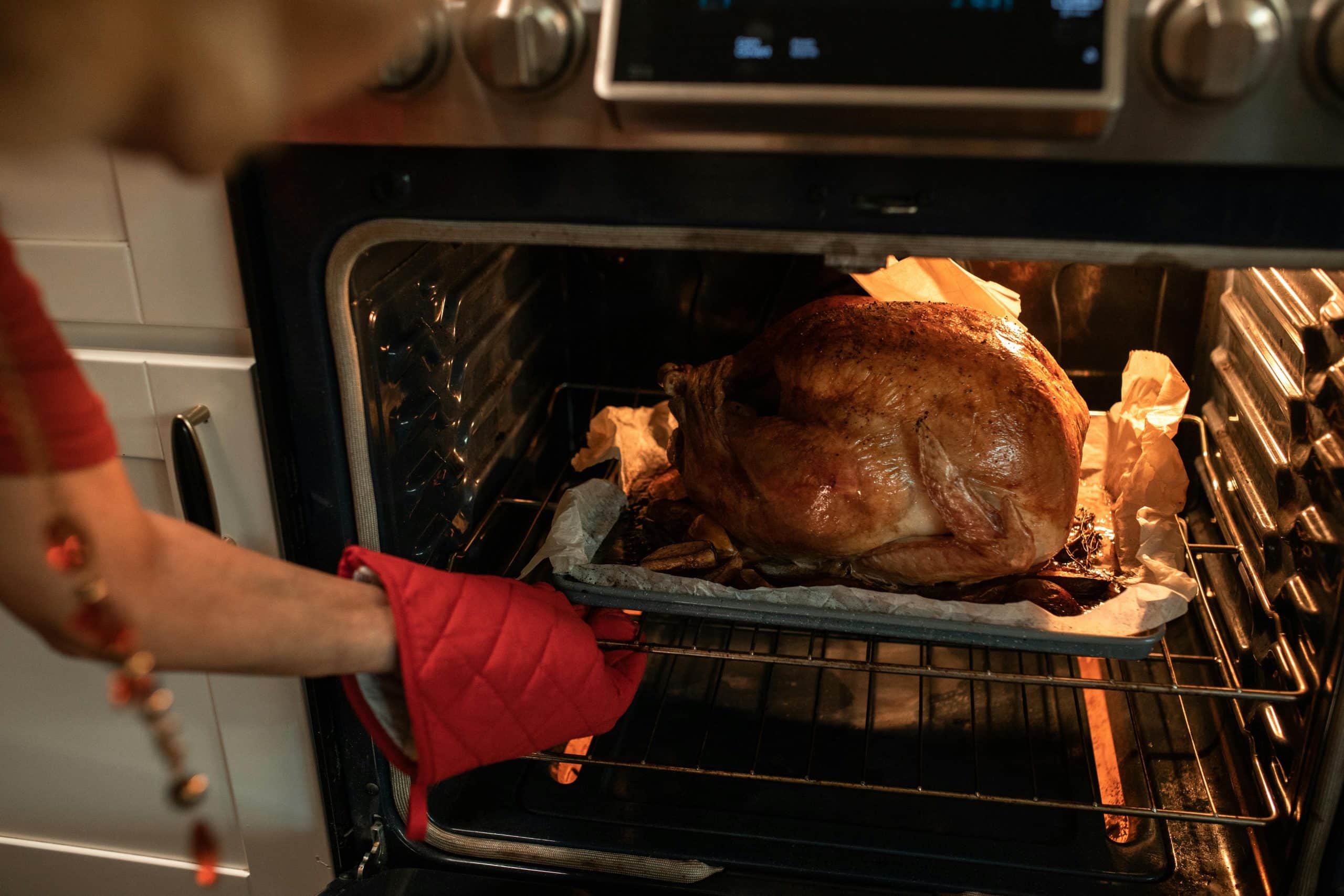
To determine the oven capacity correctly, you must measuring the interior of the oven. Measure the oven interior from wall to wall at the narrowest point. Additionally, measure the depth of the oven, taking care to account for the bowed door of the oven.
Finally, measure the oven height. The oven height will tell you if a tall roast of meat will fit in the oven. Only count the oven racks that is stable with full baking pans.
When determining how much food to add to the oven, three-quarters of the oven is a safe target. Three-quarters of the oven should be filled with food to avoid trapping hot air around the food. For large batches of food, you may need to reduce the amount of food by a fraction of the total batch.
For these same large batches, cooking in a crowded batch-style requires reducing the amount of food. The various types of ovens has different oven capacities. Convection ovens use fans to circulate hot air around the food.
The convection fan might change the oven capacity. Other ranges might have a pizza oven with a dome shape that limit the height of the food that you can place in the oven. Compact ovens has limited capacity and are more better for small roasts and bakes.
Standard range ovens have different features and are designed to last daily cooking use. Commercial ovens has more interior volume and allow cooks to place many baking tray in the oven. By understanding the oven capacity, you can plan your batches of food.
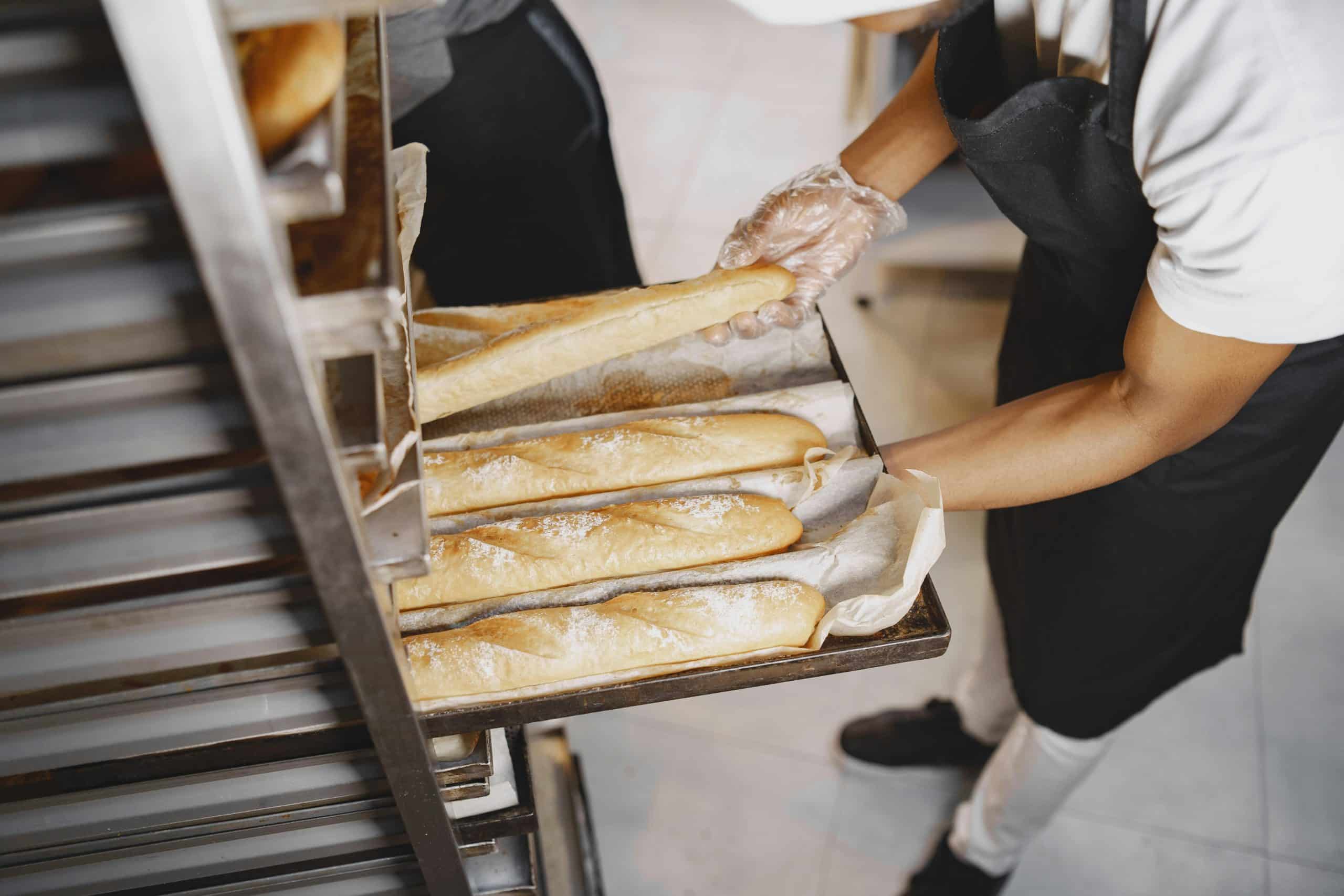
If the volume of food you are making is too large to fit in the oven with the usable oven capacity, you will have to cook the food in batches. Additionally, if you are using baking pans for your food, ensure that the dimensions of the baking pans will fit into the oven. Using pans that are too large will prevent the oven from circulating the heat proper.
Using glass baking dishes requires creating air gaps because glass heats slowly. If using foil pans, remember that foil pans may warp under high heat in the oven. Finally, experiment with the different cooking scenario to determine your oven capacity.
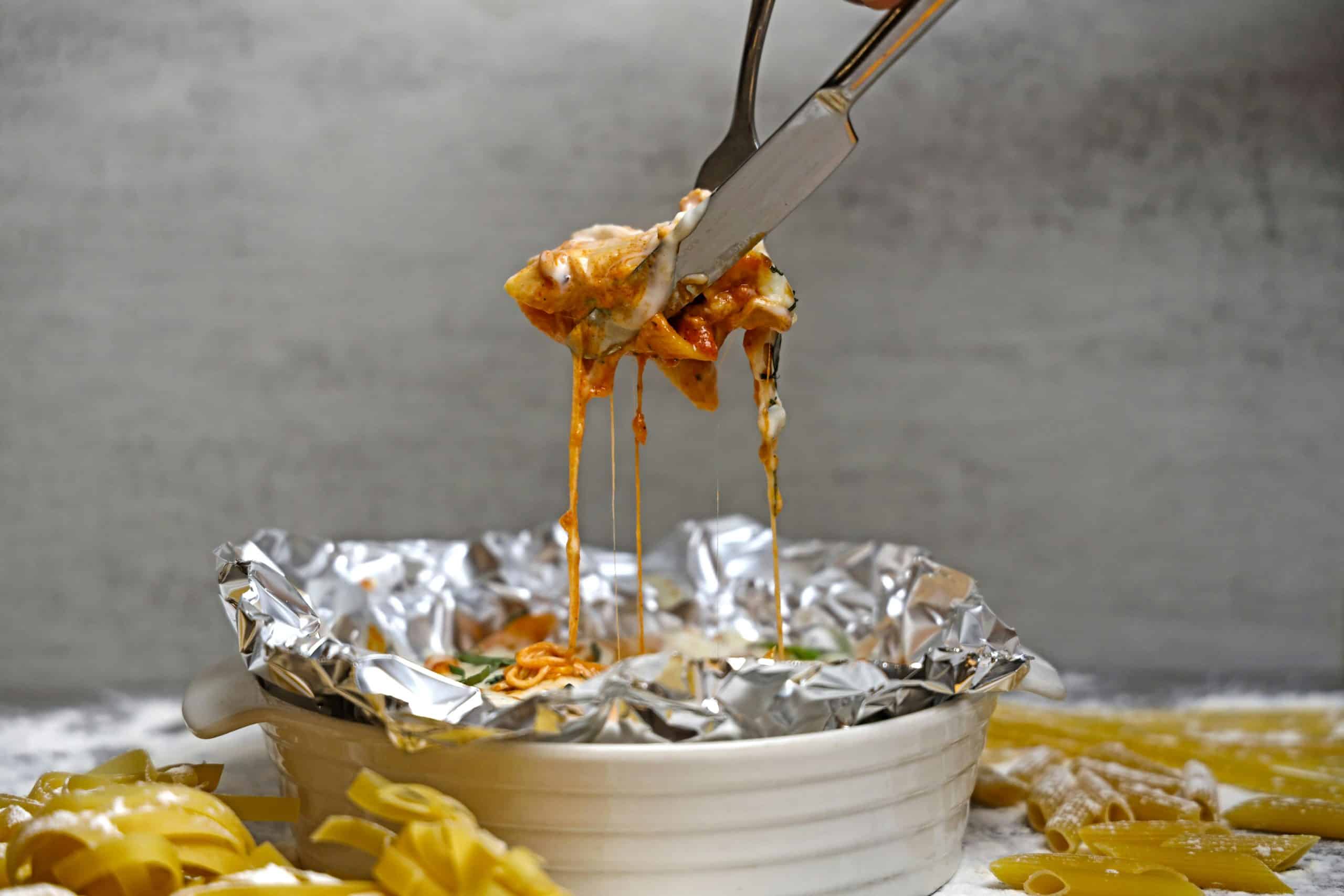
Calculate if the height of the roasts allows for the height of the meat to be place into the oven. Plan the batches of cookies to ensure they will fit in the racks of the oven. By understanding your oven capacity, you can avoid cooking your food uneven.
Understanding your oven capacity allow you to properly match the food that you are cooking to the airflow in the oven. Ensuring that the food that you are making is matched to the airflow in your oven will ensure that your food cook evenly.