Basal Metabolic Rate Calculator
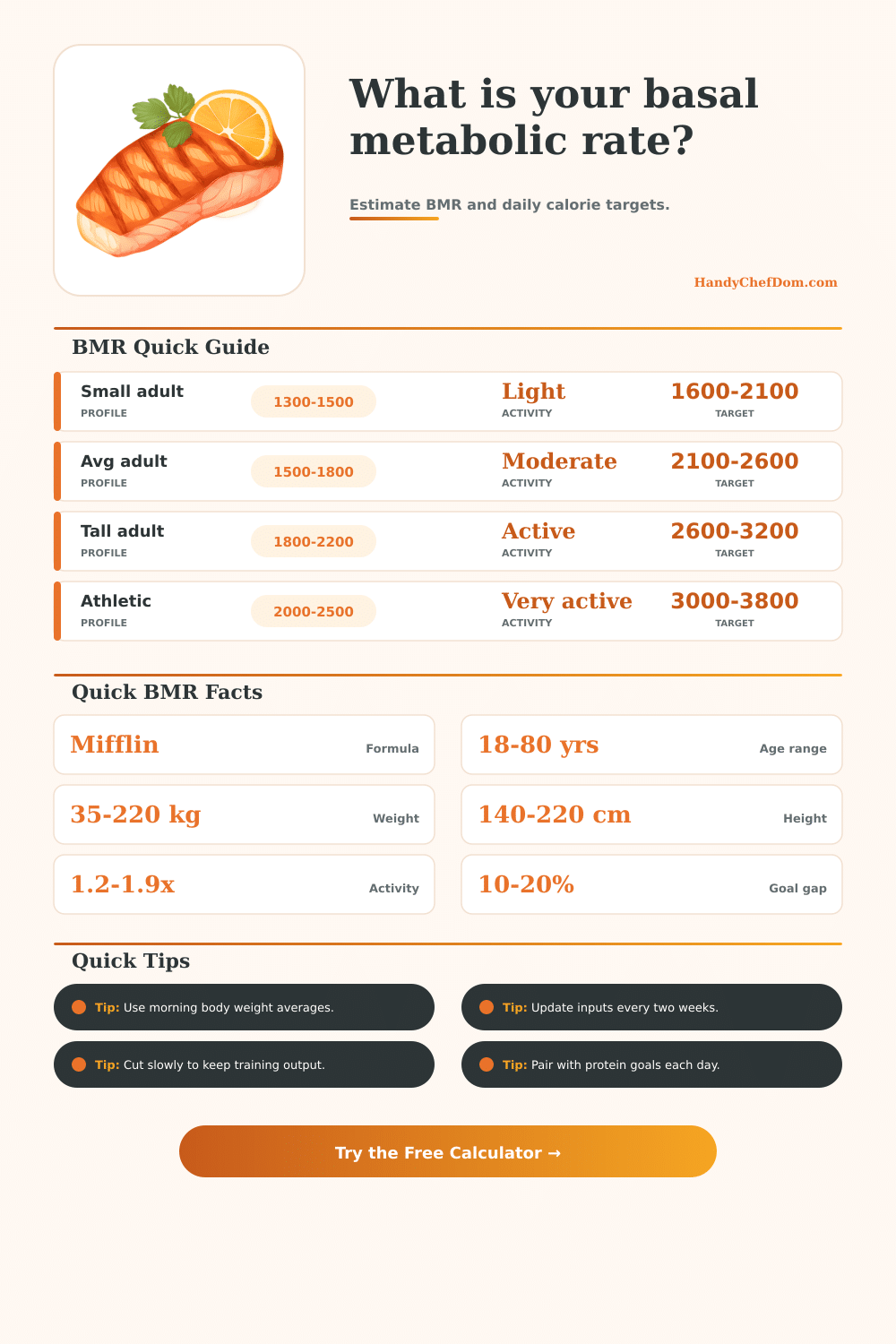
Estimate BMR with Mifflin-St Jeor, apply activity multipliers, and set practical cut or gain calorie targets for weekly nutrition planning.
Use body data, training activity, and goal pace to estimate baseline metabolism and daily targets. Recheck every two weeks after scale and performance trends stabilize.
| Level | Factor | Steps/day cue | Training cue |
|---|---|---|---|
| Sedentary | 1.20x | Below 5k | Little exercise |
| Light | 1.375x | 5k-8k | 1-3 sessions |
| Moderate | 1.55x | 8k-10k | 3-5 sessions |
| Very active | 1.725x | 10k-13k | 6 sessions |
| Extra active | 1.90x | 13k plus | 2-a-day work |
| Goal | Adjustment | Expected pace | Use case |
|---|---|---|---|
| Cut | -10% | Slow fat loss | Performance cut |
| Cut | -15% | Steady fat loss | General diet |
| Cut | -20% | Aggressive cut | Short phase |
| Gain | +8% | Lean mass gain | Long bulk |
| Gain | +12% | Faster gain | Hard gainers |
| Gain | +15% | Rapid gain | Short bulk |
| Body wt (kg) | 1.6 g/kg | 1.8 g/kg | 2.2 g/kg |
|---|---|---|---|
| 50 | 80 g | 90 g | 110 g |
| 60 | 96 g | 108 g | 132 g |
| 70 | 112 g | 126 g | 154 g |
| 80 | 128 g | 144 g | 176 g |
| 90 | 144 g | 162 g | 198 g |
Basal metabolic rate is an amount of energy that your body use to perform basic function, such as keeping your heart beat and your lungs moving. Basal metabolic rate is the amount of energy that your body uses as a baseline, and all of the other physical activitys that you perform throughout the day are added to your basal metabolic rate. If you would like to change your weight, your basal metabolic rate will be used as a reference point for determining how many calorie you need to consume daily.
Several factors will influence your basal metabolic rate, including your age, height, weight, and biological sex. As you age, your basal metabolic rate will decrease due to the decrease in the rate of tissue turnover in your body. Individuals who has higher weights and heights will have higher basal metabolic rate because they require more energy to sustain their bodily functions.
What Is Basal Metabolic Rate and How to Use It
The biological sex of an individual will play a role in there basal metabolic rate because men will typically have more muscle mass than women, which leads to a higher rate of energy consumption. While you cannot change the age, height, weight, and biological sex of an individual, these factors can be used to calculate the influence that they will have on an individual’s basal metabolic rate. Activity level is another factor that an individual can control, and it can be used as a multiplier for an individual’s basal metabolic rate.
Individuals who perform physically demanding job will have higher activity levels than those who have more sedentary jobs. As a result of these difference in activity levels, individuals will have different requirements of the amount of calories that they burn each day in order to maintain their current weight. The goal that you wish to achieve will also impact how you use your basal metabolic rate.
If your goal is to lose fat, you must consume fewer calories then your total daily energy expenditure. If the number of calories that you consume is too low, you may burn muscle mass along with fat. If your goal is to gain muscle, you must consume a surplus of calories.
The calculator will help you to determine these number. The math will be performed based off your basal metabolic rate and your goal phase. Protein is an essential nutrient that you need in order to ensure that your body has the material necessary to perform its bodily functions.
In addition, if you consume protein regularly and maintain a consistent intake of protein, your body will more easy be able to manage your diet. These calculations will not remain the same over time. Your weight, the volume of your training, and your sleep cycle can all change, and these changes will have an impact upon your energy needs.
Use these calculations every few weeks to ensure that they remain accurate. Use a seven day average of your weight because your daily weight can fluctuate due to the water and food that you consume daily. Maintenance calories refer to the number of calories that you must consume to maintain your current weight.
This number is different than the calories that you consume in order to either lose or gain weight. If you determine the number of maintenance calories that your body require, you can change the number of calories that you consume. There are various factor in your life that can change the number of calories that your body burns.
Stress, illness, and travel are three example of such factors. While these factors will not make your basal metabolic rate calculations incorrect, they do require that you pay attention to your bodys response to the diet that you consume. For example, if you increase the volume of the exercises that you perform each week, you will increase your energy needs.
Your basal metabolic rate provides you with a reference point for your total daily calorie intake. Having a reference point allow you to make decisions about the amount of food that you consume.