🥣 Arrowroot to Thicken Gravy Calculator
Calculate arrowroot powder for gravy by cups, current thickness, target thickness, slurry ratio, gravy temperature, dairy or acid level, holding time, and servings.
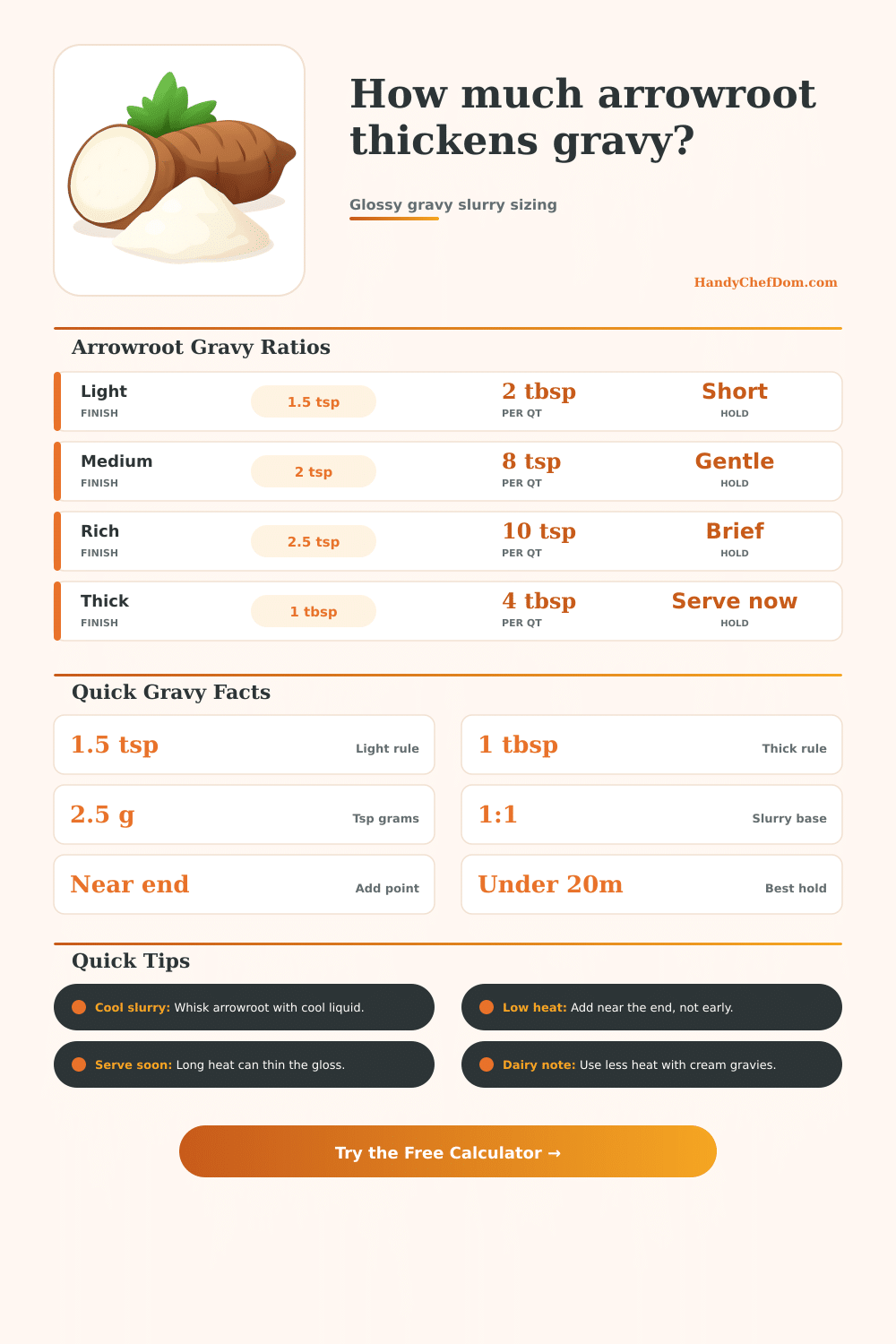
Reference rule: arrowroot often starts around 1.5 teaspoons per cup for light gravy and 1 tablespoon per cup for thick gravy. Add the slurry near the end over gentle heat.
| Target Thickness | Arrowroot Starting Ratio | Visual Cue | Best Gravy Use |
|---|---|---|---|
| Light pourable gravy | About 1.5 teaspoons per cup gravy | Glossy, fast pour, light spoon coating | Turkey gravy, chicken gravy, delicate pan juices |
| Medium spoon-coating gravy | About 2 teaspoons per cup gravy | Coats the spoon, then drips cleanly | Most dinner gravies and mashed potato service |
| Rich glossy gravy | About 2.5 teaspoons per cup gravy | Noticeable shine with a slower pour | Roast beef gravy, mushroom gravy, holiday boats |
| Thick ladle gravy | About 1 tablespoon per cup gravy | Thick trail in the spoon and slow ladling | Open-faced sandwiches or very thick plate gravy |
| Slurry Ratio | Texture | When to Use | Stirring Note |
|---|---|---|---|
| 1:1 liquid to arrowroot | Concentrated paste slurry | Small batches and precise fixes near serving time | Whisk smooth, then add in a thin stream |
| 1.5:1 liquid to arrowroot | Loose but still strong slurry | Most gravy boats and pan gravies | Stir while adding so the gloss forms evenly |
| 2:1 liquid to arrowroot | Easy-pour slurry | Medium or large gravy batches | Good when the gravy is already slightly thick |
| 3:1 liquid to arrowroot | Very thin slurry | Buffet-style control or cautious staged additions | Add in parts and pause before adding more |
| Gravy Type | Arrowroot Behavior | Adjustment | Practical Note |
|---|---|---|---|
| Clear meat stock gravy | Sets glossy and clean with a translucent finish | Use baseline | Best match for arrowroot when served soon |
| Turkey or chicken pan gravy | Glossy finish with light body | Slightly lower for delicate gravy | Use gentle heat so the texture stays smooth |
| Roast beef gravy | Good shine, especially with reduced juices | Baseline to slightly higher | Add near the end after seasoning is balanced |
| Cream or dairy gravy | Can feel softer and less clear | Use modest heat and a small reduction | Avoid long simmering after the slurry goes in |
| Wine or acidic pan sauce | May lose thickness faster under heat | Add a small reserve but hold briefly | Finish, taste, and serve without extended boiling |
| Thickener | Typical Gravy Finish | Heat Tolerance | Calculator Note |
|---|---|---|---|
| Arrowroot slurry | Glossy, clear, smooth, delicate | Best with short gentle heat | This calculator is tuned for arrowroot only |
| Cornstarch slurry | Glossy but more familiar and sturdy | Handles brief simmering better | Use a cornstarch calculator for different ratios |
| Flour roux | Opaque, hearty, classic gravy body | Needs longer cooking to lose raw taste | Not interchangeable teaspoon for teaspoon |
| Reduction only | Concentrated flavor with natural body | Depends on stock gelatin and fat | Useful before final arrowroot correction |
| Potato starch | Strong and glossy, can set quickly | Can become stringy if overworked | Use separate starch guidance for best control |
Arrowroot is a thickening agent that can be use to thicken turkey drippings or roast beef jus. Arrowroot creates a glossy finish to the gravy that dont make the liquid become opaque. Additionally, arrowroot avoids the issue associated with flour, such as potentially creating a floury cloud or raw taste in the gravy.
Arrowroot does not require simmerming to eliminate the raw taste. Arrowroot does not mask the flavor of the stocks and gravy. Arrowroot can behave differently in liquids of different volume, thickness, and that contain cream or wine.
How to Thicken Gravy with Arrowroot
If too much arrowroot is added, the gravy will set like a pudding if allowed to cool. If too little arrowroot is added, the gravy will remain thin like a soup. The amount of arrowroot that are required to thicken gravy depends on the current thickness and the target thickness.
Gravies that already have a glossy finish will require less arrowroot than gravies that is thin like stock. The target thickness can change if the gravy also contains dairy or acidic ingredient, such as cream or lemon juice, as these ingredients will loosen the setting of the arrowroot once cooked. Arrowroot will also relax if you permit the gravy to stand on heat.
Thus, the thickness of the gravy at the stove may not be the same than when it is served at the table. The calculator included on this page will help to determine the amount of arrowroot that should be used. The calculator can calculate the amount of arrowroot that will be necessary based off the volume of the finished gravy, the thickness of the gravy before thickening, the desired finish of the gravy, the slurry ratio, the level of heat at which the gravy will be cooked, and whether the gravy contains dairy or acidic ingredients.
The calculator will provide the quantity of arrowroot and the amount of cool liquid required to make the arrowroot slurry. Additionally, the calculator will indicate the amount of caution that should be used if the gravy is permitted to stand for long period of time after thickening. This calculator does not provide a recipe for gravy, but removes the guesswork involved in determining the amount of arrowroot to add to the gravy.
Arrowroot sets quickly when added to gravy, but loses it strength with prolonged heat. Arrowroot should be added when the heat is off or when the gravy is simmering at a gentle heat. After adding the arrowroot slurry to the gravy, stop stirring the gravy the moment the gravy becomes glossy on the surface of the gravy.
If the gravy will sit on a buffet or be served in a covered pot for more than twenty minute, the calculator will provide a caution flag to indicate this. This caution is provided as too much arrowroot will relax with long periods of standing on heat. In this case, an additional small amount of arrowroot slurry can be added just before the gravy is served.
Arrowroot is not the same as cornstarch, even though they may appear to be the same thickener. Arrowroot will create a more glossy finish on the gravy. Additionally, arrowroot will break down more quickly with heat than cornstarch.
Cornstarch can be boiled, while arrowroot is different. If the gravy contains wine or lemon juice, the acid will reduce the thickening power of the arrowroot. Thus, the cook will increase the amount of arrowroot in the recipe if these ingredient are in the gravy.
The same change will occur if the gravy contains cream; fat will interfere with arrowroots thickening power. Adding arrowroot too early in the gravy can cause it to thicken too much while cooking but become thin again later in the cooking process. Arrowroot should be added to gravy that has been seasoned and heated to the temperature that it will be served.
Arrowroot can be added in thin stream into the gravy while stirring. Another stream can be added if the gravy is still too thin. If the gravy thickens too much, a splash of stock can be added to loosen it, as stock will not create a chalky taste in the gravy like flour would.
In many cases, one and a half to two and a half teaspoon of arrowroot will be used for every cup of the finished gravy. The exact amount of arrowroot that will be needed will vary according to the variable listed in the gravy recipe calculator. After understanding how these variables can change the thickening power of arrowroot, the amount of arrowroot can be measured and the thickness of the gravy can be altered to match preference.
The calculator allow a cook to focus on the flavor of the gravy rather than performing the calculations to determine the needed amount of arrowroot.