Fermentation Time Calculator
Estimate a realistic fermentation window from temperature, salinity, inoculation strength, acidity target, oxygen exposure, and batch mass so your checks are timed instead of guessed.
Ferment Presets
Inputs
The model gives a timing range, not a safety guarantee. Confirm sensory cues, pH trend, and proper sanitation before consuming any fermented food or drink.
Ferment Strategy Grid
Reference Tables
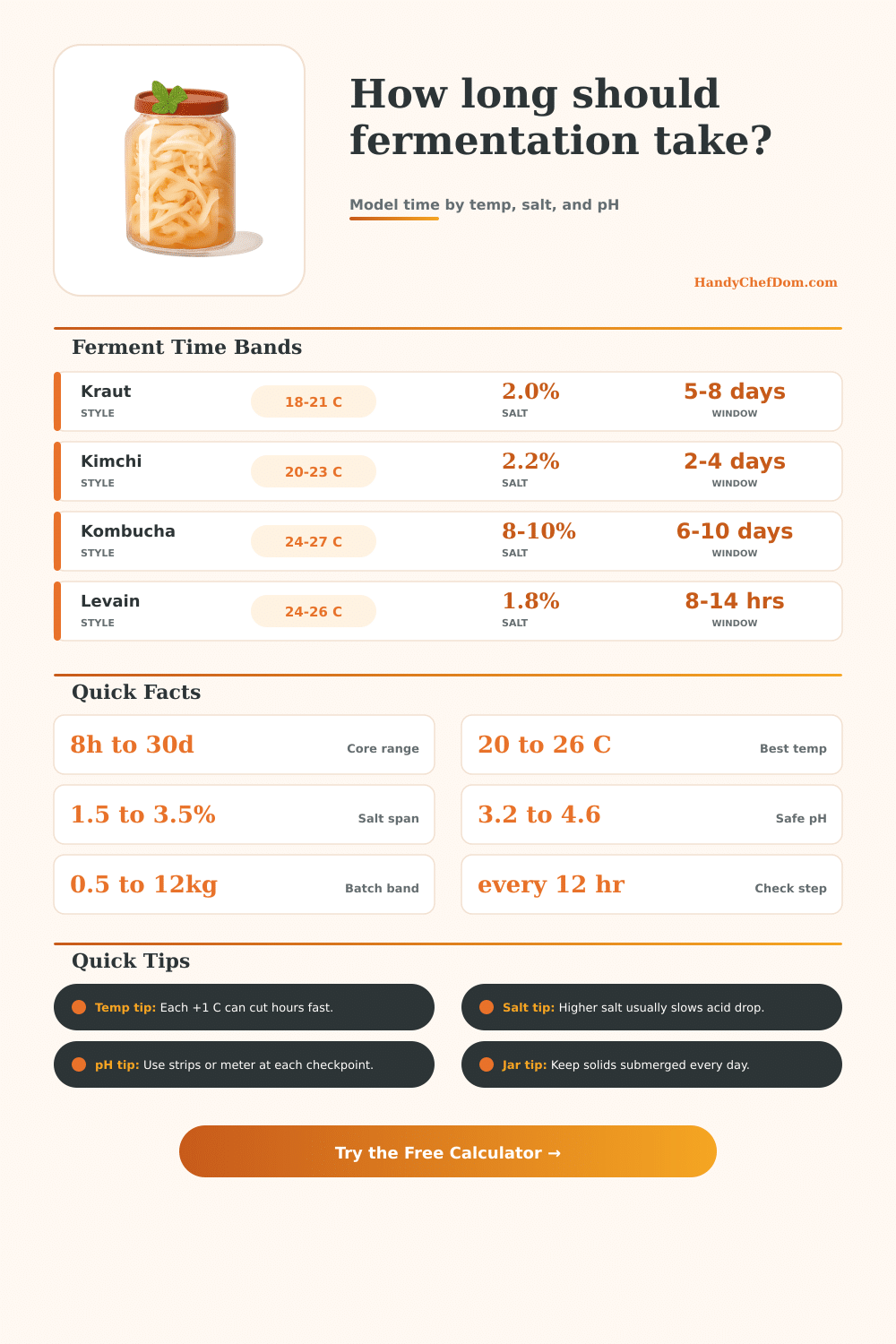
| Style | Ref Temp | Ref Salt | Base Time |
|---|---|---|---|
| Kraut | 20 C | 2.0% | 168 h |
| Kimchi | 22 C | 2.2% | 72 h |
| Pickle | 21 C | 2.5% | 96 h |
| Kombucha | 25 C | 0.0% | 168 h |
| Style | Starter | pH Target | Notes |
|---|---|---|---|
| Levain | 10-25% | 3.8-4.2 | Peak rise |
| Yogurt | 2-5% | 4.4-4.6 | Set then chill |
| Hot sauce | 2-8% | 3.2-3.8 | Mash deeper |
| Ginger bug | 5-15% | 3.5-4.0 | Feed daily |
| Temp | Speed Shift | Risk | Action |
|---|---|---|---|
| 10-15 C | Very slow | Low acid pace | Extend checks |
| 16-20 C | Steady | Stable | Daily check |
| 21-26 C | Fast | Overrun risk | 2 checks/day |
| 27-32 C | Very fast | High stress | Cool down |
| Salt % | Texture | Acid Rate | Typical Use |
|---|---|---|---|
| 1.5 | Soft crunch | Faster drop | Quick kimchi |
| 2.0 | Balanced | Controlled | Kraut daily |
| 2.5 | Firm bite | Slower drop | Pickle jars |
| 3.5 | Very firm | Slow | Long storage |
This calculator estimates fermentation timing from common process variables and provides a practical readiness window. Treat it as planning support and verify with pH, aroma, texture, and food-safety best practices.
Fermentation time does not always follow the calendars. Fermentation time isnt constant but changes with different variable. One batch of sauerkraut might reach a perfect flavor in six days, whereas another batch might still be flat after day nine despite using the same amount of cabbage and salt.
Changes in the variables of temperature, amount of starter to sauerkraut cultures, and the density of how the sauerkraut is packed into the jar cause differences in the outcome of sauerkraut fermentation. These variables do not change the end result of sauerkraut fermentation but do change the length of time it takes to reach that end result. Because the fermentation time can change, it is not enough for a sauerkraut fermenter to rely upon a general day count to determine the fermentation time.
Why Sauerkraut Fermentation Time Varies
The most important variable in the fermentation process is temperature. Fermentation speed up with an increase in temperature by a single degree, and the effect of temperature increases exponentially past 25 degrees Celsius. Fermentation slows down if the temperature drop to below 15 degrees Celsius, and the flavor will take many more week to develop.
The online calculator estimates the fermentation time based on the actual temperature of the kitchen in which the ferment is occurring. By using this calculator, the fermenter removes the guesswork in determining the effect of temperature on fermentation time. The amount of salt use in the fermentation process affects fermentation inversely.
Higher amounts of salt will slow the fermentation process. If the fermenter increases the amount of salt by a half a percent, the fermentation process will slow from occurring in five days to seven days. Increased salt allows for the end product to be more crisper.
The model will compare the percentage of salt that is selected to a reference amount of salt, and then apply a fermentation time multiplier to reflect the effect of the salt on the fermentation time. The amount of starter culture that are added to the batch of sauerkraut, as well as the amount of sugar in the sauerkraut, will accelerate the fermentation process. Using a measured amount of previous brine or a spoonful of culture will shorten the lag phase.
The lag phase is the period when the jar smell of raw vegetables. Fermentation is faster with more sugar, which is helpful for individuals fermenting sauerkraut into drinks or levains. However, the faster the fermenter completes the fermentation process, the more likely it is that the brine will become too sour.
Without measuring the brines pH, the fermenter could add too much sugar. The amount of exposure to oxygen and the percentage of the jar that is to be filled with sauerkraut are two variables that a fermenter might not think to track. An open cloth cover to the jar allows faster fermentation but also allows molds to grow on the sauerkraut.
A nearly full jar with an airlock will allow the brine to remain in contact with the sauerkraut. A nearly full jar limits the amount of headspace in which carbon dioxide can exit the jar. By limiting the headspace for the sauerkraut, the sauerkraut will take longer to ferment.
The online calculator accounts for these variables to determine the fermentation time. The output of the calculator will take into account the effect of these variables on the fermentation time. The reference tables located on the calculator page serve as a quick orientation of the different types and time requirements of ferments.
These tables are not exact instructions for fermenters. The tables show where different types of sauerkraut lie on the spectrum of fermentation time. For example, levains can take hours to ferment, whereas hot sauce ferments might take weeks.
The reference table can help a fermenter to determine where their fermented product belongs on the time spectrum. The first table might be mistaken for a sign of the fermentation process’s end. Instead, the fermenter should of use the early sample point that is included at roughly one-third of the fermentation time to taste the product.
If the flavor has not changed, the temperature and the amount of starter culture might be too low for the batch of sauerkraut. A significant drop in pH at this early date can indicate that the process will take less time to sample the brine. Sampling the brine at this one-third time point will prevent the outcome of the brine from being either too bland or too sour.
The batch size of sauerkraut will have a small effect on the fermentation process. The model incorporates the batch size using a logarithmic calculation because this calculation best reflects the fermentation process. Although the impact of batch size is small, a calculation that takes batch size into account prevents the fermenter from underestimating the difference in time for a ten-kilogram batch of sauerkraut compared to a one-kilogram batch.
Using a risk scoring system allows the model to flag ferments that have variables outside the normal parameters. If the variables of temperature, salt, and target pH fall outside of the normal ranges, the risk to the fermentation process is higher. This risk model does not eliminate the need for food safety practices but alerts the fermenter that the chosen variables for fermentation could have adverse outcomes.
By understanding the effect of these different variables, the brine fermenter can move away from using recipes that have been tested and toward creating repeatable outcomes to fermentation. The model can help a brine maker to understand which kitchen temperatures produce the desired texture for sauerkraut and the amount of starter culture needed to ferment kimchi in three days. Given enough batches of sauerkraut made with the variables accounted for in the model, an individual will be able to open the jar at the predicted time because the predicted time has delivered the flavor desired of the brine in the past.
Using this model will transform brine fermentation from an unmanageable process to a manageable one. Although an individual will still have to use their senses to determine when the sauerkraut is ready, the model will remove the blind waiting periods for the brine to ferment. Using this model will allow a fermenter to have fewer failed batches of brine and to have confidence in the outcome of their fermentation process.