Taco Bar Calculator
Plan a taco bar that feels generous without turning into a mystery grocery haul. Estimate tacos, cooked filling, raw meat to buy, tortillas, toppings, salsa, sides, serving pans, and budget from the way guests will actually build plates.
Start with a real taco-bar scenario, then adjust the headcount, appetite, taco size, protein split, tortilla plan, sides, and buffer. Presets are starting points, not locked recipes.
Your taco bar estimate
Smaller tacos need more tortillas but less filling per piece.
Balanced main-meal order for the current guest mix.
Higher target for teens, long parties, or no side dishes.
Estimated food cost divided by listed guests.
| Bar role | Tacos per adult | Cooked filling per taco | Best buffer | Planning note |
|---|---|---|---|---|
| Snack station | 1.5 to 2 tacos | 2 to 2.5 oz | 8 to 12 pct | Good for happy hour, late appetizer, or party grazing. |
| Main meal | 2.75 to 3.25 tacos | 2.5 oz | 10 to 15 pct | Most dinner taco bars land here when chips or rice are available. |
| Only food | 3.25 to 4 tacos | 2.5 to 3 oz | 15 to 22 pct | Add more if guests arrive hungry or there are few sides. |
| Late-night station | 2 to 3 tacos | 2 to 2.5 oz | 12 to 20 pct | Demand spikes after dancing, games, or several hours of snacks. |
| Taco bowl setup | 1 bowl plus 1 taco | 4 to 5 oz per bowl | 10 to 18 pct | Bowls stretch tortillas but raise rice, beans, and topping needs. |
| Filling | Typical cooked yield | Good for | Buy-weight note |
|---|---|---|---|
| Ground beef or turkey | 75 pct | Classic family and office taco bars | Drain loss and seasoning moisture mean raw pounds should be higher than cooked pounds. |
| Shredded chicken | 72 pct | Budget-friendly mixed crowds | Boneless thighs hold better than breast meat on a buffet. |
| Carnitas or pulled pork | 62 pct | Game days, open houses, and hearty buffets | Shoulder loses weight during long cooking but reheats well. |
| Carne asada or steak | 70 pct | Premium taco bars and smaller parties | Slice thin and portion with tongs to protect the count. |
| Beans, tofu, or vegetables | 90 pct | Plant-forward or budget-stretch bars | Use as a dedicated filling and as a meat stretcher. |
| Mixed proteins | 72 pct | Large parties with variety | Keep a simple crowd favorite as the largest share. |
| Item | Light bar | Classic bar | Loaded bar | Serving note |
|---|---|---|---|---|
| Shredded cheese | 0.5 oz per guest | 0.75 oz per guest | 1 oz per guest | Put out smaller bowls so it stays cold and tidy. |
| Lettuce or cabbage | 0.5 oz per guest | 0.75 oz per guest | 1 oz per guest | Cabbage holds better than lettuce for outdoor service. |
| Pico, tomatoes, onion, cilantro | 1 oz per guest | 1.5 oz per guest | 2 oz per guest | Drain watery salsa before it hits tortillas. |
| Salsa and hot sauce | 1.5 oz per guest | 2 oz per guest | 2.5 oz per guest | Offer one mild, one medium, and one spicy option. |
| Sour cream, crema, or guacamole | 0.5 oz per guest | 0.75 oz per guest | 1.25 oz per guest | Guacamole disappears fastest, so portion it or refill in waves. |
| Rice, beans, chips, salad | 2 to 4 oz per guest | 4 to 6 oz per guest | 6 to 9 oz per guest | Hearty sides reduce taco demand and protect the budget. |
| Setup | Tortilla plan | Holding plan | Practical check |
|---|---|---|---|
| Mostly corn | Plan 1.15 tortillas per taco | Warm in covered stacks | Corn tortillas tear more often, so include a larger backup. |
| Mostly flour | Plan 1.05 tortillas per taco | Keep wrapped and warm | Flour tortillas are flexible and friendly for kids. |
| Mixed corn and flour | Split packs about 50/50 | Label baskets clearly | Best default for guests with different preferences. |
| Crunchy shells plus soft | Buy soft tortillas for backup | Keep crunchy shells dry | Broken shells happen, so do not count every shell as usable. |
| Bowl-friendly bar | Fewer tortillas, more bowls | Hold rice and beans hot | Bowls help gluten-free guests and stretch taco shells. |
| Large buffet | Separate stations or baskets | Refill every 15 to 20 minutes | Two tortilla points prevent the line from bottlenecking. |
How this taco bar calculator thinks
The calculator starts by turning the guest list into adult-equivalent eaters. Kids count lighter, teens and big eaters count heavier, and the taco bar role sets the first taco target. Then appetite, serving time, sides, service style, planning mode, buffer, and leftover goal adjust the count before everything rounds into practical shopping numbers.
Filling is calculated as cooked ounces first, because that is what lands in tacos. The calculator then converts cooked filling into raw buy weight using a yield for ground beef, chicken, pork, steak, beans, or a mixed-protein bar. If part of the bar is beans or vegetables, that share stretches the meat without pretending guests eat less.
Tortillas, toppings, salsa, sides, and budget are separate because they run out at different speeds. Tortillas need a breakage cushion, salsa needs mild and spicy choices, toppings need cold refills, and sides can reduce taco demand while making the table feel more abundant.
Planning a taco bar require considering many different variables. The number of guests that will come to the party and the types of guests that will come will impact the number of tacos that will be required to provide for all of the guests. For example, a person may host a dinner for eight people or a party for fifty people.
A party for fifty people will require more meat and more toppings then a dinner for eight people. The way that people will use the taco bar will also impact the number of toppings that will be required. Some people may eat the tacos quick while others may take longer to eat there portions.
How to Plan a Taco Bar
Additionally, the number of leftovers that will be made from the party will also impact the amount of food that will need to be purchased for the taco bar. A taco bar isnt going to provide the same amount of food for each of the guests. For example, some guests may only have a light taco dinner while others may eat three or four taco each.
In addition, children will eat less food than adults and may not want spicy food. Conversely, teenagers and athletes will eat more food then adults. These different diets for the various types of guests will impact the total number of tacos that should be made for the party.
The calculator allow for these variables of the guests to be entered into the calculator to provide an accurate estimate about the number of tacos that will be needed. The type of service for the taco bar will also impact the number of tacos that will be needed. For instance, if it is a self serve taco bar, people may eat the tacos at a faster rate because they can see all of the food that is on the table.
A plated taco line may have portion of the food controlled. Additionally, the length of the service will also impact the number of tacos that will need to be made. For instance, if the food will need to be provided for a long period of time, there will be a need for food refills in order to maintain the flavor of the food.
Thus, the length of the service will also need to be reflected in the taco bar. Finally, the role of the taco bar will also impact the amount of food that needs to be prepared. For instance, if the taco bar is the only food that will be provided at the party, people will be much hungrier.
If there are other type of food at the dinner, the number of tacos that each guest will eat will be less. The calculator can reflect these differences in the type of food that will be provided to the guests. The protein that is used in the tacos will also change the shopping list for the taco bar and the total cost of the taco bar.
For instance, if ground beef, carnitas or shredded chicken is used, the amount of weight that will be lost during the cooking of the meat will need to be accounted for. Additionally, if beans or vegetables are added to the meat, the amount of meat will be stretched for the guests. The calculator accounts for the weight of the cooked meat so that people wont have to guess at how much ground beef they need to purchase.
Additionally, the type of tortillas that are made will impact the tacos that are sold at the taco bar. For example, corn tortillas will tear more easily than flour tortillas and crunchy shells can break when they are taken out of the package. Thus, there needs to be a cushion of extra tortillas provided for these issues.
Offering both types of tortillas may allow people to have variety in their food but it may also cause the taco bar to overbuy the number of tortillas that they need. The same is true of the list of toppings. A list of only cheese, lettuce and salsa is less complicated than a list of guacamole, crema and other toppings.
A taco bar that has a generous portion of food for the guests will have more food for the guests but it will also cost more money and create more leftovers. A taco bar with a tighter budget may be able to feed everyone but it will require the event to also provide additional side dishes for the guests. People will have to decide what type of experience they want to provide their guests before they begin to purchase the ingredients for the taco bar.
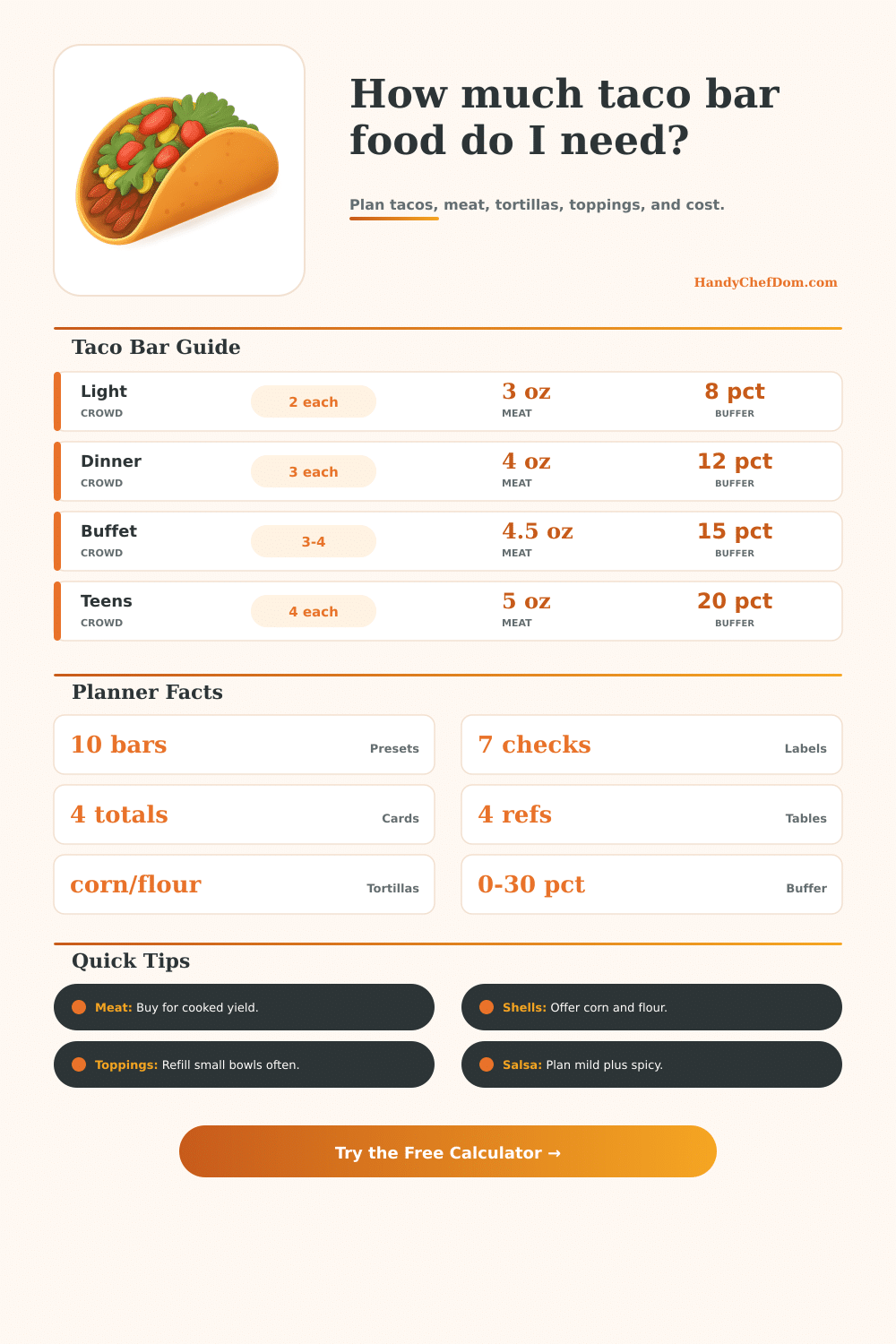
The reference tables included on this page will allow people to see the differences in the size of the tacos, the weight of the fillings and the number of percentages for the buffer of food that will remain after the feeding of the guests. These tables will allow people to see why a street-taco style setup will require more tortillas than a loaded-taco bar. Common mistakes can be made when planning a taco bar.
For instance, people will buy the same amount of each of the toppings. However, some toppings will last less than others. The same is true of the number of guests.
People may plan for the number of guests but they may not account for the fact that some people will want seconds. These suggestions and calculations will help people to avoid these mistakes. People will have to run the numbers to ensure that the cost of the food per guest matches the budget that they have for the party.
For instance, if the cost is too high, people can purchase more side dishes or reduce the number of toppings that are provided. However, if the cost is too low, the buffer will have to be increased so that all of the last guests will have enough food to eat.