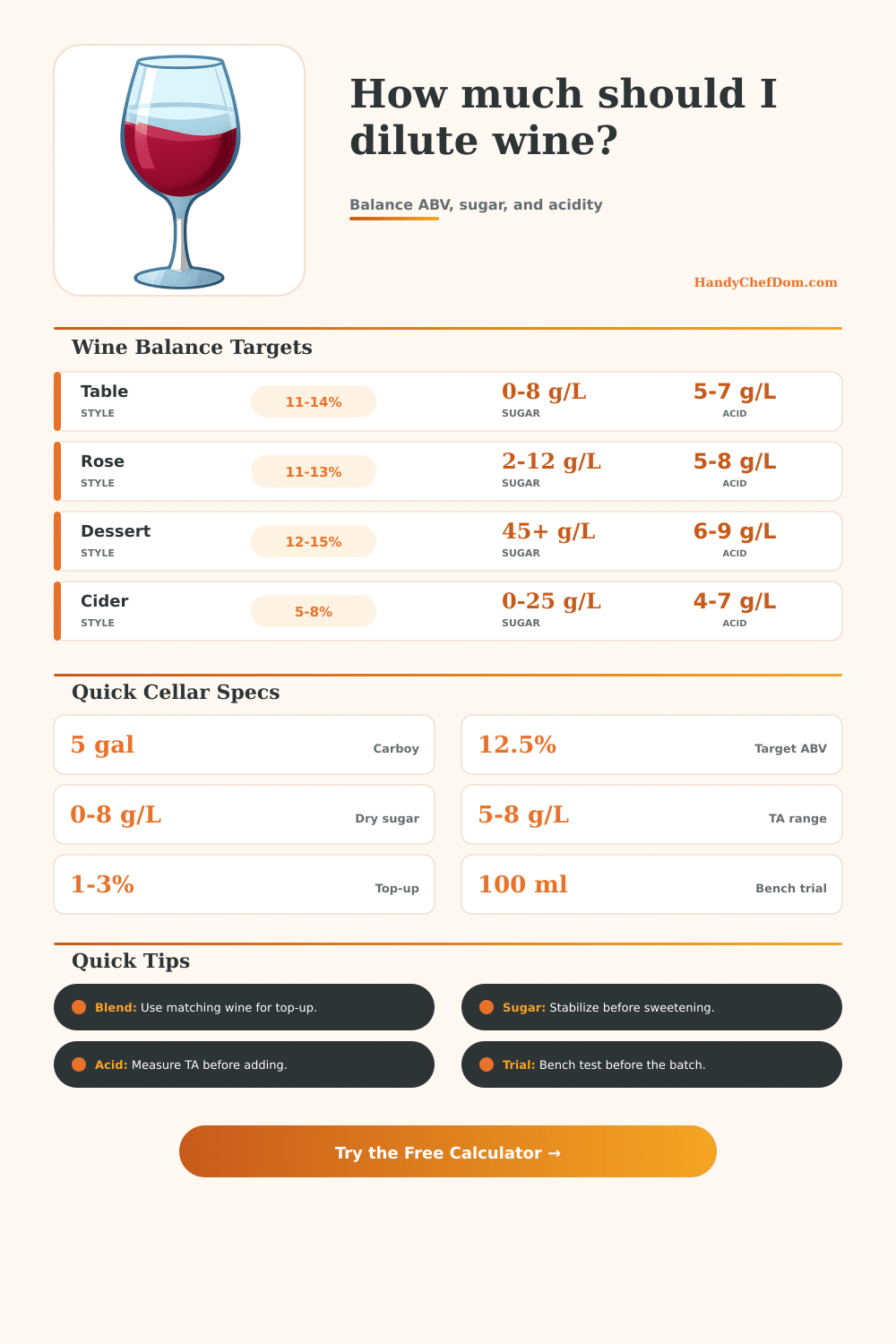
🍷 Wine Dilution Calculator
Estimate water, juice, or wine blend additions for target ABV, residual sugar, titratable acidity, blend ratio, final volume, and cellar top-up adjustments.
Choose a priority target, then enter the current wine and addition liquid. The calculator compares ABV, sugar, and acidity targets, then reports the addition volume and final cellar profile.
| Adjustment liquid | Typical ABV | Sugar g/L | TA g/L | Best use |
|---|---|---|---|---|
| Water | 0% | 0 | 0 | Lower ABV and acidity |
| Low sugar juice | 0% | 60-100 | 4-7 | Soften alcohol, add fruit |
| Sweet reserve | 0% | 160-220 | 5-8 | Backsweeten carefully |
| Dry white wine | 11-13% | 0-5 | 6-8 | Top-up white wine |
| Dry red wine | 12-14% | 0-5 | 5-7 | Top-up red wine |
| High acid wine | 10-12% | 0-8 | 8-11 | Raise crispness |
| Low acid wine | 12-14% | 0-8 | 3-5 | Reduce sharpness |
| Neutral must | 0% | 120-180 | 4-6 | Lower alcohol, add body |
| Target style | ABV range | Sugar range | TA range | Blend cue |
|---|---|---|---|---|
| Dry table red | 12.5-14.5% | 0-4 g/L | 5-7 g/L | Blend with dry red |
| Dry table white | 11.5-13.5% | 0-6 g/L | 6-8 g/L | Use bright top-up wine |
| Off-dry white | 10.5-12.5% | 9-18 g/L | 6-9 g/L | Reserve juice works |
| Rose | 11-13% | 2-12 g/L | 5.5-8 g/L | Protect color balance |
| Fruit wine | 9-12% | 10-35 g/L | 5-8 g/L | Bench test sweetness |
| Dessert wine | 12-15% | 45+ g/L | 6-9 g/L | Balance sugar with acid |
| Addition share | Blend ratio | ABV impact with water | Cellar meaning | Risk cue |
|---|---|---|---|---|
| 2% | 49:1 | Small drop | Normal top-up | Low |
| 5% | 19:1 | Noticeable trim | Bench first | Low-medium |
| 10% | 9:1 | Clear dilution | Flavor may soften | Medium |
| 15% | 5.7:1 | Large adjustment | Blend trial needed | Medium-high |
| 25% | 3:1 | Major dilution | Recipe-level change | High |
| 50% | 1:1 | New blend | Separate lot decision | Very high |
| Bench trial size | 1% addition | 5% addition | 10% addition | How to scale |
|---|---|---|---|---|
| 50 ml | 0.5 ml | 2.5 ml | 5 ml | Multiply to batch |
| 100 ml | 1 ml | 5 ml | 10 ml | Easy pipette trial |
| 250 ml | 2.5 ml | 12.5 ml | 25 ml | Small tasting glass |
| 500 ml | 5 ml | 25 ml | 50 ml | Half bottle trial |
| 1 L | 10 ml | 50 ml | 100 ml | Lab jar trial |
| 5 gal | 0.05 gal | 0.25 gal | 0.5 gal | Carboy scale |
This calculator uses volume-weighted blending math for ABV, sugar, and titratable acidity estimates. Lab readings, pH, sulfite plan, and sensory trials still matter for final cellar decisions.
Winemakers often need to dilute wines. Wine can have too much alcohol or to much acidity. In warm vintages, red wines will have more alcohol then desired.
White wines may be too sharply, meaning they have too much acidity. In winemaking processes, winemakers often dilute wine in carboys after racking the wine. Racking cause the loss of some of the wine.
Why and How Winemakers Dilute Wine
The goal of diluting wine is to achieve a target alcohol, sugar, and acidity levels. Furthermore, the goal of dilution is to keep the wine true to it wine style. Winemakers has a choice in the type of liquid that will be added to the wine.
Using water will reduce the alcohol content of the wine, as well as the sugar and acid content. Adding juice will increase the sugar and acid content of the wine. Adding another type of wine will increase the amount of the wine that is added, but will also add its own flavor to the wine.
These different liquid alter the wine, so winemakers must consider the type of wine that they is making when they make these decision. Winemakers also have to calculate the amount of addition liquid that will be used in the wine. Winemakers use volume math to calculate the amount of wine that will be made.
However, winemakers must also account for the loss of wine during the racking and filtration processes. If the wine lose even one or two percent of it’s volume during these processes, the winemaking calculations can drastically alter the amount of wine that will be produced. For some wines, the adjustment are small.
For others, more addition liquid is required. Large adjustments to the wine will drastically alter the mouthfeel and aroma of the wine. Adding too much liquid to the wine can produce undesirable result.
Winemakers can use a calculator to calculate the amount of addition liquid that will produce the desired results for the wine. The calculator will find the answer through the use of coefficients and conversions. However, the calculator cant understand the taste of the wine.
Winemakers must use their sensory judgment to ensure that the wine taste correct after the addition of the addition liquid. Winemakers often use bench trials to test the taste of the wine prior to add the addition liquid to the wine in the winemaking process. By adding the base wine and the addition liquid together in a small amount, winemakers can test the flavor of the wine prior to the winemaking process.
This will help winemakers to ensure that the wine will taste correctly when it is made. Bench trials will help winemakers to understand how the different component of wine interact with each other. Not all wine style are created equal when it comes to dilution.
Table red wines can often be diluted with water. White and rosé wines will dilinate more quick than red wines. Dessert wines require winemakers to take care in the amount of dilution that is performed with these wines.
Winemakers can use reference table for different types of wines to understand where the numbers of the wine sit in relation to the standard wine parameters for that type of wine. Winemakers often make mistake when diluting wine. Winemakers should of not try to adjust only one component of the wine.
For example, winemakers that try to reduce the alcohol of the wine without considering the acid content of the wine will create wine that may taste flat. Adding juice will increase the sugar content of the wine, but may also increase the acidity of the wine. Winemakers should enter every number into the dilution calculator to avoid mistake.
If the dilution calculator reports that the addition liquid has reached a maximum cap, the target for the wine cannot be achieved with the type of addition liquid that is being consider. Winemakers may have to compromise the desired wine parameter and change the type of addition liquid. Lastly, winemakers may have to split the batch of wine into two project.
Winemakers must also consider the stability of the wine when adding liquid to the wine. If the addition liquid contain sugar or microbes, the wine will require sulfur and filtration to remain winemaking stable.