🍞 Flour Weight Calculator
Convert flour cups to grams by flour type, measuring method, sifted state, protein level, hydration target, and recipe scale.
Pick a flour and measuring style, then convert cups to grams or grams to cups. Protein and hydration fields help estimate dough strength and water needs after scaling.
| Flour Type | Spoon-Level Cup | Typical Protein | Hydration Behavior | Best Use |
|---|---|---|---|---|
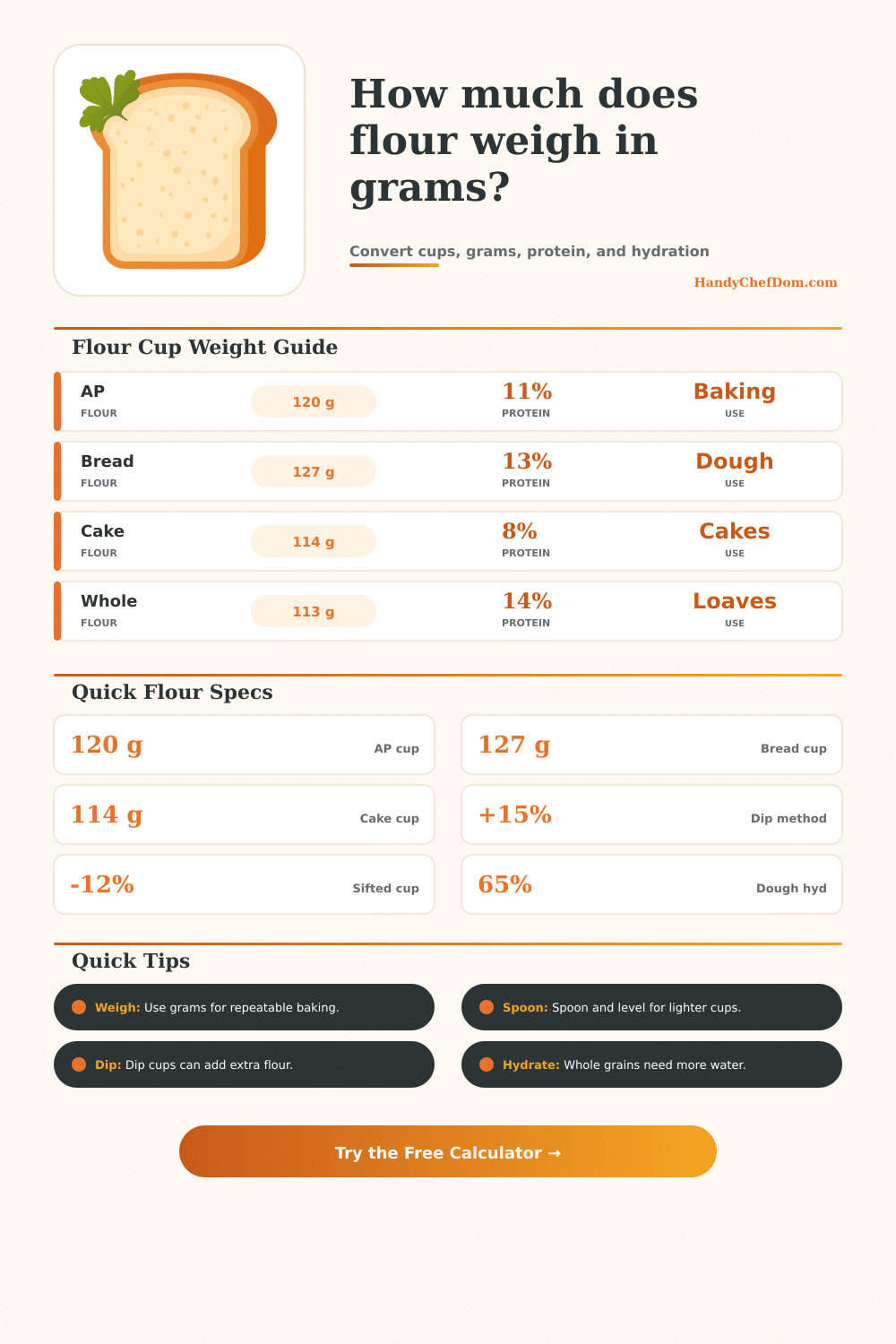
| All-purpose flour | 120 g | 10% to 12% | Baseline absorption | Cookies, muffins, quick breads |
| Bread flour | 127 g | 12% to 14% | Slightly more water | Lean dough, pizza, chewy rolls |
| Cake flour | 114 g | 7% to 9% | Softer and less thirsty | Cakes, tender crumbs, cupcakes |
| Pastry flour | 106 g | 8% to 10% | Moderate-low absorption | Tarts, biscuits, delicate bakes |
| Whole wheat flour | 113 g | 13% to 15% | Needs more water and rest | Whole grain bread and muffins |
| White whole wheat flour | 113 g | 12% to 14% | More water than AP flour | Soft whole grain baking |
| Rye flour | 102 g | 8% to 11% | Absorbs steadily, less gluten | Rye blends and seeded loaves |
| Semolina flour | 167 g | 12% to 13% | Dense and thirsty | Pasta, semolina bread, dusting |
| Gluten-free cup blend | 140 g | Varies | Often needs rest time | 1-for-1 style baking blends |
| Blanched almond flour | 96 g | About 21% | High fat, not gluten forming | Cookies, cakes, low-gluten bakes |
| Measuring Style | Weight Shift | Example AP Cup | When It Happens | Calculator Setting |
|---|---|---|---|---|
| Spoon and level | 0% | 120 g | Flour spooned into cup and leveled | Spoon and level |
| Dip and sweep | About +15% | 138 g | Cup dipped into flour bin and swept flat | Dip and sweep |
| Lightly spooned | About -5% | 114 g | Very loose flour, minimal settling | Lightly spooned |
| Packed cup | About +25% | 150 g | Flour pressed or compacted in the cup | Packed cup |
| Sifted before measuring | About -12% | 106 g | Recipe says sifted flour before cups | Sifted before measuring |
| Measured then sifted | 0% | 120 g | Recipe says flour, sifted after amount | Measured then sifted |
| Baking Style | Common Hydration | Flour Protein Cue | Water Adjustment | Planning Note |
|---|---|---|---|---|
| Cookie dough | 20% to 35% | Low to moderate | Usually no extra water | Weight flour to control spread |
| Muffins and quick breads | 70% to 100% | Moderate | Whole grain may need a rest | Hydration includes liquid ingredients |
| Sandwich bread | 60% to 68% | Moderate-high | Bread flour can handle more water | Scale flour before kneading |
| Pizza dough | 60% to 75% | High | Higher protein supports extensibility | Adjust after flour absorbs |
| Whole wheat loaf | 75% to 90% | High but bran-heavy | Add water gradually | Rest helps bran soften |
| Cake batter | 80% to 120% | Low | Avoid over-thickening with packed cups | Spoon or weigh for tender crumb |
| Recipe Scale | Original Cups | AP Flour Weight | Bread Flour Weight | Hydration at 65% |
|---|---|---|---|---|
| Half batch | 1 cup | 120 g | 127 g | 78 g water |
| Single batch | 2 cups | 240 g | 254 g | 156 g water |
| Double batch | 4 cups | 480 g | 508 g | 312 g water |
| Triple batch | 6 cups | 720 g | 762 g | 468 g water |
| Large dough | 8 cups | 960 g | 1016 g | 624 g water |
| Prep batch | 10 cups | 1200 g | 1270 g | 780 g water |
Flour cup weights vary by brand, humidity, milling style, and measuring technique. This calculator uses common kitchen references and lets you override grams per cup when your flour bag or scale gives a better value.
Measurements of flour is important in the baking process because the weight of the flour will impact the texture of the baked goods. If the weight of the flour are incorrect, the resulting goods can be dry, gummy, or bread that dont rise properly. These different weights can result from the differences in how flour is measured into a measuring cup.
Flour is a compressible substance, so the weight will change according to the way the flour is compressed when it is measure. When a cook spoons flour into a measuring cup, it will weigh less than flour that is scooped directly into the measuring cup from a bag of flour. Scooping the cup into the flour will pack the flour into the cup, and the packed flour will weigh more than flour that is merely spooned into the cup.
How to Measure Flour Correctly
Additionally, flour can be sifted prior to measuring. Sifting flour will incorporate some air into the flour particles, and the flour will weigh less when sifted than when it is not sifted. Using the calculator described in this article allows cooks to manage the different weights of flour.
By entering the type of flour that is to be measured, as well as the flour measuring method that will be used, the calculator will return the weight in grams of the flour that will be measured. The calculator can scale the recipe to any size. In addition to calculating the weight of flour that will be measured, the calculator also asks how much protein is contain in the flour.
Flour with high protein amounts will create more gluten when mixed with water. This gluten will create structure in bread and pizza dough, but will create softer results in flour that has lower protein amount. Lower protein flour is better for cakes and pastries.
Cooks can adjust the protein content of flour in the calculator, allowing cooks to see how different brands of flour will behave when prepared according to a given recipe. The hydration of dough is the amount of water in the dough recipe in relation to the weight of the flour that is used. Dough with 65 percent hydration will feel different than dough with 80 percent hydration.
Flour that contains more water will have more hydration. Whole wheat flour and rye flour will absorb more water than flour that is labeled all-purpose. This information can be accounted for in the calculator, such that the calculator provide realistic calculations for the amount of water that should of been added to the flour to prepare dough.
Scaling recipes is often a difficult process. If a recipe is to be doubled, the measuring method for the flour can impact the weight of the flour that is added to the recipe. For example, if a recipe uses the scoop-and-sweep method, doubling the recipe will result in adding more flour than if the recipe that is doubled use the spoon-and-level method.
This calculator allows cooks to first adjust the weight of the flour for the measuring method, and then scales the recipe after this adjustment. This prevents cooks from attempting to scale the recipe first, and then using a different measuring method for the flour. Weighing flour is a process that many cooks use when preparing recipes.
The weight of flour can change according to the amount of humidity in the air, and differently based off the way that flour is milled. If cooks would like to measure flour with a scale in the kitchen, they could weigh a cup of their flour, and enter that weight into the calculator. The reference tables include information about how different measuring methods will impact the weight of the flour.
This information can allow cooks to adjust their methods to add more or less flour to the recipes. Some cooks may scoop brown sugar into a recipe, but pack the flour into the recipe. Such packing of the flour will add too much flour to the baked goods.
Other cooks may sift the flour into a recipe, but after they have measured the flour. This will also change the weight of the flour. The calculator account for both the measuring and sifting methods.
The type of flour that will be used in a recipe will impact the amount of water that the flour will absorb when mixed. Bread flour absorbs more water than all-purpose flour. Additionally, all-purpose flour creates softer results than cake flour.
If a recipe is to be changed from all-purpose flour to whole wheat flour, the calculator will show how much additional water will be required. Such information can allow cooks to gradually add water to the dough to adjust for the consistency of the dough. Using scales to measure flour will make the recipes that are prepared with that flour more repeatable over time.
Recipes that use flour that is weighed will have more consistent results in different kitchens using different brands of flour. The calculator will translate the cup measurements of flour needed for a recipe to gram measurements of that flour. Such a calculation of gram weights of flour will remove the guesswork of cooks.
Additionally, cooks can use the calculator to ensure that the protein and hydration of the flour and recipe are accounted for in the preparation of the recipe.