🥩 Frozen to Thawed Meat Weight Calculator
Estimate thaw drip, packaging loss, bone, trim, cooked planning weight, and portions from the frozen meat you already have.
Enter the frozen package weight, choose the cut and package style, then set drip, bone, trim, cooking yield, and desired serving size. The calculator keeps the math in weight, so it works for bulk packs, individual cuts, roasts, ribs, poultry, fish, and ground meat.
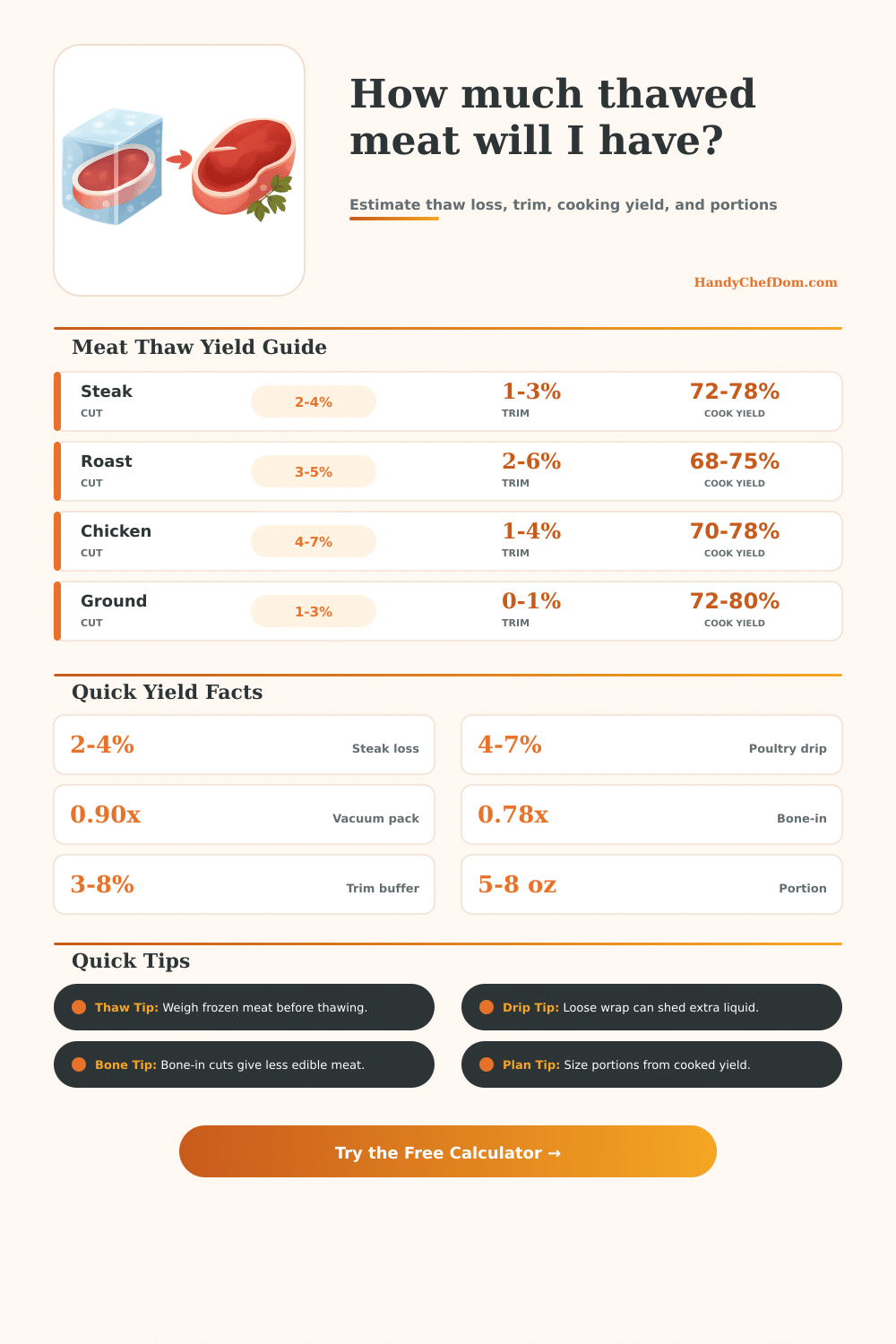
| Cut Type | Thaw Drip | Trim Range | Cooked Yield |
|---|---|---|---|
| Beef steak or chops | 2-4% | 1-3% | 72-78% |
| Beef or pork roast | 3-5% | 2-6% | 68-75% |
| Boneless chicken | 4-7% | 1-4% | 70-78% |
| Bone-in chicken | 4-8% | 2-5% | 62-72% |
| Ground meat | 1-3% | 0-1% | 72-80% |
| Fish fillets | 3-8% | 0-3% | 78-85% |
| Packaging | Discard Range | Drip Effect | Best Use |
|---|---|---|---|
| Vacuum sealed | 0-1% | Lowest drip | Steaks, roasts, fish |
| Tight freezer wrap | 1-2% | Moderate drip | Family portions |
| Store tray wrap | 1-3% | More surface drip | Short freezer hold |
| Freezer bag | 1-4% | Varies by air | Meal prep packs |
| Loose wrap or frost | 3-8% | Higher discard | Older packages |
| Ice glazed seafood | 5-12% | Glaze discard | Fish and shrimp |
| Bone-In Item | Bone Factor | Trim Factor | Planning Note |
|---|---|---|---|
| Bone-in chicken pieces | 20-30% | 2-5% | Plan on smaller edible yield |
| Turkey breast on bone | 18-28% | 2-4% | Better sliced yield than whole bird |
| Pork ribs | 30-45% | 1-3% | Use hearty portion buffer |
| Lamb leg bone-in | 18-25% | 3-8% | Trim cap affects final yield |
| Rib roast | 15-25% | 2-5% | Cooked slices shrink visibly |
| Pork shoulder bone-in | 10-18% | 5-12% | Large fat pockets reduce yield |
| Serving Goal | Cooked Portion | Use Case | Planning Cue |
|---|---|---|---|
| Light plate | 4 oz | Lunches, bowls | Good with grains and vegetables |
| Standard entree | 6 oz | Dinner service | Most family meals fit here |
| Hearty plate | 8 oz | BBQ, steak night | Add buffer for seconds |
| Sandwich meat | 3-4 oz | Sliders, wraps | Use cooked pulled weight |
| Buffet tray | 5-7 oz | Shared platter | Adjust for side dish count |
| Meal prep | 5 oz | Portioned boxes | Weigh after cooking for accuracy |
When planning a meal using frozen meat, it is difficult to find an exact weight of the cooked meat. When people looks at the weight of the meat that is shown on the packages, people often assume that the weight is the same than the weight of the cooked meat that will be prepared for the guests. However, the weight of the meat will changes due to several factor.
Each factor will reduce the weight of the meat that will be cooked. Therefore, it is essential to account for each of these factors to find the weight of the cooked meat that will be prepared for the guest. The first type of weight loss is due to thaw drip.
How to find the cooked weight of frozen meat
Thaw drip is the liquid that leave the meat packages as the meat thaws. Because the meat lose this liquid before it is cooked, the weight of the meat will be reduced due to this loss. Vacuum sealed meat will lose less weight due to thaw drip than meat that is placed into loose packages as there will be less opportunity for the liquid to escape the packages.
The percentage of thaw drip can be entered into a calculator to determine the effect of this type of weight loss on the weight of the cooked meat. The second type of weight loss are due to the weight of the bones. The packages of meat will contain the bones that the meat came from.
For example, if a person purchase a package of ribs, the weight will include the weight of the bones that make up the ribs. Because people dont eat the bones, the weight of the bones is a loss in the total weight of the meat that will be cooked. By entering a percentage into a calculator that represent the percentage of the weight of the bones in the meat, you can account for the weight of the bones in the calculation of the weight of the cooked meat.
The third type of weight loss is due to trimming. Once the meat has thawed, it may be trimmed of area such as fat, skin, and silver skin. The individuals who will consume the meat do not eat these parts.
Therefore, the removal of these parts will reduce the weight of the meat. By adjusting the percentage in the calculator that account for the weight of the fat and skin in the meat, the weight loss from trimming can be accounted for in the calculation of the weight of the cooked meat. The fourth type of weight loss is due to cooking yield.
When meat is cooked, some of the weight of the meat is lost due to the loss of moisture and fat. Lean meats will lose less weight during the cooking process than meat that contain more fat. By using a cooking yield percentage in the calculation of the weight of the meat, the weight loss due to cooking can be accounted for.
The final cooked weight of the meat is the most important number when planning a meal. This number will determine how many people the prepared meat can feed. By knowing the weight of the cooked meat, it is possible to determine if there is enough meat to feed the number of guests.
If the weight is too low, it will be known that the meat need to be thawed for longer. However, if the calculated weight is high, the individuals who eats the meal will know that there is enough meat to make leftovers. The type of packaging in which the meat is packaged can also play a significently role in the weight of the cooked meat.
For example, if the meat is vacuum sealed, the meat will lose less weight due to thaw drip. However, if the meat is placed in loose packaging, the meat will lose more weight due to thaw drip. By selecting the appropriate packaging type in the calculator, the loss of meat due to thaw drip can be accounted for.
By using these different type of inputs, it is possible to plan a meal using frozen meat more accurate. By accounting for the weight loss that occurs due to thaw drip, bone weight, trimming, and cooking yield, the host can move from a state of uncertainty regarding the amount of meat that will be cooked to a state of planning. Knowing each of these factors allow the person to plan for enough meat to ensure that every guest is fed.