💧 How Much Water to Drink on Creatine Calculator
Plan daily fluid, training hydration, sodium, and cups or ml around creatine dose, sweat rate, climate, and body weight.
This planner estimates a practical target from body-weight baseline fluid, training sweat loss, creatine dose phase, climate stress, sodium needs, and your current water habit.
| Creatine Scenario | Typical Dose | Hydration Planning Add-On | Practical Note |
|---|---|---|---|
| Beginner low-dose ramp | 2-3 g/day | 150-250 ml | Start with normal baseline fluid and build a consistent habit. |
| Maintenance phase | 3-5 g/day | 250-400 ml | A small extra glass is usually enough for planning. |
| Loading week | 15-20 g/day split | 500-900 ml | Split doses and do not turn loading into forced overdrinking. |
| No creatine today | 0 g | 0 ml | Use body weight, thirst, meals, climate, and training sweat. |
| Large athlete maintenance | 5-10 g/day | 350-600 ml | Higher body mass can raise baseline needs separately from dose. |
| Cutting or low-carb week | 3-5 g/day | 250-500 ml | Lower carbohydrate intake can change scale weight and water feel. |
| Sweat Rate | Training Feel | 60-Min Sweat Loss | Drink Planning Range |
|---|---|---|---|
| 0.3-0.5 L/hour | Light sweat | 300-500 ml | Small sips may cover most sessions. |
| 0.6-0.9 L/hour | Moderate sweat | 600-900 ml | Bring a bottle and sip between sets or intervals. |
| 1.0-1.4 L/hour | Heavy sweat | 1000-1400 ml | Plan fluids before, during, and after training. |
| 1.5-2.0 L/hour | Very heavy sweat | 1500-2000 ml | Use sodium and avoid replacing all fluid at once. |
| Over 2.0 L/hour | Extreme sweat | 2000+ ml | Consider weighing before and after workouts for accuracy. |
| Unknown sweat rate | Not measured | Start at 0.8 L | Adjust after checking body weight change and urine color. |
| Climate Setting | Baseline Buffer | Training Buffer | When to Choose It |
|---|---|---|---|
| Cool gym or easy room | 0% | 95% | Air conditioned space, easy sweating, short session. |
| Normal indoor training | 5% | 100% | Typical gym, moderate airflow, predictable sweat. |
| Warm room or mild sun | 10% | 112% | Warm indoor room, sunny walk, or mild outdoor lift. |
| Hot garage or outdoor heat | 15% | 125% | Heat exposure, garage gym, hot court, or summer conditioning. |
| Humid heat or poor airflow | 20% | 130% | High humidity, limited evaporation, or sticky indoor sessions. |
| Travel or sauna-like day | 20%+ | 130%+ | Use caution and lower intensity if symptoms appear. |
| Sodium Strategy | Range Per Liter | Best Fit | Safety Note |
|---|---|---|---|
| Plain water only | 0 mg/L | Short, cool, low-sweat sessions | Do not overdrink plain water for long sweaty workouts. |
| Light sweat | 300-500 mg/L | Moderate training under 75 minutes | Works well when meals already contain sodium. |
| Steady training | 500-700 mg/L | Longer sessions or visible salt marks | Use with food and thirst cues, not as a medical prescription. |
| Salty sweater | 700-1000 mg/L | Heavy sweat, heat, or cramping history | Avoid high sodium if restricted by a clinician. |
| Post-session meal | Meal based | Normal meals after training | Food can replace electrolytes without a special drink. |
| Medical restriction | Clinician set | Kidney, heart, blood pressure, or fluid limits | Follow your care plan over calculator output. |
Creatine draw water into muscle tissue. Because creatine draws water into muscle tissue, individual will notice an increase in there body weight on the scale. This increase in body weight isnt a medical crisis; it will only become a medical crisis if an individual drink very little water or if that person train in extreme heat.
Determining their normal fluid intake, the amount of fluid that they lose through sweating during their workouts, and the level of humidity of the climate in which they train calculates the amount of fluid that an individual need to take. Most of the fluid that an individual needs to take is accounted for by these factors, and most of the fluid that an individual needs to take do not come from the creatine supplement itself. Body weight is one of the first metrics that an individual can use to determine their fluid needs.
How to Check Your Water Needs with Creatine
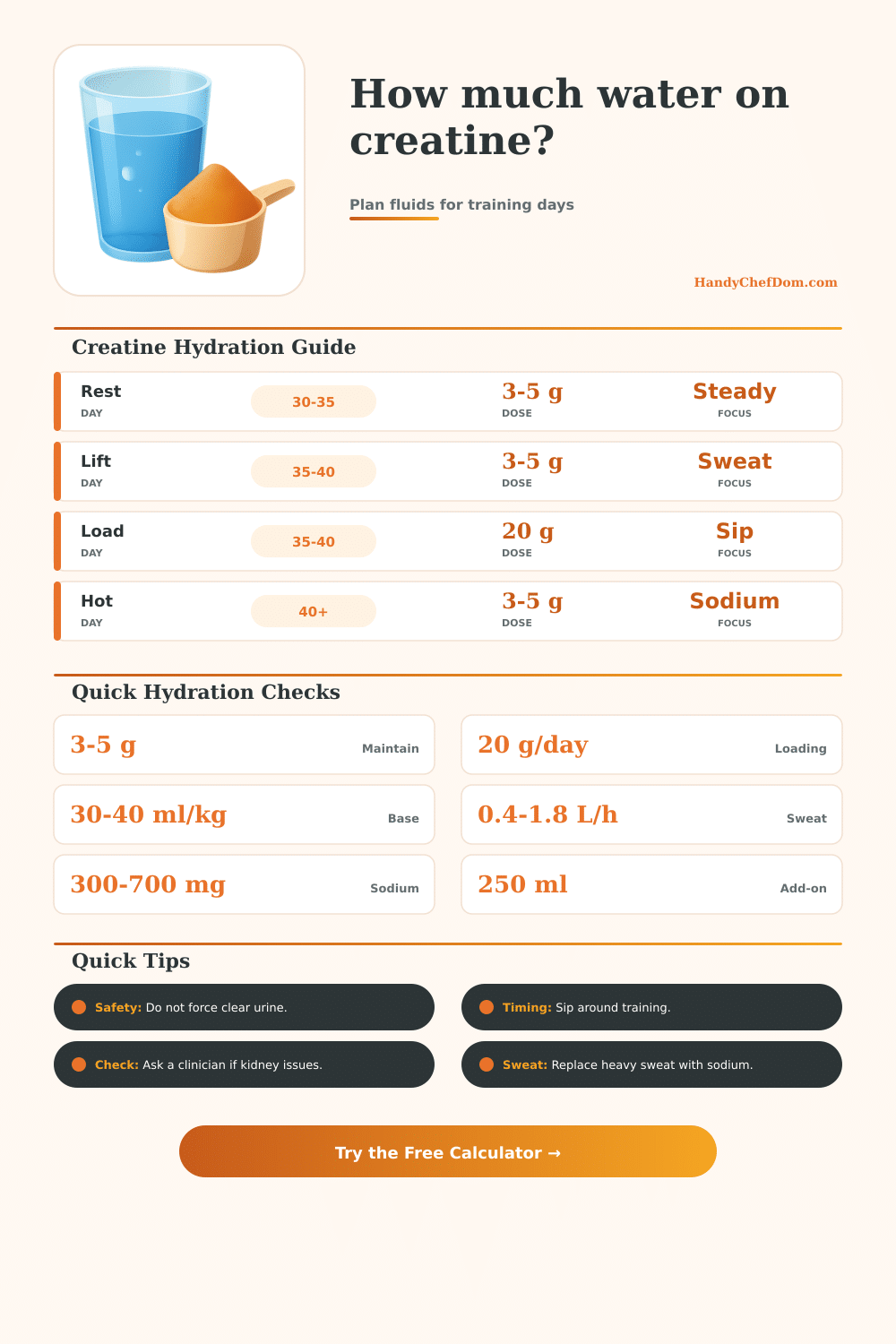
An individual can use their body weight to establish a baseline of their fluid needs. An active individual should take 30 to 40 milliliters of fluid per kilogram of body weight to satisfy the baseline fluid needs of that individual when that individual is not consuming additional water from creatine supplement. The calculator that is provided in this article use an individual’s weight and their level of activity to calculate how much fluid that they should consume daily to support their training.
Additionally, the calculator also allows for an individual to adjust the amount of fluid that they consume according to their climate; hot weather and high levels of humidity cause the body to lose fluid through breathing and sweating, so these percentage are included in the calculator. These small percentages are important to include in the calculation of an individual’s fluid needs, because these percentages are used to account for fluid loss during training sessions that last longer than one hour. An individual’s training length and their bodys rate of sweating during training sessions are two factor that the calculator considers.
An individual’s training length and their bodys rate of sweating are two factors that matter more then many individuals believe. For example, sixty minutes of weight training in the gym in the winter will result in an individual losing less than half a liter of fluid, but sixty minutes of weight training in the summer can result in an individual losing more than one and a half liter of fluid. Therefore, an individual must estimate the amount of fluid that they lose hourly while training, and the calculator also allow an individual to set a timing for how much fluid to consume during training.
Many individuals will not consume all of the fluid that they lose during training; drinking too much plain water can lead to low level of sodium in the blood. Therefore, the calculator displays the amount of sodium in the range of fluid that an individual should consume. An individual’s creatine dose is another variable that can be accounted for in the calculator.
The amount of creatine that an individual consume can impact the amount of water that they need to consume. When an individual is loading their creatine supplement, the calculator may suggest that an individual consumes an additional amount of fluid to account for the increased intake of creatine. However, with maintenance doses of creatine, the additional amount of fluid is small and may be only one extra glass of water per day.
Additionally, creatine should be taken with meals or mixed with a shake to ensure that the individual’s stomach does not become accustomed to taking creatine and fluid at the same time. Therefore, establishing a habit of taking creatine with meals is more important than increasing an individual’s daily intake of water. Another variable that the calculator suggest for an individual is their sodium intake during training.
An individual that does not tend to sweat much may only need 300 to 500 mg of sodium per liter of fluid consumed during training. An individual that tends to sweat alot and whose clothes are marked with salt after training may need 700 mg of sodium per liter. These amount are provided in the supplement calculator to allow an individual to determine whether or not they should consume plain water or an electrolyte drink that contains the sodium.
Additionally, an individual can adjust the amount of sodium to account for long training sessions; because an individual’s body may lose sodium through sweating during those sessions. Furthermore, individual sweat rates contain varying amounts of sodium and most individuals consumes enough sodium from the food that they eat daily. Many individuals make mistakes with their hydration plans.
For example, an individual may determine that they should consume a gallon of water each day based off information that they find on the internet. Yet, an individual may feel bloated after rest days or become dehydrated during intense training sessions. The calculator will prevent these mistake by showing how much fluid that an individual currently consumes each day compared to the amount that they should consume.
Small differences in fluid intake will require small adjustments in the amount of fluid that an individual drinks; large differences will allow an individual to drink more of the fluid over several training sessions. One of the most common mistakes that individuals make is in the difference between an individual’s baseline fluid and training fluid. An individual’s baseline fluid is the amount of water that an individual consumes to perform normal bodily functions.
However, an individual need to consume fluid to replace the amount of fluid that is lost through training. Many individuals lump these two type of fluid together. As a result, individuals drink too much fluid during easy training days and do not drink enough fluid during intense training days.
The supplement calculator maintains these two types of fluid visible to an individual so that they can maintain a practical hydration plan. An individual’s retention of fluid in the body can be impacted by a number of variables in the real world. For example, an individual’s travels, their illnesses or changes to their diets can have an impact on an individual’s retention of fluid.
One factor that can impact fluid retention is an individual’s carbohydrate intake; an individual that consumes little carbohydrate will lose fluid from the body as the body utilize glycogen stores for energy. Additionally, an individual that consumes little carbohydrate will find their scale reading drop even if they drink the same amount of water. Therefore, the supplement calculator provides a good starting point for an individual to consume fluid.
However, an individual can make adjustments to the amount of fluid that an individual consumes based upon their thirst level, the color of their urine and how they feel during the first twenty minutes of training. For instance, if an individual feels good after training and the amount of fluid that they lose during training is within one or two percent of their body weight, the amount of fluid that they consume daily is sufficient according to the supplement calculator. An individual should always consider the safety of their body if they are increasing their fluid consumption and creatine intake.
For example, an individual with kidney disease, an individual with heart conditions or an individual with any fluid limitation in their diet should consult with their physician prior to increasing their fluid intake. Additionally, if an individual feels any swelling, dizziness or unusual muscle cramp after changing both their creatine and fluid intake, they should seek medical guidance regarding their health. These conditions are rare, but they are more important than the calculations that are provided with the supplement calculator.
Finally, as discussed, the main goal for all of these calculations is to create habits that are easy for an individual to repeat each day. An individual simply need to input their body weight, the length of their training sessions and their rate of sweating into the calculator. The supplement calculator will output the amount of fluid that they should consume daily, the amount of fluid to consume during training and the sodium range that they should consume during training.
These variables can be tested over time, and an individual can make adjustments to the supplement and creatine plans that they create for themselves. Thus, the supplement calculator will help to turn the worry of an individual about how much fluid to drink into a routine that works for that individual.