🫘 Protein in Chickpeas Calculator
Estimate chickpea protein from canned, cooked, or dry chickpeas. Convert cups, grams, drained can weight, cooked yield, servings, hummus use, and target protein.
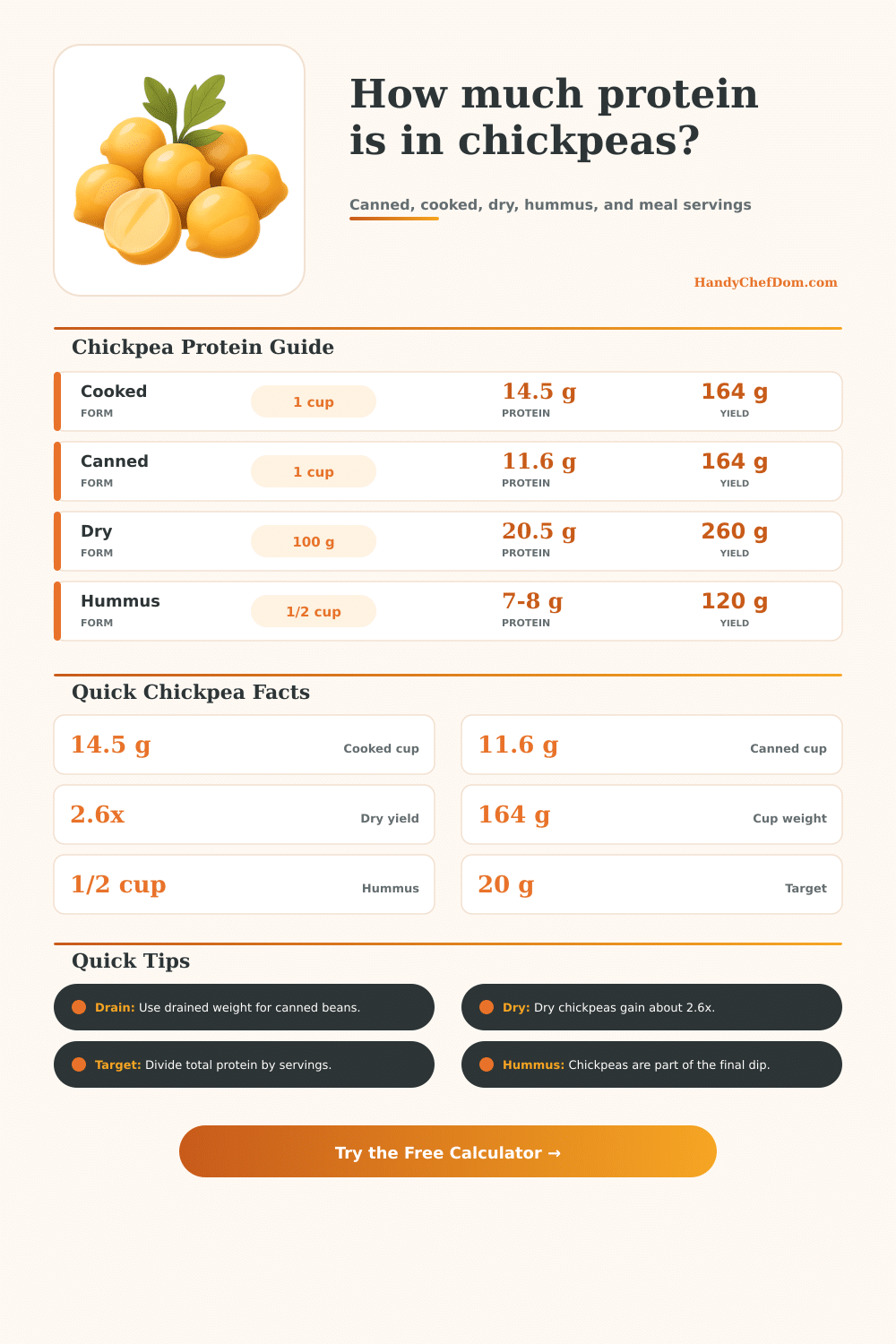
Use drained weight for canned chickpeas, cooked weight for ready chickpeas, or dry weight before soaking. Dry chickpea protein is preserved, while cooked yield estimates the ready-to-eat volume.
| Chickpea form | Typical measure | Protein | Best calculator input |
|---|---|---|---|
| Cooked chickpeas | 1 cup / 164 g | 14.5 g | Use cups or cooked grams |
| Canned, drained | 1 cup / 164 g | 11.6 g | Use drained cups, grams, or cans |
| Dry chickpeas | 100 g dry | 20.5 g | Use dry weight before cooking |
| Dry chickpeas | 1 cup / 200 g | 41.0 g | Use dry cups and yield multiplier |
| Hummus base | 1/2 cup finished dip | 7-8 g | Use hummus style and chickpea share |
| Conversion | Chickpea amount | Protein estimate | Yield note |
|---|---|---|---|
| 1/2 cup cooked | 82 g cooked | 7.3 g | Small side serving |
| 1 cup cooked | 164 g cooked | 14.5 g | Meal bowl serving |
| 15.5 oz can | About 270 g drained | 19.2 g | At 62% drained weight |
| 100 g dry | 260 g cooked | 20.5 g | At 2.6x cooked yield |
| 1 lb dry | About 1.18 kg cooked | 92.9 g | Big meal prep batch |
| Dry starting amount | Cooked yield at 2.4x | Cooked yield at 2.6x | Cooked cup estimate |
|---|---|---|---|
| 100 g dry | 240 g | 260 g | 1.6 cups |
| 200 g dry | 480 g | 520 g | 3.2 cups |
| 1 cup dry / 200 g | 480 g | 520 g | 3.2 cups |
| 1 lb dry / 454 g | 1089 g | 1180 g | 7.2 cups |
| 500 g dry | 1200 g | 1300 g | 7.9 cups |
| Use style | Common serving | Chickpea protein | Calculator note |
|---|---|---|---|
| Meal bowl or curry | 1 cup cooked | 14-15 g | Good for entree planning |
| Hummus or dip | 1/2 cup dip | 7-8 g | Depends on chickpea share |
| Salad topper | 1/3 cup cooked | 4-5 g | Use for lighter portions |
| Snack portion | 1/2 cup cooked | 7 g | Useful for roasted chickpeas |
| Buffet side | 2/3 cup cooked | 9-10 g | Add buffer for seconds |
Chickpeas are a source of proteins. The amount of protein that is contained within chickpeas can change base off the form in which the chickpeas are used; dry, canned, or cooked. If chickpeas are use in a recipe, the weight and volumes of the chickpeas will change based upon the fact that chickpeas will absorb water while they are being cook.
Dry chickpeas contain a highly concentration of protein due to the fact that they contain very little water. However, once the chickpeas are cooked, their volume will increase due to the water that the chickpeas have absorbed. Therefore, the amount of protein that is contained per gram of chickpea will decrease even though the total amount of protein contained within the chickpeas will remain the same.
How to measure protein in chickpeas
Canned chickpeas is different from dry chickpeas due to the fact that the chickpeas have already absorbed water while they were in the can. Therefore, when using canned chickpeas, the person must drain the liquid from the can before the chickpeas are weigh. If the liquid is not drain from the can, the weight of the water will be weighed along with the chickpeas, leading to an inaccurate measurement of the protein content of the chickpeas.
The protein calculator allow the user to input the form of chickpeas that is to be used in the recipe to ensure that the protein content is accurate for that specific recipe. The way that chickpeas are measured will also impact the amount of protein that is calculate from the chickpeas. A cup of dry chickpeas will weigh different than a cup of cooked chickpeas.
Additionally, the label that is included on the can of chickpeas will reveal the total contents of the can, which will include the liquid that is pour into the can. The drained weight of the chickpeas is what is to be weighed, however, therefore the chickpea protein calculator can be used to calculate the protein that is contained in the chickpeas once the liquid is drained from the can. One additional consideration in calculating the protein content of chickpeas is the number of serving of chickpeas that will be prepared.
It is possible that there will be enough chickpeas to feed a large group of individual, or it is also possible that there will only be enough chickpeas to feed one person. The calculator allows the user to divide the total amount of protein that is contained within all of the chickpeas by the number of servings of chickpeas that will be prepared. The resulting calculation will provide the amount of protein that will be contained in each serving of chickpeas.
This calculation is helpful to determine if the chickpeas contain enough protein to meet the protein requirement of the individuals that will eat the chickpeas, or if additional protein needs to be added to the dish. Hummus is a food that is made with chickpeas. However, hummus is not the same than chickpeas alone.
Hummus is made with chickpeas, tahini, oil, and lemon. Therefore, the protein content of hummus will be less than that of plain chickpeas because tahini, oil, and lemon is not chickpeas. However, by adjusting the ratio of chickpeas to hummus in the recipe, the amount of protein that will be contained in hummus can be made accuracy.
Some legume contain more protein than others. For instance, lentils and white beans contain more protein than chickpeas, while green peas contain less protein than chickpeas. While the protein content of legumes is vary by flavor and texture, it is also helpful to know the protein content of each type of legume.
For instance, if an individual is looking for a high-protein food that can be added to a meal, they may choose lentil-based upon the protein that it contains rather than the flavor of the legume. Additionally, they may also choose chickpeas over green peas due to the protein content of each legume. It is a common misconception that the protein content of chickpeas change when they are cooked.
However, the total amount of protein contained within chickpeas will not change when they are cooked, only the weight and the volume of the chickpeas will change. Therefore, it is necessary to ensure that the form of chickpeas is correctly enter into the protein calculator so that the calculation of the total protein content is correct. If the dry and cooked forms of chickpeas are not account for correctly, the total protein content of the meal will be calculated incorrectly.
It is also possible for the amount of liquid contained within canned chickpeas to differ from brand to brand. Some brands may contain more liquid than others. Additionally, the amount of water that dry chickpeas absorb can differ from brand to brand.
Therefore, the most accurate way to ensure that the chickpeas contain the amount of protein that is calculate by the protein calculator is to weigh the chickpeas. This will ensure that the amount of protein that is calculate for the meal is accurate. It is important for individuals to choose one method of measuring the chickpeas that will be used within a recipe.
For instance, if the chickpeas are to be measured in the number of cup of drained chickpeas, then the cooked setting on the calculator should be used. Additionally, if the chickpeas are to be weighed before they are cooked, the dry setting on the calculator can be used. By using one method of measuring the chickpeas, an individual can easily track the protein content of the chickpeas that are consume throughout the day.