🥩 Sausage Patty Protein Calculator
Estimate protein, calories, fat, sodium, cooked yield, and per-serving nutrition for pork, turkey, chicken, and breakfast sausage patties.
Enter patty weight, count, sausage style, cooked yield, and servings. Nutrition uses cooked-weight estimates and applies yield when the weight is entered raw.
| Patty Style | Protein / 100 g | Calories / 100 g | Fat / 100 g | Sodium / 100 g |
|---|---|---|---|---|
| Classic breakfast pork | 16 g | 320 cal | 28 g | 760 mg |
| Maple pork breakfast | 14 g | 300 cal | 24 g | 720 mg |
| Lean pork patty | 22 g | 260 cal | 18 g | 620 mg |
| Turkey breakfast patty | 24 g | 210 cal | 12 g | 670 mg |
| Chicken breakfast patty | 22 g | 190 cal | 10 g | 610 mg |
| Chicken apple patty | 19 g | 175 cal | 9 g | 560 mg |
| Beef and pork blend | 20 g | 290 cal | 23 g | 700 mg |
| Venison pork patty | 24 g | 230 cal | 14 g | 590 mg |
| Style | Typical Yield | 2 oz Raw Becomes | Protein After Yield | Best Fit |
|---|---|---|---|---|
| Classic pork | 80% | 1.6 oz | 7.3 g | Traditional breakfast |
| Maple pork | 82% | 1.64 oz | 6.5 g | Sweeter brunch plates |
| Lean pork | 80% | 1.6 oz | 10.0 g | Higher protein plates |
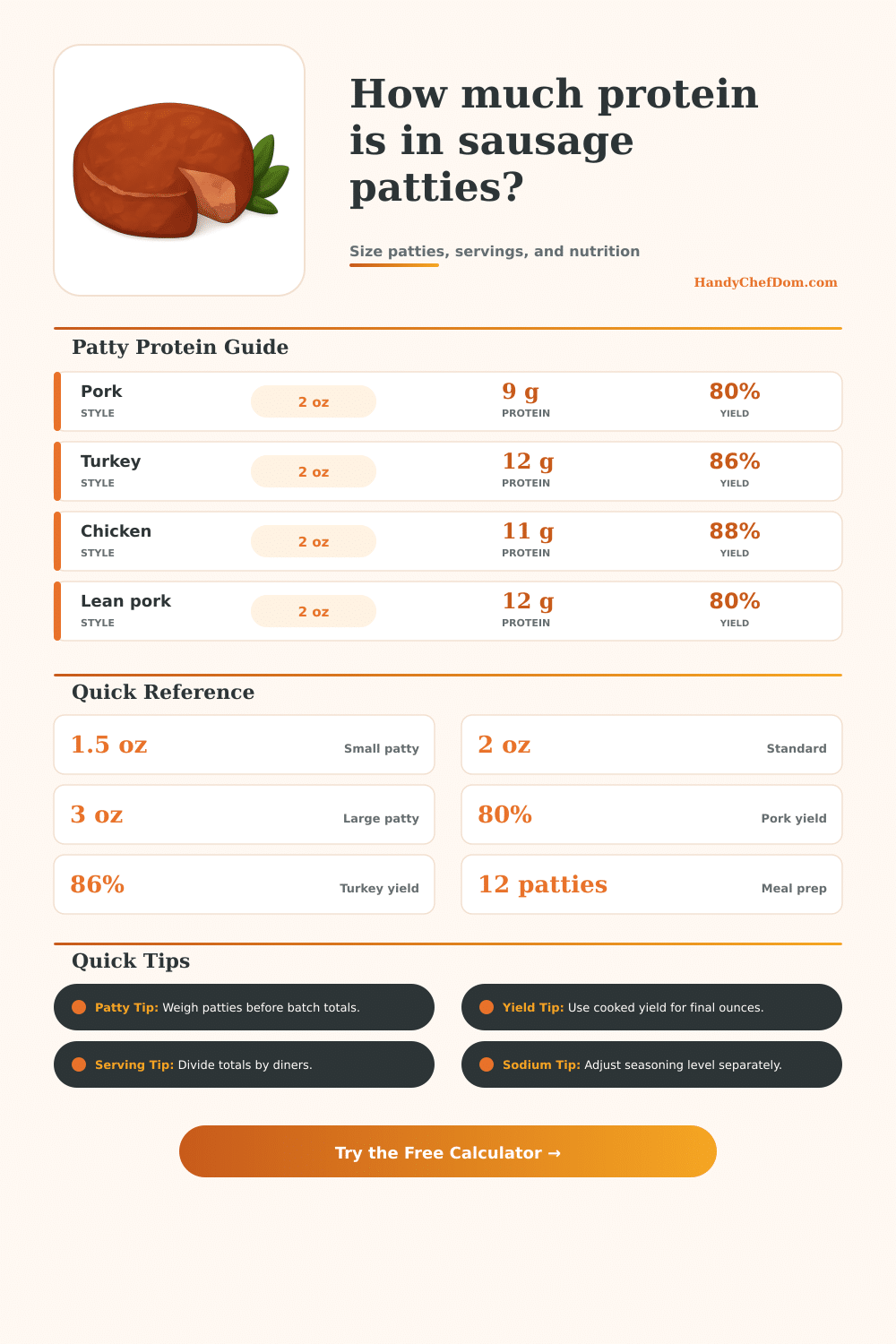
| Turkey | 86% | 1.72 oz | 11.7 g | Lean meal prep |
| Chicken | 88% | 1.76 oz | 11.0 g | Light breakfast bowls |
| Chicken apple | 88% | 1.76 oz | 9.5 g | Moderate sodium menus |
| Serving Plan | Patties | Servings | Patties Each | Notes |
|---|---|---|---|---|
| Breakfast for 4 | 8 | 4 | 2.0 | Classic plate count |
| Family tray | 12 | 6 | 2.0 | Even portions |
| Meal prep | 12 | 4 | 3.0 | Protein-forward boxes |
| Brunch board | 18 | 9 | 2.0 | Shared serving tray |
| Buffet tray | 30 | 15 | 2.0 | Easy tray math |
| Large patties | 6 | 6 | 1.0 | One main patty each |
| Cooked Patty Size | Classic Pork Protein | Turkey Protein | Chicken Protein | Lean Pork Protein |
|---|---|---|---|---|
| 1 oz cooked | 4.5 g | 6.8 g | 6.2 g | 6.2 g |
| 1.5 oz cooked | 6.8 g | 10.2 g | 9.4 g | 9.4 g |
| 2 oz cooked | 9.1 g | 13.6 g | 12.5 g | 12.5 g |
| 2.5 oz cooked | 11.3 g | 17.0 g | 15.6 g | 15.6 g |
| 3 oz cooked | 13.6 g | 20.4 g | 18.7 g | 18.7 g |
| 4 oz cooked | 18.1 g | 27.2 g | 24.9 g | 24.9 g |
These are sausage patties. A sausage patty is a pretty set breakfast item. You grab two from tray to go, but in the kitchen, raw weight fools us. Those discs appear large when you pull them from package. You feel good about that portion. This continues until you place them in the skillet. The heat hits meat, moisture vaporizes, fat renders out and then you watch patties shrink right before your eyes.
It’s this shrinkage that causes most of our nutritional planning failure; we plan for the weight we see in the bag and not the weight that ends up on the plate. Knowing your cooked yield will change everything about your approach to protein and fullness. Once you plug in your patty style and weight, this calculator do the math for you. It factors in both the difference between raw and cooked output, so there’s no fumbling with conversions and numbers.
How to Calculate Sausage Portions
Breakfast sausages tend to keep around eighty percent of their original weight during the cooking process. Doesn’t seem like a lot until you realize that that’s a loss of twenty percent of your total mass. So if you’re banking on those missing grams to meet your protein target, you’ll be coming up short unless you take that lost mass into consideration.
Patties made from turkey or chicken typically has a little more mass than traditional pork blend patties due to the lower fat content, which results in less liquid being evaporated from rendered oil. There’s also taste to consider, but style itself matters too. Pork is classic because of its rich, fatty texture; it absorbs the flavors of things like sage and maple excellenly, while staying heavy on your stomach. Chicken and turkey are much lower in fat. They have more protein per bite, but they lack that rich mouthfeel.
With this feature, you can toggle back-and-forth between styles to see change in macro profile. What you’ll find: changing from regular pork to lean turkey increases your protein intake while simultaneously decreasing fat and calorie intake. This is a question of efficiency versus satisfaction. Some meals make you crave that indulgent pork feeling. Other days, when preparing for meals ahead of time, you need something that keeps it light on the waistline.
Complicating this further is batch cooking, where each patty will be slightly different. Although they were all cooked together on one tray, there’s still some variation in thickness and distribution of fat. By weighing several patties pre-cook we get a good idea of their average size… Not what’s claimed on the package but what they actualy are like. Averages is used by the calculator, so give it the best real world data possible and you’ll see improvement. Cook one dozen burgers during the week? Know exactly how many grams/ounces a single one weighs when done? Now you can measure your portions instead of guessing, and that saves time.
What people often don’t consider in their math are sodium amounts; even though they’re neither calorically nor weight-related, they influence hydration and how full you feel. Salt tends to spike up in breakfast meats, so you might find yourself bloated instead of fueled-up come mid-morning. This is where tweaking your seasoning expectations comes into play. While some sausage companies opt for a light brine, others go all-in on savory flavors. Understanding your starting point allows you to balance the rest of the plate. If the sausage are salty, stick to simple eggs and side items.
So how do you calculate portion size? You take all those totals and divide them by how many servings you need. If it’s just yourself, then that is one serving. But what about a meal prep box for 10? A meal prep box for 10 is a whole other set of numbers, just like a brunch board for nine would of been. In that case, it becomes a brunch board for nine. And that will look dramatically different from an individual serving.
Everything is laid out in the reference table on the page. It shows how many patties turn into how many servings. It is one thing if there are two patty per person. What if there are three patties per person? That is entirely another level of nutrition for that meal. Scale accordingly based off your fridge vs a big party.
There’s never going to be an end to cooking sausage if there isn’t a commitment to manage expectations. That means accepting that your pre-cooked weight doesn’t exist anymore and being okay with how much you actualy get. Cook as needed; use the tool to connect everything from package to plate, then cook based off what you want instead of what you assume.
That sausage shrinking isn’t a flaw in the system. Meat does that when it’s under pressure.