🥧 Protein in Pecans Calculator
Convert pecan halves, pieces, chopped cups, ounces, grams, servings, and protein targets for snack bowls, baking add-ins, and topping plans.
Choose whether you already measured pecans or want the calculator to find the amount needed for a protein goal. Cup weights change by halves, pieces, and chopped form.
| Pecan Form | Approx Cup Weight | Protein Per Cup | Best Calculator Use |
|---|---|---|---|
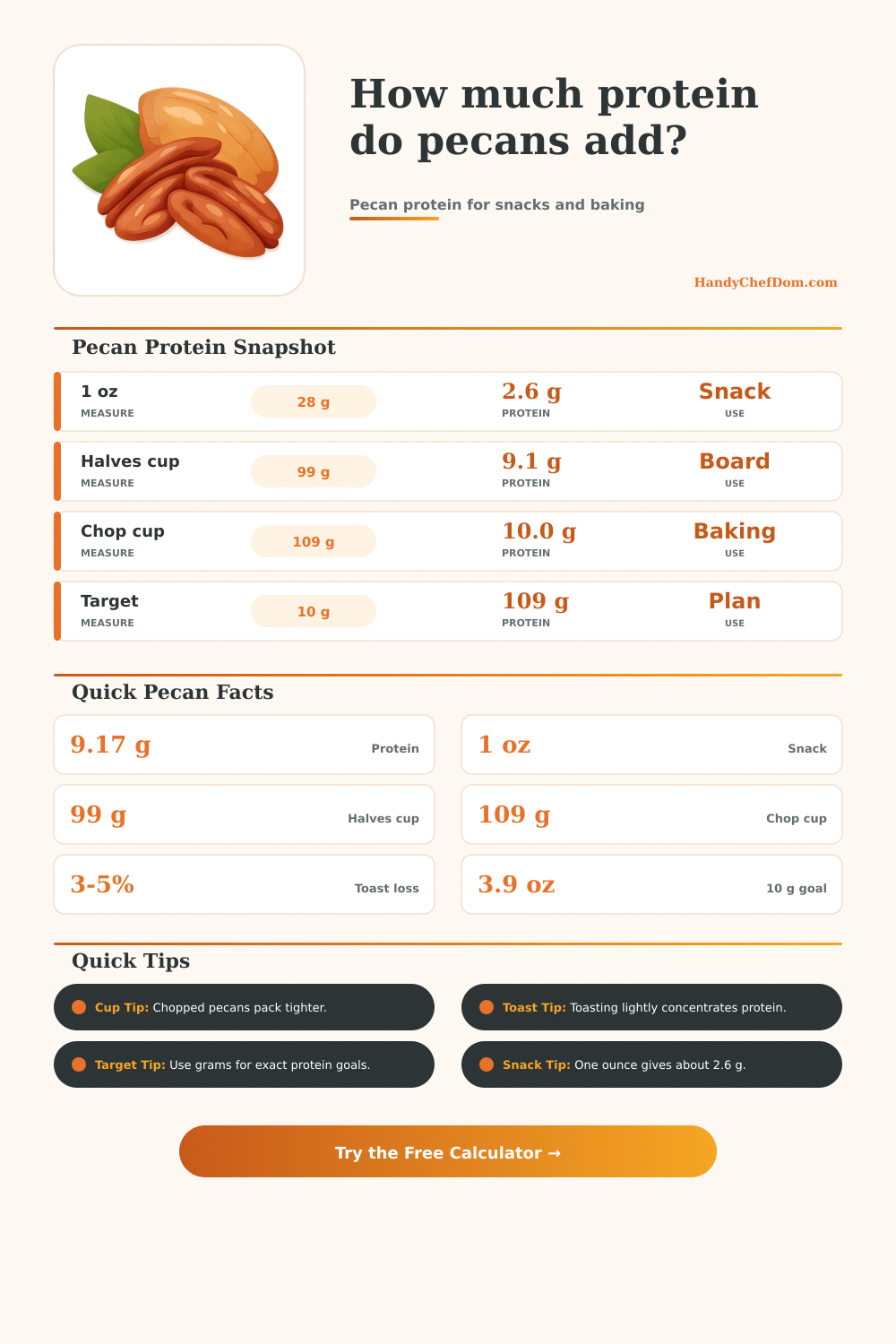
| Large pecan halves | 99 g per cup | 9.1 g protein | Snack boards and measured bowls |
| Pecan pieces | 105 g per cup | 9.6 g protein | Trail mix and topping scoops |
| Coarsely chopped pecans | 109 g per cup | 10.0 g protein | Batter fold-ins and cookie batches |
| Finely chopped pecans | 120 g per cup | 11.0 g protein | Dense toppings and pressed bases |
| Ground pecan meal | 92 g per cup | 8.4 g protein | Crumb blends and flour-style mixes |
| Small baking bits | 115 g per cup | 10.5 g protein | Muffins, bars, and granola clusters |
| Measure | Raw Weight | Protein Estimate | Serving Note |
|---|---|---|---|
| 1 ounce pecans | 28.35 g | 2.6 g protein | Common snack portion |
| 1/4 cup halves | 24.8 g | 2.3 g protein | Small topping or lunch pack |
| 1/2 cup halves | 49.5 g | 4.5 g protein | Large snack bowl for sharing |
| 1 cup chopped | 109 g | 10.0 g protein | Baking add-in calculation |
| 100 grams pecans | 100 g | 9.17 g protein | Metric nutrition baseline |
| 10 g protein target | 109 g raw | 10.0 g protein | About 3.9 ounces of pecans |
| Preparation | Protein Basis | Weight Adjustment | When To Choose |
|---|---|---|---|
| Raw pecans | 9.17 g per 100 g | No moisture loss applied | Bagged pecans, snack packs, raw baking prep |
| Lightly toasted | About 9.55 g per 100 g | Typical 4% weight loss | Toasted toppings and finished snack mixes |
| Level cup | Base cup weight | 1.00x cup density | Standard cup conversions |
| Rounded cup | More pecans per scoop | 1.08x cup density | Loose scoops that mound above rim |
| Packed cup | Dense baking scoop | 1.15x cup density | Finely chopped or pressed nut mixtures |
| Use Case | Typical Pecan Amount | Protein Added | Planning Hint |
|---|---|---|---|
| Snack bowl | 1 oz per person | 2.6 g each | Use servings to split a measured bag |
| Salad crunch | 10 g per person | 0.9 g each | Small amounts add texture more than protein |
| Baking fold-in | 1 cup chopped | 10.0 g batch | Divide by slices for per-serving protein |
| Granola mix | 1/2 cup pieces | 4.8 g batch | Count the whole mix batch first |
| Dessert board | 20 g per person | 1.8 g each | Use halves for easy portion counting |
| Pressed crust | 30 g per serving | 2.8 g each | Fine chop packs more weight per cup |
Pecans is a food item that many people use in there kitchen. Many people use pecans in salad or in baked goods. However, pecans do not contain as much protein as many other type of nuts.
Due to the fact that pecans do not contain as much protein as other nuts, a person who rely upon pecans as their primary protein source may not be obtaining the amount of protein that their body require. Thus, it is important for individual to understand the protein content of pecans, whether their body requires a high amount of protein from food item, or if they are creating snacks that they would like to contain pecans but which must also contain the amount of protein that the body requires to function normal. The protein calculator that is available on this page will allow individuals to calculate the amount of protein that are contained within pecans.
How Much Protein in Pecans
The user must first select the form of the pecans that is to be utilized. For instance, the calculator may be used to determine the amount of protein contained within pecan half, pecan pieces, or pecans that are finely chop. A cup of pecan halves will contain more air within the pecans than a cup of finely chopped pecans.
Thus, the weight of the pecan halves will be different than the weight of the chopped pecans. As such, the amount of protein within a cup of pecan halves will be different from the amount of protein that is contained within a cup of chopped pecans. Additionally, youll also need to indicate whether the pecans that are to be utilized are raw or toasted.
Toasting pecans remove some of the moisture from the pecans. Thus, the protein content is slightly higher for pecans that have been toasted compared to raw pecans. Pecans naturally contain less protein than other nut.
One ounce of pecans will contain the same amount of protein as a few bite of cheese. Due to the fact that pecans contain less protein than other nuts, people often use pecans for flavor and texture rather than as a source of protein for the body. The calculator will allow an individual to determine the number of pecans that are require to obtain the amount of protein that they require.
This information can be used to either add more pecans to a meal, or to decide what other food item containing more protein can be added to the meal that also contains pecans. Thus, the calculator will help to avoid adding pecans to a meal that an individual feel will not provide enough protein to the body to perform normal task and functions. The portion size of pecans can impact the amount of protein that an individual receive from those pecans.
One ounce of pecans is considered to be a serving size for individuals who use pecans as a snack food. However, if an ounce of pecans is incorporated into a salad, an individual will receive less than one ounce of pecans with each bite of the salad. If the ounce of pecans is to be divided into several serving, the amount of protein that is provided within each serving will be less than the total amount of protein within the ounce of pecans.
The calculator allows for the number of servings to be selected so that the protein content of each serving can be determined. This information may be utilized in the preparation of meals to ensure that each container of food contains the same amount of protein. The way that the pecans are packed into the measuring tool will impact their weight.
For instance, a cup of pecans that are rounded the top contains more pecans than a level cup. Additionally, a cup of pecans that are packed tightly together will weigh more than a cup of pecans that are not packed tightly together. These difference can impact the amount of pecans that are utilized in a recipe that utilize volume measurements of pecans compared to those that utilize weight measurements of the pecans.
Thus, the calculator help to ensure that individuals dont have to guess at the weight of the pecans. Many environmental factor will impact the behavior of pecans when they are being utilized in the kitchen. For instance, chopped pecans may naturally clump together due to the humidity in the kitchen in which the pecans are prepared.
Thus, the amount of pecans that can fit into a measuring cup may change if the pecans clump together. The length of time that the pecans are stored will impact the freshness of the pecans but will not impact their protein content. Additionally, toasting pecans for too long may result in bitterness to the pecans but will not impact the amount of protein that the pecans contain.
However, knowing the baseline number of gram of protein that pecans contain will allow an individual to adjust the recipe in which those pecans are used, despite these potential environmental variables. The best way to utilize pecans is as part of an overall nutritional plan. Knowing the amount of protein that pecans contain allows an individual to determine whether pecans should be the primary protein source within a snack, or if another ingredient should be added to the snack to ensure that it contains enough protein to fulfill the bodys requirement.
Thus, utilizing pecans for their flavor and texture only, while utilizing foods with proteins as the primary source of protein in the snack, allows individuals to simultaneously satisfy their taste bud and their bodies’ need for adequate protein.