🍚 Water for Pearl Couscous Calculator
Calculate the right water or broth for pearl couscous by dry cups, grams, servings, cooking method, texture, pot width, add-ins, and resting time.
Pearl couscous absorbs differently from tiny Moroccan couscous. This calculator starts with dry cup and gram equivalents, then adjusts liquid for method, texture, evaporation, pot diameter, rest time, broth substitution, and add-in moisture.
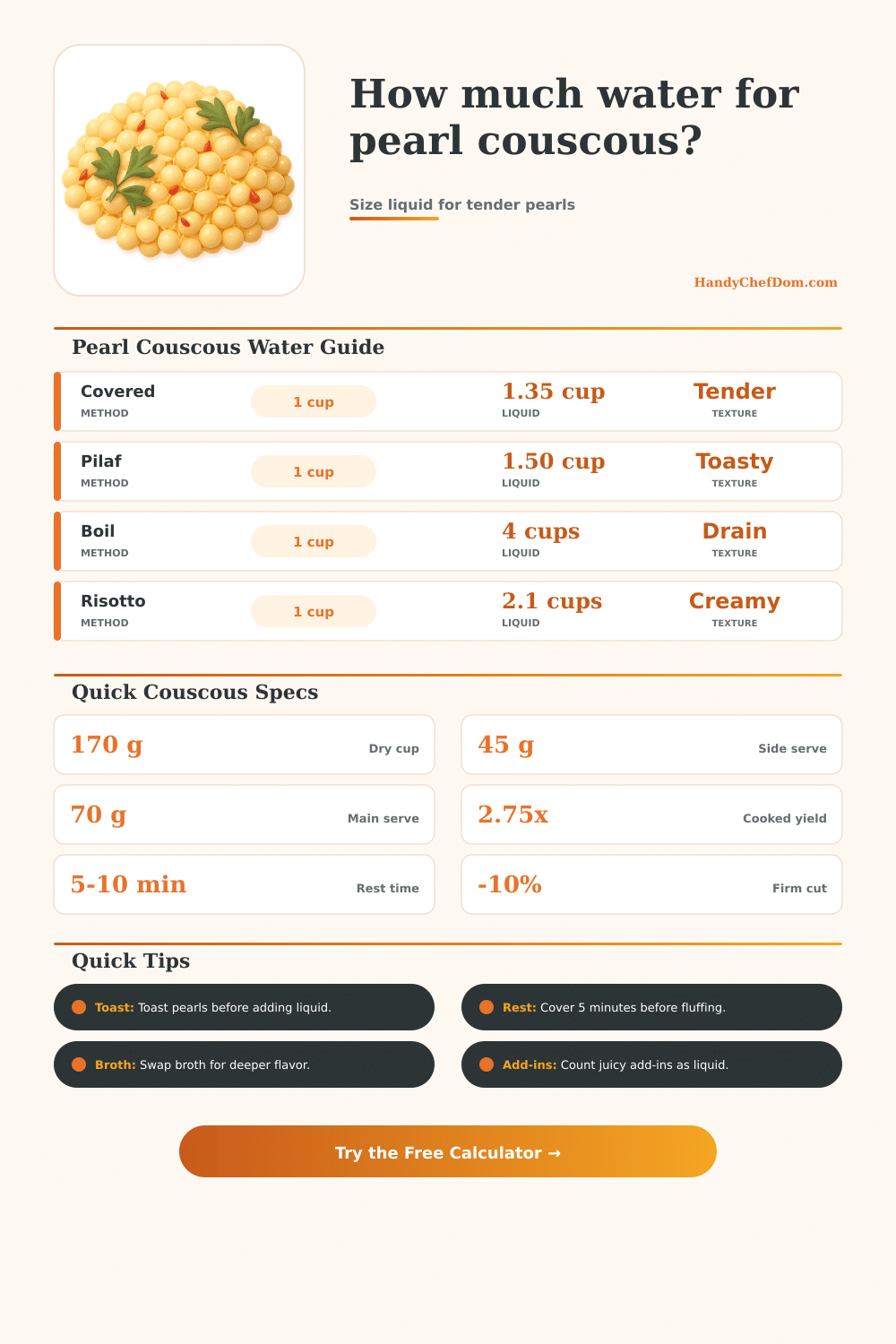
| Cooking Method | Starting Liquid | Best Texture | Calculator Note |
|---|---|---|---|
| Covered absorption saucepan | 1.25 cups per dry cup | Tender and fluffy | Add a small evaporation buffer for pot width. |
| Toasted pilaf, covered finish | 1.35 cups per dry cup | Toasty and separate | Toast first, then simmer with a lid. |
| Uncovered simmer and stir | 1.55 cups per dry cup | Soft and loose | More liquid is needed because steam escapes. |
| Boil like pasta, then drain | 4 cups per dry cup | Separate salad pearls | Most liquid is drained, not absorbed. |
| Risotto-style gradual ladles | 2.05 cups per dry cup | Creamy finish | Liquid is added in stages and reduced. |
| Rice cooker or multicooker | 1.32 cups per dry cup | Even batch | Lower evaporation means less extra liquid. |
| Dry Pearl Couscous | Approx Grams | Cooked Yield | Side Servings |
|---|---|---|---|
| 1/2 cup | 85 g | 1.4 cups | 2 small sides |
| 1 cup | 170 g | 2.75 cups | 3 to 4 sides |
| 1 1/2 cups | 255 g | 4.1 cups | 5 to 6 sides |
| 2 cups | 340 g | 5.5 cups | 7 to 8 sides |
| 3 cups | 510 g | 8.25 cups | 11 sides |
| 4 cups | 680 g | 11 cups | 15 sides |
| Texture Target | Liquid Change | Rest Time | Use Case |
|---|---|---|---|
| Firm and separate | Reduce about 10% | 3 to 5 minutes | Chilled salads and grain bowls. |
| Tender and fluffy | Baseline | 5 to 8 minutes | Weeknight side dishes. |
| Soft and plump | Add about 12% | 8 to 10 minutes | Warm bowls and saucy plates. |
| Loose brothy finish | Add about 35% | 2 to 4 minutes | Spoonable couscous with extra broth. |
| Pot Setup | Evaporation Pattern | Calculator Effect | Best Match |
|---|---|---|---|
| 8 to 9 inch saucepan | Moderate surface area | Baseline adjustment | 1 to 2 cups dry pearls. |
| Wide 11 inch skillet | Faster evaporation | Adds a liquid buffer | Pilaf or one-pot vegetables. |
| Tight lid | Steam stays trapped | Reduces evaporation buffer | Absorption cooking. |
| Vented lid | Steam escapes slowly | Adds a small buffer | Frequent stirring or saucy batches. |
| No lid | Fastest evaporation | Adds the largest buffer | Uncovered simmering. |
With pearl couscous, the bigger sort. How you get your water is less obvious; unlike its small Moroccan cousin, these little pearls require constant hydration but not too much evaporation on top (otherwise they turn into glue). A measured rest after heat turns them out, rewarding patience in other ways. It all depends on the amount you cook, the add-ins, and even which pan you use that evening.
First: Your cooking method matter for the initial amount of water/liter used. If using absorption cooking, the covered vessel retains most of that steam, and the starting ratio is small. If instead you use an open skillet or stir frequently, you’re losing more moisture to the air. That means you need noticeably more liquid to reach the tender point with the same cup of dry pearls. Substituting broth doesn’t alter the overall volume, but it does change the flavor depth without changing the final amount of water absorbed by the pearls.
How to Get the Right Amount of Water
Texture preference also matter. For a chilled salad with firm, separate pearls, you’d use less liquid and cook it for a shorter time. For warm bowls where you want a plumper, softer result, you’d add a bit more liquid and let it sit covered long enough for steam to finish the work.
Once you’ve selected your targets, the calculator up top does the math for you. It eliminates the guessing game around how much water evaporates in a certain time frame, or how much pot width will affect your efforts. But that’s not all: Add-ins also complicate the situation, as certain components will contribute water of their own.
Roasted peppers and juicy tomatoes give up liquid when stirred in with the rest of dish, so factor that addition into the starting water amount. Cheese adds none; neither do dry nuts. That keeps it nearer to the starting point.
The same applies to serving size. If you’re making a lighter side portion, there’s much less dry stuff per-person compared to if this is the main attraction, with the couscous at its center. Set your number of servings and the water adjust along with it.
Wider is not always better when it comes to pans; larger diameters also mean more surface area for moisture to evaporate. The same dish will behave in different ways if you grab a wide skillet instead of a narrow saucepan. The latter holds steam more effectively. Likewise with resting time: letting the covered dish sit an additional minute or two allows the remaining warmth to level out moisture, as opposed to introducing more.
Common mistakes usually come from treating pearl couscous like fine couscous. This leads to using too much grain relative to its small size or submerging it too deeply. Other mistakes happen when people treat it like pasta by boiling it in water and draining the liquid, which makes it under-seasoned. The solution: You should of not make those errors before you even start. Use the proper amount of liquid for the desired texture and technique.
But when the bowl hits the table, and you start to fluff those pearls, that’s when the real pay-off happens. You see it in the even bite. The broth clings without pooling. The consistent yield matches what you planned on having for dinner. That consistency turns another variable into just another thing you set and forget.
Actually, with pearl couscous, the bigger sort. How you get your water is less obvious; unlike its small Moroccan cousin, these little pearls require constant hydration but not too much evaporation on top (otherwise they turn into glue). A measured rest after heat turns them out, rewarding patience in other ways. It all depends on the amount you cook, the add-ins, and even which pan you use that evening.
First: Your cooking method matter for the initial amount of water/liter used. If using absorption cooking, the covered vessel retains most of that steam, and the starting ratio is small. If instead you use an open skillet or stir frequently, you’re losing more moisture to the air. That means you need noticeably more liquid to reach the tender point with the same cup of dry pearls. Substituting broth doesn’t alter the overall volume, but it does change the flavor depth without changing the final amount of water absorbed by the pearls.
Texture preference also matter. For a chilled salad with firm, separate pearls, you’d use less liquid and cook it for a shorter time. For warm bowls where you want a plumper, softer result, you’d add a bit more liquid and let it sit covered long enough for steam to finish the work.
Once you’ve selected your targets, the calculator up top does the math for you. It eliminates the guessing game around how much water evaporates in a certain time frame, or how much pot width will affect your efforts. But that’s not all: Add-ins also complicate the situation, as certain components will contribute water of their own.
Roasted peppers and juicyly tomatoes give up liquid when stirred in with the rest of dish, so factor that addition into the starting water amount. Cheese adds none; neither do dry nuts. That keeps it nearer to the starting point.
The same applies to serving size. If you’re making a lighter side portion, there’s much less dry stuff per-person compared to if this is the main attraction, with the couscous at its center. Set your number of servings and the water adjust along with it.
Wider is not always better when it comes to pans; larger diameters also mean more surface area for moisture to evaporate. The same dish will behave in different ways if you grab a wide skillet instead of a narrow saucepan… The latter holds steam more effectively. Likewise with resting time: letting the covered dish sit an additional minute or two allows the remaining warmth to level out moisture, as opposed to introducing more.
Common mistakes usually come from treating pearl couscous like fine couscous. This leads to using too much grain relative to its small size or submerging it too deeply. Other mistakes happen when people treat it like pasta by boiling it in water and draining the liquid, which makes it under-seasoned. The solution: You should of not make those errors before you even start. Use the proper amount of liquid for the desired texture and technique.
But when the bowl hits the table, and you start to fluff those pearls, that’s when the real pay-off happens. You see it in the even bite. The broth clings without pooling. The consistent yield matches what you planned on having for dinner. That consistency turns another variable into just another thing you set and forget.