🍝 Breadcrumbs for Meatballs Calculator
Size dry crumbs, panko, fresh bread, or panade for meatballs using meat weight, binder style, egg, tenderness, simmer time, and batch buffer.
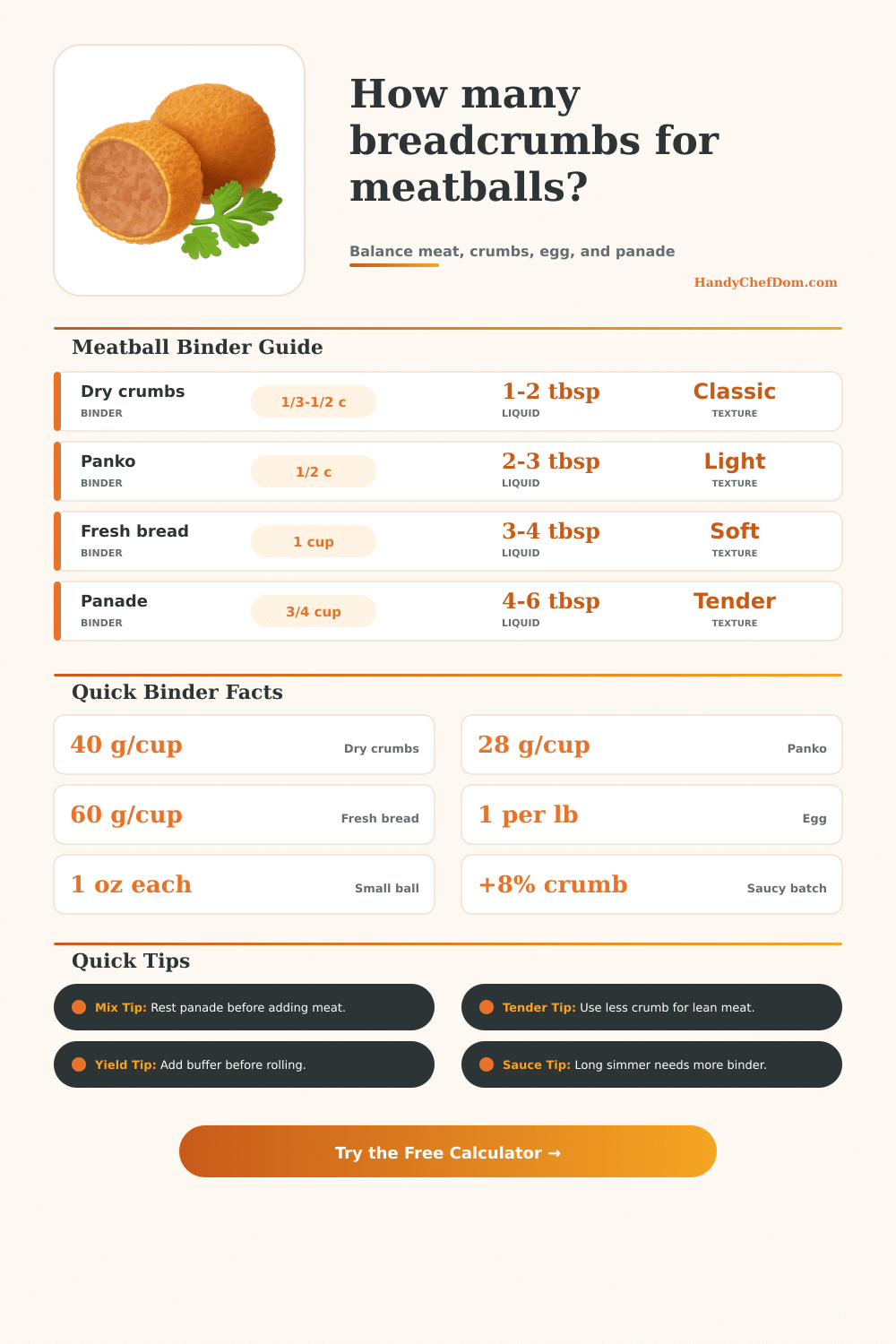
Enter meat by weight or target meatball count. The calculator uses culinary binder ratios: dry crumbs about 1/3 to 1/2 cup per pound, panko lighter, and fresh bread about 1 cup per pound.
| Binder Style | Base Cup Per lb | Liquid Per lb | Best Texture |
|---|---|---|---|
| Dry seasoned breadcrumbs | 0.42 cup | 1 to 2 tbsp | Classic meatball structure for baking or light simmering. |
| Fine dry breadcrumbs | 0.36 cup | 1 to 2 tbsp | Firm, tidy mix when crumbs absorb quickly. |
| Panko crumbs | 0.50 cup | 2 to 3 tbsp | Lighter bite because flakes weigh less per cup. |
| Fresh bread crumbs | 1.00 cup | 3 to 4 tbsp | Soft home-style meatballs with a plush center. |
| Milk panade | 0.70 cup | 4 to 6 tbsp | Tender meatballs that stay moist in sauce. |
| Broth panade | 0.65 cup | 4 to 5 tbsp | Savory binder for lean beef, turkey, or chicken. |
| Gluten-free dry crumbs | 0.45 cup | 2 to 3 tbsp | Needs a short rest so crumbs hydrate evenly. |
| Crumb Type | Approx g Per Cup | Absorption | Calculator Use |
|---|---|---|---|
| Seasoned dry crumbs | 45 g | Medium | Default Italian-style meatballs. |
| Fine dry crumbs | 50 g | High | Use less volume for a denser binder. |
| Panko | 28 g | Low to medium | More cups, fewer grams, lighter texture. |
| Fresh bread crumbs | 60 g | Medium | Higher cup volume because bread is fluffy. |
| Milk panade crumbs | 45 g | High after soak | Counts liquid separately for tenderness. |
| Broth panade crumbs | 45 g | High after soak | Good when dairy is not wanted. |
| Gluten-free crumbs | 55 g | Variable | Add liquid slowly and rest the mix. |
| Meatball Size | Raw Weight Each | Yield Per lb Meat | Common Use |
|---|---|---|---|
| Mini appetizer | 0.5 oz | 32 meatballs | Skewers, soups, tasting trays. |
| Small sauced | 1 oz | 16 meatballs | Buffet trays and sauce simmering. |
| Classic dinner | 1.5 oz | 10 to 11 meatballs | Spaghetti bowls and family dinners. |
| Large spaghetti | 2 oz | 8 meatballs | Plated dinners with fewer pieces. |
| Jumbo stuffed | 3 oz | 5 meatballs | Large centerpiece meatballs. |
| Meat Type | Crumb Adjustment | Liquid Adjustment | Binder Note |
|---|---|---|---|
| 80/20 ground beef | Baseline | Baseline | Fat helps tenderness, so moderate crumb works well. |
| 90/10 lean beef | -5% | +15% | Use less dry crumb and more liquid to avoid firmness. |
| Pork and beef blend | +5% | Baseline | Juicy blend can hold a bit more crumb. |
| Ground turkey | -8% | +20% | Lean poultry benefits from a softer panade. |
| Ground chicken | -10% | +25% | Delicate texture needs gentle binder and hydration. |
| Ground lamb | +3% | Baseline | Rich meat carries herbs and crumbs easily. |
| Veal, pork, and beef mix | Baseline | +5% | Classic tender blend works with panade. |
| Plant-style ground | -15% | -10% | Many blends already contain binders. |
Meatballs will stay together during a cooking process due to the binder that is used in the meat mixture. The binder will prevent the meatballs from collapsing when they is placed into a pan or sauce pot. Breadcrumbs are one of most common binders for meatballs, and breadcrumbs serves several important functions for meatballs.
Breadcrumbs help to retain moisture within the meatballs, and the breadcrumbs also work to soften the texture of the meatballs while they are cooking. If breadcrumbs are not used in the proper amount within the meat mixture, or if the wrong type of binder are used, the meatballs may fail to set appropriately and may be too tight to enjoy eating. The type of meat that the cook uses in the meatballs will impact the amount of breadcrumbs that is required to be included in the meat mixture.
How Breadcrumbs and Eggs Help Meatballs Stay Together
For example, if the cook use beef that is high in fat, fewer breadcrumbs are required. The fat in the meat will moisten the meatballs, much like breadcrumbs will. However, if lean meats, like turkey, is used in the meatballs, the meat will dry out more quickly during the cooking process.
In this case, the cook will need to add more liquid to the lean meats so that they remains moist during the cooking process. In the case of the use of panade (breadcrumbs and milk), the panade will absorb the milk before being add into the meat mixture. Allowing the panade to rest will allow the breadcrumbs to fully swell when cooked.
If the breadcrumbs are not allowed to swell, the meatballs may become rubbery when simmered in the sauce for extended period of time. The size of the meatballs will impact the amount of moisture that the meatballs will retain. Small meatballs will lose moisture at a faster rate then large meatballs.
Therefore, more breadcrumbs will be required within small meatballs to allow the small meatballs to retain their moisture. Additionally, the longer that meatballs are simmered in the sauce, the more moisture that the meatballs will lose. Therefore, if simmering meatballs for sixty minutes, more binder will be required than if simmering the meatballs for only twenty minute.
Another ingredient that can be included in meatballs are eggs. Eggs contain protein that will help the meatballs to set while they are cooking. However, care should be used in the amount of eggs that are used in the meat mixture.
Too many eggs may result in the meatballs being too tight. One egg can be used for every pound of meat that is to be used in the meat mixture. However, the cook can adjust the amount of egg prior to cooking the meatballs.
If the meat mixture is too firm, a tablespoon of liquid can be added to the meat mixture. If the mixture is too loose, the meatballs can be allowed to rest for five minutes so that the breadcrumbs will absorb some of the liquid from the meat mixture. There are different types of breadcrumbs that can be used in the meatballs.
Dry seasoned breadcrumbs are often used in recipes for beef meatballs. Panko breadcrumbs is lighter and often used to allow for more volume to be added to the meatballs. Fresh breadcrumbs contain more moisture than dry breadcrumbs, so more liquid will need to be added to the meat mixture if fresh breadcrumbs are used.
In the case of plant-based meat products, the ingredient already contains some type of binder. In this case, fewer breadcrumbs should be added to the meat mixture. Common mistakes with meatballs include the addition of breadcrumbs in the same amount for each pound of meat that is used.
This is an error in the preparation of meatballs, because the fat content and the cooking times for the meatballs will impact the amount of breadcrumbs that is required. Another common mistake is to skip the resting period for the panade. If the panade is skipped, the breadcrumbs will not have time to swell.
These dry pockets will pull moisture away from the meatballs. These meatballs will be tight when cooked instead of juicy. In order to successfully prepare meatballs, the type of meat that will be used, the size of the meatballs, the cooking time of the meatballs in the sauce, and the desired tenderness of the cooked meatballs should be decided upon.
Based off these variables, the ratio of breadcrumbs and liquid can be determined. Finally, the cook should check the meat mixture by hand prior to beginning to roll the meatballs. This will allow for the cook to determine if more liquid should of been added to the mixture or if the mixture is ready to be roll into balls of meat.