🍜 Miso Paste In Miso Soup Calculator
Calculate tablespoons, grams, sodium per serving, and broth-to-paste ratio from broth volume, servings, miso type, dashi strength, add-ins, and taste level.
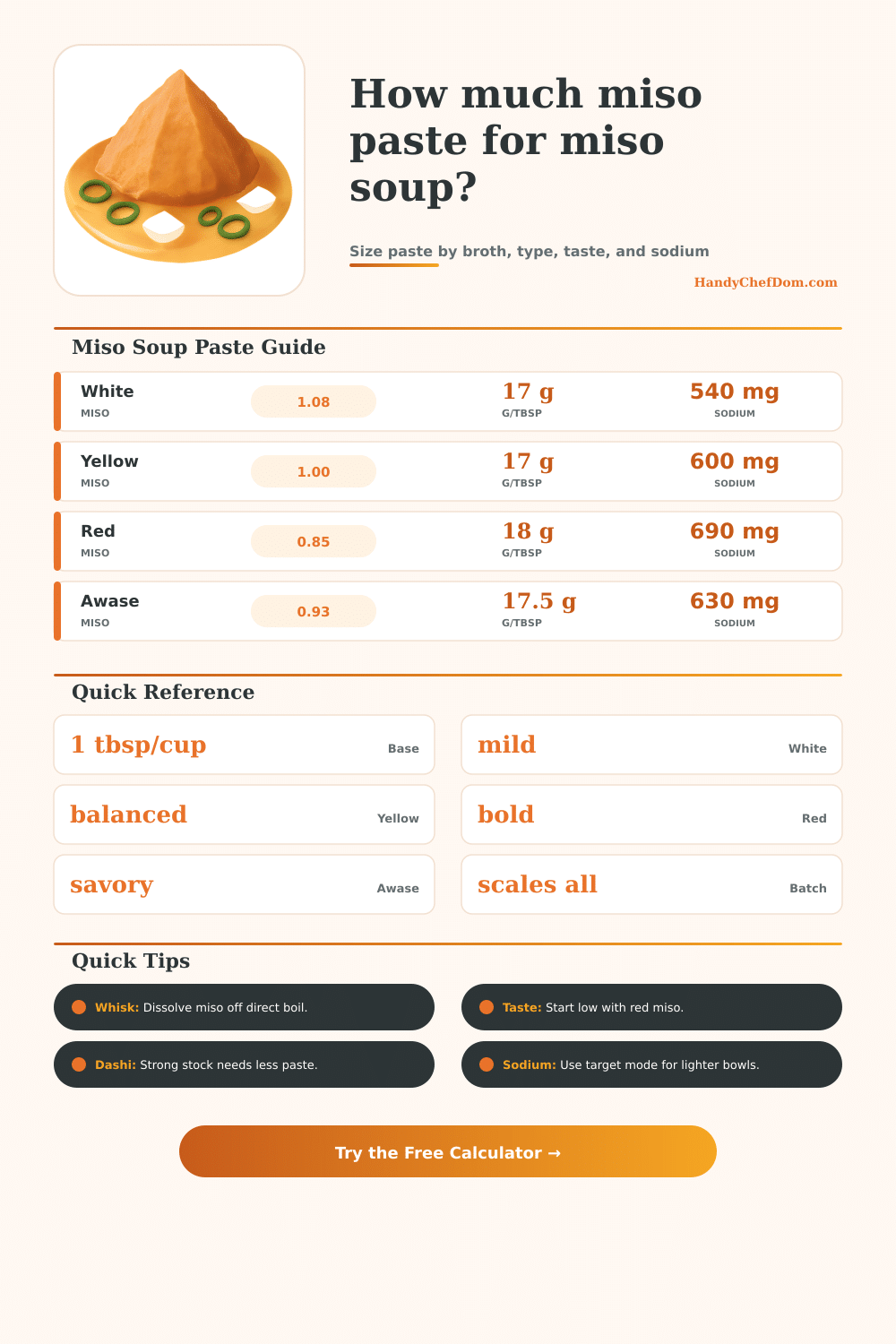
A standard miso soup starting point is about 1 tablespoon miso paste per cup of dashi. This calculator adjusts that baseline for paste style, saltiness, dashi strength, add-ins, taste level, batch size, and an optional sodium target.
| Miso Type | Flavor Profile | Calculator Factor | Starting Amount |
|---|---|---|---|
| White miso | Mild, sweet, gentle, lighter color | 1.08x | About 1.08 tbsp per cup dashi |
| Yellow miso | Balanced, savory, everyday soup style | 1.00x | About 1 tbsp per cup dashi |
| Red miso | Deep, aged, salty, bold aroma | 0.85x | About 0.85 tbsp per cup dashi |
| Awase miso | Mixed miso with rounded savory depth | 0.93x | About 0.93 tbsp per cup dashi |
| Paste Measure | White Miso | Yellow Miso | Red or Awase Miso |
|---|---|---|---|
| 1 teaspoon | 5.7 g | 5.7 g | 5.8 to 6 g |
| 1 tablespoon | 17 g | 17 g | 17.5 to 18 g |
| 2 tablespoons | 34 g | 34 g | 35 to 36 g |
| 1/4 cup | 68 g | 68 g | 70 to 72 g |
| 1/2 cup | 136 g | 136 g | 140 to 144 g |
| Soup Strength | Taste Level | Typical Ratio | Best Match |
|---|---|---|---|
| Gentle breakfast bowl | 0.75x | About 1.3 cups broth per tbsp | White miso, light dashi, small bowls. |
| Balanced standard soup | 1.00x | About 1 cup broth per tbsp | Yellow or awase miso for everyday meals. |
| Rich restaurant-style bowl | 1.20x | About 0.8 cup broth per tbsp | Tofu, wakame, mushrooms, and richer dashi. |
| Bold miso-forward soup | 1.35x | About 0.7 cup broth per tbsp | Robust red miso or hearty add-in bowls. |
| Sodium Range | Per Tablespoon | Per 1-Cup Bowl | Calculator Handling |
|---|---|---|---|
| Lower sodium paste | 420 to 520 mg | About 400 to 550 mg | Uses more paste for flavor but less sodium per spoon. |
| Standard white miso | 500 to 590 mg | About 500 to 650 mg | Good for mild soup when sodium target is moderate. |
| Yellow or awase miso | 580 to 660 mg | About 600 to 750 mg | Balanced default for most home miso soup. |
| Red or aged miso | 650 to 780 mg | About 650 to 850 mg | Uses less paste because flavor and salt are stronger. |
When measuring an miso paste to add to the soup, the amount of the miso paste will determine the flavors of the soup. If you use too little of the miso paste, the broth will lack flavorully. Using too much of the miso paste will make the soup more salty.
Many people tries to guess the amount of the miso paste to add to the soup. Using a calculator to determine the amount of the miso paste to add to the soup will be helpful to remove the guesswork from teh recipe. Since miso paste are not one single ingredient, you must account for the different type of the miso paste.
How to Measure Miso Paste for Soup
White miso paste is light in color and slightly sweet in flavor so you will need a larger volume of the white miso paste than the other styles. Red miso paste is dark in color and salty in flavor so using the same volume of the red miso paste that the cook uses for white will make the soup too saltiness. Yellow miso paste and mixed awase miso paste falls somewhere in between white and red miso paste in flavor and salt level.
The calculator will adjust for these difference in the styles of the miso paste. The type of dashi that you use will impact the amount of the miso paste that should be used in the soup. Using a light dashi will allow the miso paste to flavor the broth but using a concentrated dashi will allow the dashi to have an impactful flavor for the miso paste.
Additionally, the solid ingredient that will be used in the soup will also impact the volume of the soup. The solid ingredients will not contribute much salt to the broth but will take up the volume in the soup. The calculator will factor these solid ingredients into the calculation of the amount of the miso paste that should be add to the broth.
Your preference in the flavor of the soup will have an impact on the amount of the miso paste to be used. For example, you may prefer a light flavor for your breakfast soup but you may want a strong flavor for your dinner soup. Additionally, if you are concerned with the amount of sodium in your diet, you can limit the amount of the miso paste according to your sodium target in the calculator so that you dont exceed your sodium limit.
Tables of the different types of the miso paste include the weight of the miso paste and the sodium content of each type of the miso paste. These tables is helpful to understand the weight of each type of the miso paste since a tablespoon of white miso paste may not weigh the same than a tablespoon of red miso paste. The tables also help to compare different brand of the miso paste since different brands may have different weight of the miso paste in a tablespoon.
The tables explain the reason for the different amount of the miso paste that are recommended with each style of the miso paste and provide context to the recommendation of the calculator. When adding the miso paste to the soup, do not add the paste directly to the boiling broth as this will create lumps in the broth due to the boiling of the broth. Instead, ladle a small amount of the hot broth into a separate bowl, add the miso paste to the broth and whisk until smooth.
Once you whisk the miso paste into the broth, stir the miso paste into the soup. When preparing a large batch of soup, you must also calculate the amount of the miso paste that should be added. Simply doubling the amount of the miso paste that is recommended for a small batch of soup will not necessarily work when preparing a large batch of soup.
The multiplier field allow you to adjust for a different batch size and the calculation will adjust the amount of the miso paste accordingly. Additionally, different rounding options allow you to input the amount of the miso paste that you would like to measure in quarter tablespoon instead of decimals. This calculator allows you to manage the relationship between the different variables in relation to the amount of the miso paste to be added to the soup.
You input each of the variables and the calculator output the amount of the miso paste to be used. While using the calculator will ensure that the ratio of the ingredients of the soup (dashi and miso paste) is maintained, you must still taste the soup to ensure that the flavor is to you liking.