🍝 Sauce Per Lb of Pasta Calculator
Calculate sauce cups, ounces, milliliters, per-serving amount, reserved pasta water, and jar or can equivalents for each pound of dry pasta.
Enter dry pasta by pounds and ounces. The calculator starts with common per-pound sauce ranges, then adjusts for pasta shape, sauciness, thickness, add-ins, reserved pasta water, and planned leftovers.
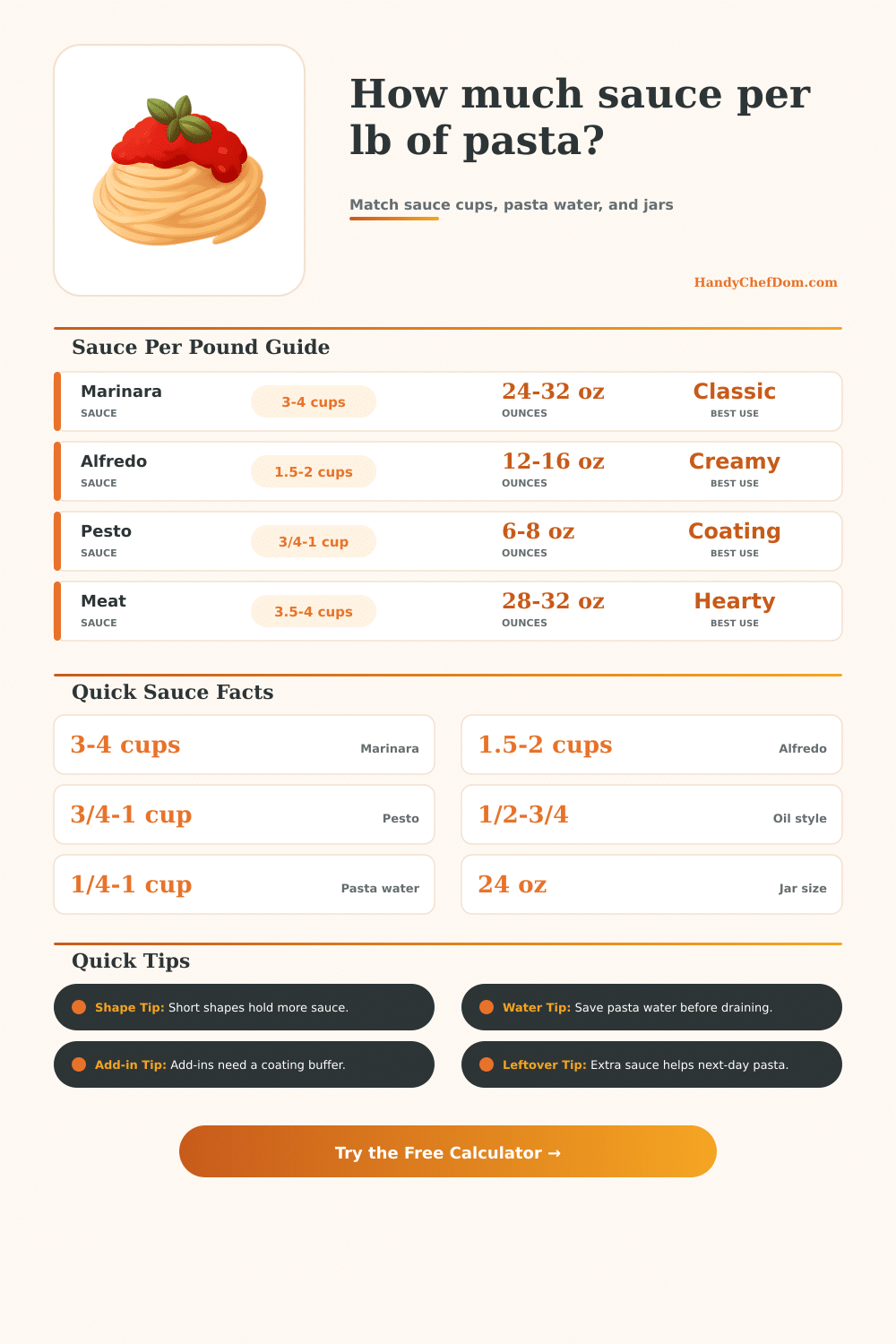
| Sauce Type | Starting Amount for 1 Lb Dry Pasta | Ounce and Ml Equivalent | Jar or Can Planning Note |
|---|---|---|---|
| Marinara or tomato sauce | 3 to 4 cups, with 3.5 cups as a balanced target | 24 to 32 fl oz, about 710 to 950 ml | One 24 oz jar is light; add extra for saucy portions. |
| Alfredo or cream sauce | 1.5 to 2 cups because cream coats more densely | 12 to 16 fl oz, about 355 to 475 ml | A 15 oz jar usually covers 1 lb when balanced. |
| Pesto | 3/4 to 1 cup before pasta water is folded in | 6 to 8 fl oz, about 175 to 235 ml | A small 6.5 to 8 oz tub often covers 1 lb. |
| Meat sauce or ragu | 3.5 to 4 cups because chunks need coating sauce | 28 to 32 fl oz, about 830 to 950 ml | Plan more than one 24 oz jar if adding meat. |
| Olive oil, garlic, or aglio e olio | 1/2 to 3/4 cup oil-style base plus pasta water | 4 to 6 fl oz, about 120 to 175 ml | Use bottle ounces; the pasta water does the emulsifying. |
| Pasta Shape | Sauce Hold Factor | Why It Changes Sauce | Best Sauce Match |
|---|---|---|---|
| Spaghetti or bucatini | 1.00x | Long strands take a standard coating. | Tomato, oil, meat sauce, or pesto. |
| Linguine or fettuccine | 1.03x | Wide ribbons expose more surface area. | Cream, pesto, seafood, or oil sauce. |
| Angel hair or capellini | 0.92x | Thin strands overload quickly. | Light tomato, oil, or delicate pesto. |
| Penne or ziti | 1.10x | Tubes trap sauce inside each piece. | Tomato, Alfredo, or baked pasta sauce. |
| Rigatoni or paccheri | 1.18x | Large ridged tubes need more coverage. | Meat sauce, chunky tomato, or baked pasta. |
| Fusilli, rotini, or cavatappi | 1.15x | Spirals hold sauce in curves. | Pesto, tomato, cream, or cold pasta salads. |
| Farfalle or bow ties | 1.08x | Centers stay thicker and need coating. | Cream, tomato, or vegetable sauces. |
| Shells or orecchiette | 1.20x | Cupped shapes catch the most sauce. | Chunky sauce, meat sauce, or baked dishes. |
| Serving Size Plan | Dry Pasta Per Person | Sauce Per Person | Planning Use |
|---|---|---|---|
| Light side serving | 2 oz dry pasta | About 1/3 to 1/2 cup tomato sauce | Useful when pasta is one of several sides. |
| Standard dinner serving | 3 to 4 oz dry pasta | About 2/3 to 1 cup tomato sauce | Works for most weeknight pasta bowls. |
| Hearty main serving | 4 to 5 oz dry pasta | About 1 to 1 1/4 cups tomato sauce | Better for large appetites or simple meals. |
| Buffet or party tray | 2.5 to 3 oz dry pasta | Keep 10 to 15% sauce in reserve | Useful when pasta sits before serving. |
| Meal prep leftovers | 3 to 4 oz dry pasta | Add 15 to 25% extra sauce | Prevents dry pasta after chilling and reheating. |
| Sauce Thickness | Calculator Factor | Pasta Water Direction | When to Use It |
|---|---|---|---|
| Thin or loose sauce | 0.92x sauce volume | Use less pasta water at the finish. | Fresh tomato sauce, brothy clam sauce, or watery pan sauces. |
| Standard spoonable sauce | 1.00x sauce volume | Use the default pasta water amount. | Most jarred tomato, cream, pesto, and meat sauces. |
| Thick reduced sauce | 1.08x sauce volume | Reserve more water to loosen the coating. | Long-simmered tomato sauce, thick Alfredo, or reduced ragu. |
| Chunky sauce with texture | 1.14x sauce volume | Stir in water slowly so chunks stay coated. | Vegetable sauce, meat sauce, mushroom sauce, and baked pasta. |
To determine the proper sauce-to-pasta ratio for you pasta dish, you must understand how pasta and sauce interacts with one another during and after the pasta is cooked. When you cook pasta, one pound of dry pasta will expand in volume. However, the surface areas of the pasta will not increase at the same rate as the pastas increased volume.
Because the pastas surface area is limited, the amount of sauce use to cook the pasta should be sufficient to cover the pasta’s surface area. Using too little sauce will result in the pasta being dry. Using too much sauce will make the pasta dish more liquidy for a sauce-based pasta dish and more soup-like.
How Much Sauce to Use for Pasta
The shape of the pasta will impact the amount of sauce that the pasta can hold. Pasta that features long strands, such as spaghetti, will only require a certin amount of sauce to ensure that the pasta strand are coated. However, the sauce will adhere to pasta that features tube or ridges, such as penne or shells.
These shapes will hold the sauce inside they tubes. As a result, these pasta shapes will require more sauce by volume than the long-shaped pasta. A sauce to pasta calculator can determine the exact amount of sauce that will be needed for the pasta dish based off these different pasta shapes.
The style of sauce will change the amount of sauce that is needed for cook the pasta. Tomato sauce will spread easy on the pasta, so an increased volume of sauce will be required. Cream sauces will coat the pasta more dense, so less sauce will be required compared to a tomato sauce.
Pesto sauce is more concentrated than other sauces; however, the pesto will be thin with pasta water prior to cooking the pasta. Meat sauces will contain solid chunks of meat that will require an extra volume of liquid to ensure the meat is coat in sauce. Additionally, the thickness of the sauce will impact the amount of sauce that will adhere to the pasta.
Thin sauces will have a low viscosity, which will allow the sauce to adhere less to the pasta than thick sauces. Thick sauces will contain a high viscosity that will allow the sauce to adhere more to the pasta. In the instance that a cook use a thick sauce, pasta water will need to be added to the sauce to even out the consistency of the sauce.
Additionally, ingredients like vegetable or protein will change the sauce requirements. Vegetables like mushrooms or sausage will absorb the sauce that is cooked with the pasta; therefore, an extra buffer of sauce will be needed for the pasta to remain saucy when serve. Pasta water is the liquid used to cook the pasta to allow the sauce to adhere to the pasta.
The starch in the pasta water allow the sauce to adhere to the pasta and enables the chef to adjust the consistency of the sauce while preserving the flavor of the sauce. Most sauce styles will require at least a quarter cup of pasta water be added to each pound of cooked pasta. Cream and oil based sauces will require half a cup of pasta water or more to achieve the desired thickness of the sauce.
Additionally, the amount of sauce that will be required for the pasta should be considered in the planning of the pasta dish if the pasta dishes will be prepared as leftover. Cooked pasta will absorb the sauce that is cooked with the pasta as the pasta cools. If the sauce-to-pasta ratio is not planned for this water absorption, the pasta will become dry with the leftovers of the pasta dish.
To prevent the pasta from becoming dry as the leftovers sit, an extra buffer of sauce will be prepare during the cooking of the pasta. The reference tables included in the article will illustrate the different amounts of sauce that will be required for different pasta shapes, sauce thicknesses, and the plans for the serving of the pasta dishes. These tables will allow the chef or home cook to quickly determine the amount of sauce that should be prepared for the pasta based on the number of individual that will be served.
The pasta shape, sauce style, sauce thickness, and the plans for the leftover pasta should be chose before the pasta is cooked. By choosing these variables, enough sauce can be prepared to ensure the pasta is balanced and moist throughout the day.