🌿 Pine Nuts For Pesto Calculator
Calculate pine nut cups, grams, olive oil, parmesan, and pesto yield from packed basil, target cups, pasta pounds, servings, intensity, and nut substitutions.
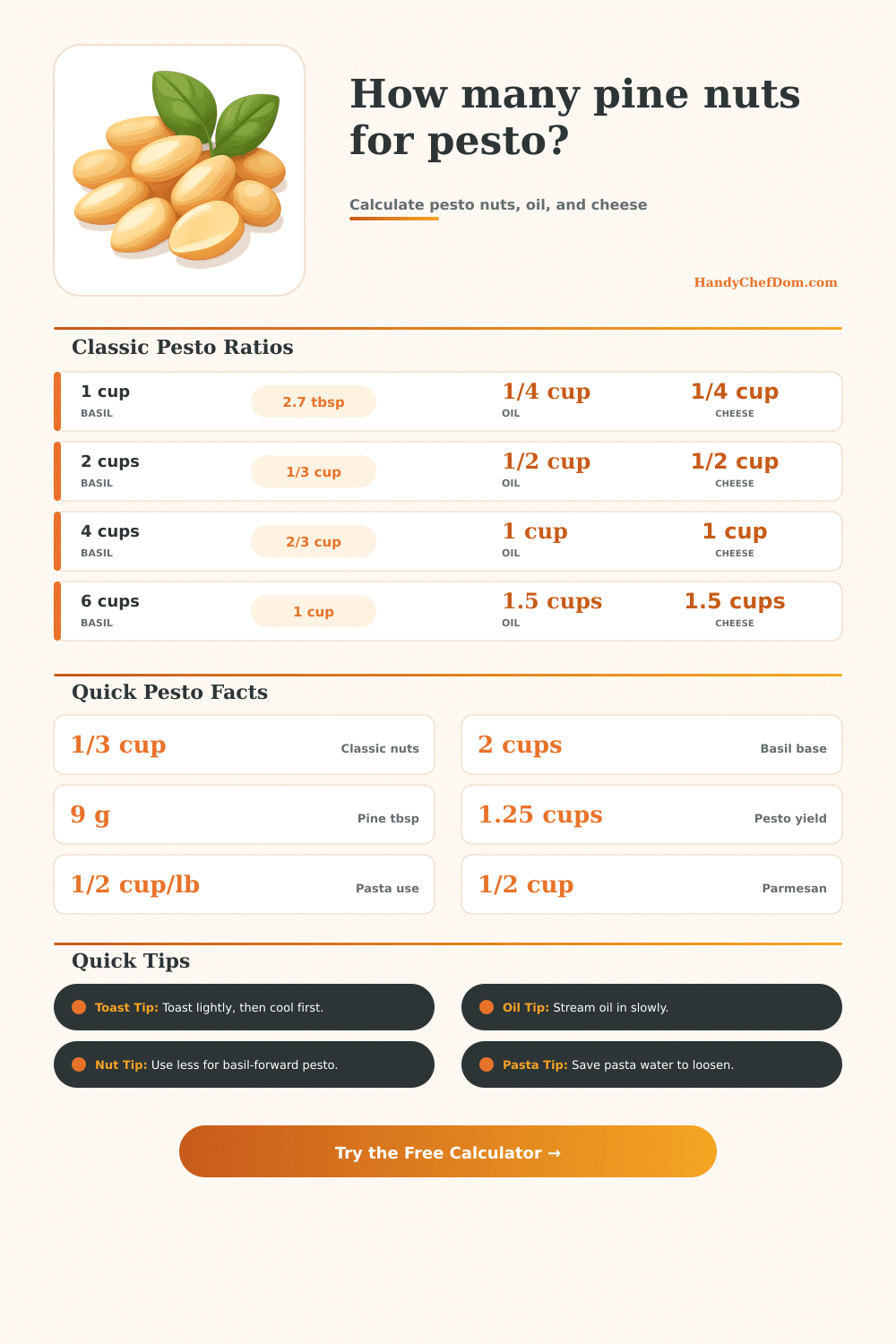
Classic basil pesto often starts with about 1/3 cup pine nuts for every 2 packed cups of basil. This calculator scales that ratio, then adjusts for target yield, nut intensity, oil, cheese, pasta use, and substitute nuts.
| Pesto Ratio | Packed Basil | Pine Nuts | Oil and Cheese Start |
|---|---|---|---|
| Small garnish batch | 1 packed cup, about 25 g | 2.7 tablespoons, about 23 to 25 g | 1/4 cup oil and 1/4 cup parmesan |
| Classic batch | 2 packed cups, about 50 g | 1/3 cup pine nuts, about 45 to 50 g | 1/2 cup oil and 1/2 cup parmesan |
| Double batch | 4 packed cups, about 100 g | 2/3 cup pine nuts, about 90 to 100 g | 1 cup oil and 1 cup parmesan |
| Party batch | 6 packed cups, about 150 g | 1 cup pine nuts, about 135 to 150 g | 1 1/2 cups oil and 1 1/2 cups parmesan |
| Nut or Seed | Approx Weight per 1/3 Cup | Texture | Calculator Factor |
|---|---|---|---|
| Pine nuts | 45 to 50 g | Soft, buttery, classic | 1.00x baseline |
| Walnuts | 35 to 40 g | Earthy, slightly coarse | 0.95x for balance |
| Almonds | 45 to 50 g | Firm, mild, dense | 1.05x for body |
| Cashews | 45 to 50 g | Creamy, sweet, heavy | 0.90x to avoid weight |
| Pistachios | 40 to 45 g | Green, sweet, rich | 0.95x for color and flavor |
| Sunflower seeds | 45 to 50 g | Seeded, savory, firm | 1.05x for structure |
| Pasta Amount | Light Coating | Classic Coating | Generous Coating |
|---|---|---|---|
| 1/2 pound pasta | 1/4 cup pesto | 1/3 cup pesto | 1/2 cup pesto |
| 1 pound pasta | 1/2 cup pesto | 2/3 cup pesto | 3/4 to 1 cup pesto |
| 2 pounds pasta | 1 cup pesto | 1 1/3 cups pesto | 1 1/2 to 2 cups pesto |
| 3 pounds pasta | 1 1/2 cups pesto | 2 cups pesto | 2 1/4 to 3 cups pesto |
| Substitution | Flavor Direction | Best Adjustment | Use Note |
|---|---|---|---|
| Pine nuts | Classic, buttery, rounded | Use the calculated amount | Best for traditional basil pesto balance |
| Walnuts | Earthy and slightly tannic | Use 5 percent less or add extra oil | Pairs well with stronger cheese |
| Almonds | Mild, clean, and firm | Use 5 percent more and blend longer | Good for thicker spreads |
| Cashews | Sweet, creamy, and heavy | Use 10 percent less and loosen with oil | Good for smooth sauces and dips |
| Pistachios | Green, sweet, and rich | Use 5 percent less for balance | Works well when color matters |
| Sunflower seeds | Savory, seeded, and firm | Use 5 percent more for body | Useful when avoiding tree nuts |
Making pesto require a specific balance between amount of basil and the amount of nut. The amount of basil and the amount of nut that are use will determine the flavor of the pesto that result. If there is too little of the nut used in the pesto, the pesto will taste thin.
However, if there are too many nut used in the pesto, the pesto will taste heavy of the same flavor than nut butter. Using basil in pesto can be difficult due to the way that the cook packs the basil into a cup. A cup of basil can be packed loosely or tight with basil leaves.
How to balance basil, nuts and oil for pesto
Using grams instead of cup to measure basil for pesto allow for more accuracy in the amount of basil that are used in the pesto. By weighing the basil, the ingredient calculation can provide more accurate measurement of nuts that should of be added to the pesto. Oil and cheese are other two ingredients that should be consider when making pesto.
Oil can impact the texture of the pesto, as well as the flavor of the pesto. Additionally, cheese add salt to the pesto, as well as flavor. The amount of oil can be adjusted according to how you would like to use the pesto.
For instance, if the cook is to use the pesto as an sandwich spread, there will be less oil than if the pesto was to be used on pasta. The calculator provide an adjustment in oil according to the way that the pesto is to be used. In addition to nuts, oil, and cheese, the type of nut can also change the flavor and texture of the pesto.
Walnuts has an earthy flavor to them, but tend to oxidize quick after they are made into pesto. Additionally, almonds are considered to have a milder flavor than pine nut, but require more of them to be use in the pesto to achieve the same flavor as pine nuts. Cashews has a sweet flavor, but can make the pesto heavy if the cook uses the same amount of cashews as pine nuts.
The calculator use a multiplier for these different types of nut to allow for the pesto to still taste the same as if pine nuts were use. The way that the nut are prepared change the flavor and texture of the pesto. For instance, toasting nuts will create a different flavor to the nut than if they were not toasted.
Additionally, the weight of the nut will decrease if they are toasted, due to the loss in moisture. Other preparations of the nut changes the texture of the pesto. If the cook chop nuts coarsely, they will remain visible in the pesto.
However, if the nuts are ground into a fine powder, the pesto will have a thicker texture. These preparation method will alter the texture of the pesto and the way it coat the pasta. The amount of pasta that will be cooked will impact the amount of pesto that is need.
A larger amount of pasta will require more pesto to be thrown on the pasta than a smaller amount of pasta. Additionally, the cooks of the pesto can chose the amount of pesto that will be use on the pasta. The pasta-pounds input on the calculator will allow the cook to determine the amount of batch of pesto that will be made.
Many people make mistake when preparing pesto. For instance, one of the most common mistake is in the measurement of the basil. Using too much or too little basil will impact the flavor of the pesto.
Additionally, some people will forget to taste the pesto while adding oil, which can make the pesto too thick or too thin. However, if people taste the pesto after all of the ingredient have been combined, people can ensure that the flavor is balance. One method for cooking pesto is to make the pesto slightly thicker than necessary.
If the pesto is too thick, water or oil can be added to the pesto before it is serve. This method ensure that the texture of the pesto is maintain and the flavor is strong and concentrated. By understanding each of these ingredient and their impact on the pesto, the calculator will allow the cooks to prepare the pesto and recieve the same result every time.