🥣 Dashi for Miso Soup Calculator
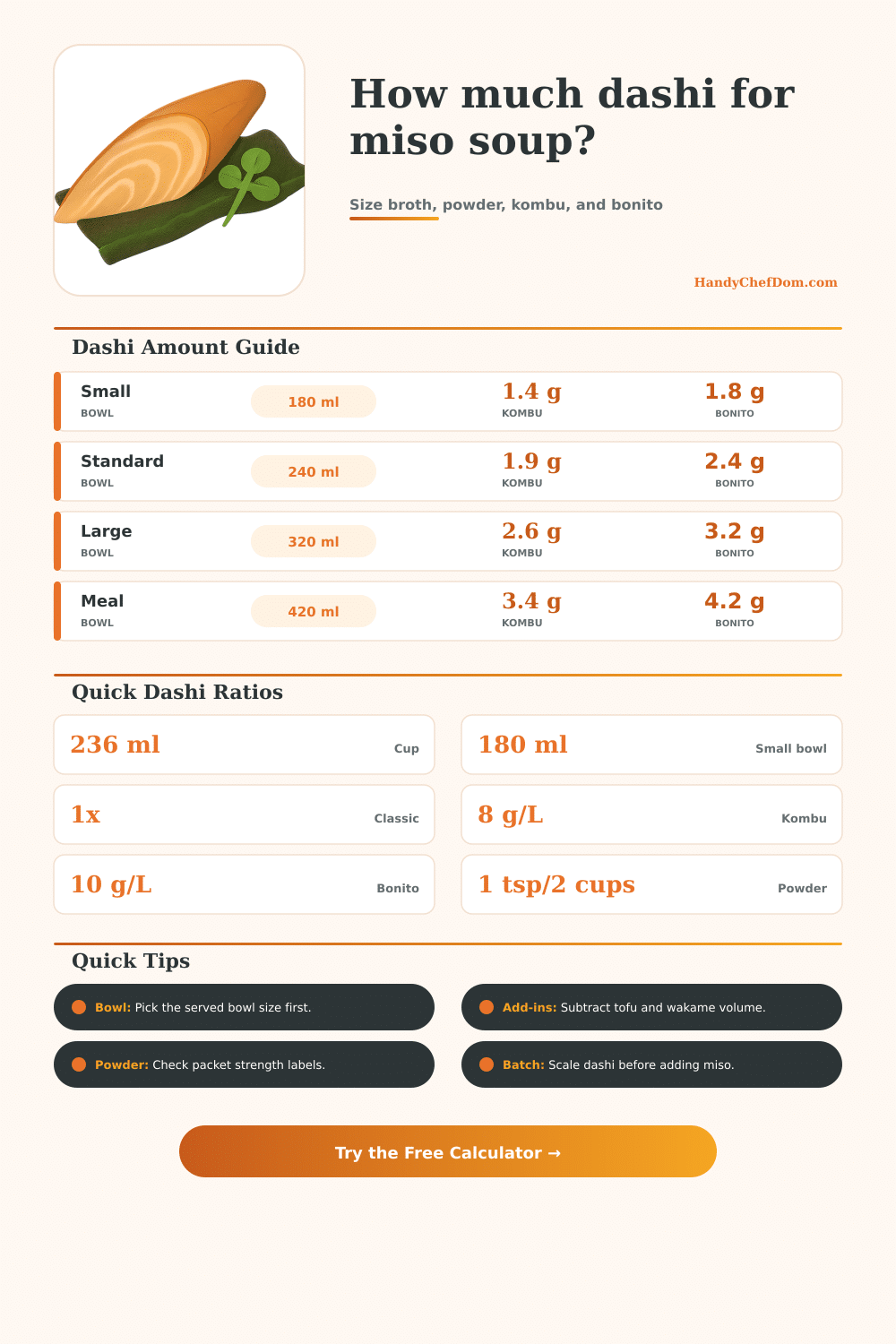
Calculate the dashi base for miso soup by servings, bowl size, dashi style, broth strength, miso volume, add-in displacement, concentrate ratio, and batch multiplier.
This calculator sizes the liquid dashi before miso is dissolved. Add-ins such as tofu, wakame, mushrooms, or scallions displace liquid, while concentrate settings show how much strong base to make.
| Dashi Type | Base Ingredient Rate | Best Miso Soup Use | Calculator Note |
|---|---|---|---|
| Kombu dashi | 8 grams kombu per liter | Gentle, clean bowls and vegan soups | Calculator reports kombu grams only |
| Bonito dashi | 10 grams bonito flakes per liter | Classic savory miso soup | Calculator reports bonito grams only |
| Awase dashi | 7 grams kombu plus 8 grams bonito per liter | Rounded everyday soup base | Calculator splits grams across both ingredients |
| Instant powder dashi | About 1 teaspoon per 2 cups liquid | Fast lunch bowls and small batches | Use the label if your powder differs |
| Vegan dashi | 7 grams kombu plus 5 grams shiitake per liter | Plant-based miso soup with depth | Bonito card shows shiitake-style grams |
| Bowl Setting | Finished Volume | Best Serving Situation | Dashi Planning Note |
|---|---|---|---|
| Small starter bowl | 180 ml, about 3/4 cup | Side soup with rice or a larger meal | Good when add-ins are light |
| Standard miso bowl | 240 ml, about 1 cup | Typical home miso soup portion | Default starting point for most batches |
| Large soup bowl | 320 ml, about 1.35 cups | Generous bowl with tofu and greens | Useful when soup is a main side |
| Meal bowl | 420 ml, about 1.8 cups | Noodle-style or hearty add-in bowl | Displacement matters most here |
| Custom bowl | 80 to 900 ml | Match your actual bowl or cup | Measure once, then save the preset mentally |
| Concentrate Setting | Make This Much Base | Add Water Later | Best Use |
|---|---|---|---|
| Ready-to-use 1:1 | Full calculated dashi volume | No dilution required | Cook and serve the same pot |
| Double-strength 1:2 | Half the calculated dashi volume | Add equal water before miso | Fridge prep for tomorrow |
| Triple-strength 1:3 | One-third of the calculated dashi volume | Add two parts water before miso | Small storage containers |
| Quad concentrate 1:4 | One-quarter of the calculated dashi volume | Add three parts water before miso | Freezer cubes or tight storage |
| Add-In Style | Typical Displacement | Examples | How to Enter It |
|---|---|---|---|
| Light garnish | 10 to 20 ml per serving | Scallion, a few wakame pieces | Enter 15 ml per serving |
| Classic tofu bowl | 30 to 45 ml per serving | Tofu cubes plus wakame | Enter 35 ml per serving |
| Vegetable-heavy bowl | 50 to 80 ml per serving | Mushroom, greens, onion, tofu | Enter 60 ml per serving |
| Noodle or meal bowl | 90 to 150 ml per serving | Noodles, tofu, greens, mushrooms | Enter 120 ml per serving |
Dashi is the broth used to make miso soup. Dashi provide the liquid base for miso soup. The taste and texture of miso soup depend on the liquid base, so using the correct amount of dashi is important for flavor.
While many people will guess the amount of dashi they need, a dashi calculator can tell them the exact amount of dashi they need for there miso soup by asking for the size of the soup bowl and the ingredients. Dashi can be made in several way. Dashi can be made using kombu, dashi can be made using bonito flakes, or a cook can make dashi using a combination of kombu and bonito flakes.
How a dashi calculator works
Kombu produces a much more gentle flavor than bonito flake. For these various ways of making dashi, a dashi calculator can calculate the different ingredient ratios required for these types of dashi stock. The dashi calculator will use these different ratio to show how much kombu or bonito flakes is required to make the dashi.
If a person selects a specific type of dashi, the dashi calculator will apply a gram-per-liter ratio to calculate the amount of that ingredient need for the soup. The size of the soup bowls is another factor in the amount of dashi required. When ingredients is added to the soup bowls, they take up the space within the bowls.
For instance, ingredients like tofu and mushrooms will take up the space within the soup bowl and create a displacement of the liquid within the bowl. In the case of a soup bowl with tofu or mushrooms, the dashi calculator will subtract the volume of the tofu and mushrooms from the total volume of the soup bowl. This ensures that there isnt too much liquid in the soup bowl or too little.
The amount of volume that the miso paste takes up will also be accounted for within the soup bowl. The strength of the dashi can be manipulated within the dashi calculator. For light soups, a light strength of dashi can be used.
For soups that contain noodle, or in cold weather season, a rich and strong dashi can be used. The dashi calculator will multiply the amount of each ingredient for the dashi by the strength of the dashi. Using a rich strength of dashi will increase the amount of kombu and bonito flakes required for the soup to increase the flavor of the dashi without increasing the total amount of liquid.
The other option for the dashi calculator is to create a dashi concentrate. This is useful for making the dashi in advance. For instance, an individual can make a strong concentrate of the dashi and then add water to the concentrate later.
The dashi calculator will calculate the amount of water that must be added to the concentrate of the dashi for it to be the same strength and volume as the soup bowl. The dashi calculator also includes batch multipliers. These allow an individual to double or halve the recipe for making the dashi while maintaining the same ratio of the ingredients.
Reference tables for common soup sizes and the displacement of ingredients like tofu and mushrooms is included on the dashi calculator page. Additionally, there are reference tables for the different style of dashi, which can help individuals decide if they should use a powder or the traditional base of kombu and bonito flakes. These tables allow an individual to check their recipe against the typical use case for miso soup.
A buffer can be used for the amount of liquid evaporate during the simmer of the dashi or when ladling it into the soup bowl. The dashi calculator includes a five or ten percent buffer in the calculation of the amount of dashi to be used. This buffer will ensure the individual has enough liquid for the last soup bowl to be made.
The dashi calculator automatically adds this buffer. With regular use of the dashi calculator, an individual will become more familiar with the way that ingredients like tofu take up space within the soup bowl. They will also become more familiar with how the different strength setting for the soup change the amount of bonito flakes required to make the soup.
The goal in using the dashi calculator is for the volume of the dashi to match the volume of the soup bowl and the ingredients added to each bowl. If the volume of the liquid dashi match the volume of the soup and ingredients, the miso will dissolve cleanly into the soup, and every serving of soup will have the same strength.