🌽 Cornmeal for Cornbread Calculator
Scale cornmeal, flour, milk, eggs, and batter volume from pan size, servings, ratio, grind, sweetness, thickness, and batch multiplier.
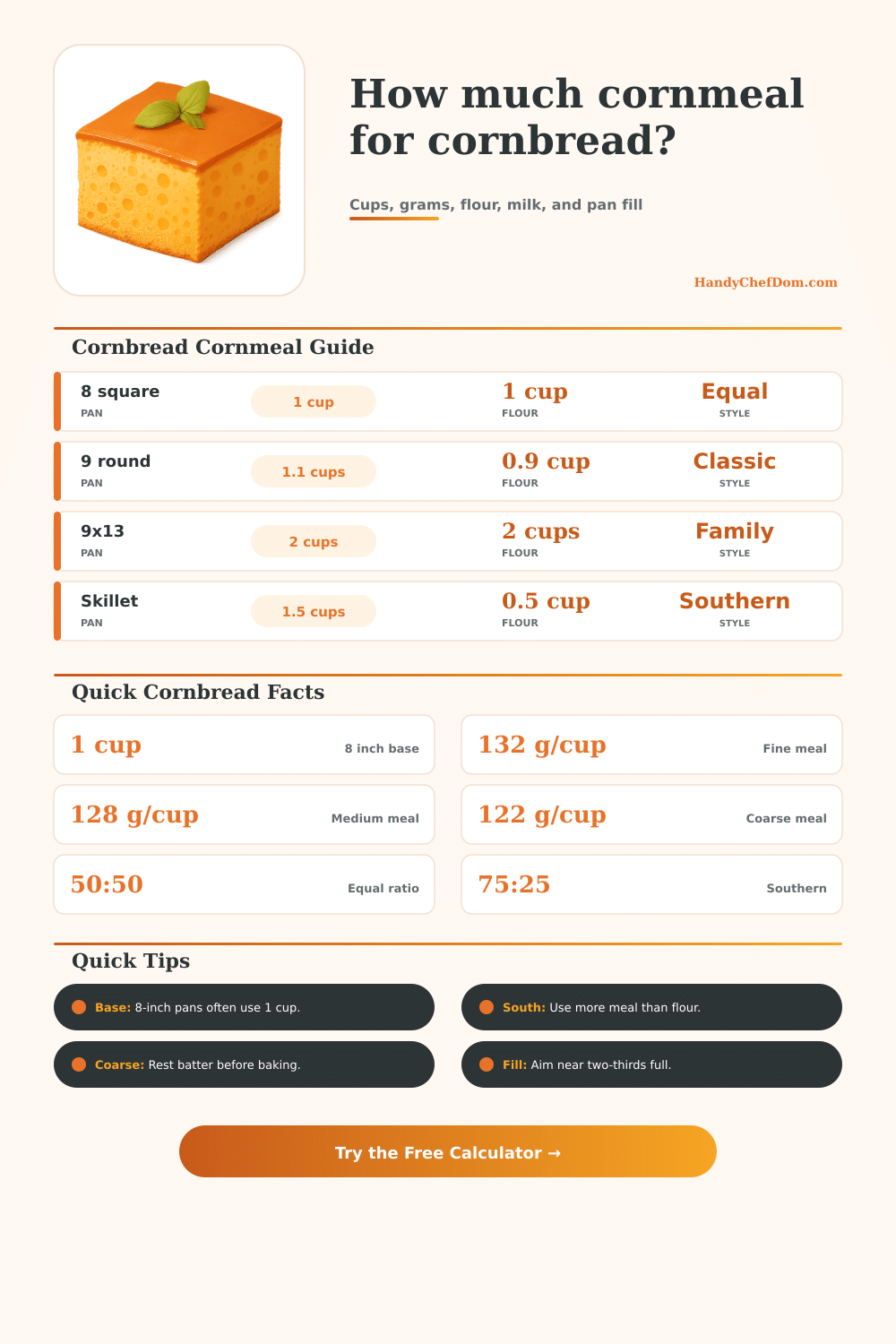
A common 8-inch pan reference is 1 cup cornmeal plus 1 cup flour. This calculator scales that dry base by pan area, serving target, batch multiplier, and the cornmeal-to-flour ratio you choose.
Balanced corn flavor with enough flour for a softer, sliceable crumb in square pans.
More cornmeal flavor while keeping a familiar tender texture for weeknight cornbread.
Corn-forward and less cake-like, especially useful for skillets and savory batches.
Firmest corn flavor and texture; hydration and rest matter more with coarse grinds.
| Pan size | Approx area | Dry mix scale | Common servings |
|---|---|---|---|
| 8-inch square pan | 64 square inches | 1.00x, about 2 cups total cornmeal plus flour | 8 to 9 pieces |
| 8-inch round pan | 50 square inches | 0.79x, smaller than the square reference | 6 to 8 wedges |
| 9-inch round pan | 64 square inches | 1.00x, similar to an 8-inch square pan | 8 wedges |
| 9-inch square pan | 81 square inches | 1.27x, slightly larger family pan | 9 to 12 pieces |
| 10-inch skillet | 79 square inches | 1.23x, good for corn-forward styles | 8 to 10 wedges |
| 9 x 13-inch pan | 117 square inches | 1.83x, close to a double batch | 15 to 20 pieces |
| 12 standard muffins | About 78 square inches equivalent | 1.20x, divided into muffin cups | 12 muffins |
| 9 x 5-inch loaf pan | 45 square inches | 0.70x if filled like cornbread, not a tall loaf | 8 slices |
| Ratio option | Cornmeal share | Flour share | Texture cue |
|---|---|---|---|
| Tender northern-style blend | 40% | 60% | Softest and most cake-like; useful for sweet cornbread. |
| Equal 8-inch reference | 50% | 50% | Often 1 cup cornmeal plus 1 cup flour in an 8-inch pan. |
| Classic corn-forward blend | 60% | 40% | More corn flavor while still holding a tender crumb. |
| Southern-style blend | 75% | 25% | Less flour, stronger cornmeal character, and a heartier bite. |
| Mostly cornmeal | 90% | 10% | Very corn-forward; watch hydration and avoid over-thick batter. |
| All cornmeal | 100% | 0% | Traditional for some savory pans; texture depends heavily on grind. |
| Cornmeal type | Approx grams per cup | Hydration adjustment | Calculator note |
|---|---|---|---|
| Fine yellow cornmeal | 132 g per cup | Absorbs quickly and makes a smoother batter | Use near-standard milk unless batter looks stiff. |
| Medium yellow cornmeal | 128 g per cup | Balanced absorption and classic texture | Default weight for most pantry cornmeal. |
| Coarse stone-ground cornmeal | 122 g per cup | Needs more liquid and a short rest | Rest batter so the grains hydrate before baking. |
| Medium white cornmeal | 126 g per cup | Similar to yellow medium meal | Works well in savory Southern-style pans. |
| Masa harina style corn flour | 115 g per cup | Hydrates differently and thickens fast | Use cautiously; it is not identical to regular cornmeal. |
| Self-rising cornmeal mix | 125 g per cup | May already include flour, salt, and leavening | Best for mix-based recipes rather than pure ratio swaps. |
| Cornbread style | Best pan | Sweetness cue | Batter thickness |
|---|---|---|---|
| Savory Southern skillet | 9 to 10-inch skillet | Little or no sugar | Standard to thick, especially with more cornmeal. |
| Classic square-pan cornbread | 8-inch or 9-inch square | Lightly sweet | Standard spoonable batter with balanced crumb. |
| Sweet northern-style cornbread | 8-inch square or 9-inch round | Moderate sugar, honey, or syrup | Slightly softer batter for cake-like texture. |
| Potluck sheet cornbread | 9 x 13-inch pan | Light to sweet | Standard batter, scaled close to double batch. |
| Muffin cornbread | 12-cup muffin tin | Light to sweet | Pourable enough to portion evenly. |
| Dressing or stuffing bread | Thin square pan or skillet | Savory | Slightly thinner layer for easier drying and crumbling later. |
A cornmeal for cornbread calculator is a helpful tool for determining the correct measurements needed to make cornbread. The measurement for cornbread are essential as they determines the texture and flavor of the cooked cornbread. If you use too little cornmeal when cooking cornbread, the resulting bread will have a texture similarer to cake.
However, using too much cornmeal will result in a sandy texture when cooked. A cornmeal for cornbread calculator take the essential variables of the recipe for cornbread and turn them into precise measurement. A ratio of cornmeal to flour in cornbread is a primary variable that a cornmeal for cornbread calculator must manage.
Use a Cornmeal Calculator to Make Cornbread
Using an equal ratio of cornmeal and flour will result in a tender slice of cornbread that will hold its shape in a square pan. However, using a ratio of seventy-five percent cornmeal will result in cornbread with a more traditional flavor and texture from the Southern regions of America. A cornmeal for cornbread calculator can adjust the ratio of cornmeal to flour automatically to give you the perfect recipe for the style of cornbread you want.
The grind of the cornmeal must also be accounted for when cooking cornbread. Using fine cornmeal will absorb the liquid quick to make a smooth batter. However, if using coarse cornmeal, the recipe require a rest period for the cornmeal to absorb the liquid.
The cornmeal for cornbread calculator can account for the grind of the cornmeal to suggest how much extra liquid is needed to cook cornbread and if a rest period for the cornmeal is require before cooking. Another variable the cornmeal for cornbread calculator must account for is the size of the baking pan. Using an eight-inch square pan for cornbread is a common practice.
However, using a nine-by-thirteen sheet pan for cooking cornbread require more dry ingredients. The cornmeal for cornbread calculator will ask for the area of the pan and the number of servings you would like to cook. Based off this information, the cornbread calculator will provide measurement for the dry ingredients needed for your recipe.
This is helpful for those who want to cook for a large number of people or those who only want to make a small batch of cornbread. The cornmeal for cornbread calculator take into account the percentage of the pan that cornbread should fill. Most cornbread recipes requires that the batter fill the pan to two-thirds of its capacity.
If the pan is filled beyond this volume, the cornbread may overflow from the pan when cooked. Additionally, if the pan is not filled to the proper capacity, the cornbread will cook to a dry texture at the edge. The amount of milk and the amount of eggs needed in the cornbread recipe also depend on the amount of cornmeal and flour to be used in the cornbread.
A cornmeal for cornbread calculator will take these ingredient into account and provide you with an estimate for the amount of liquid ingredients needed to mix with the dry ingredients to make the batter. This estimate will also allow you to see if the amount of batter will fit into the pan of your choosing. A cornmeal for cornbread calculator can save you the guesswork of determining how much of each ingredient to use.
Instead, you just have to input the variables for your cornbread into the calculator, and it will provide you with a single output that will provide you with the measurements of each ingredient needed to make your cornbread. The taste of cornbread depend on the ratio of the cornmeal to the flour that is used in the cornbread. Although the cornmeal for cornbread calculator is a helpful tool, it cannot account for your taste preference.
Cornbread that contains a high amount of cornmeal is best used for savory dishes and is a great dish to reheat. However, cornbread that contains less cornmeal and more sweetness is best use with chili or as a snack. The cornmeal for cornbread calculator provides the measurements for both types of cornbread.
However, you must choose whether you would like to make a sweet or savory cornbread based on your taste preferences. Using a cornmeal for cornbread calculator allow you to learn what the most important variables for cornbread are. For example, some people might prefer the seventy-five percent ratio of cornmeal to flour for a cornbread recipe to be cooked in a cast iron skillet.
Others might prefer the equal ratio for cornmeal and flour to be cooked in a square baking pan. As you use the cornmeal for cornbread calculator, you will learn what the preferred variables is for cornbread that you like to cook. Consequently, this tool will turn the process of cooking cornbread from guesswork to a choice that best fits your preference for the end product.