🍚 Oyster Sauce in Fried Rice Calculator
Estimate oyster sauce for fried rice from cooked rice cups, servings, soy sauce, add-ins, sweetness target, sodium target, and wok or skillet style.
1Quick Fried Rice Presets
2Oyster Sauce Topic Labels
3Calculator Inputs
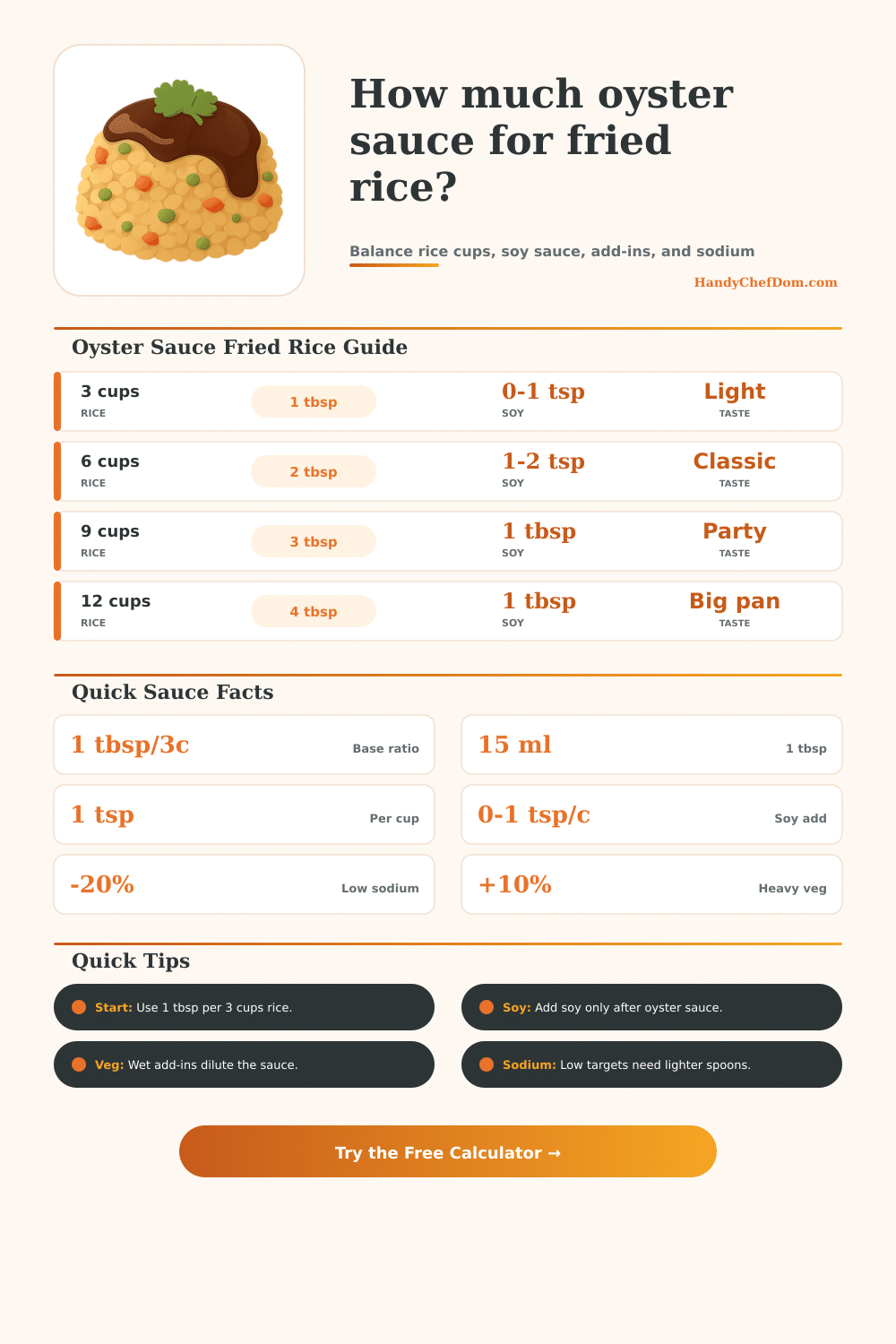
The base reference is 1 tablespoon oyster sauce for every 3 cups cooked rice. The calculator then adjusts for sauce type, soy sauce, add-ins, flavor target, sodium target, and pan evaporation.
4Quick Sauce Cards
5Oyster Sauce Comparison Grid
Best default for classic fried rice when soy sauce is only a small accent.
Stronger body and sweetness mean a slightly smaller spoon often tastes balanced.
Can use a little more for glaze while keeping estimated sodium lower.
Vegetarian versions are often lighter, so the calculator nudges up for depth.
6Fried Rice Sauce Ratios
| Cooked rice | Base oyster sauce | Optional soy sauce | Best flavor direction |
|---|---|---|---|
| 2 cups cooked rice | 2 tsp oyster sauce | 0 to 1 tsp soy sauce | Solo bowl or light lunch. |
| 3 cups cooked rice | 1 tbsp oyster sauce | 0 to 1 tsp soy sauce | Reference ratio for balanced fried rice. |
| 6 cups cooked rice | 2 tbsp oyster sauce | 1 to 2 tsp soy sauce | Family skillet with egg and vegetables. |
| 9 cups cooked rice | 3 tbsp oyster sauce | 2 tsp to 1 tbsp soy sauce | Party wok or meal prep batch. |
| 12 cups cooked rice | 4 tbsp oyster sauce | 1 tbsp soy sauce | Large tray, best tossed in batches. |
7Sauce Comparison Table
| Sauce choice | Flavor role | Approx sodium per tbsp | Calculator adjustment |
|---|---|---|---|
| Regular oyster sauce | Sweet, salty, rounded umami base | About 490 mg | Uses the base 1.00x multiplier. |
| Premium thick oyster sauce | More concentrated glaze and color | About 560 mg | Uses slightly less sauce for balance. |
| Vegetarian mushroom oyster sauce | Earthy umami with lighter seafood note | About 430 mg | Uses a small increase for depth. |
| Lower sodium oyster sauce | Less salty, still glossy and sweet | About 300 mg | Allows a touch more volume if needed. |
| Light soy sauce | Sharp salt and color support | About 290 mg per tsp | Reduces oyster sauce slightly. |
| Low-sodium soy sauce | Milder salt accent | About 180 mg per tsp | Keeps oyster sauce closer to base. |
8Rice Servings Table
| Serving plan | Cooked rice cups | Oyster sauce start | Notes for tossing |
|---|---|---|---|
| Side for 2 | 2 to 3 cups | 2 tsp to 1 tbsp | Use a very hot pan so the sauce coats without steaming. |
| Main for 2 | 4 cups | 1 tbsp plus 1 tsp | Good with egg, scallion, and one protein. |
| Family for 4 | 6 cups | 2 tbsp | Split into two batches if the skillet is crowded. |
| Meal prep 6 | 8 to 9 cups | 2 tbsp plus 2 tsp to 3 tbsp | Taste after reheating because cold rice absorbs sauce. |
| Party tray 8 | 12 cups | 4 tbsp | Batch cooking keeps each grain coated instead of wet. |
9Add-In Adjustments Table
| Add-in load | Typical examples | Sauce adjustment | Balance note |
|---|---|---|---|
| Mostly rice and egg | Egg, scallion, small aromatics | Reduce about 8% | Too much sauce can dominate plain rice. |
| Light protein or peas | Egg, peas, diced ham, small shrimp | Use the base amount | Matches the 1 tbsp per 3 cups rice reference. |
| Balanced meat and vegetables | Chicken, pork, carrots, peas | Increase about 8% | Extra surfaces need slightly more glaze. |
| Heavy protein | Beef, chicken, shrimp, tofu | Increase about 12% | Protein carries savory oyster sauce well. |
| Heavy vegetables | Broccoli, cabbage, pineapple, corn | Increase about 10% | Vegetables dilute the sauce across more volume. |
| Wet vegetables or kimchi | Mushrooms, zucchini, kimchi, thawed veg | Reduce about 5% | Cook off moisture before final sauce. |
10Two Practical Tips
Oyster sauce is seasoning that will add gloss and savory flavor to your fried rice. However, the amount of oyster sauce used will have a critical bearing on the quality of your fried rice. Using too little oyster sauce will make the fried rice taste flatly.
Using too many will make the fried rice heavier or salty. The amount of oyster sauce require will depend on the amount of rice and the ingredient you are adding to the pan when you cook your fried rice. As a starting point, use one tablespoon of oyster sauce for every three cup of cooked rice.
How Much Oyster Sauce to Use in Fried Rice
This ratio of one tablespoon of oyster sauce to three cup of rice will provide a good balance of the sweetness and saltiness contain in the oyster sauce. Depending on the type of oyster sauce you are using, you may need to increase or decrease this amount. Premium oyster sauce is often thicker and contain fewer ingredient than lighter, vegetarian mushroom oyster sauce.
If you use one of these type of oyster sauce, you may need to adjust the amount of oyster sauce you use when cooking your fried rice. Soy sauce will add salt and color to your fried rice. You should add soy sauce to the pan after adding the oyster sauce.
Adding soy sauce after adding oyster sauce will allow you to taste the fried rice before adding the soy sauce. Depending on the ingredients you are using in your fried rice, you may need to increase or decrease the amount of oyster sauce. For instance, heavy protein like chicken or beef will require more oyster sauce than recipes using wet ingredient like mushrooms and vegetables.
The protein will allow the oyster sauce to coat the meat better, while the water content of the mushrooms and vegetables will dilute the oyster sauce flavor. Sodium level matter when using oyster sauce and soy sauce. If you are following a low-sodium diet, use less of both sauce.
If you want to achieve the flavor that restaurant-style fried rice has, use more of both sauces. The type of pan that you cook your fried rice in will also affect the final product. If you use a wok that you heated up to the right temperature to fry your rice, much of the oyster sauce liquid will evaporate during frying.
However, if you cook in a crowded skillet, you may end up with fried rice that is too wet for your liking if you use too much oyster sauce. The calculator provided on this page will help you calculate the amount of oyster sauce and soy sauce your fried rice recipe require. Just enter the detail of your recipe into the calculator to see the total amount of each sauce you need and how much sodium your fried rice will contain per serving.
These reference table will provide you with the same information as the calculator without having to enter anything. The condition of the rice can impact how the oyster sauce perform in the pan. If you use day-old rice for your fried rice, this will work more better with the oyster sauce.
This is because day-old rice is cold when you cook it, and it will allow the rice to absorb the oyster sauce more even than if you used fresh rice. Fresh rice tends to steam in the pan while frying and will mute the flavor of the oyster sauce. When frying your rice, add the oyster sauce to the edge of the hot pan instead of directly on the rice.
Cooks who do not understand that oyster sauce contain salt and sweetness often use soy sauce in large amount in fried rice recipe. Therefore, using soy sauce in fried rice is optional. If the fried rice does not have the proper flavor after adding the oyster sauce, you can always add a small amount of soy sauce to enhance the flavor.
You can determine the amount of oyster sauce need by cooking the fried rice. If the fried rice appear dry and the rice grain separate easily, you have the proper amount of oyster sauce. If the fried rice appear too wet or the sauce visibly cling to the rice, you should use less oyster sauce in your next batch of fried rice.
Once you have prepared fried rice several time using the recipe and understood the effect of the oyster sauce, you can use the calculator to prepare your next batch of fried rice.