Cellulose in Parmesan Cheese Calculator
Estimate cellulose grams, anti-caking blend, pure cheese equivalent, grated cups, ounces, serving portions, and melt-texture sensitivity for parmesan used in pasta, sauces, salads, bakes, and toppings.
1Parmesan Presets
2Cheese Amount and Form
3Cellulose, Blend, and Texture Inputs
Your Parmesan Cellulose Breakdown
Adjust the parmesan form, ounces, cups, additives, recipe use, and serving count, then calculate.
4Calculated Cheese Components
| Component | Amount | Percent | Culinary role |
|---|---|---|---|
| Pure parmesan portion | 0 oz | 0% | Cheese flavor and body equivalent |
| Cellulose estimate | 0 g | 0% | Dry anti-caking fraction in the grated mix |
| Other anti-caking blend | 0 g | 0% | Extra dry blend if listed or estimated |
| Total grated amount | 0 oz | 100% | What you measure from the container |
| Equivalent target amount | 0 oz | 0 cups | Grated amount to match pure cheese target |
5Reference Tables
| Parmesan form | Approx oz per cup | Typical additive estimate | Best calculator use |
|---|---|---|---|
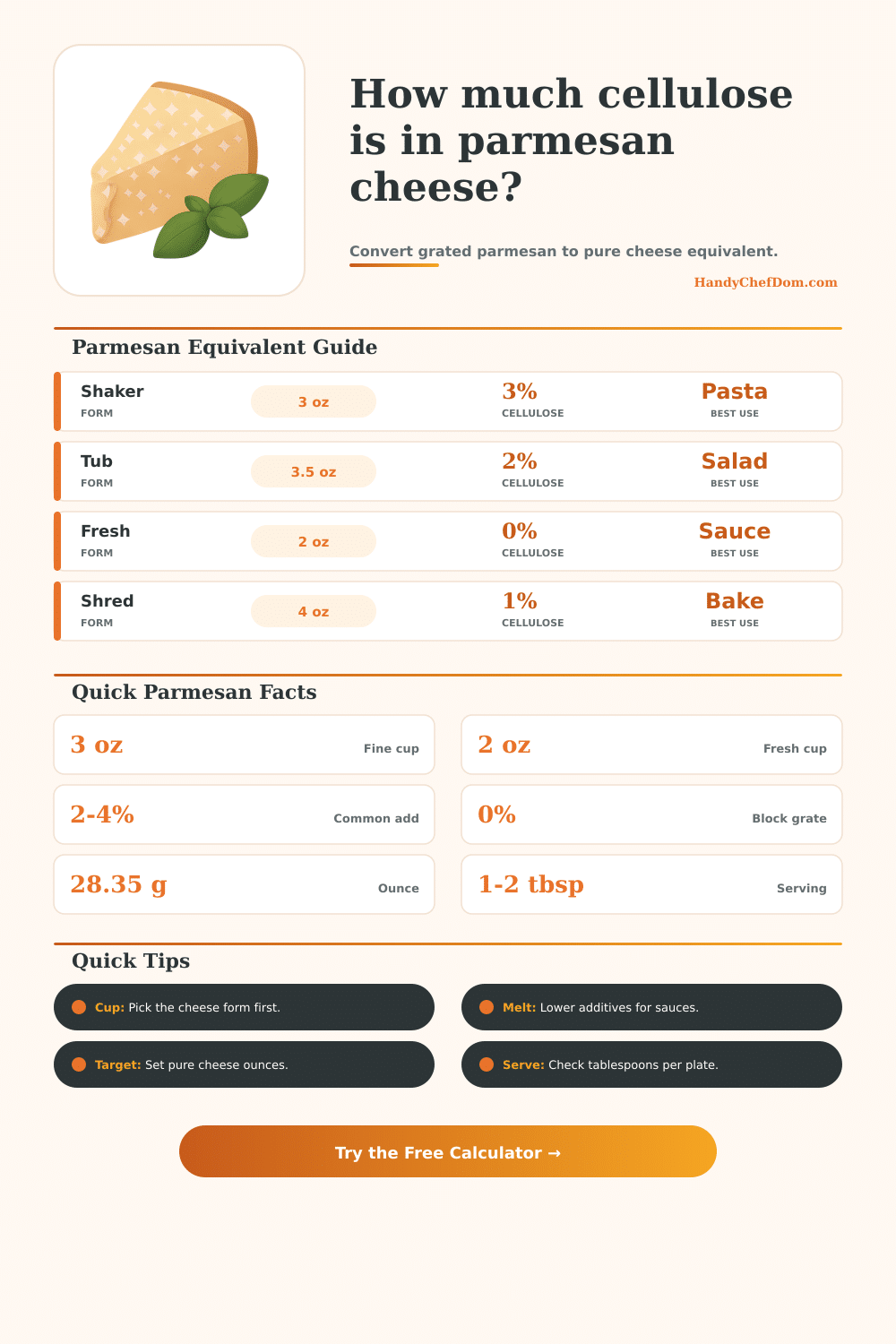
| Shelf-stable fine grated | 3.0 oz | 3% cellulose plus 1% blend | Table sprinkle, pasta finish, casseroles |
| Refrigerated tub grated | 3.5 oz | 2% cellulose plus 0.5% blend | Salads, warm pasta, quick toppings |
| Deli fine grated | 3.2 oz | 1% cellulose plus 0.3% blend | Recipes that need closer fresh equivalent |
| Fresh microplane from block | 2.0 oz | 0% added dry blend | Sauces, risotto, finishing piles |
| Shredded parmesan | 4.0 oz | 1.5% cellulose plus 0.5% blend | Bakes, pizza finish, gratins |
| Shaved parmesan flakes | 2.4 oz | 0.2% handling estimate | Salads and garnish, not cup-for-cup melting |
| Recipe use | Texture sensitivity | Equivalent cue | Calculator note |
|---|---|---|---|
| Pasta finish | Low to medium | Flavor and table coverage | Cellulose changes the pure cheese percentage more than the sprinkle feel |
| Creamy sauce | High | Pure cheese ounces matter | Use target mode when replacing fresh grated cheese |
| Baked casserole | Medium | Coverage plus browning texture | Shreds and fine grated cheeses behave differently by cup |
| Cold salad | Low | Tablespoons per serving | Volume matters for visual coverage and salty-cheesy hits |
| Risotto fold-in | High | Pure cheese equivalent | Fresh grated usually needs fewer measured cups for smooth body |
| Pure cheese target | At 0% additives | At 2% additives | At 4% additives |
|---|---|---|---|
| 1 oz pure cheese | 1.00 oz grated | 1.02 oz grated | 1.04 oz grated |
| 2 oz pure cheese | 2.00 oz grated | 2.04 oz grated | 2.08 oz grated |
| 4 oz pure cheese | 4.00 oz grated | 4.08 oz grated | 4.17 oz grated |
| 8 oz pure cheese | 8.00 oz grated | 8.16 oz grated | 8.33 oz grated |
| 16 oz pure cheese | 16.00 oz grated | 16.33 oz grated | 16.67 oz grated |
| Serving plan | Light finish | Generous finish | Measured cue |
|---|---|---|---|
| 4 servings | 4 to 8 tbsp | 8 to 12 tbsp | About 1/4 to 3/4 cup depending on form |
| 8 servings | 8 to 16 tbsp | 16 to 24 tbsp | About 1/2 to 1 1/2 cups depending on form |
| 12 servings | 12 to 24 tbsp | 24 to 36 tbsp | Scale by ounces when forms differ |
| 24 servings | 24 to 48 tbsp | 48 to 72 tbsp | Check pure equivalent before large-batch sauce |
6Comparison Grid
Best when the recipe is measured in tablespoons or cups. The calculator removes estimated cellulose and blend to show the cheese-equivalent ounces.
Uses a fluffy cup density and near-zero additive setting, so it often needs fewer ounces to match the same pure cheese target.
Weights the additive estimate more heavily because smooth sauces and fold-ins reveal dry matter more than salad toppings.
Converts the batch into per-serving tablespoons so a party pasta tray does not drift from a light sprinkle to a heavy coating.
7Two Practical Parmesan Tips
When you sprinkle a handful of grated parmesan on top of something, do you think about what’s inside?
Grated parmesan is mostly parmesan (duh), but it also contains some other thing, specifically, an ingredient called cellulose which keeps it from clumping together. Cellulose are derived from wood pulp, and while it makes the product shelf-stable, it doesn’t mean there’s as much cheese in that bag as you’d imagine. But why?
Why Use This Calculator?
After all, you’re just sprinkling it on, right? If you have two ounces of fresh parmesan for your sauce, but three or four percent of that is cellulose, that’s going to change things. Heat and liquid don’t play well with cellulose, it won’t mix and melt as readily, resulting in something silky becoming more chalky-textured.
That’s why some chef stash a block for heating while reaching for the shaker for finishings. Enter your recipe, your cheese form, the quantity of cheese, and let the calculator do the math. Note that cup measurements vary depending on if your cheese is shredded off the block in a fluffy way or finely grated to make it dense. The amount of cups doesn’t mean exact same weight.) How it’s used in a recipe also make a difference.
You may be able to get away with adding more stuff to something like a cold salad garnish where you want both visual coverage and salty flavor. Something creamy like a risotto or sauce show off the cellulose more because dry matter prevents it from melting smoothly. The output reflects your texture goals and melt sensitivity, allowing you to adjust for those needs based off what is being made.
Not all grated parmesan are created equal; read the label. Deli-fresh grated cheese tend to fall somewhere in between, and some refrigerated tubs use less cellulose than shelf-stable shakers. If your recipe calls for a specific amount of pure cheese, enter the amount you want different than what you measured to match any additives. Other pages contains reference tables that show how different forms stack up by cup weight and typical additive range, and they also map recipe uses to texture sensitivity (helpful if scaling up a dish for guests).
For example, a weeknight dinner for four requires different portioning then a party pasta tray for twenty-four, so if you’re measuring by cups, take into account that different additives will alter your perception of cheesiness per serving. So when? That’s where it comes down to the dish itself. Are you melting the cheese into something else, a sauce, for example or a warm mixture? In that case, just use more cheese (maybe start with a lower additive form) and keep the texture intact.
Are you simply topping a dish? Then the ease of use from the shaker probably outweighs the slight loss in cheese purity. And calculator lets you see exactly how that change affects things. So you should of not to guess later.