Ice Cream Overrun Calculator
Estimate batch air, finished volume, and scoop yield for every style.
Enter the base mix, target overrun, and draw loss to estimate finished volume, density, and how many tubs or scoops the batch will fill.
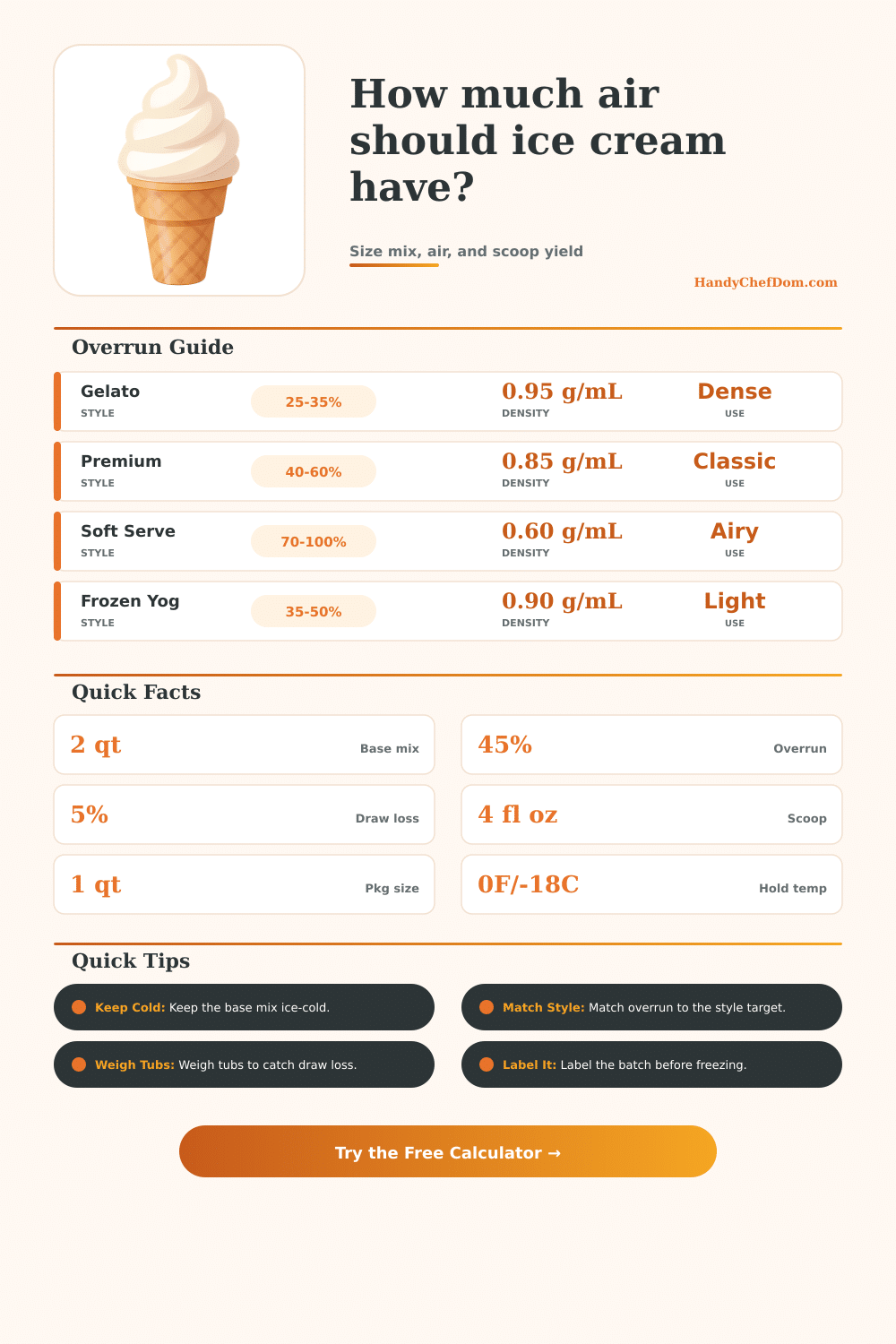
| Style | Overrun | Density | Use |
|---|---|---|---|
| Gelato | 25-35% | 0.95 g/mL | Dense |
| Premium | 40-60% | 0.85 g/mL | Retail |
| Soft Serve | 70-100% | 0.60 g/mL | Airy |
| Frozen Yog | 35-50% | 0.90 g/mL | Light |
| Overrun | Vol Gain | Air Share | Note |
|---|---|---|---|
| 25% | 1.25x | 20% | Dense |
| 45% | 1.45x | 31% | Classic |
| 70% | 1.70x | 41% | Light |
| 90% | 1.90x | 47% | Fluffy |
| Package | Volume | Scoops | Note |
|---|---|---|---|
| Pint | 16 fl oz | 2-4 | Home |
| Quart | 32 fl oz | 4-8 | Small |
| Half gal | 64 fl oz | 8-16 | Family |
| 2 L | 2000 mL | 16-20 | Case |
| Mix | Fat | Sugar | Temp |
|---|---|---|---|
| Custard | 11-14% | 14% | 0F |
| Gelato | 8-10% | 16% | 6F |
| Sherbet | 0-1% | 22% | 5F |
| No-Churn | 13-16% | 18% | 4F |
Overrun are the measurement of the air that gets whipped into the ice cream mix during the freezing process. Overrun is important to the recipe because overrun will determine the volume and the textures of the ice cream that is created. If air is added to the mix, then the volume of the mixture increase.
If the recipe contains a high level of overrun, then more servings of ice cream will be created, but the texture will feel lightly and airy. If the recipe contains a low level of overrun, then fewer servings will be created, but the texture will feel dense and heavy. The amount of overrun that you should use in the recipe will depend upon the type of ice cream that is to be created.
What Is Overrun in Ice Cream and Why It Matters
For example, soft-serve ice creams will contain a high level of overrun, around 85% in many cases. This high level of air will create the volume necessary for soft serve ice creams. Gelato will have a lower overrun because the dessert are meant to be dense.
Premium ice creams will typically have an overrun of around 45%. This amount of overrun create the right balance of volume and richness to the dessert. Each of these different types of ice creams have different amounts of overrun to define the style of ice cream that will be created.
Another measurement of importance to ice cream recipes is the density of the ice cream. Density is calculate by dividing the weight of the ice cream by the volume. If air is added to the ice cream, then the density will decrease.
If air is removed from the ice cream, the density will increase. For example, premium ice creams typically have a density of 0.85 grams per milliliter while gelato have a density of 0.95 grams per milliliter. It is important to ensure that the density of the ice cream is maintained to ensure that the overrun is correct in the recipe.
Another factor that affects overrun is the temperature of the ice cream. The base mix should be cold before churning. If the base mix is too warm, the air will not be able to remain within the base mix.
The air may escape from the base mix which will reduce the amount of air that can create the desired amount of overrun. Finally, the storage temperature of the ice cream may also impact the amount of air in the ice cream. If the ice cream is stored too warm, the air within the base mix may expand or may escape from the ice cream altogether which will change the textures of the ice cream.
The ingredients used in the base mix will also impact the amount of air that can be contained in the ice cream. For instance, ingredients with high levels of fat will hold air better than ingredients with low levels of fat. Similarly, ingredients with high levels of sugar will impact the freezing point and the texture of the ice cream.
Therefore, you must account for these ingredients in the recipe. Finally, it is important to always weigh the amount of ice cream that is created from the base ingredients to account for the loss of the base ingredients during the dispensing of the ice cream from the machines. During dispensing some of the ice cream may drip or melt from the dispensing machines.
The typical loss of the base ingredients during dispensing is around 5%. These base ingredients must be weighed to account for this loss so that the inventory for the restaurant remain accurate. If the restaurant doesnt account for the base ingredients, the restaurant will have less product than the calculations made for the dispensing of the ice cream.
For each batch of ice cream, the following steps should be followed:
Select the amount of overrun that will be utilized in the batch of ice cream that is to be created. Ensure that the base ingredients are cold prior to churning the mixture. Measure the volume of the batch of ice cream that was created.
Weigh the batch of ice cream to determine the density and to account for the loss of base ingredients during dispensing. By following these steps for each batch of ice cream, the amount of overrun will be consistent. Additionally, if the overrun is maintained and ensured to be consistent, then the texture of the ice creams will be consistent and the yield will be consistent, as well.
If the overrun of the ice creams is consistent, the restaurant can accurately calculate how many scoops, portions, or containers of ice cream can be created from one batch of base ingredients. Additionally, each customer will recieve the same quality of the ice cream.