🍝 Heavy Cream for Vodka Sauce Calculator
Estimate heavy cream for vodka sauce from tomato base, sauce cups, pasta ounces, blush color, reduction, servings, cheese finish, and richness target.
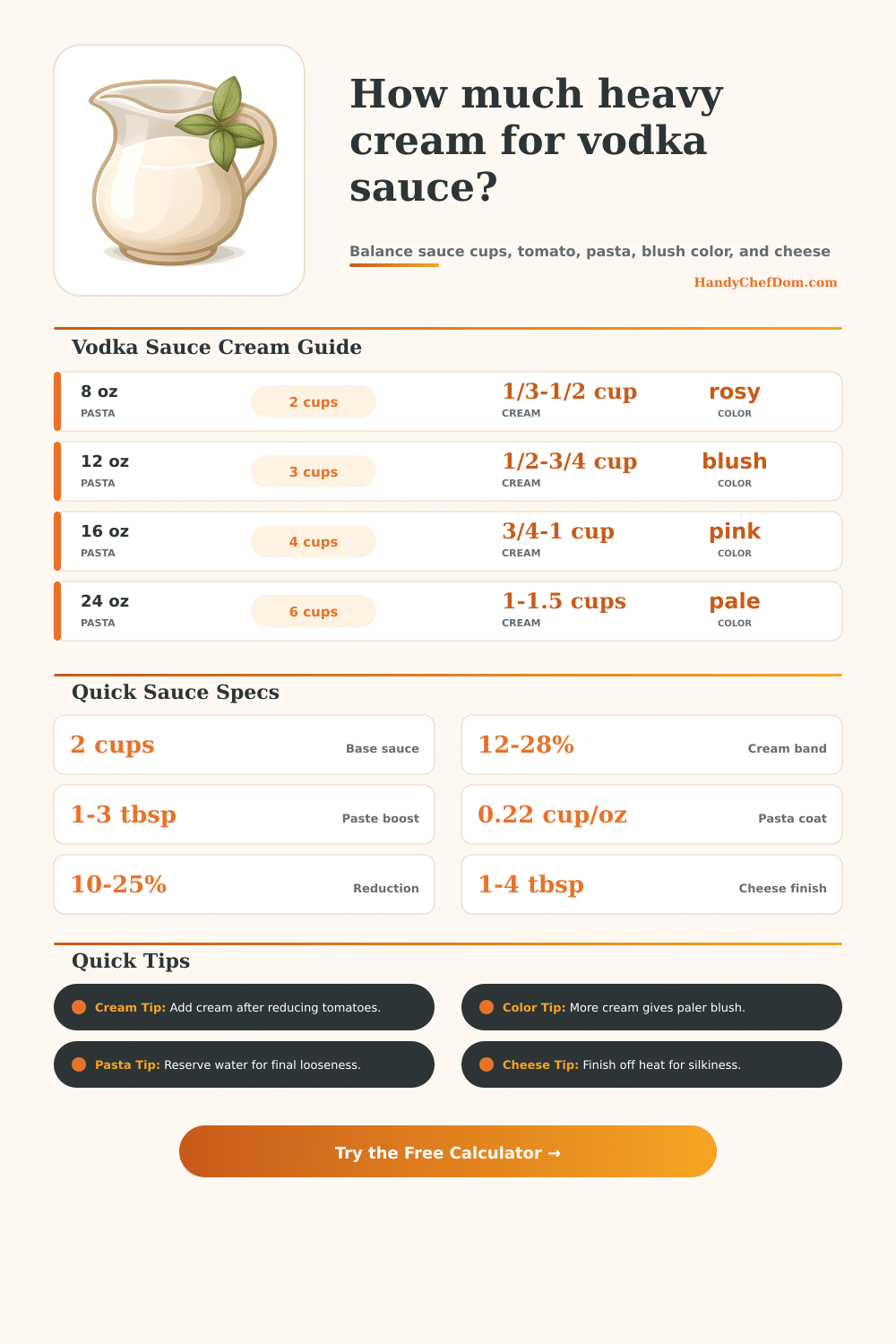
Vodka sauce usually works best when cream is added after the tomato base has reduced. A rosy sauce often lands near 16% to 22% cream in the finished sauce, while a paler, richer sauce can climb toward 28%.
Cream by Blush Color
| Color Goal | Cream Share | Tomato Look | Best For |
|---|---|---|---|
| Tomato-red blush | 10% to 14% | Mostly red | Light penne and spicy sauce |
| Classic rosy pink | 16% to 20% | Rosy orange-pink | Most family vodka sauce |
| Creamy pink | 22% to 26% | Soft pink | Restaurant-style rigatoni |
| Pale restaurant blush | 28% to 34% | Pale salmon | Rich glossy finish |
Pasta and Sauce Coverage
| Dry Pasta | Light Sauce | Balanced Sauce | Generous Sauce |
|---|---|---|---|
| 8 oz | 1.5 cups | 1.8 cups | 2.2 cups |
| 12 oz | 2.2 cups | 2.7 cups | 3.3 cups |
| 16 oz | 3 cups | 3.6 cups | 4.4 cups |
| 24 oz | 4.5 cups | 5.4 cups | 6.6 cups |
| 32 oz | 6 cups | 7.2 cups | 8.8 cups |
Tomato Base Balance
| Tomato Base | Paste Boost | Reduction | Cream Behavior |
|---|---|---|---|
| Marinara jar | 1 tbsp per 2 cups | 8% to 12% | Needs less simmer, watch salt |
| Crushed tomatoes | 2 tbsp per 3 cups | 15% to 22% | Classic body after reduction |
| Passata | 1 to 2 tbsp per 3 cups | 12% to 18% | Smooth, cream blends quickly |
| Paste-forward | 3 tbsp per 2 cups | 10% to 16% | Deep red and very clingy |
| Fresh tomato puree | 2 tbsp per 4 cups | 22% to 30% | Needs longer cooking before cream |
Finish and Richness Adjustments
| Finish Choice | Adjustment | Texture Effect | When To Use |
|---|---|---|---|
| More pasta water | 2 to 4 tbsp | Glossy and looser | Final toss feels tight |
| More cream | 1 to 3 tbsp | Paler and richer | Sauce tastes sharp or too red |
| More paste | 1 tsp to 1 tbsp | Deeper tomato body | Sauce looks too pale |
| More cheese | 1 to 4 tbsp | Thicker and saltier | Finish off heat only |
| More reduction | 3 to 6 minutes | Clingier sauce | Before cream is added |
In vodka sauce, however, it’s all about the cream. While most home cooks are able to properly cook their tomatoes and let their vodka cook off, the sauce is often still too thin and sharp tasting. Add the cream. It fills in the blanks, but only when added at just the right ratio (not too much) and at the appropriate point in the process (not before). And it’s that balance, more than anything else, that makes for a clinging sauce on the noodles, or a slippery pool at the bottom of your dish.
How much cream is that? That depends on your tomatoes, and how thickly they’re cooked. If you’ve let them cook down for a while (and really concentrated the tomato flavor), then you can get away with a higher cream-to-tomato ratio. If you had a lot of water in there from a shorter cook, or even used jarred marinara, the same amount of cream might seem too heavy. You don’t need to worry about that math, once you type in what volume of tomatoes you had, and how much you reduced them, calculator will work out the rest.
The Secret of Cream in Vodka Sauce
Next is color, which most folks view as an afterthought. Red/pink (usually meaning cream makes up about a fifth of the final volume) get you a classic rosy vodka sauce. For anything lighter, add enough cream to take some edge off the tomato color. The catch? More cream loses the sauce; you can compensate by reducing longer prior to the cream addition, but ultimately this will be a bit loose unless you finish with pasta water and/or cheese to thicken back up.
That’s where the cheese finish and the richness target come in. The secret here: A recipe assumes too little about two very important variables: portion sizes and shape. For example, thin strands such as spaghetti will absorbs less sauce per bite than do wider ones (such as shells or rigatoni). That means that even though it’s only a half-cup difference, one might call for more sauce; likewise, an 8-ounce dried serving of thin pasta might be too much if you want generously tossed food, and not enough if you’re after lightly coated bits. If you know how much sauce you’d like to have, and what the weight of your pasta is, then you know whether you’re close, or should of double or halve your batch. Based off how many ounces of sauce cover each ounce of pasta.
The last tools are cheese and pasta water. A little parmesan or pecorino stirred in off heat will thicken the sauce and give it salt without disrupting the emulsion. Reserved pasta water has the reverse effect, loosening up the dish while bringing along some starch to make the sauce stick. When the sauce is tight, many of us grab a bit more cream; often a tablespoon or two of pasta water fixes things without altering either the richness or color. Both possibilities appear on calculator, so you choose which way to tweak.
But the trick with vodka sauce comes early on: Taste what’s left after reducing your tomatoes before you add the cream. Do they still taste bright and sharp? Then you can handle cream. Are they getting sweet and rounded already? You probably won’t need as much cream. Once you notice that moment, the other choices come more easy.