Cornmeal To Thicken Chili Calculator
Estimate how much cornmeal or masa to add based on chili volume, current texture, target texture, grind, simmer time, bean balance, and expected reduction.
| Target Change | Fine Cornmeal | Medium Cornmeal | Masa Harina | Best Use |
|---|---|---|---|---|
| Light body, 1 step | 1.3 tbsp per qt | 1.5 tbsp per qt | 1.1 tbsp per qt | Thin chili that only needs coating body |
| Classic thick, 2 steps | 2.6 tbsp per qt | 3.0 tbsp per qt | 2.3 tbsp per qt | Most weeknight beef, turkey, and bean chili |
| Extra thick, 3 steps | 3.8 tbsp per qt | 4.5 tbsp per qt | 3.4 tbsp per qt | Game day chili that should mound on a spoon |
| Rescue watery pot | 4.6 tbsp per qt | 5.2 tbsp per qt | 4.0 tbsp per qt | Brothy chili with tomatoes still pooling |
| Grind | Absorption Pace | Calculator Factor | Approx Grams per Tbsp | Texture Note |
|---|---|---|---|---|
| Fine yellow cornmeal | Fast | 0.90x | 7.5 g | Smoothest cornmeal choice for quick chili thickening |
| Medium cornmeal | Moderate | 1.00x | 6.8 g | Good balance of body, flavor, and visible grain |
| Coarse cornmeal | Slow | 1.15x | 6.2 g | Needs longer simmer to avoid gritty bites |
| Masa harina | Very fast | 0.75x | 7.8 g | Strong thickening with a softer tortilla flavor |
| Polenta grind | Very slow | 1.25x | 5.8 g | Use only when a rustic grain texture is wanted |
| Instant cornmeal | Very fast | 0.65x | 6.5 g | Small amount thickens quickly, so add in rounds |
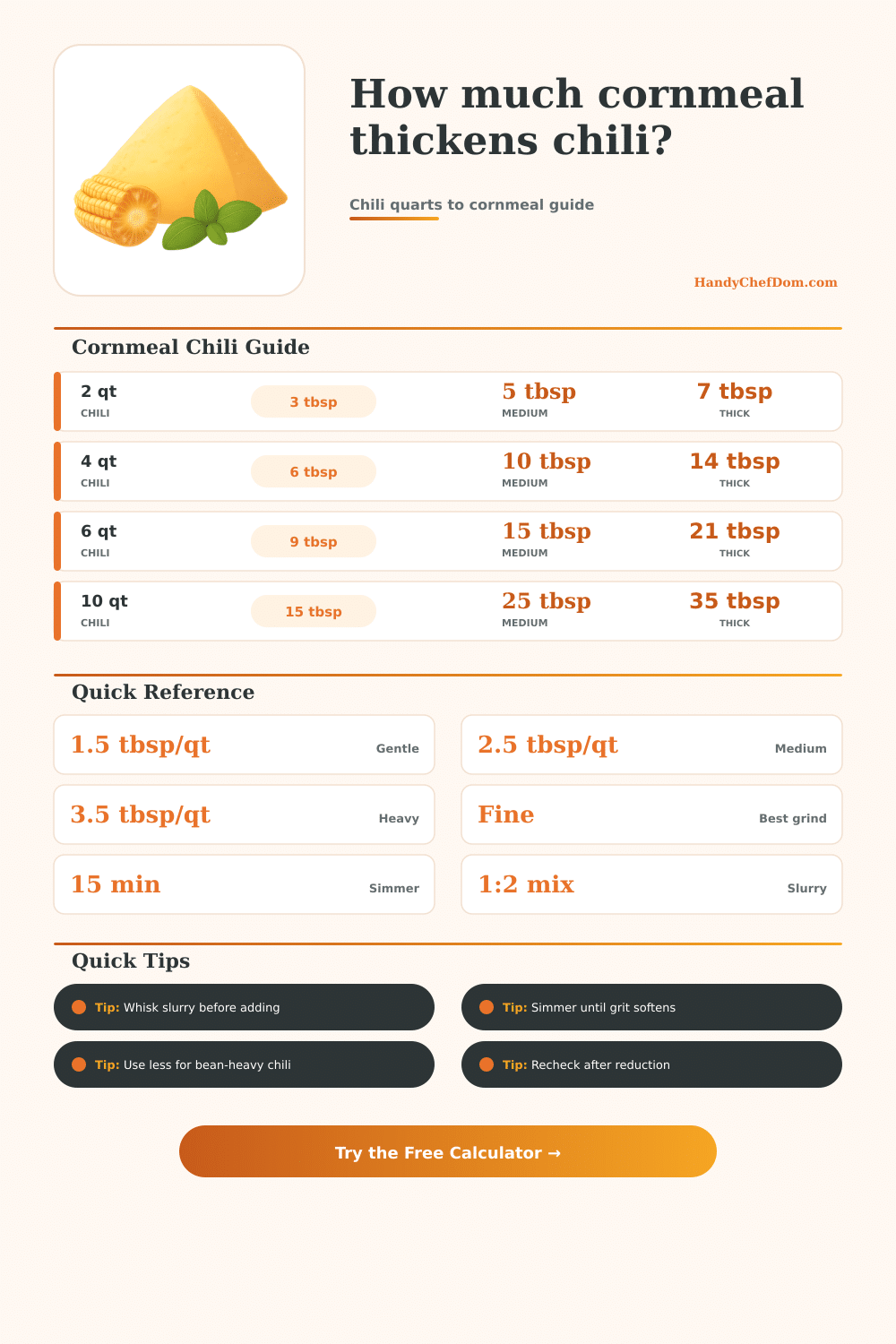
| Pot Size | Light Body | Classic Thick | Extra Thick | Typical Servings |
|---|---|---|---|---|
| 2 qt | 3 tbsp | 6 tbsp | 9 tbsp | 4 bowls |
| 4 qt | 6 tbsp | 12 tbsp | 18 tbsp | 8 bowls |
| 6 qt | 9 tbsp | 18 tbsp | 27 tbsp | 12 bowls |
| 10 qt | 15 tbsp | 30 tbsp | 45 tbsp | 20 bowls |
| 16 qt | 24 tbsp | 48 tbsp | 72 tbsp | 32 bowls |
| Simmer Left | Reduction Expected | Adjustment | When To Use | Check Point |
|---|---|---|---|---|
| 5 to 10 min | 0% to 5% | Add 12% more | Late rescue before serving | Stir after 4 min |
| 15 to 25 min | 5% to 15% | Use normal rate | Most stovetop chili pots | Stir after 8 min |
| 30 to 45 min | 15% to 25% | Use 8% less | Low simmer with lid cracked | Stir after 12 min |
| 60 min or more | 25% to 35% | Use 15% less | Long finish for big batches | Stir after 15 min |
Cold Water Slurry
Most predictable. Mix one part cornmeal with two parts cold water, whisk smooth, then stir into simmering chili.
Warm Broth Slurry
Slightly richer. Use warm chili broth, but whisk quickly so the cornmeal does not clump before it reaches the pot.
Dry Sprinkle
Fastest but clump-prone. Sprinkle slowly while stirring hard, then simmer long enough for the grain to hydrate.
Bean Blend Assist
Use less cornmeal when beans are blended into the chili because bean starch adds body without extra grain texture.
Chili made with cornmeal will thicken. As it cooks some of the cornmeal’s starches breaks down and form a gummy substance that thickens the chili. If your chili needs thickening, this works like a charm. But if you add too much, you have a paste in your pot. Too little means your pot remain watery.
Besides the batch size, getting the right consistency requires thinking about several other factors such as your starting ingredients. What consistency do you want to achieve? How long will the chili be cooking? For small amounts, most folks just do some guessing and tasting until they get it right. Add a bit of cornmeal, let it sit, taste…repeat.
How to Thicken Chili with Cornmeal
For larger batches, this approach is not so safe. With more than a few quarts in the pot, a few tablespoons here or there can mean all the difference between a spoon standing straight up and one leaning gently on the mush. Above is a calculator that does the math for you. You tell it what texture you have, what texture you want it to be, and approximately how much water will evaporate as it simmers.
Far most helpful: texture, which indicates to the tool how much movement of the chili are required. You use less cornmeal in a brothy pot then in one thickened to resemble your idea of classic bowl chili. Next, select the grind. Masa and fine cornmeal will release their starch quick during shorter cooking periods. More robust grinds requires softening over time. Selecting either coarse cornmeal or polenta along with a short remainder of cooking time results in an increase in amount.
It’s also affected by bean balance. Starch from legumes already exists in bean-heavy chili, reducing the amount of cornmeal used. Tomato-forward and meat-heavy versions requires slightly more since they lack natural body. The percent reduction takes into account how much liquid will cook out. Otherwise your final chili will be thicker than desired.
These variables add up in different ways for various common pot sizes; that’s what the reference tables on the page illustrate. These aren’t meant to replace the calculator, but they is a way to get an idea of relative amounts before you start entering your own data.
You’ll then need to determine where to place the cornmeal; the least picky approach (and therefore most forgiving) is to make a slurry with cold water, which eliminates lumps. If you’re willing to whisk continually, dry sprinklings work… But most people feel this result in more clumping than anticipated. But it stops you from just throwing a handful of cornmeal into the pan as a last resort, and gets you to think about those other ingredients up front.
This shifts your thinking about cornmeal: It’s not just something to throw in at the end; it’s an ingredient that should of been part of the recipe right from the start. And if you’re stirring up a big batch of chili for the masses, or trying to reheat leftovers while maintaining texture, that makes a difference. When I thicken it properly the first go-round, then refrigerate it or put it on low heat, it don’t turn runny later on.
The calculator just brings all that thinking out into plain view. So yes, you decide how spicy you want it, and what flavor, too, but this takes the guessing out of figuring out how much starch you’ll need to get the bowlful of consistency you realy desire.