🧄 Garlic Cloves Per Bulb Calculator
Estimate usable cloves per garlic bulb by bulb size, variety, trim loss, recipe count, and shopping buffer before you buy or prep.
Use this calculator when a recipe lists cloves but your shopping list needs whole bulbs. It estimates the usable cloves left after skins, trimmed ends, and tiny interior cloves are accounted for.
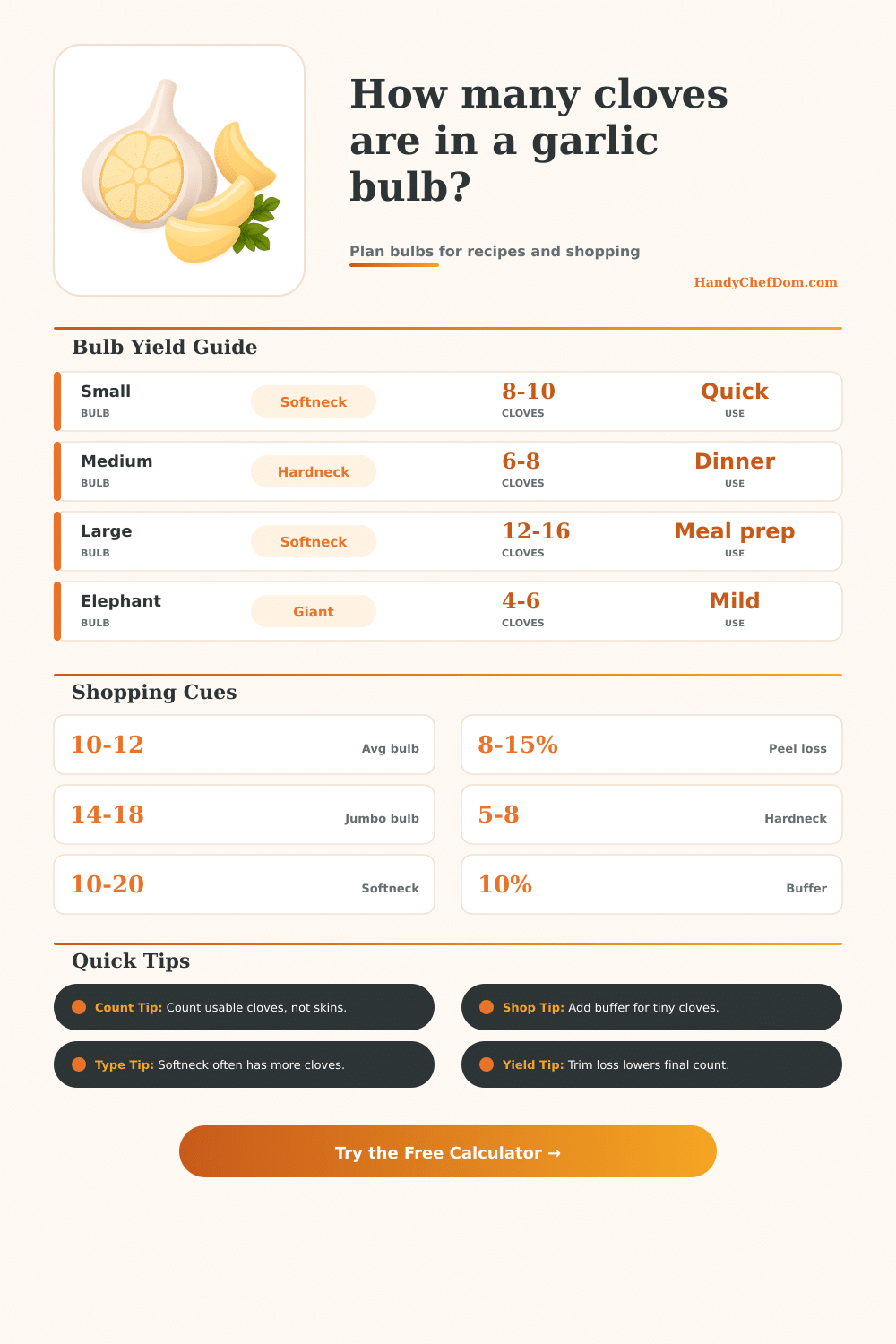
| Bulb Size | Diameter | Cloves | Best Use |
|---|---|---|---|
| Tiny | Under 1.5 in | 4-7 | Single dish |
| Small | 1.5-1.9 in | 7-10 | Quick meal |
| Medium | 2.0-2.3 in | 9-13 | Dinner prep |
| Large | 2.4-2.8 in | 12-16 | Batch sauce |
| Jumbo | 2.9 in plus | 14-20 | Meal prep |
| Elephant | 3.5 in plus | 4-6 | Mild flavor |
| Variety | Pattern | Cloves | Planning Note |
|---|---|---|---|
| Softneck | Layered | 10-20 | More small cloves |
| Hardneck | Single ring | 5-10 | Larger cloves |
| Purple stripe | Even ring | 8-12 | Good balance |
| Rocambole | Loose skin | 6-11 | Peels easily |
| Porcelain | Big cloves | 4-8 | Count lower |
| Artichoke | Many layers | 12-20 | Good pantry pick |
| Recipe Need | Softneck Buy | Hardneck Buy | Buffer |
|---|---|---|---|
| 4 cloves | 1 bulb | 1 bulb | None |
| 8 cloves | 1 bulb | 2 bulbs | Small |
| 16 cloves | 2 bulbs | 3 bulbs | 10% |
| 24 cloves | 3 bulbs | 4 bulbs | 10% |
| 40 cloves | 4 bulbs | 7 bulbs | 15% |
| 60 cloves | 6 bulbs | 10 bulbs | 15% |
| Yield Factor | Typical Range | When To Use | Effect |
|---|---|---|---|
| Peel loss | 5-8% | Fresh tight bulbs | Minor |
| Trim loss | 8-12% | Dry root ends | Medium |
| Tiny cloves | 10-25% | Softneck centers | Count lower |
| Sprouting | 15-25% | Older pantry bulbs | Buy extra |
| Bruising | 10-20% | Loose bins | Inspect first |
| Premium bulbs | 3-6% | Firm farmers market | High yield |
There you are, standing in the grocery aisle with a single head of garlic in your hand, suspecting it might be to small, yet knowing the recipe call for precisely six cloves of garlic. How do you convert cooking measurements to actual produce? No one ever taught you! And don’t think this is just a question of counting objects wrapped in paper-like skins; there is variables (size class, variety, potential unseen loss when shelling tiny, or even damaged, inner cloves). Enter: Math Problem Solver #1 Above, which translates fuzzy recipe needs into tangible shopping numbers.
Garlic isn’t a one-size-fits-all type of crop. You wouldn’t expect a big-box-store-bought softneck bulb to behave identicaly to a hardneck from your local farmstand, would you? Softneck means more-cloved, where cloves is packed tightly together and are often smaller. Hardneck garlic have fewer but larger cloves, which usually form just a single ring around the central stalk. When it comes time to roast them whole, and I think we all know the deliciousness of whole-roasted garlic, you’ll want to adjust the number of bulbs you purchase based off their structure.
How to Choose the Right Garlic for Your Recipe
Enter the number of heads you have. The calculator will then ask if you are working with softneck or hardneck varieties and adjust the estimated yield to match. But size trumps variety in loose bins where you’re looking at bulb one by one. That jumbo may be promising eight cloves, but is it an elephant garlic? If so, it may have four giant segments that are closer to the sweetness of an onion then the punch of garlic. Or will that little hardneck produce six good-size cloves exactly right for your sauce? The diameter entry in the tool bridges that visual divide by relating actual size to past experience: What do I see? And what shall I get?
Hidden prep costs And then there’s lost trim: When you peel or crush garlic every single one has some loss from skins, roots and all those little bits that drop into the sink. This trim loss will vary between eight and fifteen percent, depending on how fresh the bulb is and if it was bought as older stock from a bag or bin. The calculator accounts for this by allowing you to adjust the percentage up or down. If you’re worried about getting to dinner only to find half a head instead of three cloves because sprouts formed or the heads started to dry out, adjust the percentage. This can happen when you buy older stock from a loose bin. In those cases, you should of adjust the percentage down to say eighty percent or less.
Tiny cloves is another quiet killer of garlic planning. Many softneck heads has a mass of tiny ones clustered in their centers. They are a pain to remove and do not have much volume. Cooks either toss them out, or mash them in anyway. With this tool, you enter how many such smaller cloves there are as a percent so it can advise whether you’ll have enough meaty stuff to serve what’s required for the intended recipe. Those tiny bits matter less for something like garlic bread when presentation is part of the deal. For a marinade which gets blended or strained, they count fully.
Having that little bit of extra shopping money around is simply being smart about risk: life happens; bulbs get dropped, bruised, and found to be hollow in the middle. A ten percent buffer protect you from those surprises without bloating your grocery bill. It’s the difference between “oh crap I only have enough for one more” and “I’ve got exactly what I needed right here on the counter.”
When you’re not cooking dinner for one night but rather meal prepping for the week, it’s about seeing how demand scales with batch sizes, as shown in the reference tables on the page. All of this comes down to paying attention to the variety of garlic and the changes it brings, and the way that each individual plant grows different despite all your best intentions. Nature isn’t going to give you perfectly symmetrical heads; don’t try to make her. Know the variables; understand what goes into it (and then let yourself off the hook). Accept some small clove variation, a little peel loss, and real world imperfection. Stop guessing and start knowing.
When you next grab that bulb, you’ll know just how far you can take it before breaking the seal and feeding another recipe or two (or three).