🌿 Dried to Fresh Cilantro Converter
Convert dried cilantro to fresh cups, bunches, sprigs, and leaves for salsa, tacos, chutney, rice, marinades, and bright garnish finishes.
Choose the cilantro you have, the dish it is going into, and how fresh each form tastes. The calculator treats dried cilantro as weaker in raw salsa and garnish, then recommends when to add it.
| Fresh cilantro form | Kitchen equivalent | Approx weight | Best use |
|---|---|---|---|
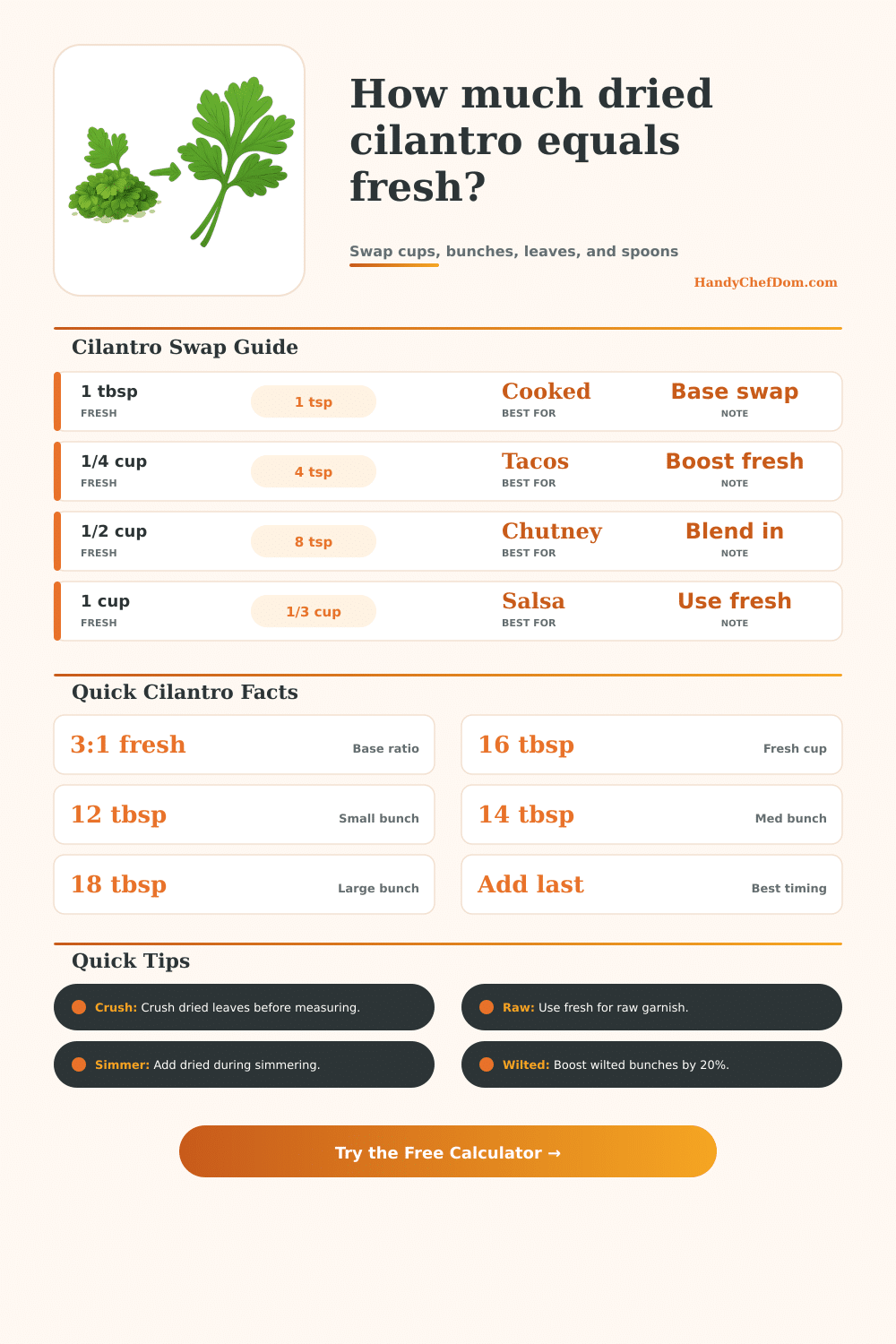
| 1 tbsp chopped fresh cilantro | 1 tsp dried flakes | 1 g fresh | Cooked dishes |
| 1/4 cup chopped fresh cilantro | 4 tsp dried flakes | 4 g fresh | Tacos and bowls |
| 1/2 cup chopped fresh cilantro | 8 tsp dried flakes | 8 g fresh | Rice, beans, sauce |
| 1 cup chopped fresh cilantro | 1/3 cup dried flakes | 16 g fresh | Salsa or chutney base |
| 1 medium bunch | 14 tsp dried flakes | 14 g fresh | Family garnish bowl |
| 1 whole sprig | 1/4 tbsp chopped | 0.25 g fresh | Plate finish |
| Dish use | Dried cilantro strength | Fresh priority | Add timing |
|---|---|---|---|
| Raw salsa or pico de gallo | Very weak, about 35% | High | Fresh mixed at end |
| Tacos and bowls | Moderate, about 55% | High | Fresh on top |
| Cilantro chutney | Useful but thin, about 70% | Very high | Blend fresh last |
| Cilantro rice or beans | Good support, about 82% | Medium | Stir in off heat |
| Soup, stew, or dal | Good support, about 88% | Medium | Bloom dried, finish fresh |
| Marinade or rub | Strongest, about 92% | Low | Hydrate before mixing |
| Freshness condition | Flavor kept | Converter adjustment | Cilantro cue |
|---|---|---|---|
| Bright, crisp, just washed | 100% | No boost | Clean citrus-green aroma |
| Refrigerated 2 to 4 days | 90% | Add about 10% | Still leafy and fragrant |
| Wilted leaves, flavor fading | 78% | Add about 22% | Leaves bend, aroma fades |
| Stem-heavy after picking | 84% | Add about 16% | More crunch than leaf |
| Limp bunch needing rescue | 70% | Add about 30% | Use in sauce, not garnish |
| Freshly crushed dried flakes | 108% | Use a little less | Aroma blooms quickly |
| When cilantro is added | Fresh result | Dried result | Best calculator choice |
|---|---|---|---|
| On top right before serving | Brightest flavor | Dry texture shows | Use fresh leaves |
| At the end, off heat | Strong and balanced | Acceptable if hydrated | Default for most dishes |
| Mixed into cold salsa or dip | Fresh aroma stays high | Needs time and lime | Prefer fresh cilantro |
| Simmered into a dish | Fresh aroma drops | Hydrates well | Add dried earlier |
| Added early and cooked longer | Big flavor loss | Mostly background | Save fresh for finish |
| Dried cilantro bloomed in liquid | Not needed | Best dried texture | Bloom 5 to 10 minutes |
The next time you have a recipe that calls for fresh cilantro but you don’t have any, you’ll know why: unlike most herbs that only add flavor, cilantro also adds texture and hint of citrus. If you approach cilantro like thyme or oregano, all the flavor fade away.
The standard kitchen rule of thumb suggest a three-to-one ratio when converting dried to fresh cilantro. What occurs to volatile oils when water leaves the leaf? And how do cooking times affects those volatile oils? As a general rule, the three-to-one ratio apply. That means one tablespoon fresh, chopped cilantro equals one teaspoon dried flakes. Use this as a starting point for prepared recipes.
How to Use Fresh and Dried Cilantro
Why? The herb has had enough time to soak up liquid and spread its taste throughout the dish. But take this thinking to raw applications. Immediate citrus smells are what make salsa, guac, and other garnish sing. Powder can’t replace that punch. Dried cilantro… Where did all that brightness go? The moisture’s gone, and so have those top notes. Now there’s just that dusty, earthy undertone. Good for a marinade, a slow-cooked bean dish. Not-so-good based off your diced tomatoes.
Enter the calculator: It recalibrates the ratio based on the type of dish you’re making. With raw pico de gallo as the input, it tells you that dried cilantro is actualy practically worthless. It makes you realize that nothing can substitutes for fresh leaves tossed in at the end.
The freshness condition of your ingredients can matter far more to most cooks then they know. Three-day-old cilantro is not as strong. To account for this, the tool lets you say whether the leaves are crisp or wilted. Because wilted leaves have muddied flavors, you will require greater volume. That’s why the tool asks about condition of your herbs. There may be a limp bunch left with some fragrance intact. The adjuster helps ensure you don’t over-estimate how much life your ingredients has left. This prevents you from under-seasoning.
Timing is one more variable that makes all the difference. If you add dried herbs right when your dish starts simmering, they’ll rehydrate and become part of subtle background. Fresh herbs added later retains their aroma. See which dish calls for one form or the other in reference table below. A complex stew wants the dried herb soaked early in the broth. For tacos, it’s got to be fresh on top. Know the difference so nobody wastes anything and no dish taste flat.
There’s also the matter of quantity vs. It’s about intensity. For example, a measured cup of freshly chopped cilantro is different than those stem-heavy bundles, which will be milder. Will it be whole sprigs or just packed leaves? That’s where this comes in, enter the details and it translates that for you so you know exactly what to scale back up (or down) for large crowds. Because who wants to buy extra bunches only to realize you didn’t have enough because of wasted stems? It makes shopping for ingredients for big parties easier.
Balance is the final aim. Long-lasting dried cilantro is easy and keeps forever. But fresh cilantro is best in texture and brightness. Removing guesswork from the kitchen make cooking easier. Right-flavor notes turn what could of a disaster into a delicious, successful meal. When faced with an empty refrigerator, you’ll know what to make. You will also know how to make it instead of just hoping. That is the difference between good and great.