🧀 Cheese Slice Protein Calculator
Estimate protein, calories, fat, calcium, ounces, and grams for sliced cheese portions in sandwiches, snack plates, lunch boxes, and meal prep stacks.
Choose the cheese, slice style, count, and serving pattern. The calculator uses standard nutrition data per ounce and scales it by your slice weight or thickness.
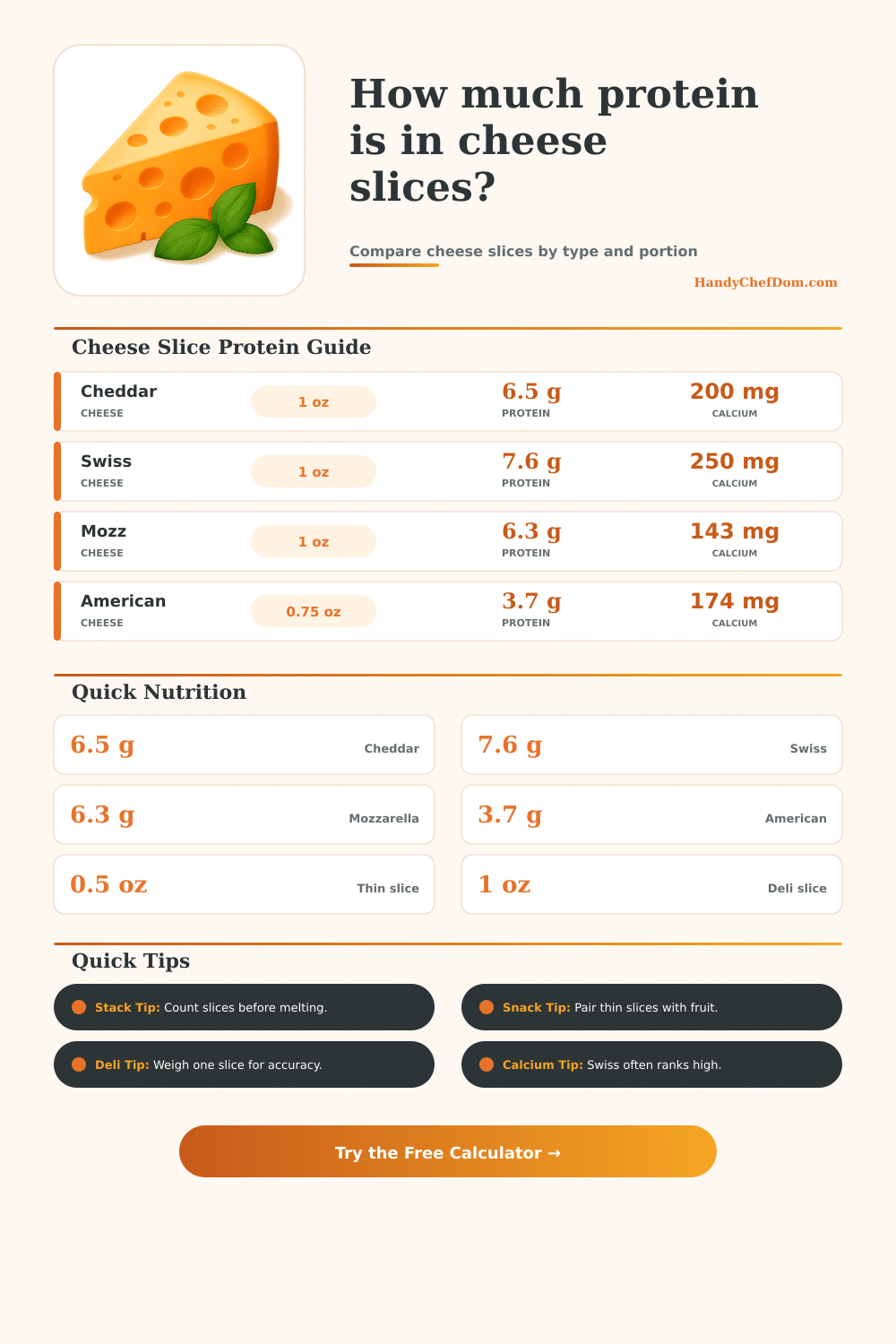
| Cheese Type | Protein per oz | Calories per oz | Fat per oz | Calcium per oz |
|---|---|---|---|---|
| Cheddar | 6.5 g | 114 kcal | 9.4 g | 200 mg |
| Swiss | 7.6 g | 111 kcal | 8.8 g | 250 mg |
| Mozzarella | 6.3 g | 85 kcal | 6.3 g | 143 mg |
| American | 4.9 g | 94 kcal | 7.4 g | 232 mg |
| Provolone | 7.2 g | 100 kcal | 7.5 g | 214 mg |
| Colby jack | 6.8 g | 110 kcal | 8.9 g | 200 mg |
| Pepper jack | 6.4 g | 106 kcal | 8.6 g | 190 mg |
| Gouda | 7.1 g | 101 kcal | 7.8 g | 198 mg |
| Havarti | 6.1 g | 105 kcal | 8.7 g | 160 mg |
| Slice Label | Typical Weight | Best Use | Protein Range | Portion Note |
|---|---|---|---|---|
| Paper thin | 0.35 oz / 10 g | Snack rollups | 1.7-2.7 g | Use 2-3 slices |
| Thin deli | 0.50 oz / 14 g | Light sandwich | 2.5-3.8 g | Low bulk |
| Standard single | 0.75 oz / 21 g | Lunch slice | 3.7-5.7 g | Common pack size |
| Deli counter | 1.00 oz / 28 g | Full sandwich | 4.9-7.6 g | Easy math |
| Thick cut | 1.25 oz / 35 g | Melt or burger | 6.1-9.5 g | Very filling |
| Party square | 0.40 oz / 11 g | Cheese board | 2.0-3.0 g | Count pieces |
| Portion Scenario | Slices | Weight | Protein Goal | Good Cheese Fit |
|---|---|---|---|---|
| Light snack | 1 thin | 0.50 oz | 3-4 g | Swiss or provolone |
| Kid sandwich | 1 standard | 0.75 oz | 4-5 g | Cheddar or mozzarella |
| Adult sandwich | 2 standard | 1.50 oz | 9-11 g | Swiss or gouda |
| Grilled cheese | 3 standard | 2.25 oz | 13-17 g | American plus cheddar |
| Burger stack | 1 deli | 1.00 oz | 5-8 g | American or pepper jack |
| Meal prep pack | 8 standard | 6.00 oz | 35-45 g | Colby jack or Swiss |
| Cheese | Calcium Rank | Fat Style | Protein Density | Best Portion Use |
|---|---|---|---|---|
| Swiss | High | Moderate | Very high | Protein-focused sandwich |
| American | High | Moderate | Lower | Classic melt portion |
| Provolone | High | Moderate | High | Deli sandwich layer |
| Cheddar | Medium high | Higher | High | Snack and burger slice |
| Mozzarella | Medium | Lower | High | Caprese and light snack |
| Havarti | Medium | Higher | Medium | Creamy sandwich layer |
The problem is that a packaged slice can be very different than another. The exact weight of each slice vary. While some may be 3/4-ounce, others could be as much as an ounce per slice depending on how thickly they’re sliced at the deli. Because the nutrition payoff comes from whatever it is you actualy consume, getting this figure correct make all the difference for your sandwich macros.
After plugging in what kind of cheese you’re using and how much (which is done on the calculator above), it does the rest of the work for you. Choose your cheese, enter slice thickness and let it know if it’s one serving or more servings. Then it will scale up nutrition information based off that exact piece of cheese. A tiny change, yes, but it makes an otherwise vague estimate into something you can actualy count on, which means no second-guessing yourself as to whether you’ll hit your protein target.
How to Count Your Cheese Nutrition
How about a comparison between American and Swiss cheese? Both are mainstays of our diet. Yet one is nutritionally superior than the other: The former’s got a healthy dose of calcium, whereas the latter is a better bet if you’re seeking substantial protein and even higher calcium-per-ounce numbers while avoiding extra bulk. Knowing that, you’d be wise to swap your American cheese for a variety with more protein density like Swiss or even provolone.
The other factor is thickness. It will have a different amount of protein depending on thickness (a thin deli slice might just give you two grams, whereas a thicker one double it). To see how this changes the total you get from each slice, check out reference table on the page. Unless you want to weigh every single slice, you don’t have to, but if you know your typical slice weighs around twenty grams, then you should of be able to estimate a stack pretty well from there.
Calcium often gets lost in the protein conversation. Although hitting your daily requirement is simple with cheese, not all cheeses is created equal. Mozzarella doesn’t quite cut it for calcium; Swiss and American top the charts. Want to use mozz on your breakfast sammie? Consider adding a side of yogurt or a glass of fortified milk to help round out the minerals. The calculator lays out the micronutrients in addition to macronutrients so you don’t just run after grams of protein without seeing the whole picture.
It gets even more complicated if you like meal prepping as mistakes tend to stack up really fast with multiple sandwich. Too much cheese? More fat/sodium than planned. Not enough? Maybe not enough calories to fuel an especially hard workout. Make tweaks based on habit, trimming, or your idea of appropriate serving sizes and appetite. Trim the cheese edges down for looks? Those are actualy ounces of weight coming out of your nutritional account.
We’re not suggesting obsessing over each milligram, but why should there be any guesswork when it comes to something as common as cheese? Delicious, yes, varied, sure, calorically dense, absolutely. Knowing exactly what’s going onto that plate lets you indulge in your favorite foods while keeping your bigger nutrition plan intact. Whether building a high protein stack for later or filling up a lunchbox, clarity beats confusion.
Begin with something familiar. If possible, weigh it. Otherwise, set the default settings and go from there. And then follow the numbers. Tweak it little by little, add an extra slice of this kind of cheese, or subtract another slice of something else. Over time, those tiny changes really do add up. When you grab for that plastic wrap again, you won’t know what is inside, but you eventualy will.