🥯 Bagel Protein Calculator
Estimate protein by bagel style, bakery weight, portion size, toppings, eggs, and savory add-ins, then compare each serving with your target.
Use the bakery weight when you have it. A standard store bagel is often near 95 g, while a large deli bagel may be 120 g to 140 g, which changes the protein total.
| Bagel style | Reference weight | Protein | Calories | Carbs | Fat | Fiber |
|---|---|---|---|---|---|---|
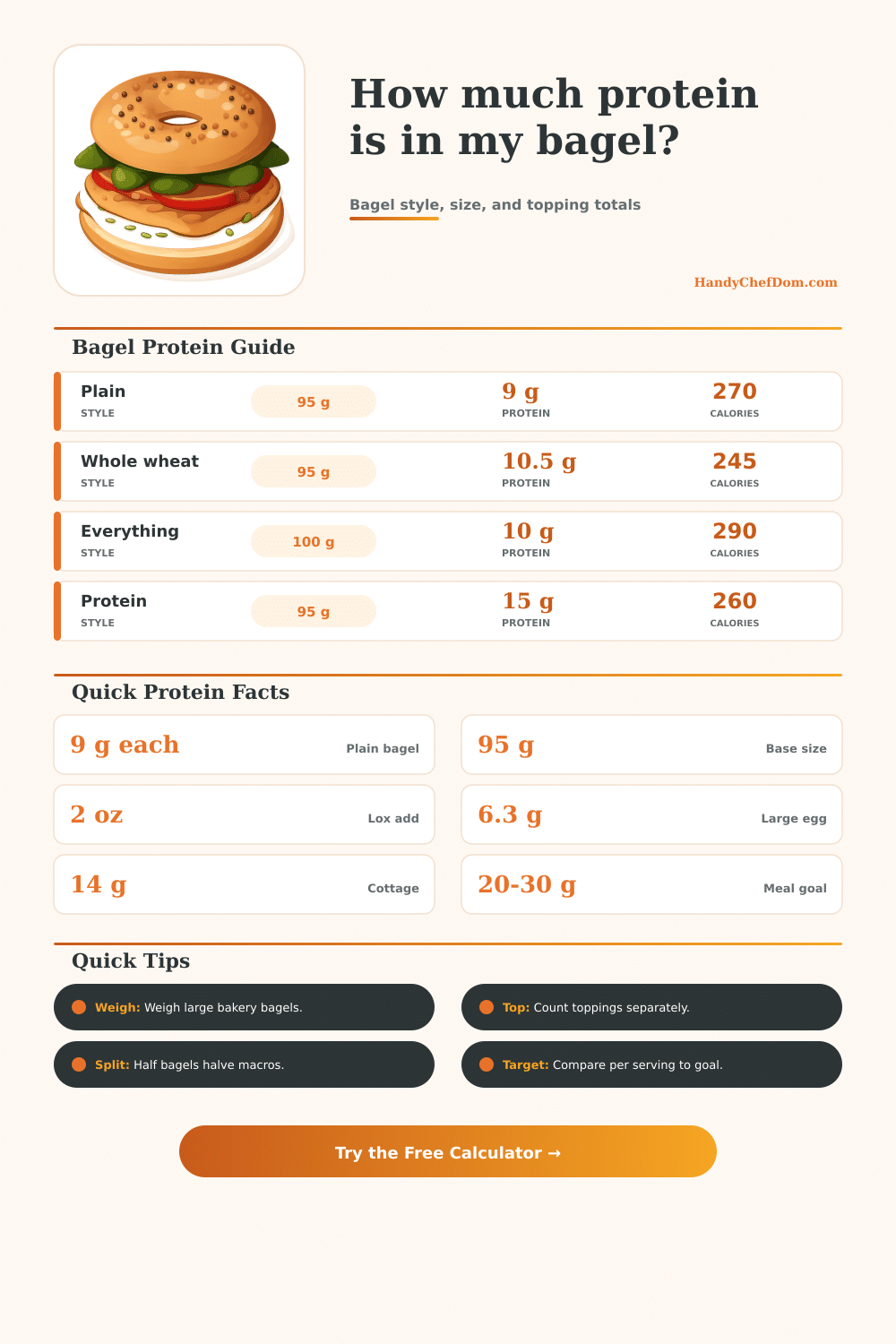
| Plain | 95 g | 9.1 g | 270 | 53 g | 1.5 g | 2.0 g |
| Whole wheat | 95 g | 10.5 g | 245 | 47 g | 2.0 g | 4.0 g |
| Everything | 100 g | 10.0 g | 290 | 56 g | 3.0 g | 2.5 g |
| Sesame | 100 g | 10.5 g | 285 | 53 g | 3.8 g | 2.5 g |
| Cinnamon raisin | 95 g | 9.0 g | 275 | 57 g | 1.5 g | 2.0 g |
| Egg bagel | 100 g | 10.8 g | 292 | 53 g | 2.7 g | 2.0 g |
| Pumpernickel | 95 g | 9.5 g | 250 | 49 g | 1.8 g | 3.5 g |
| Asiago cheese | 105 g | 13.0 g | 330 | 53 g | 6.0 g | 2.0 g |
| Mini plain | 45 g | 4.3 g | 125 | 25 g | 0.8 g | 1.0 g |
| Higher protein | 95 g | 15.0 g | 260 | 43 g | 3.0 g | 6.0 g |
| Topping or add-in | Kitchen serving | Protein | Calories | Best use in calculator |
|---|---|---|---|---|
| Cream cheese | 2 tbsp, 28 g | 2.0 g | 100 | Classic smear |
| Peanut butter | 2 tbsp, 32 g | 7.0 g | 190 | Sweet snack bagel |
| Hummus | 2 tbsp, 30 g | 2.0 g | 70 | Savory vegetarian plate |
| Cottage cheese | 1/2 cup, 113 g | 14.0 g | 110 | High protein topping |
| Greek yogurt spread | 1/2 cup, 113 g | 11.0 g | 80 | Tangy high protein spread |
| Large egg | 1 egg, 50 g | 6.3 g | 72 | Breakfast sandwich |
| Smoked salmon | 2 oz, 56 g | 11.4 g | 66 | Lox brunch plate |
| Deli turkey | 2 oz, 56 g | 11.6 g | 60 | Lunch sandwich |
| Protein target | Typical serving | Bagel strategy | Example pairing |
|---|---|---|---|
| 10 g to 15 g | Light snack | Half to whole bagel | Plain bagel plus light spread |
| 15 g to 20 g | Small breakfast | Whole bagel with protein topping | Whole wheat plus egg |
| 20 g to 30 g | Balanced meal | Whole bagel plus egg or fish | Everything bagel with lox |
| 30 g to 40 g | Training meal | Protein bagel plus two add-ins | Protein bagel, egg, turkey |
| 40 g plus | Large meal prep | Use lean add-ins generously | Chicken, egg, high protein spread |
| Kitchen conversion | Imperial | Metric | Calculator note |
|---|---|---|---|
| Standard bagel | 3.35 oz | 95 g | Use when label is missing |
| Large bakery bagel | 4.5 oz | 128 g | Raises base protein by weight |
| Mini bagel | 1.6 oz | 45 g | Good for party trays |
| One large egg | 1.75 oz | 50 g | Adds about 6.3 g protein |
| Two tablespoons spread | 1 oz | 28 g | Common cream cheese portion |
| Two ounces deli protein | 2 oz | 56 g | Common lox or turkey portion |
At its most basic level, most people treats a bagel like a carbohydrate delivery system. That’s what nutrition labels tell us. But what about the protein added by dough and toppings? When we look past that surface-level fact, we see that many morning sandwich are loaded with far more muscle fuel than folks realize. Those extra grams make all the difference between a plain ol’ breakfast and a training meal.
The weight you eat matters a lot when it comes to proteins. Nutrition labels provide information based off a ninety-five gram serving. But many bakery bagel weigh much more, even over one hundred twenty grams. As the size of dough goes up, so does its protein content. A bigger bagel has more of the base ingredients: flour, eggs, etc. This means more baseline protein. If you don’t account for that additional volume, then you’ll underestimate what you’re eating. Make sure to tweak weight entry in tracking apps according to how big your bagel is.
How to Get More Protein from Bagels
But it can alter the taste and nutrition too. Because whole wheat contains germ and bran in its flours, it tends to have higher amounts of protein (on average) different than plain bagels. Higher amounts of fiber, which digests slower, meaning that when we eat them our bodies absorbs the protein over time rather than experiencing the quick spike and crash. The structure is slightly diffrent, but it has a big impact on metabolism. The trick is knowing what you’re measuring and how that differentiates from something that just “feels” more healthy for you.
That’s not even counting toppings, which is where tracking can really get wonky. Two tablespoons of cream cheese add some flavor but not much protein, roughly two grams per serving. If you’re trying to get twenty grams of protein, that amount are too small. But swap in some Greek yogurt or cottage cheese and the nutrient breakdown shifts dramaticly. A half-cup of cottage cheese, for example, contains more than fourteen gram of protein. No need for any kind of meat; it becomes a perfectly balanced meal instead of a carb-heavy snack. Pick your spread, let the calculator do the math, and see how those extra grams stacks up against your goals.
Protein-wise, eggs and lean meats is both effective. A single large egg contains six grams of protein. Another eleven or twelve grams come from two ounces of smoked salmon or turkey. Put it all together, a whole wheat bagel with egg and turkey, and you’ve got at least 25 grams of protein in no time flat. It’s a well-structured lunch. Though you don’t have to track calories to notice.
If your sandwich is mostly just bread on a plate, chances are it’s low-protein. But if it has topping that give it height and different textures, it’s probably more balanced. Daily tracking also depends on portion sizes: Half a bagel seems small, yet it’s still got plenty of carbs and a little protein. But cutting a big bagel into two pieces completely shifts the per-portion calculation. Partial input fields clearly indicate how much a half or a quarter of something count towards your day.
That comes in handy when prepping meals too. For instance, if you’re whipping up a dozen sandwiches for the week, it would of been nice to know how many grams of protein is in the whole batch so you can account for it in your other meal. It’s good to mix things up so that there’s a heavier protein day and a lighter one.
A small point on density: While toasting does cause some moisture to evaporate from the bagel, it doesn’t change the nutrient density per gram of dry matter. The water is gone and the bagel is now lighter, yet all the protein are still there. So in terms of weight, a toasted bagel will be more packed with nutrition compared to its softer version. Why? Because when you’re trying to count every calorie or are super health-conscious, you probably keep track of what you put into your body. If you don’t weigh your toast, then this won’t really register for you.
The bottom line is that a bagel is simply a way to deliver nutrition. Whether it’s light breakfast or serious lunch depends on its construction. So does whether it’s healthy or not. If you know what you’re consuming, and top it correctly, it can become a nutritional powerhouse. Health goals don’t have to mean an end to bakery indulgences; they only require that you make them substantive. Layering on some cheese or another egg will get you where you want to go, and transform a bagel into a balanced, nourishing plate. Next time you pick up one of these snacks, think less about the carbs on top and more about the protein throughout.