Corn Tortilla Carb Calculator
Estimate total carbs, net carbs, fiber, serving portions, chip pieces, tostada shells, and taco batch scaling from real corn tortilla sizes.
Full Corn Tortilla Breakdown
| Corn tortilla type | Usual size | Typical weight | Total carbs | Fiber |
|---|---|---|---|---|
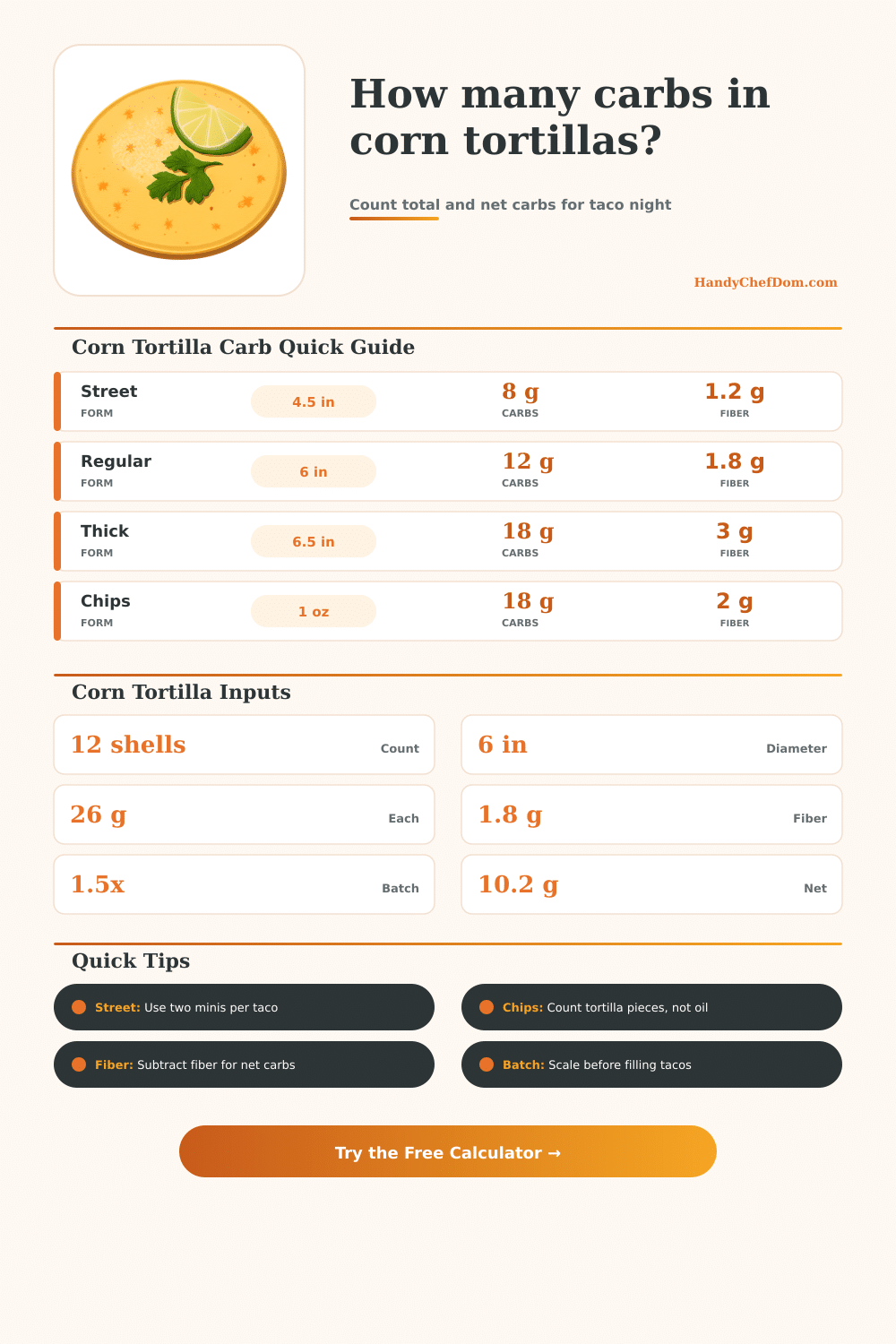
| White corn street taco tortilla | 4 to 4.5 in | 11 to 13 g | 7 to 9 g | 1 to 1.5 g |
| Yellow corn street taco tortilla | 4 to 4.5 in | 12 to 14 g | 8 to 10 g | 1 to 1.6 g |
| Regular white corn tortilla | 5.5 to 6 in | 24 to 28 g | 11 to 13 g | 1.5 to 2 g |
| Regular yellow corn tortilla | 5.5 to 6 in | 25 to 30 g | 12 to 15 g | 1.5 to 2.5 g |
| Blue corn tortilla | 5.5 to 6 in | 25 to 30 g | 12 to 15 g | 2 to 3 g |
| Thick handmade corn tortilla | 6 to 6.5 in | 32 to 40 g | 16 to 20 g | 2.5 to 3.5 g |
| Plain tostada shell | 5 to 6 in | 12 to 16 g | 10 to 14 g | 1.5 to 2.5 g |
| Corn tortilla chips | 1 oz serving | 28 g | 17 to 19 g | 1.5 to 2.5 g |
| Plan | Tortilla logic | For 4 servings | For 12 servings | Carb planning note |
|---|---|---|---|---|
| Single regular tacos | 1 tortilla per taco | 8 tortillas for 2 each | 24 tortillas for 2 each | Use regular 6 in carb value |
| Doubled street tacos | 2 minis per taco | 16 tortillas for 2 tacos | 48 tortillas for 2 tacos | Two minis can equal one regular tortilla |
| Tostada plates | 1 crisp shell each | 8 shells for 2 each | 24 shells for 2 each | Carbs follow shell label, not oil |
| Chip wedge tray | 6 to 8 pieces each tortilla | 72 to 96 pieces from 12 tortillas | 216 to 288 pieces from 36 tortillas | Piece count changes, total carbs do not |
| Taquito batch | 1 tortilla each | 12 taquitos for 3 each | 36 taquitos for 3 each | Small tortillas keep per-piece carbs lower |
| Form choice | Calculator count | Carb effect | Best input to verify | Output to watch |
|---|---|---|---|---|
| Whole tostada shell | Count each shell | Similar carbs to one tortilla | Shell label grams | Shells per serving |
| Cut into 6 chips | Count original tortillas | Total carbs stay tied to tortillas | Carbs per tortilla | Total chip pieces |
| Cut into 8 chips | Count original tortillas | Smaller pieces spread the same carbs | Fiber per tortilla | Pieces per serving |
| Packaged corn chips | Use 1 oz profile | Carbs follow ounce serving | Serving weight | Ounces or grams total |
| Broken tortilla buffer | Add 5% to 15% | Raises total carbs with extra pieces | Allowance setting | Adjusted tortilla count |
| Taco style | Typical tortilla count | Typical total carbs | Typical net carbs | Use when |
|---|---|---|---|---|
| One regular corn taco | 1 regular tortilla | 12 to 15 g | 10 to 13 g | You want fewer tortillas per taco |
| Doubled street taco | 2 mini tortillas | 14 to 20 g | 12 to 17 g | You want the classic double layer |
| Small taquito | 1 street tortilla | 7 to 10 g | 6 to 9 g | You are counting each rolled piece |
| Single tostada | 1 crisp shell | 10 to 14 g | 8 to 12 g | You are using flat crisp shells |
| Corn chip side | 1 oz chips | 17 to 19 g | 15 to 17 g | You are measuring by chip serving weight |
Putting together a taco is tricky business: How do you know how many carbs you’re getting? If you grab an ordinary six-inch corn tortilla and double it for good measure, as most people do with their street-style tacos, the size of those tortillas can vary widely. Hand-pressed tortillas made to order at a taqueria will be heavier than mass-produced ones. The thinner variety you buy at a supermarket could weigh just twelve grams, whereas a thicker artisanal version could tip scales at thirty grams or more. That extra weight translate into a corresponding change in your daily carb intake.
To use it: Simply plug in certain information regarding your tortillas into the calculator and let it do the math. It’s easier than trying to read tiny nutrition labels. Most importantly, you must put in how much each tortilla weigh. We know, everyone thinks they’re eating the same thing with their corn tortillas. Different companies press them different ways, and some make them more hydrated than others. So if you’re buying fresh tortillas from a vendor, they’ll likely be denser than ones stored in refrigerator. Remember to include this extra weight when putting numbers into the calculator. If not, your carb estimate will be wrong because weight field will stay at its default setting, making the tortillas seem heavier then they are.
How to Count Carbs in Your Tacos
Many home cooks don’t think about one variable: fiber. For example, wheat flour has less of it relative to corn, so its net carb load is usually slightly smaller than you’d guess from looking at number of carbs per serving. If you pick the right kind of display in the tool, it will take fiber into account and calculate it out for you. That can make a difference for people on low-carbohydrate diet, or, frankly, anyone trying to manage their blood sugar. Because some part of what you’re eating is slow-digesting structure made of whole grains, that shifts the metabolism of the meal. It is a detail, yes. But it is a detail that changes the outcome.
With a party dish, however, you’re moving from precise to uncertain: how many people do you need to feed? Unless they’re all eating at once, or the tortilla tears up in the pan, there’s no way of ensuring that everyone get exactly four tortillas. To allow for this randomness, the batch scaling option introduce a percentage that buffers your count. For example, you might want a 15% safety margin on tortilla chips. Tortillas tear up when cut, and you get less surface area to work with as more of shell breaks off into crumbs. Underestimating means running out of chips long before you run out of salsa, which doesn’t affect the logistics much, but it ruins the experience.
Switching between crisp tostadas, doubled street styles, and soft tacos update the calculation based on what you are planning to serve. Net vs. Total carbs: Knowing this difference gives you the power to choose well while still keeping things tasty. If you cut a tortilla into eight chips, no one’s fooled about the carb impact per bite. That’s just an optical illusion. Whether those are sitting on a cheese-covered platter or wrapped around some beef doesn’t change total amount of carbohydrates in the batch. It only shifts how you handle portion control. Tacos take more time to assemble/chew. Because of this, most people will eat fewer whole tacos than separate chip pieces.
Nutritionally, because they contain anthocyanins, blue corn tortillas are a bit different from white or yellow ones, though carb counts will be comparable unless they’re thicker or thinner. You shouldn’t assume that the color means you’re loading up on an outrageous amount of fiber just because you’re eating blue corn. Unless it says so on the label, don’t go there. In terms of nutrients, most commercially available blue corn tortillas aren’t too far off from their pale cousins. It’s usually more about taste and tradition than some wild change in the glycemic load.
Unlike processed snack food calories, traditional foods are a little trickier to track carbs because they has variable ingredients, depending on the water used in the masa and who’s making it. Knowing the weight per shell helps you go from guesswork to knowledge. There’s no reason to weigh each taco after you’ve eaten it, just like there’s no need to weigh a bagel or a tortilla before eating one. But when you have a good idea of what it should of been, you can enjoy your meal without worrying about it. That alone makes entering your numbers worth it.