🧈 Butter Sodium Calculator
Estimate sodium in salted, unsalted, light, cultured, whipped, and clarified butter by tablespoons, sticks, grams, recipe servings, use style, daily limit, and salt equivalent.
Choose how the butter is measured, pick the closest butter label, and add recipe servings. Optional label sodium lets you override the standard database value for a specific package.
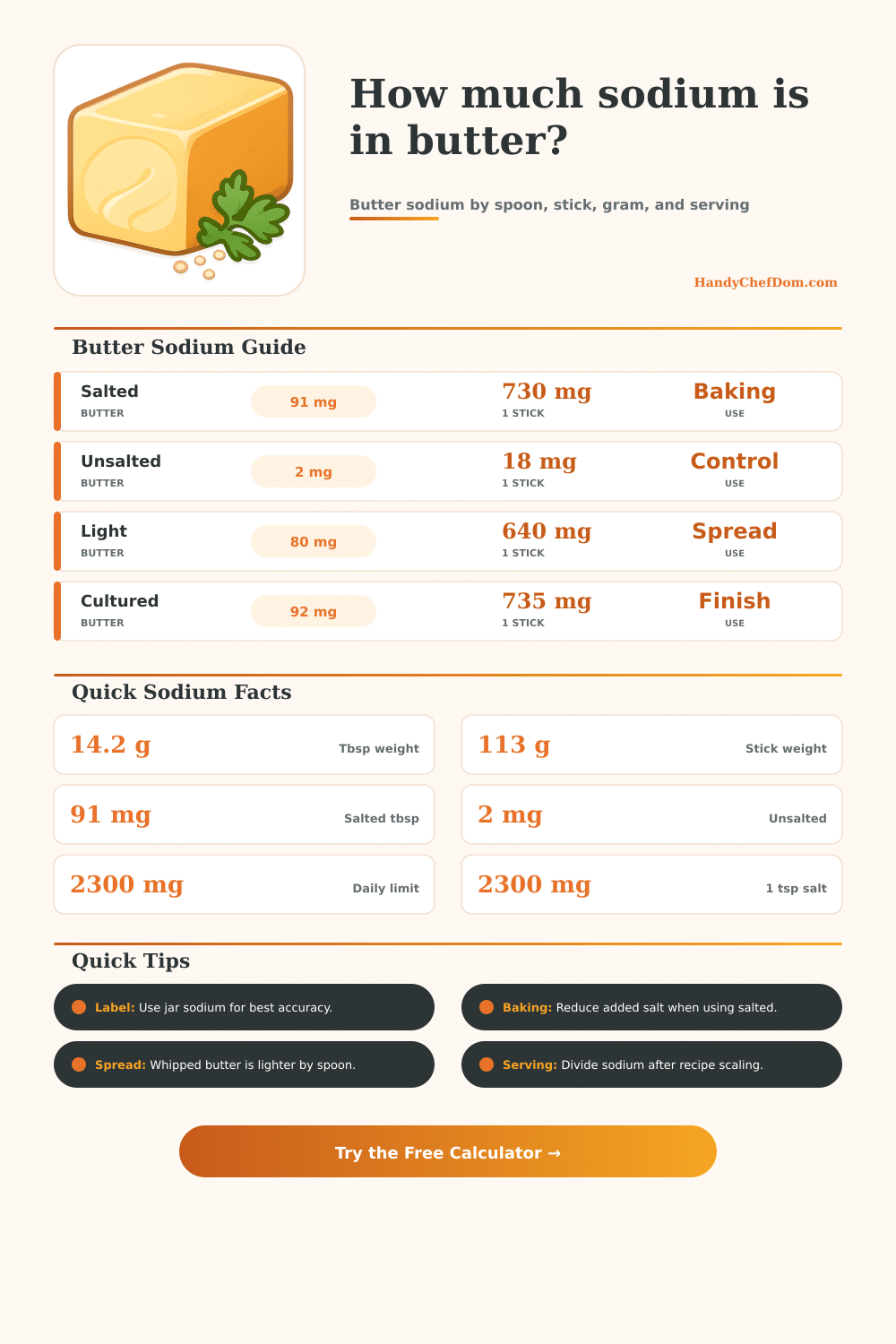
Standard butter math uses 14.2 g per tablespoon, 8 tablespoons per US stick, 28.35 g per ounce, and about 2300 mg sodium in one level teaspoon of table salt.
| Butter type | Typical sodium per tbsp | Sodium per stick | Sodium per 100 g | Best calculator use |
|---|---|---|---|---|
| Salted butter, regular | 91 mg | 728 mg | 641 mg | Default baking, toast, and general salted butter. |
| Unsalted butter | 2 mg | 18 mg | 16 mg | Recipes where salt is controlled separately. |
| Cultured salted butter | 92 mg | 736 mg | 648 mg | Finishing butter and richer table spreads. |
| Cultured unsalted butter | 3 mg | 24 mg | 21 mg | Baking or sauces with cultured flavor but low sodium. |
| Light salted butter spread | 80 mg | 640 mg | 563 mg | Soft tub spreads that often list sodium by tablespoon. |
| Whipped salted butter | 45 mg | 360 mg | 317 mg | Airy table butter measured by spoon volume. |
| European-style salted butter | 88 mg | 704 mg | 620 mg | Higher-fat salted butter used in pastry and finishing. |
| Clarified butter or ghee | 1 mg | 8 mg | 7 mg | Nearly sodium-free fat unless salt is added separately. |
| Butter measure | Tablespoons | Sticks | Grams | Salted sodium estimate |
|---|---|---|---|---|
| 1 teaspoon | 0.33 tbsp | 0.04 stick | 4.7 g | 30 mg |
| 1 tablespoon | 1 tbsp | 0.13 stick | 14.2 g | 91 mg |
| 2 tablespoons | 2 tbsp | 0.25 stick | 28.4 g | 182 mg |
| Half stick | 4 tbsp | 0.5 stick | 56.8 g | 364 mg |
| 1 stick | 8 tbsp | 1 stick | 113.6 g | 728 mg |
| 1 cup | 16 tbsp | 2 sticks | 227 g | 1456 mg |
| Scenario | Butter amount | Butter type | Servings | Approx sodium per serving |
|---|---|---|---|---|
| Toast for two | 2 tbsp | Salted | 2 | 91 mg |
| Cookie batch | 1 stick | Salted | 24 | 30 mg |
| Roll spread bowl | 6 tbsp | Light salted | 12 | 40 mg |
| Finishing pats | 4 tbsp | Cultured salted | 8 | 46 mg |
| Unsalted cake butter | 2 sticks | Unsalted | 12 | 3 mg |
| Whipped table butter | 8 tbsp | Whipped salted | 16 | 23 mg |
| Sodium amount | Percent of 2300 mg limit | Table salt equivalent | Butter comparison | How to read it |
|---|---|---|---|---|
| 45 mg | 2% | 0.02 tsp | 1 tbsp whipped salted | Small spread amount. |
| 91 mg | 4% | 0.04 tsp | 1 tbsp regular salted | Typical pat or toast spread. |
| 364 mg | 16% | 0.16 tsp | Half stick salted | Recipe sodium starts to matter. |
| 728 mg | 32% | 0.32 tsp | 1 stick salted | Divide by servings before judging. |
| 1456 mg | 63% | 0.63 tsp | 1 cup salted | Large baking batches need serving math. |
When you grab a stick of butter, I bet you don’t consider the sodium content. Sure, you’re thinking: cream color, rich flavor. But not: invisible sprinkling of salt crystals throughout this fat. That salt is there, though, and if you’re generous with the spread across your breakfast toast, or baking big batches, that sneaky sodium can add up quick.
Use tool above to do all the work for you. It turns your measures into precise milligram counts so you won’t have to guess if every pat of butter is a harmless indulgence or diet-busting slip-up.
Why Butter Has Hidden Salt
One thing all sodium calculations rely on is simply what kind of butter you purchase. Unsalted varieties weighs in at approximately two milligrams of sodium per tablespoon; salted butters clock in around ninety-one. That sounds like an insignificant amount until you consider that an average-size stick of butter yields eight tablespoon. And if you’re making cookies from a recipe requiring a whole stick, and use salted butter rather than the called-for unsalted, then you’ve just added more than seven hundred milligrams of sodium to the cookie dough, before you even add your personal sprinkle of salt.
One small food choice can mean half the fight when it comes to watching your sodium intake. All Butter Is Not Created Equal Butter doesn’t have to be the same: Many people assume all butter is equal, but whipped or light spreads contain air or water, which changes the density and often alters the sodium concentration relative to volume. While a tablespoon of whipped butter may weigh less than a tablespoon of dense, block butter, the calculator allows you to choose among different types (e.g., clarified ghee vs. You can choose different types of butter, such as clarified ghee or European-style cultured butter, so your result matches what is actualy on your plate instead of a generic average. To account for those differences, the calculator allows you to choose among different types (e.g., clarified ghee vs. European-style cultured butter) so your result will match what’s actually on your plate, not some generic average.
Clarified butter is essentially pure fat with no water or milk solids, making it almost sodium-free (what’s left behind in the cooking pot after you cook it away). Another area where our gut falls short? Serving size. I think we’re used to estimating total sodium for a recipe; that’s great, but unless you can break it up into portions for everyone at the table, it doesn’t mean much. For example, two sticks of butter in a big loaf of bread seems like a ton of salt. But when there are going to be 24 slices from that same bread, and each gets a fraction of the stick, then it isn’t so overwhelming. It helps me see the math behind why big portions don’t freak me out, or how something that I eat all day long in tiny bites accumulates.
Salt makes it more complicated. Recipes typically tell you to add salt even if the butter is salted or not. For pros, this tends to be unsalted butter since bakers want exact control over their seasonings. At home, though, we tend to reach for what’s in the fridge, which might mean ingredients that are already salted. If that’s your choice, and you add salt as the recipe directs, you’re probably adding twice the amount of sodium intended. You can enter the number of added teaspoons of salt here, too, and see how it all balances out. When you can see it all at once, you know whether you should of back off on any added salt with a pre-salted ingredient.
These figures are also relative to daily limits. Most health advice recommends sticking to less than two thousand three hundred milligrams of sodium per day. A stick of salted butter use up around thirty-two percent of that amount by itself. That’s a lot of one food for breakfast, or even as a snack! Once you know how much of your limit is eaten by butter, you can better ration the other foods in your meal plan. If butter is already loaded with sodium, maybe pass on the salty cereal and try to avoid heavily-processed meat later in the day. You do not need to completely give up on butter; just make smarter choices across all your meals.
So: How should we think about tracking sodium in fats? The answer is simple: Less restriction than awareness. Fats adds richness and structure that’s hard for other ingredients to match. Don’t be afraid to use them, but just make sure you understand what you’re eating. Run the numbers; read the label. Turn a general feeling of health into concrete understanding. Next time you reach for a stick for your toast or dinner roll, you’ll know a little better how much you’re realy getting. And with that clarity comes ability to appreciate their taste without losing track of total intake.