Steak Marinating Time Calculator
Estimate steak marinating time from cut, thickness, marinade acid level, salt percentage, tenderizing ingredient, refrigerator temperature, flavor intensity, and a safety cap.
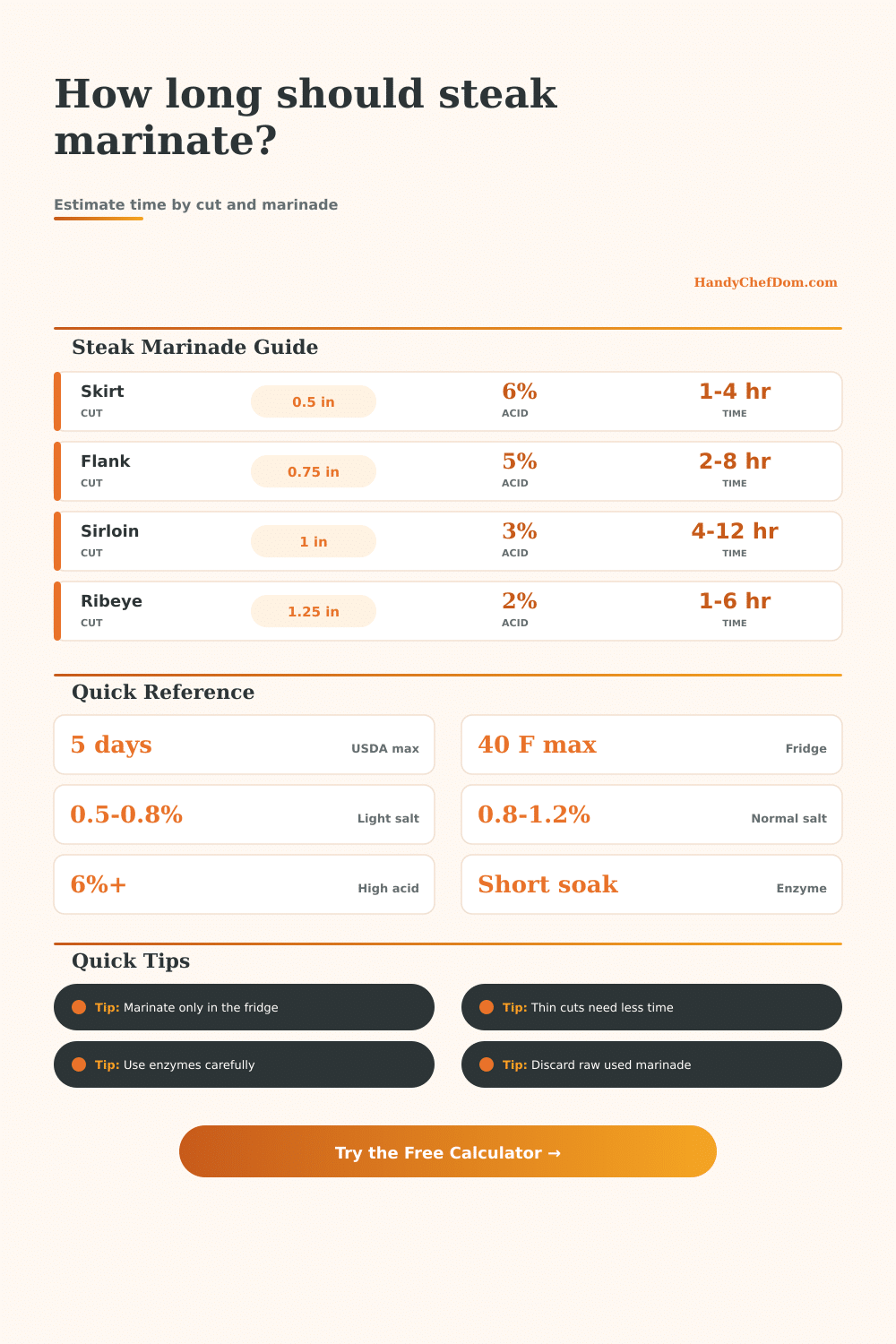
| Steak Cut | Typical Thickness | Balanced Marinade | High Acid Limit |
|---|---|---|---|
| Skirt steak | 0.4 to 0.7 in | 1 to 4 hours | 1 to 3 hours |
| Flank steak | 0.6 to 1.0 in | 2 to 8 hours | 2 to 6 hours |
| Flat iron | 0.8 to 1.2 in | 2 to 8 hours | 1 to 5 hours |
| Top sirloin | 0.8 to 1.5 in | 4 to 12 hours | 2 to 8 hours |
| Tri tip steak | 1.0 to 2.0 in | 6 to 18 hours | 3 to 10 hours |
| Ribeye | 1.0 to 1.5 in | 1 to 6 hours | 45 min to 4 hours |
| New York strip | 1.0 to 1.5 in | 1 to 8 hours | 1 to 5 hours |
| Filet mignon | 1.2 to 2.0 in | 30 min to 4 hours | 30 min to 2 hours |
| Salt Percent | Use Case | Flavor Impact | Timing Note |
|---|---|---|---|
| Under 0.5% | Low sodium marinade | Light surface flavor | Works best with herbs and acid |
| 0.5 to 0.8% | Gentle steak seasoning | Mildly seasoned center | Good for tender cuts |
| 0.8 to 1.2% | Standard dry-brine range | Balanced beef flavor | Good overnight limit for lean cuts |
| 1.3 to 1.8% | Bold marinade or soy base | Noticeably salty | Shorten time if acid is high |
| Over 1.8% | Very salty marinade | Cured or hammy edge | Use short contact time only |
| Ingredient Profile | Typical Acid | Tenderizing Force | Best Window |
|---|---|---|---|
| Herb oil or garlic oil | 0 to 1% | Very low | 1 to 24 hours |
| Wine, beer, or buttermilk | 1 to 3% | Mild | 2 to 18 hours |
| Soy sauce and aromatics | 1 to 3% | Salt driven | 1 to 12 hours |
| Citrus or vinegar forward | 4 to 8% | Medium to high | 30 minutes to 6 hours |
| Pineapple or papaya | 2 to 6% | Very high enzyme | 15 minutes to 2 hours |
| Kiwi or ginger | 1 to 5% | High enzyme | 30 minutes to 3 hours |
| Condition | Calculator Effect | Why It Matters | Practical Action |
|---|---|---|---|
| 32 to 35 F fridge | No timing penalty | Cold storage slows quality change | Allow longer warm-up before cooking |
| 36 to 40 F fridge | Normal USDA-safe range | Standard refrigerator assumption | Keep sealed and below ready foods |
| 41 to 45 F fridge | Shortens suggested time | Above the recommended 40 F limit | Adjust fridge and cook sooner |
| Room temperature | Not supported | Marinating should be refrigerated | Move steak to the refrigerator |
Marinades are chemical processes; they need to be respected. You take this lovely hunk of beef, and by leaving it in marinade too long, you turn it into something else entirely: Mushy! It tastes more aggressively sour than savory, with the consistency of overcooked fish.
Marinating is not just about soaking; its actualy a chemical process. And cooking means knowing what variables affect your time, which is where my calculator comes in. Plug in your own numbers and let the calculator do the math for you. This spares you the task of trying to guess if you should marinate your flank steak for an hour or a day.
How to Marinate Meat Correctly
Knowing why these numbers exist will change your approach at stove. Salt and acid are spreading agents; they has to penetrate tissue to perform their magic. This means thickness is the most important factor. A ribeye is going to take hours before it taste seasoned on the interior (if ever), while a thin skirt steak will be thoroughly infused throughout its cross-section in about an hour.
That’s why the knife requires exact dimensions, not just the type of meat you are seasoning, but also thickness, so you don’t treat a half-inch slice like a two-inch cut. You’ll end up with ruined exterior texture or unseasoned interior. The page’s reference table make this clear at a glance.
Marinade is a double edged sword: Acid break down the protein in meat to tenderize, but if given free rein it’s going to break it all the way down. High acid blends require significantly shorter times different than oil based ones (think lemon vs olive oil). Use the helpful calculator which take into account the acidity percentage you put in and adjusts the time to match. A light herb oil infusion won’t curdle as fast as a heavy citrus soak will at surface. Tenderize but don’t destroy. The line can be very narrow between perfect and paste.
Salt is different. Salt doesn’t just season the outside. It dissolve muscle fibers, extracts moisture from the flesh, and lets that seasoned juice get sucked back deep inside meat. That’s what makes higher concentrations of salt capable of impacting an entire steak even after a brief marinade time. It measures your salt content so you never accidentally overdo it and end up with a piece of corned beef for dinner. Normally you’d want to stay somewhere in the 1% range. It seasons but does not cure.
Fresh pineapple, kiwi, and papaya should be treated cautiously: They’re chock-full of aggressive enzymes. Natural proteases chop ruthlessly through protein chains. An hour will turn them into mush; a few minutes might transform them utterly. That’s why the calculator calls out those ingredients and shortens your recommended time frame a lot. Once they collapse, you could of not put toothpaste back in tube.
In addition to being safe, low temps also has a practical benefit: They slow chemical reactions, buying you time without compromising texture. You’re operating safely by keeping your steak under 40F, and letting the marinade do its thing gradualy instead of aggressively. The USDA says you can keep raw beef in the fridge up to five days, but food quality typicaly gets worse well before it reaches unsafe levels.
Where you land within my suggested range depend on what kind of flavor you want. For surface flavors, you pull out earlier; for penetration that reaches the core, go right up to the max (assuming the acid level and cut permit). Home cooks underestimate just how rapidly thin slice can take on flavor. Pay attention to the timing though, it’s for a reason, and it works…if you do.
Then there’s the most critical part: Toss the raw marinade. It should never be reused as a sauce; bring it to a boil first if you want to do so. Pat the steak dry, too. This, too, is an enemy of the perfect sear. No moisture means no steaming; just browning. The last prize for all that careful planning is a nice, dry crust.
Don’t think that marinating is magic. It’s simply a chemical process controlled by temperature and time. Respect the acid. Watch out for the enzymes. And don’t forget about the cooling power of the fridge. A few more minutes of patience can be the difference between good steak and great steak when you get the timing correct. The dinner will thank you for it.