🧈 Butter to Shortening Substitute Calculator
Convert butter and shortening by cups, tablespoons, ounces, or grams while matching fat, water, salt, and baking texture.
Enter the original fat from your recipe. The calculator estimates a practical replacement, the fat match, and the liquid change caused by butter water.
| Original | Practical Swap | Liquid Move | Best For |
|---|---|---|---|
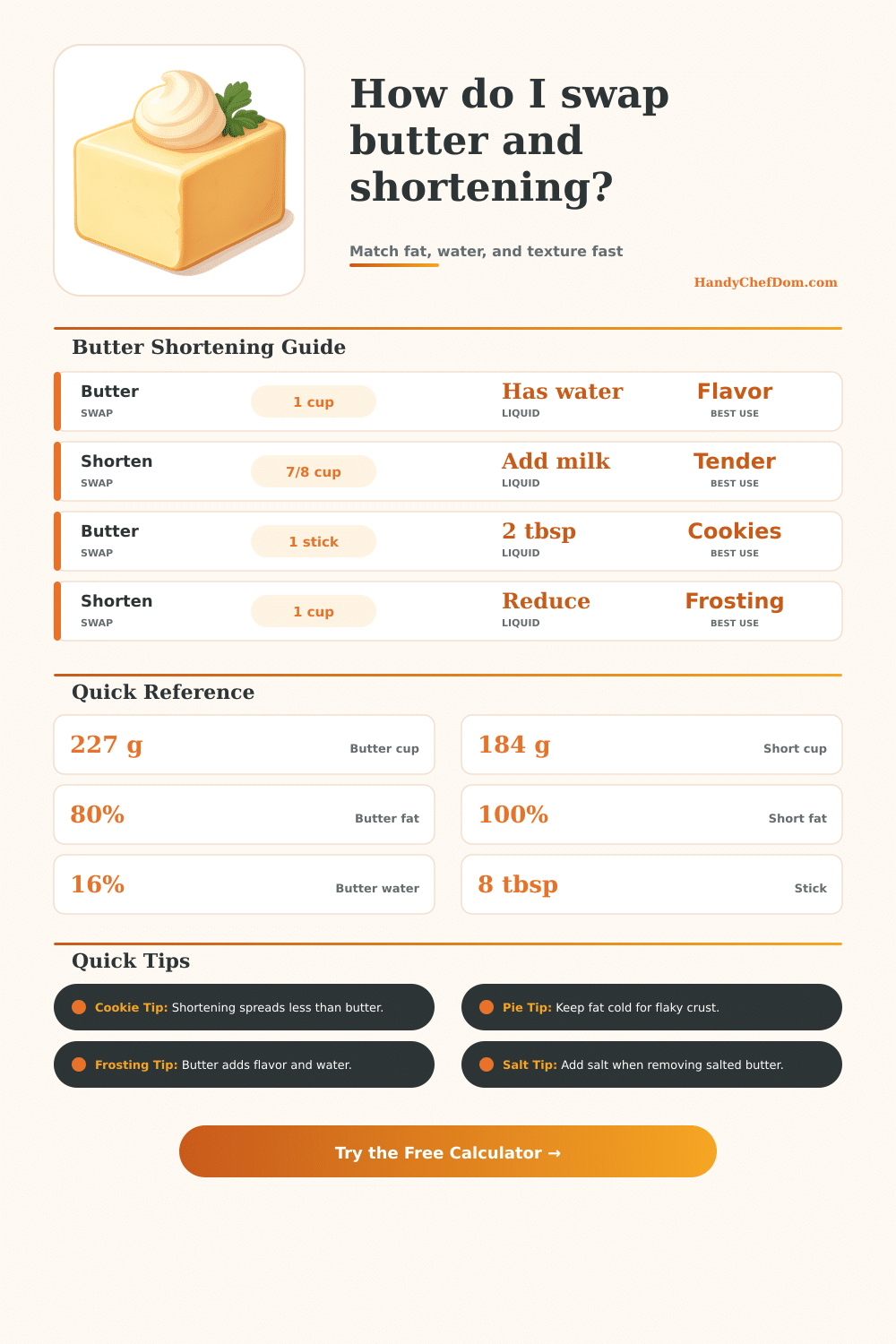
| 1 cup butter | 7/8 cup shortening | Add 2 to 3 tbsp milk or water | Cookies, cakes, quick breads |
| 1/2 cup butter | 7 tbsp shortening | Add 1 to 1 1/2 tbsp liquid | Small cookie batches |
| 1 stick butter | 7 tbsp shortening | Add 1 to 1 1/2 tbsp liquid | Bars and drop cookies |
| 1 cup shortening | 1 cup butter | Reduce recipe liquid by 2 to 3 tbsp | Flavor-focused baking |
| 1/2 cup shortening | 1/2 cup butter | Reduce recipe liquid by 1 tbsp | Cakes and frostings |
| 100 g butter | 80 g shortening | Add about 16 g liquid | Scaled metric formulas |
| Use | Butter Effect | Shortening Effect | Adjustment |
|---|---|---|---|
| Cookies | More spread and browning | Taller, softer cookies | Add a little liquid when replacing butter |
| Pie crust | Flavor and browning | Tender, easy flakes | Keep fat cold and avoid extra liquid |
| Frosting | Richer taste, softer set | Whiter color, firm hold | Balance with milk or powdered sugar |
| Cake | Flavor and moisture | Fine crumb and height | Match fat and replace butter water |
| Biscuits | Flavor and steam lift | Tender bite | Add liquid carefully after cutting fat |
| Brownies | Dense flavor | Less butter aroma | Keep some butter for taste if desired |
| Measure | Butter | Shortening | Note |
|---|---|---|---|
| 1 cup | 227 g | 184 g | Different density, similar cup use |
| 1 tablespoon | 14.2 g | 11.5 g | Useful for small adjustments |
| 1 ounce | 28.35 g | 28.35 g | Weight is direct |
| 100 grams | 7.0 tbsp | 8.7 tbsp | Shortening is lighter by volume |
| 1 stick butter | 113 g | About 98 g swap | Common cookie conversion |
| 1/4 cup | 57 g | 46 g | Small batch reference |
| Texture Goal | Fat Move | Water Move | Kitchen Cue |
|---|---|---|---|
| Balanced match | Use calculated amount | Replace butter water | Closest all-purpose swap |
| Softer and taller | Slightly more shortening | Keep liquid moderate | Good for soft cookies |
| Crisper edges | Slightly less shortening | Keep liquid low | Better browning with butter |
| Flakier layers | Keep visible fat pieces | Add only as needed | Best for pastry |
| Creamier frosting | Use mixed fat if possible | Add milk slowly | Controls stiffness |
| Richer flavor | Favor butter direction | Reduce other liquid | More dairy notes |
Why bake with butter and shortening? They both have different levels of water content. Shortening contain no water; it’s all fat. On the other hand, butter has about 16 percent water and is around 80 percent fat. These two ingredient act very differently during cooking.
One impact is that steam forms in the oven. Without steam, the crust remains tender but lacks some of its flakiness. Steam lift up the dough to create layers. By replacing one fat with the other, you’re also taking away a naturaly leavening ingredient found within dairy.
How to Swap Butter and Shortening
These are all densities that many bakers find interchangeable when it comes to measuring out equal volumes. They grab a cup of this fat and a cup of that one and ask why didn’t it turn out right? It’s because a cup of butter is much heavier then a cup of shortening. Hydrogenated oils capture air, whereas milk solids are packed tight. That’s where the conversion calculator comes into play; it takes the math into account for different densities between these fats.
Want to replace butter with shortening? You’ll want to add liquid to make up for what was lost. Replace shortening with butter? Reduce some of the liquid in the batter, otherwise result will be soggy. In either case, switching them back and forth by volume alone won’t do. It’ll be too moist or oddly greasy.
The converter allows you to select your destination. Most people baking at home don’t care about precise numbers of grams; they just want something that tastes good. Do you want cookies that spread on your cookie sheet (which is what happens with butter)? Or do you prefer ones that stand up tall and stay chewy?
Shortening melts slower, remaining solid longer during cooking time, so it’s better suited for that purpose. On the other hand, butter melt sooner. This causes the cookie to spread more rapidly which results in crispier cookie edges but less height. Many professional bakers combine both: They add shortening for its structure and tenderness, but keep some butter to give the dish more taste.
The calculator allows you to choose your use case; is it a pie, or are you making frosting? An airy sponge cake might benefit from a different swap than denser brownies.
Think about one more thing: salt. Most recipes assume you are using unsalted butter so you can season them as you like. If you start with salted butter but then swap to plain shortening, remember to add an extra pinch of salt. That’s because shortening doesn’t have any flavor of its own, it’s designed to be bland, leaving the structure-building job to the other ingredients.
Milk solids in butter react with heat to form those golden crusts on your scones, biscuits and more. They don’t do that as well with vegetable fat, which results in paler baked items and a slightly cleaner flavor. That isn’t bad at all! It simply alters their entire character. Fruit pies may benefit from this blank canvas but butter cookies might disappoint.
You can’t make big changes with liquids, but what you do makes a big difference. Two tablespoons of milk doesn’t sound like much, but think about how much water has already left the butter. Too little liquid results in cracked dough, but too much makes it become slack. Add the liquid mix slowly and don’t dump it all in at one time. Feel the dough as you’re going because although the calculator will give you a target number, your hands know when it’s done.
Baking involves both science and feel. The numbers help you get close but you need experience to cross the finish line. When it comes down to swapping fats, it’s all about setting proper expectations: butter won’t give you a shortening-like lift and shortening won’t give you buttery flavor. It’s about deciding what trade-off makes the most sense for your meal.
Lift or spread? Whiteness or color? When you’re okay with that tradeoff, the fat swap gets easy. Be mindful of the water though, since that sneaky moisture content is always trying to throw off your balance. Keep an eye on it and you’ll consistently see results that last.