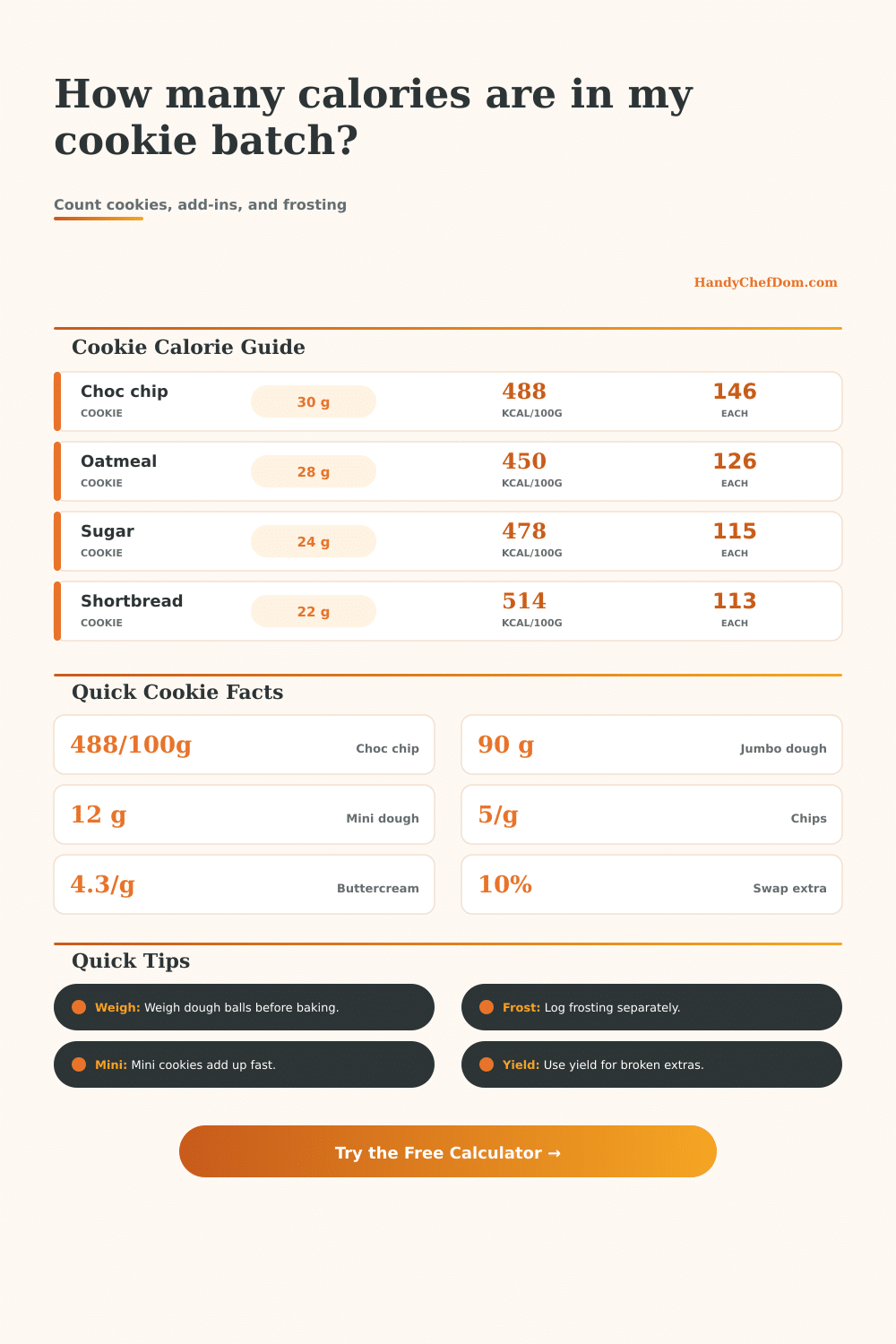
Portions are one thing that cause people stress during holiday baking. Will those little treats be too much? When looking at bowl of chocolate chip cookie dough, will adding more chips make it a dietary no-no? In most cases, the answer’s yes… But it matters how you define “more.”
Cookies isn’t always consistent in size and shape; they becomes denser and flatter over time. Eyes are not reliable. Know your measurement. For calorie counts on baked goods, weight is best. A large flat oatmeal cookie may be the same volume as a thick dense shortbread, but shortbread will weigh more, meaning a higher calorie count.
Why Weighing Helps Control Calories
If you weigh your dough before and after baking (remembering water evaporates during cooking), then enter your specific variables into the calculator, it figure out the rest for you. You don’t need to estimate how much weight has been reduced by evaporation. When a batter bakes, it lose water, making the remaining ingredient more concentrated. Flour, sugar, and fat becomes more densely packed. Thus, total weight of the dough going into oven is greater than its weight when cooked.
Most packages base their estimates based off a standard density, whereas you should weigh each ball of raw dough before baking. That way, weight remains constant regardless of what’s happening with oven temperatures and humidity. The base recipe will have an effect as well as add-ins such as chocolate chips and nuts. A plain version of something has a set number of calories.
For example, a chocolate chip cookie is one thing, but adding white chocolate or five gram of walnuts changes that amount. White chocolate is mostly sugar, and nuts is high in fat. They don’t evaporate like water does; they remains in the cookie. Adding those items only increases the calories in dough. If you’re attempting to create a batch that falls into some kind of nutritional category, this make a difference.
For example, butter is higher in fat different than royal icing; this is why a gram of buttercream will add more calories per gram than a gram of royal icing. (You can see the effect in the reference tables on the page.) The type of frosting also impact the outcome. Adding a light glaze doesn’t increase calories much, while a heavy coat of chocolate ganache or even just regular buttercream could more than double number of calories from the underlying cookie. You’ll want to account for this.
To do so, if you only ice half your batch of cookies and skip other half, average calories per cookie will decrease, but the ones with frosting will have more. Our calculator allows you to enter the percent of frosted cookies, reflecting what actualy happens (you might make a bunch of decorated cookies for a party, but leave others plain for lunches). It takes into account the fact that not all of your cookies will be equal.
A lot of nutrition labels also fail to account for waste or yield, that is, it’s rare you end up with as many cookies as a given recipe claims. A few cookie will be broken; a bit of batter will stick to spoon; others will become snacked on in their uncooked state. Those losses don’t vanish from the overall caloric tally. When you bake fewer (say, twenty) cookies then planned (twenty-four), the calories from those missing cookies is added to the rest. So every one of those remaining cookies contain slightly more energy density than recipe states. Taking into account waste prevents your predictions from becoming an inaccurate exercise.
Baking isn’t perfect, but it’s precise. You don’t need a laboratory to understand that adding ingredients add energy, and that weight matter more than size. After you’ve weighed out your dough and measured your add-ins, you won’t feel as anxious anymore about the calories involved. You should of known. And knowing takes care of all that wondering and guessing. Knowing is worth the effort of taking a few minutes to weigh things. It makes math easier, and math is less scary than feeling anxious.