🌭 Brats in Beer Simmering Time Calculator
Estimate beer brat simmering time from brat count, average weight, raw or precooked state, beer volume, pot diameter, liquid temperature, onion load, holding time, and grill finish.
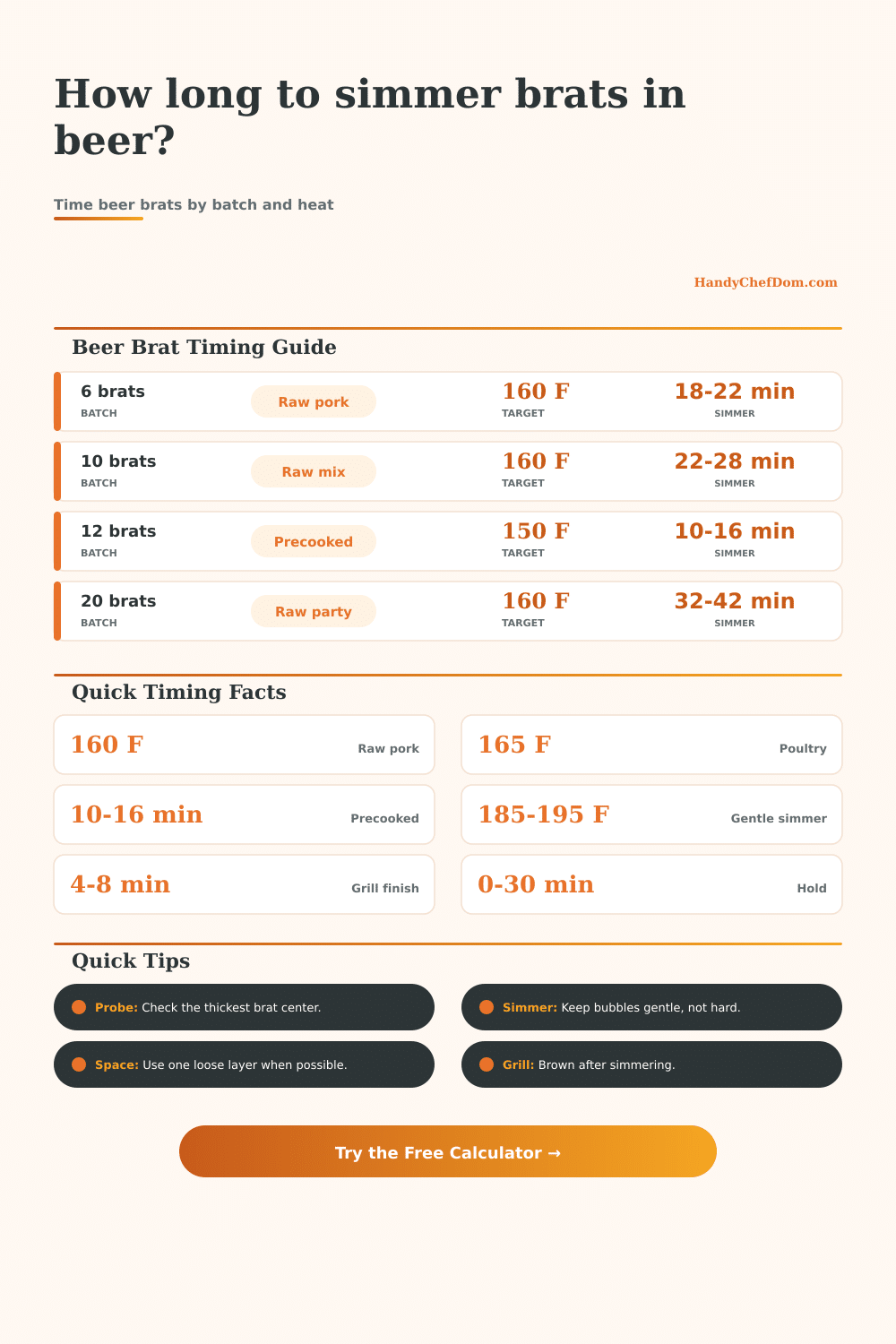
Set the batch size and pot conditions. Raw sausage timing defaults to common USDA-style safe minimum references, while precooked brats use a reheating target that you can adjust.
| Brat Type | Starting State | Target Internal Temperature | Timing Use |
|---|---|---|---|
| Classic pork bratwurst | Raw sausage | 160°F / 71°C | USDA-style ground meat sausage reference |
| Beef and pork brat | Raw sausage | 160°F / 71°C | Ground meat sausage reference |
| Chicken or turkey brat | Raw poultry sausage | 165°F / 74°C | Poultry sausage reference |
| Smoked precooked brat | Precooked package | Package direction or 165°F leftover-style reheat | Heating plan, not raw cooking |
| Plant-style brat | Chilled prepared link | Package direction | Quality and serving heat target |
| Batch Size | Standard Raw Brats | Precooked Brats | Pot Note |
|---|---|---|---|
| 4 to 6 brats | 16 to 22 minutes | 8 to 12 minutes | 9 inch skillet or small pot |
| 8 to 10 brats | 20 to 28 minutes | 10 to 15 minutes | 10 to 12 inch pot works well |
| 12 to 16 brats | 26 to 36 minutes | 14 to 20 minutes | Stir once for even heating |
| 20 to 24 brats | 32 to 45 minutes | 18 to 26 minutes | Use a stockpot or split batches |
| 30 or more brats | 40 to 60 minutes | 24 to 36 minutes | Probe several links before holding |
| Beer and Pot Setup | Liquid Depth Guide | Heat Transfer | Calculator Effect |
|---|---|---|---|
| 3 cups in 10 inch pot | About 0.6 inch | Shallow bath | Adds a few minutes |
| 4 cups in 10 inch pot | About 0.8 inch | Good partial coverage | Baseline for 8 to 10 brats |
| 6 cups in 12 inch pot | About 0.9 inch | Even wide batch | Good for party pans |
| 8 cups in 12 inch pot | About 1.1 inches | Deep simmer | Good for heavy onions |
| Low liquid late simmer | Under 0.5 inch | Uneven contact | Turn links and watch the pan |
| Simmer Level or Finish | Approx Liquid Temp | Best For | Timing Effect |
|---|---|---|---|
| Bare simmer | 180 to 185°F | Gentle texture | Add 4 to 8 minutes |
| Gentle simmer | 185 to 195°F | Most raw beer brats | Baseline |
| Steady simmer | 195 to 205°F | Larger batches | Subtract 2 to 4 minutes |
| Active simmer | 205°F plus | Fast heat-up only | Can split casings if held hard |
| Standard grill finish | Medium grill | Browned casings | Add 6 minutes after simmer |
Temperature references follow common USDA-style consumer guidance for sausage and poultry. Use package directions for precooked specialty links and verify doneness with a food thermometer.
You’re serving brats and one of your guests asks “Are they done?”. Uh oh. Panic time.
You thought you were being clever and pulled them out early so the beer glaze could soak in, but they’re all pink in the middle and cold. Why’d that happen? Usually it’s a lack of understanding of how heat travels through your meat and liquid. Cooking brats doesn’t boil away some magic elixir called “beery goodness” that makes ’em taste better, it’s a heat control issue.
How to Cook Brats Perfectly
There’s a tool for that: this web page that lets you plug in the specific details (sausage type, batch volume, and pot size) and turns it into a concrete number (time). No physics degree required. You just need to know which variables really matter.
It comes down to sausage in. Precooked and ready-to-eat links will only have to be warmed through, whereas raw pork brats (like the ones we use) must be fully cooked to an appropriate internal temp. Big difference here. Raw pork brats requires a full cook to reach a safe internal temperature, while precooked links just need to warm through. Though they may appear about the same size, a smoke-processed brat will not take nearly as long than a raw, thick-butcher-cut kind. This is where the tool comes into play: It knows how long to cook based off the starting point… Reheating versus raw. And adjusts accordingly.
It also considers weight of your brats. A standard supermarket sausage link won’t take as long to get hot all the way through as a thicker butcher cut. Surface area isn’t everything; it’s all about mass.
The other key variables are pot diameter and liquid volume. A wider pot allows for a single layer of brats, which helps with even heat distribution. More beer = more tasty. Well… yes, but if there’s too much liquid it will boil too violently (which impedes heating). You want it to just barely simmer. It shouldn’t be a full-on rolling boil. If the bratwurst boils so hard that the casings split open, the juice escapes and that’s what makes the sausage moist in the first place.
With a larger pot, you can use a single layer of brats, which heats everything evenly. Too many brats packed into a small pot, and they’ll form hot/cold spots because the heat won’t be distributed properly. For groups, double-potting your brats (i.e., using two pans) is nearly always quicker than cramming 20 brats into a single one.
One more thing to consider is onions. Adding them complicates things a bit. They act as a slight thermal buffer and lengthen cooking time. This is a small detail, but it is critical if you are on a timeline. To compensate for this, I’ve programmed the onion count into the calculator so it’ll account for how much onion goes in your pot. It will help keep the onions soft enough to impart some sweetness to the beer bath without cooking the brats through to death. And with onions comes a slight change in the cooking time.
Now let’s talk about the texture. To get that right, I think you need to do the finishing on the grill. By simmering, you know that the interior is tender and cooked safely, but it also results in a pale and soft exterior. Get some contrasting color and texture by quickly blasting the brats on the grill. Far better than just throwing brats right onto the fire of the grill raw, which risks charred outsides and raw insides. The calculator will split the grill time from the simmer time so you can manage how you want to work through it. For example, you could simmer a batch up, keep it warm, and then bring out one or two and hit them on the grill when people come in the door. They are fresh and still hot, but not overcooked.
Prioritize safety. The recommended temps follow general food safety standards for poultry and ground pork. Pork and poultry sausages requires different internal temperatures, with poultry needing a higher temperature. The tool will automatically adjust depending on which you choose. Use a thermometer to check doneness every time. Color is an imperfect guide. The color of the casing varies depending on the grill and type of beer used. Always use a thermometer to determine if it is safe.
If you’re familiar with heat transfer physics, cooking brats in beer can’t go wrong. It’s a forgiving technique: The beer acts as a buffer between meat and the air, which keeps your brats from drying out and ensures they all cook evenly. Time-wise, the gadget removes the guessing game so you can concentrate on the socializing part of the party. Hit the button and soon, your brats will be hot, plump and ready to hit the grill. As the links sizzle away, the beer will be reduced down to a rich sauce that coats the links.
There’s no need to ask whether or not they’re done, you’ll serve ’em up and everyone knows they taste right. You should of checked them earlier!