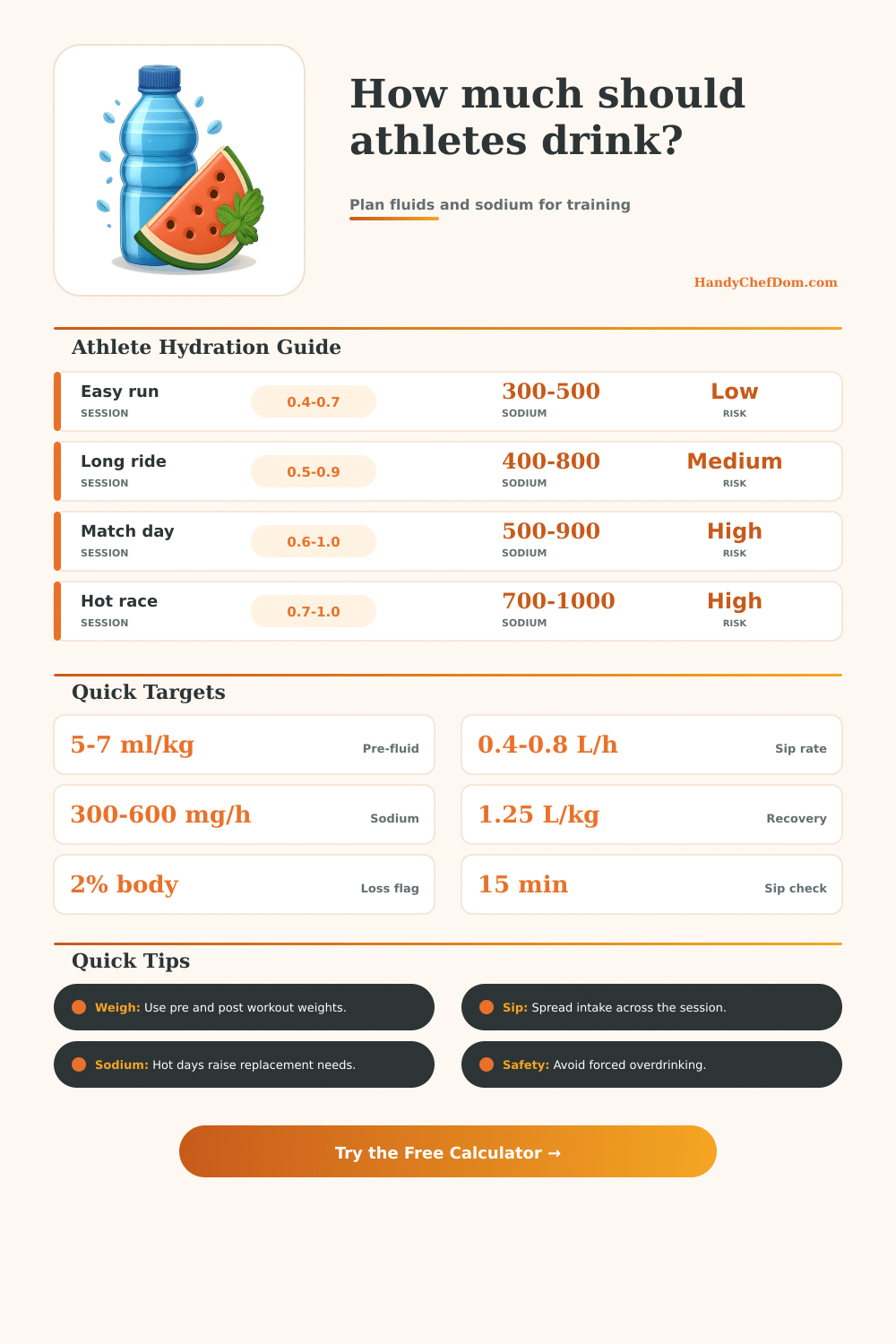
💧 Hydration Calculator for Athletes
Estimate sweat loss, fluid timing, sodium replacement, and recovery drinking targets for training, competition, and hot-weather sessions.
Enter your body weight, workout duration, planned sweat rate, conditions, sodium loss, and optional pre/post weigh-in. If weigh-in data is complete, the calculator uses it to refine the sweat-rate estimate.
| Athlete Session | Typical Sweat Rate | Common Sodium Range | Planning Note |
|---|---|---|---|
| Easy run under 75 minutes | 0.4-0.7 L/hr | 300-600 mg/L | Thirst and a small bottle may be enough in mild weather. |
| Long run or race build | 0.6-1.1 L/hr | 500-900 mg/L | Practice sip timing before race day. |
| Cycling endurance block | 0.5-1.2 L/hr | 400-1000 mg/L | Use bottle marks to divide intake by hour. |
| Field sport or pads | 0.7-1.4 L/hr | 600-1200 mg/L | Break access and gear load drive the plan. |
| Indoor court sport | 0.5-1.0 L/hr | 400-900 mg/L | Short breaks favor frequent smaller drinks. |
| Hot trail or mountain day | 0.8-1.6 L/hr | 700-1400 mg/L | Carry capacity and resupply matter. |
| Timing Window | Fluid Target | Sodium Target | Use Case |
|---|---|---|---|
| Four hours before | 5-7 ml/kg | Normal meal sodium | Build baseline hydration without chugging. |
| Two hours before | 3-5 ml/kg if needed | Light sodium if salty sweater | Useful when urine stays dark or session is hot. |
| During training | 0.4-0.8 L/hr typical | 300-600 mg/hr common | Adjust to sweat rate, gut comfort, and heat. |
| Long hot competition | Use sweat test target | 600-1000 mg/hr may fit | Needs rehearsal and athlete-specific tolerance. |
| After training | 1.25-1.5 L/kg lost | Include sodium with food | Best when another session follows soon. |
| Weight gained after event | Pause aggressive fluids | Do not add plain water | Review for overdrinking risk. |
| Sodium Loss Type | mg/L Sweat | Visible Clues | Electrolyte Strategy |
|---|---|---|---|
| Low sodium sweater | 300-500 | Few salt marks | Food sodium may cover short sessions. |
| Average sodium sweater | 500-900 | Some salt on clothing | Use sports drink or electrolyte mix for longer sessions. |
| High sodium sweater | 900-1300 | Salt crust, stinging eyes | Plan sodium per hour and test gut tolerance. |
| Very high sodium sweater | 1300-1800 | Heavy crust, cramps history | Consider lab testing and sports dietitian support. |
| Unknown sodium loss | Start 600-700 | No testing yet | Use conservative estimates and adjust from weigh-ins. |
| Medical sodium restriction | Clinician guided | Doctor-directed plan | Do not use generic sodium targets. |
| Condition | Temp Factor | Intensity Factor | Hydration Adjustment |
|---|---|---|---|
| Cool easy aerobic | 0.90x | 0.90x | Lower total sweat, but still start hydrated. |
| Mild steady endurance | 1.00x | 1.00x | Good baseline for sweat-rate testing. |
| Warm hard intervals | 1.12x | 1.12x | Add bottle capacity and a sodium check. |
| Hot match play | 1.24x | 1.20x | Use breaks deliberately; do not wait until late. |
| Extreme heat race | 1.38x | 1.20x | Needs heat plan, cooling, and medical caution. |
| Heavy gear or pack | 1.10x | 1.08x | Plan earlier refills and electrolyte access. |
A hydration calculator are a tool that helps a person to determine how much fluid and how much sodium that they need to consume during or after there period of physical activity. Many athlete use these calculators as they allow an individual to calculate the amount of fluid and sodium that they should consume according to their measurements. Using a hydration calculator is more effectively than guessing at how much fluid and sodium an athlete should consume as the calculator provides targets for those fluids based off an individual’s measurements.
To use the calculator, an individual must provide three different inputs. The first is their body weight, as this is the basis for the amount of fluid that they should consume. The second input is the length of the activity that they will perform, as the longer that they perform that activity, the more fluid that they will lose.
How to Use a Hydration Calculator for Fluids and Salt
The most important input is their sweat rate; this will change according to each individual and there environment. For instance, an individual will lose different amounts of fluid when performing the same activity in the heat versus in cooler weather. Thus, the calculator must adjust for environmental factors like temperature, humidity, and the amount of clothing that they will wear while performing the activity.
In addition to these factors, the amount of sodium that an individual loses during physical activity is a critical factor to consider with fluid replacement. The amount of sodium that is lost vary from individual to individual. For instance, some individuals will lose a significant amount of sodium with their sweat compared to others.
Should an individual lose sodium but not replace it, they may begin to experience muscle cramp. The calculator will ask for the individual to input the amount of sodium that the individual loses during sweat, or use a middle range of sodium if they are not aware of their sodium loss. To determine an accurate sweat rate for the individual, the individual will perform weigh-ins prior to and after the activity.
By weighing themselves prior to beginning the activity and again after performing the activity, the calculator can determine how much fluid the individual lost through sweating. Additionally, the individual can input the amount of fluid that they consumed during the activity, as well as the fluid that they lost through bathroom use. The calculator can use these measurements to calculate the individual’s measured sweat rate, which will likely differ than their planned sweat rate.
The calculator will provide three main types of information as its outputs. First, the amount of fluid that the individual should consume during the activity; second, information about the pace at which the individual should consume the fluid, since the individual may not be able to consume the fluid at the same rate that they perform the activity; and third, information regarding the total sodium that the individual will consume during the activity, broken down into the sodium that is consumed each hour during the activity. These totals will allow the individual to determine whether they should consume a drink mix or an electrolyte tablet to replace the sodium that is lost during the activity.
Finally, the calculator will indicate the amount of fluid that the individual needs to consume after the activity to aid in the recovery of their body. An individual should use the results from the calculator as a starting point for their fluid and sodium consumption. The initial results may need to be adjusted based upon the individual’s physical feelings during the activity.
For instance, if the individual feels sluggish or develops muscle cramps after the activity, they should increase the amount of sodium that they consume during the next session. Alternatively, if the individual feels that the amount of fluid that they are to consume is too high to efficiently manage during the activity, they should adjust the fluid intake rate according to the recommendations of the calculator. An individual should also take into consideration the amount of fluid that they should consume prior to beginning the activity.
If an individual begins to perform an activity while dehydrated, they will have difficulty replacing the fluid that is lost. By using the pre-fluid estimation from the calculator, an individual can ensure that they are properly hydrated prior to beginning there activity. An individual may make mistakes when attempting to consume the amount of fluid that the calculator suggests.
For instance, they may consume too much fluid or too little fluid. An individual may drink according to a set schedule, regardless of the weather, which may lead to consuming too much fluid when the weather is cool, yet too little fluid when it is hot outside. Alternatively, they may wait until they feel thirsty before consuming fluid, which is not an ideal method of managing fluid balance.
Thus, individuals should use the amount of fluid indicated by the calculator as their target fluid intake, while using thirst as a second signal of hydration needs. An individual should consume fluids as well as sodium to aid in the recovery of the body after strenuous physical activity. Fluid replacement after physical activity is necessary to restore the fluid that was lost.
Plain water does not contain sodium, which is necessary for restoring fluid balance in the body. An individual could consume sodium from food, but they may need to consume sodium replacements if the activity was both long-and hot-weather activity. An individual could check their body weight in the morning following the activity to determine whether they restored their fluid levels.
Overall, the calculator simplifies the hydration process for athletes. The calculator handles all calculations for an individual so that they dont need to remember factors like fluid percentages or conversion tables. Thus, an individual can move from hoping to be properly hydrated to knowing that they have planned for proper hydration.