🌶 Cumin In Chili Calculator
Estimate ground cumin or toasted cumin seed for chili by quarts, meat and beans, style, heat, chili powder, simmer time, servings, and flavor intensity.
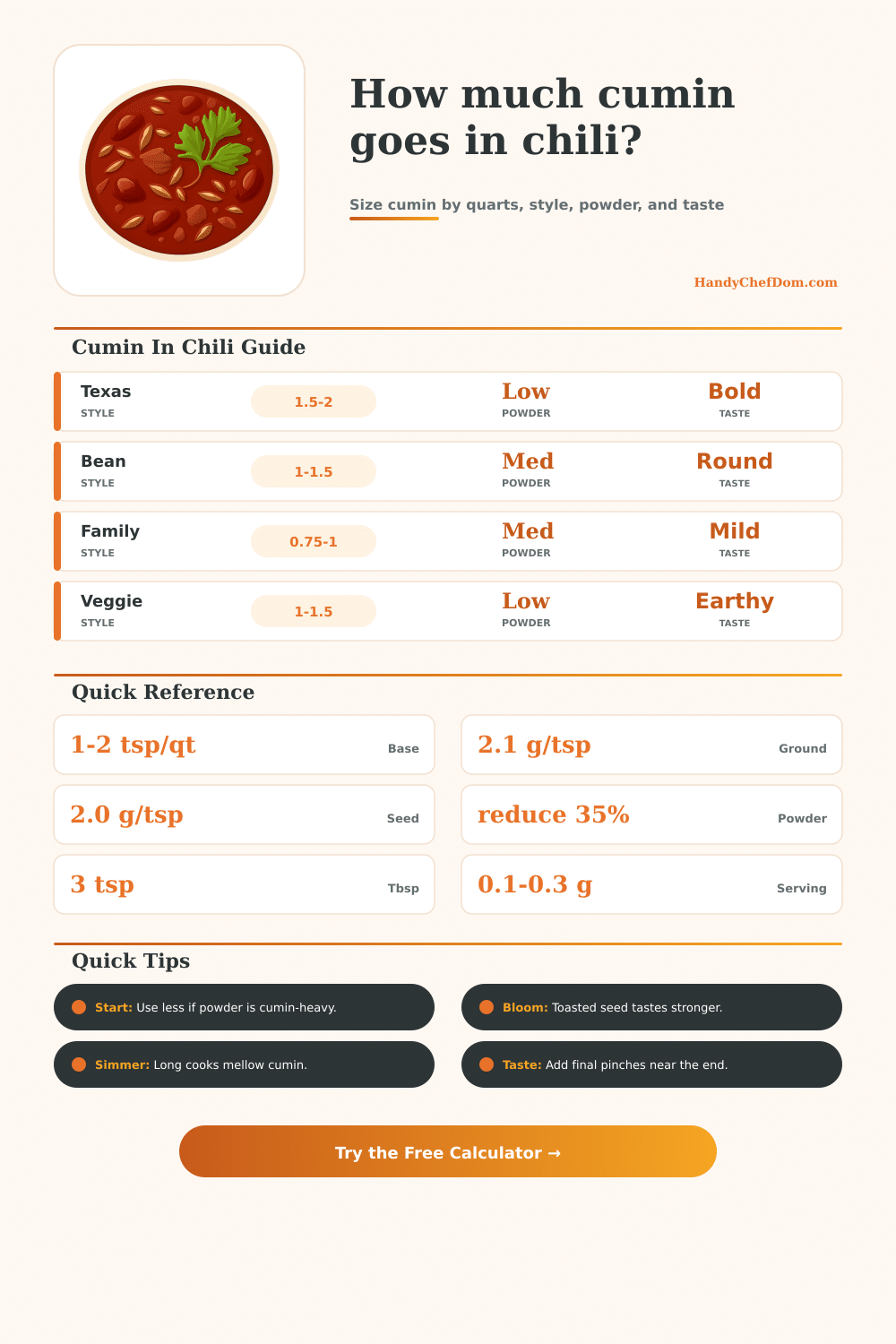
A practical cumin starting point for chili is about 1 to 2 teaspoons ground cumin per quart. This calculator lowers that amount when your chili powder already contains cumin and adjusts for style, intensity, and form.
| Chili Style | Ground Cumin Start | Typical Powder Credit | Flavor Direction |
|---|---|---|---|
| Texas-style beef chili | 1.5 to 2 tsp per quart | Low to medium if using pure chile powder | Bold, earthy cumin supports beef and dried chile. |
| Classic red chili | 1.1 to 1.5 tsp per quart | Medium because most chili powder blends include cumin | Balanced cumin, chile, garlic, onion, and tomato. |
| Bean-forward chili | 1 to 1.4 tsp per quart | Medium to high if blend is already seasoned | Round, warm spice that seasons beans without tasting dusty. |
| Turkey or chicken chili | 0.9 to 1.2 tsp per quart | Medium | Lighter meats usually need a softer cumin hand. |
| Vegetarian chili | 1 to 1.5 tsp per quart | Low to medium | Earthy cumin helps vegetables, lentils, and beans taste fuller. |
| Green chili or chile verde | 0.6 to 1 tsp per quart | Often low | Use less so tomatillo, green chile, and herbs stay bright. |
| Cincinnati-style chili | 0.8 to 1.1 tsp per quart | Low to medium | Cumin shares space with warm sweet spices. |
| Competition-style chili | 1.6 to 2.2 tsp per quart | Low if spices are built separately | Layered cumin note designed to stay noticeable after simmering. |
| Chili Spice Profile | Cumin Share | Chili Powder Relationship | Calculator Use |
|---|---|---|---|
| Mild family chili | About 15% of total dry spice | Chili powder does most of the work | Choose gentle intensity and standard powder credit. |
| Balanced classic chili | About 20% of total dry spice | Cumin complements chili powder | Use balanced intensity and medium heat. |
| Tex-Mex beef chili | About 25% of total dry spice | Often paired with separate chile powder | Choose Texas style and bold intensity. |
| Bean-heavy chili | About 18% of total dry spice | Beans absorb spice and mute sharp edges | Use bean style, then check meat and bean pounds. |
| Hot chili | About 20% of total dry spice | Heat can hide cumin aroma | Hot settings add a small cumin boost. |
| Long-simmer chili | About 18% of total dry spice | Cumin softens as the pot rests | Long simmer lowers the first addition slightly. |
| Cumin Form | Spoon Conversion | Grams Per Teaspoon | Best Use In Calculator |
|---|---|---|---|
| Ground cumin | Use the calculated teaspoon amount | About 2.1 g per level tsp | Fast, even flavor through the pot. |
| Toasted cumin seed | Use about 1.15 tsp seed for 1 tsp ground | About 2.0 g per level tsp | Nutty aroma and visible spice texture. |
| Half ground, half toasted seed | Use about 1.08 tsp blend for 1 tsp ground | About 2.05 g per level tsp | Good balance of even flavor and fresh aroma. |
| Already in chili powder | Credit part of the cumin target | Varies by blend | Use the chili powder field to prevent over-seasoning. |
| Cumin Measure | Ground Cumin | Toasted Seed | Tablespoon Equivalent |
|---|---|---|---|
| 1/4 teaspoon | About 0.5 g | About 0.5 g | 0.08 tbsp |
| 1/2 teaspoon | About 1.1 g | About 1.0 g | 0.17 tbsp |
| 1 teaspoon | About 2.1 g | About 2.0 g | 0.33 tbsp |
| 1 tablespoon | About 6.3 g | About 6.0 g | 1 tbsp |
| 2 tablespoons | About 12.6 g | About 12.0 g | 2 tbsp |
| 1/4 cup | About 25.2 g | About 24.0 g | 4 tbsp |
Cumin is a spice that is used in chili, and cumin is used to provide flavor to chili. Cumin provide flavor to chili because the spice affects the way that the chili taste. Using too little cumin can cause the chili to taste thin, but using too much cumin can impart a dusty flavor to the chili due to the strong flavor of the cumin after the chili simmers for long periods of time.
The calculator are a tool that will help you to determine the correct amount of cumin that you should use in your pot of chili. You must provide information to the calculator to determine the amount of cumin that you should use; the amount of chili that you will make, the amount of meat and beans that will be used in the chili, the style of chili that will be made, and whether or not the chili powder that will be used in the chili already contains cumin. Based off this information, the calculator will be able to provide the amount of cumin (in teaspoons and grams) that you should use in your chili, as well as the amount of cumin that will be contained in each serving of chili.
How Much Cumin to Use in Chili
Many people uses a rule of one to two teaspoons of ground cumin for every quart of chili. However, the amount of cumin that your chili will require may change based upon the ingredients that are used in the chili. For instance, Texas style chili contains large chunks of beef that can stand up to higher amounts of cumin than some of the other types of chili.
Additionally, chili that contains a large amount of beans will contain less cumin because the beans will absorb some of the flavor of the cumin from the chili. The calculator accounts for these types of changes by asking for the weight of the solid ingredient that will be used in the chili. If the solid ingredients are a particularly large amount of one type of solid ingredient, the calculator will adjust the amount of cumin that is suggested.
The type of chili powder that is used in the chili will also impact the amount of cumin that is needed for the chili recipe. Many chili powders contains cumin as one of the ingredients in the powder. Using too much cumin to a chili that also contains chili powder with cumin will lead to a chili that contains one note flavor.
By using the calculator, you can account for the amount of chili powder that will be used in the chili; the calculator will subtract the amount of “credit” that the cumin in the chili powder will provide to the chili. The form of cumin that is to be used in the chili can also impact the measurements for the chili. Ground cumin and ground cumin seeds release their flavor quick into the chili and spread evenly throughout the chili.
Additionally, the toasted cumin seeds have a different aroma from ground cumin, but there is more volume of cumin seeds that must be added to a spoon to reach the same weight of ground cumin. The calculator makes adjustments to the spoon measurements for cumin if you select using cumin seeds or a blend of ground and cumin seeds. The time in which the chili will simmers will also impact the amount of cumin that should be used in the chili.
Chili that simmers for thirty minutes or less will require more cumin than chili that simmers for three or four hours; the flavor of the cumin mellows with long simmers. The calculator will adjust the amount of cumin suggested for chili with different simmer times using a simmer time multiplier that decreases as the amount of time during which the chili will simmer increases. It is still recommended that you taste the chili after it has been cooked, as the spices will change flavor when the chili rests.
Chili that rests allows the flavors of the beans to even out, as well as changes the flavor of the cumin that is contained in the chili. It is possible to add a small amount of cumin to the chili after it has been cooked to even out the flavor. The calculator incorporates an amount for late addition of cumin to the chili recipe.
Thus, the calculator is a tool that accounts for each of these variables, and recommends an amount of cumin to use in the chili to ensure the chili tastes the way that you would like the chili to taste.