🚴 Cycling Hydration Calculator
Estimate ride fluids, bottle capacity, refill stops, sodium, carbs, and caffeine timing for training rides, climbs, gravel days, and long events.
Disclaimer: This calculator gives planning estimates for generally healthy adult cyclists. Heat illness, overhydration, dehydration, kidney issues, heart conditions, medications, pregnancy, and medical diets can change safe fluid or sodium needs. Use personal testing and clinician guidance for high-risk situations.
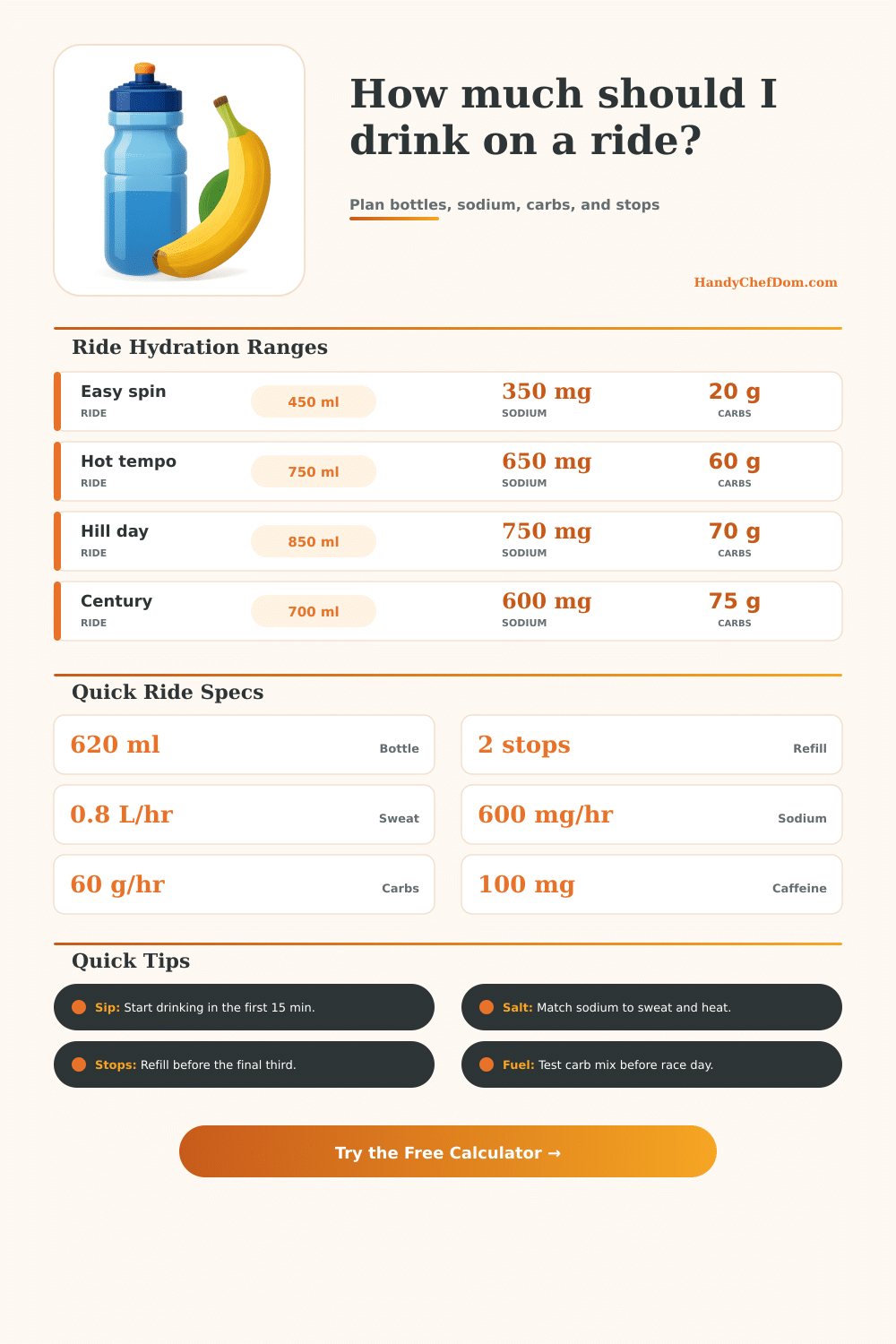
| Ride Type | Fluid Range | Sodium Range | Carb Range |
|---|---|---|---|
| Cafe roll under 2 hours | 400-600 ml/hr | 250-500 mg/hr | 0-30 g/hr |
| Endurance road ride | 500-750 ml/hr | 400-700 mg/hr | 30-60 g/hr |
| Warm gravel ride | 650-900 ml/hr | 550-900 mg/hr | 45-75 g/hr |
| Mountain climb day | 700-1000 ml/hr | 600-1000 mg/hr | 60-90 g/hr |
| Race or hard group ride | 600-950 ml/hr | 500-900 mg/hr | 60-90 g/hr |
| Indoor trainer session | 700-1200 ml/hr | 500-1000 mg/hr | 30-75 g/hr |
| Temperature Band | Fluid Adjustment | Sodium Adjustment | Planning Note |
|---|---|---|---|
| Cool under 60°F / 16°C | Reduce 8% | Reduce 5% | Thirst may lag behind effort. |
| Mild 60-74°F / 16-23°C | Baseline | Baseline | Use tested training numbers. |
| Warm 75-84°F / 24-29°C | Add 12% | Add 10% | Start sipping early. |
| Hot 85-94°F / 30-34°C | Add 22% | Add 20% | Plan more refill options. |
| Scorching 95°F+ / 35°C+ | Add 35% | Add 30% | Shorten loops when possible. |
| Climb Intensity | Sweat Multiplier | Carb Multiplier | Best Bottle Strategy |
|---|---|---|---|
| Flat endurance cruise | 0.96x | 0.90x | One bottle water, one electrolyte. |
| Rolling tempo terrain | 1.00x | 1.00x | Alternate sips between bottles. |
| Repeated hilly surges | 1.10x | 1.12x | Keep sodium in both bottles. |
| Long mountain climbing | 1.18x | 1.22x | Carry larger bottles before climbs. |
| Race pace or threshold blocks | 1.16x | 1.30x | Pre-plan grabs and gel timing. |
| Refill Pattern | What It Covers | Risk Point | Practical Cue |
|---|---|---|---|
| No stops | Short loops only | Heat surprise | Finish with a small reserve. |
| One planned stop | 2-4 hour rides | Closed fountain | Check stop before leaving. |
| Two planned stops | Century or gravel | Late sodium gap | Restock mix at stop one. |
| Aid-station course | Events and fondos | Bottle handoff miss | Know miles between stations. |
| Remote route cache | Bikepack stages | Warm bottles | Carry backup purification. |
Use this as a ride-planning worksheet, not a medical prescription. Personal sweat tests, urine color trends, body mass change after rides, and professional medical advice are better guides when stakes are high.
Cycling in warm weather can involve a relationship between the physical effort you put into cycling and the loss of body fluids due to cycling. Many cyclists often find themself in dehydration due to the signs of dehydration appearing after there legs begin to feel heavy and their mouth begin to feel dry. The rate at which a cyclist sweats can change based on the temperature, the terrain, and the effort that the cyclist puts in while cycling.
A calculator can help a cyclist to translate their input into a target for how much fluid they should drink while cycling in order to maintain their body fluids more effectivly. The calculator for determining the fluid loss that cyclists experience requires the cyclist to enter several specific inputs. The inputs that the calculator may ask for include the length of the cyclists ride, the number of bottle that they will start with, the size of those bottles, and the cyclists measured sweat rate.
How to Plan Drinks, Salt and Snacks for a Bike Ride
The sweat rate is one of the more important of these inputs in that the sweat rate will determine the amount of fluid that the cyclist lose each hour. The size of the bottles and the number of bottles that the cyclist starts with are also important to input into the calculator as these two factors determines the total amount of fluid that can be consumed during the cycling ride. The calculator also adjusts for the temperature and the terrain of the climb that the cyclist is to ride.
For cyclists who plan to refill their bottles during a ride, the cyclist can use the calculator to plan for refill stops by entering the number of refill stops that are to be made during the ride. The cyclist will enter the percentage of the bottles that are to be refilled at these refill stops into the calculator. By entering these parameters, the calculator will indicate for the cyclist whether or not their total fluid supply will meet their fluid need during the ride.
Should the cyclist find that there is a gap between supply and need, there are risks associated with this gap, especially in remote terrain or during races. Finally, the calculator will also provide a cue as to when the cyclist should look for the next water source along their ride. Beyond fluid loss, another important consideration for cyclists is the replacement of the sodium that is lost through sweating.
Sodium is an important nutrient for cyclists, and one that is often just as important as fluid loss. Cyclists can use the salt profile selector to select one of three settings for sodium loss, light sweater, average sweater, or heavy sweater. These classifications are based upon the amount of salt residue that is found on the cyclists clothing after the ride.
The setting calculates the sodium that the cyclist loses each hour, and that calculated value can be compared to the concentration of sodium in the bottles of fluid. Any gap between these two values indicates that the cyclist may need to take a salt tablet or eat a salty snack during there ride to balance out the loss of sodium. Carbohydrate needs are similar to those of sodium and fluid intake.
For cyclists to fuel their body appropriately for rides that include climbs of various intensities, the fueling selector allows the cyclist to choose from none to ultra. Higher settings for climbs will increase the hourly target for carbohydrates. The system calculates the total grams of carbohydrates, and cyclists can use that total to determine how many gels or carbohydrate-based drinks they should take on the ride.
Many cyclists carry enough fluid but not enough carbohydrate, so this calculation is of great benefit to those who is cycling long distances. One other factor that can be entered into the calculation system is the amount of caffeine that the cyclist consume while cycling. The caffeine options allow for scaling the amount of caffeine intake according to body mass, which is more accurate than guessing at an amount of caffeine to consume.
The calculator will tell the rider how many milligrams of caffeine to consume per kilogram times the riders body mass, this amount is the riders caffeine ceiling prior to beginning the ride. The conditions of the ride will rarely match the settings entered into the calculator. Factors such as the wind, navigation software errors, and the availability of water fountains along the ride will alter the conditions of the ride.
As such, the calculator should provide a general plan for the rider to follow. If the calculator suggests a fluid intake that is more high than the riders normal habit for cycling, that fluid target should be tested on a shorter ride first. Additionally, any change in the sodium concentration of the riders fluid intake should also be tested on shorter rides first; fluid that tastes good on cooler weather rides may taste too salty on a hot weather ride.
As with all things related to heat, individual responses to heat will vary. Thus, the sweat rate field is the most important field within the calculator. Everything in the calculator is based on the riders sweat rate.
If the rider does not know their sweat rate, they can calculate it by weighing themselves before and after a ride that lasts for one hour. Additionally, the rider should update their sweat rate field as the seasons change; fluid needs will change according to the time of year. The tables within the calculator can provide context to the types of rides the rider plans on completing.
A gravel ride will fall somewhere between an endurance road and a mountain ride when considering the fluid and sodium field. These side-by-side fields allow the rider to understand whether their suggested fluid and sodium intake is an aggressive or conservative plan for the day. The temperature adjustment table allows the rider to understand how much fluid and sodium the calculator will add to the riders fluid intake if the temperatures rise from mild to hot weather.
The rider can calculate the sip fields for the ride by dividing the riders hourly fluid intake by six. This will provide the rider with the volume of fluid to consume every ten minutes during the ride. Maintaining a consistent sip rate will provide the rider with steady energy and prevent the development of cramp during the ride.
A consistent sip rate is better for the rider than sipping large amount of fluid during the ride; the body can absorb a continuous amount of fluid over time rather than large amounts of fluid at once. There are safety note within the calculator. Should the rider experience dizziness, sudden chills, or headaches, the body should stop drinking fluid and begin cooling down.
The calculator cannot detect these symptoms; the rider must monitor their bodys symptoms themselves. Using the calculator as a worksheet will allow the rider to manage there ride without undue pressure. As with any habit acquired through learning to use a tool, the rider may eventually remember the various settings within the calculator and which settings will have the most impact on the outcomes suggested by the calculator.
Thus, the calculator can help to eliminate the number of rides the rider must take to discover the best fluid intake and sodium concentrations for themselves.