🍬 Gelatin to Make Gummies Calculator
Estimate gelatin tablespoons, packets, grams, batch liquid, mold yield, and chew firmness for homemade gummies using the common 2 to 4 tablespoons gelatin per cup liquid range.
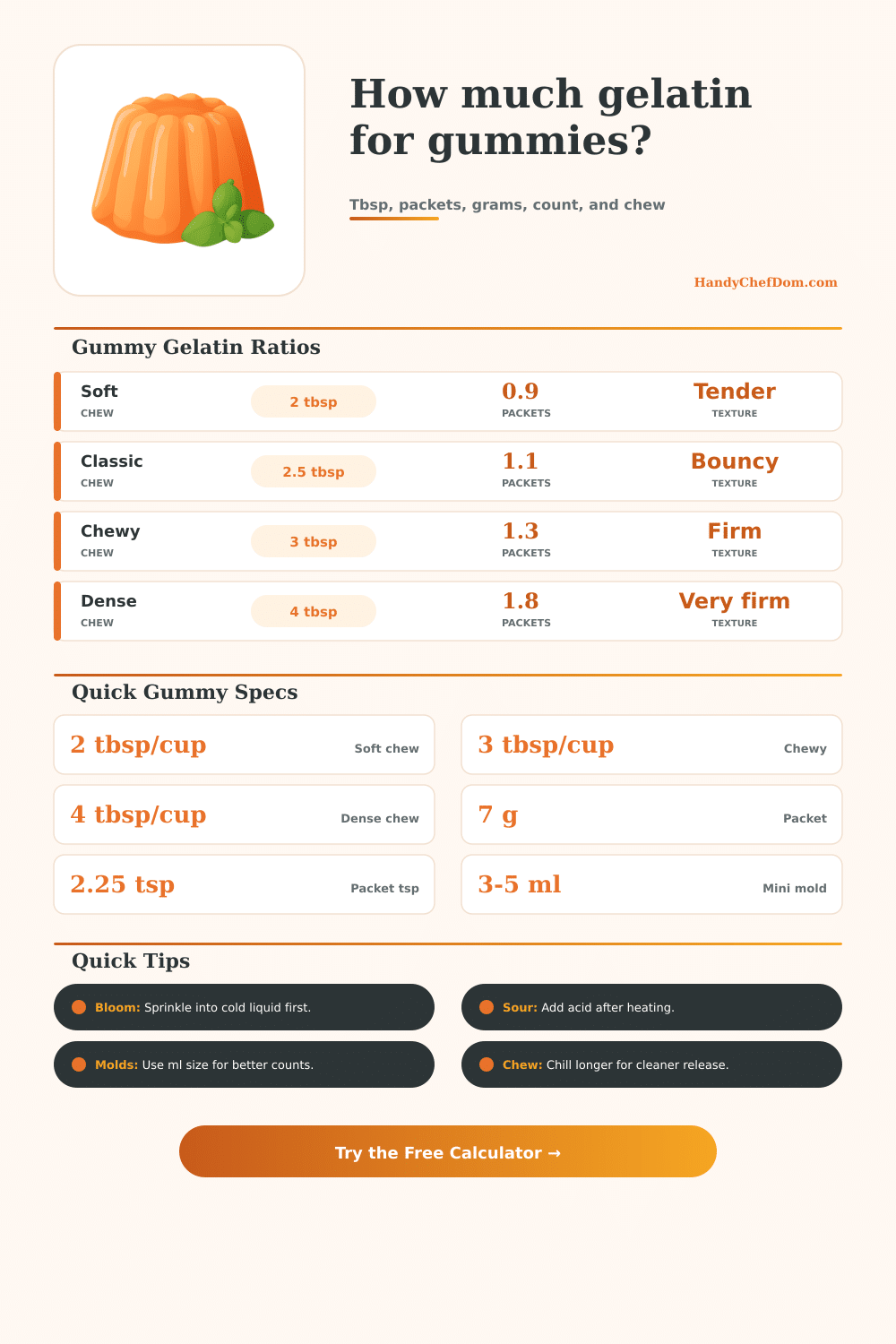
For gummies, a practical starting range is about 2 tablespoons gelatin per cup liquid for a tender chew, 3 tablespoons for a chewy fruit snack, and 4 tablespoons for a dense candy-style bite.
Usually predictable for gelatin gummies because the liquid is thin and the set can hydrate evenly.
Creates a softer bite at the same gelatin ratio, so choose a firmer setting if puree is heavy.
Adds flavor and body but also moisture, so the calculator gives honey a small gelatin cushion.
Acid can weaken the gel network, especially when heated with gelatin for a long time.
| Desired gummy chew | Gelatin tablespoons per cup liquid | Approx 7 g packets per cup | Best use |
|---|---|---|---|
| Soft gummy | 2 tablespoons | 0.85 to 0.9 packet | Tender gummies, small kids molds, or softer fruit snacks. |
| Classic gummy | 2.5 tablespoons | About 1.1 packets | Balanced homemade gummy bears with a bouncy bite. |
| Chewy fruit snack | 3 tablespoons | About 1.3 packets | Chewier trays that release cleanly from standard molds. |
| Extra chewy | 3.5 tablespoons | About 1.55 packets | Thicker cubes, rings, or gummies with honey or puree. |
| Dense candy chew | 4 tablespoons | About 1.8 packets | Very firm homemade gummies with stronger chew. |
| Packet or powder amount | Approx grams | Approx teaspoons | Approx tablespoons |
|---|---|---|---|
| 1/2 standard packet | 3.5 g | 1.13 tsp | 0.38 tbsp |
| 1 standard packet | 7 g | 2.25 tsp | 0.75 tbsp |
| 2 standard packets | 14 g | 4.5 tsp | 1.5 tbsp |
| 1 tablespoon gelatin powder | About 9.3 g | 3 tsp | 1 tbsp |
| 1/4 cup gelatin powder | About 37 g | 12 tsp | 4 tbsp |
| Mold style | Typical cavity size | Gummies from 1 cup liquid | Planning note |
|---|---|---|---|
| Tiny drops | 2 ml | About 118 pieces | Best for small vitamin-style drops or quick-setting candies. |
| Mini bears | 3.5 ml | About 67 pieces | Common small bear tray size; count varies by mold depth. |
| Standard bears | 5 ml | About 47 pieces | Useful default when the mold listing does not show volume. |
| Hearts or cubes | 7.5 ml | About 31 pieces | Good for thicker gummies that need a firmer ratio. |
| Large rings or worms | 15 ml | About 15 pieces | Large cavities may need extra chilling before release. |
| Ingredient choice | Calculator effect | Texture cue | Measurement note |
|---|---|---|---|
| Granulated sugar | Slight chew boost | Clearer bite and less stickiness when dissolved well. | 1 cup is estimated near 200 g in the calculator. |
| Honey | Small gelatin cushion | Moister chew with a softer finish than plain sugar. | 1 cup is estimated near 340 g and adds volume. |
| Corn or glucose syrup | Smooth chew boost | Helps reduce graininess and supports candy-style chew. | Measure by weight when possible for repeatable batches. |
| Tart juice or citric acid | Raises target gelatin | Bright flavor can make the gel feel softer. | Add strong acid late when possible to protect the set. |
| Fruit puree | Use firmer target | Pulp and fiber usually make the bite softer. | Count puree as liquid, but expect more variation. |
Making homemade gummy require a specific ratio of gelatin to liquid. The ratio of the amount of gelatin to the amount of liquid will determines the texture of the gummies that are made. If there is too much gelatin in the mixture, the gummies will be too firmly.
If there is too little gelatin in the mixtures, the gummies will be too soft. The calculator provide measurements for the amount of gelatin that should be used based off the ingredient that are to be used in the making of the gummies. To use the calculator, you must enter the amount of liquid to be used, the firmness of the gummies that are to be made, the bloom strength of the gelatin powder that is to be used, and the size of the batch of gummies that will be made into the calculator.
How Much Gelatin to Use for Homemade Gummies
The strength of the powder that is to be used as the gelatin for the gummies can varies. Different brand of gelatin can contain different bloom strength. If you use a brand of gelatin with a high bloom strength, the amount of the powder that is used in the gummies will be more less than if a brand of gelatin that contains a low bloom strength is used.
In addition to the type of gelatin powder that is used, the other ingredient that are used will also affect the gummies. These ingredients that must be accounted for when using the calculator are the sweeteners, acids, fruit puree and juice, and the size of the molds in which the gummies will set. The type and amount of sweeteners that is used in the gummies will also affect the texture of the gummies that are made.
For instance, sugar will cause the gelatin to set in such a way as to produce gummies that snap with a tight snap, while honey will have the effect of softening the texture of the gummies. Due to these differences in the effect of sweeteners on the setting of the gelatin, the calculator suggest a different amount of gelatin should be used if honey is used instead of sugar. In addition to the sweeteners that are used in the gummies, acids will also have an effect on the setting of the gelatin.
The acid will weaken the structure of the gummies. If too much acid is added to the gummies, the structure of the gummies will not maintain it’s shape. To avoid this issue, the acid should be added to the gummies only after the gelatin has bloomed and the mixture has been cooled.
Additionally, the calculator also includes the possibility of sour batches of gummies to allow those using the calculator to add extra gelatin to the batch of gummies in response to the sour taste. The size of the molds of the gummies does not have any effect on the amount of gelatin that is required to set the gummies. However, the size of the molds will have an effect on the number of gummies that will produce.
The smaller the size of the molds in which the gummies will be poured, the more greater the number of gummy pieces that will be produced. Conversely, if large molds are used, fewer gummies will be produced. However, regardless of the size of the molds, the same ratio of gelatin to liquid must be used.
The calculator also estimates the number of gummy pieces that the batch of gummies will create. The temperature and timing of the gummy making process are two other important variable for the creation of gummies with the desired texture. The gelatin must be bloomed in a cold liquid prior to setting.
However, the gummy mixture must be heat gently. Heating the mixture to boiling or heating the mixture for too long may reduce the ability of the gelatin to set proper. Thus, while the calculator can determine the ratio of gelatin to liquid, adhering to proper temperature and timing procedure is required to create the desired texture of the homemade gummies.
You should of check the bloom strength of the powder first because its actualy very importent for the results. There is alot of ways to make it, but these rules helps.