🍋 Vitamin C in Lemon Juice Calculator
Estimate vitamin C in fresh or bottled lemon juice from tablespoons, cups, milliliters, or lemon count, then split the result by serving.
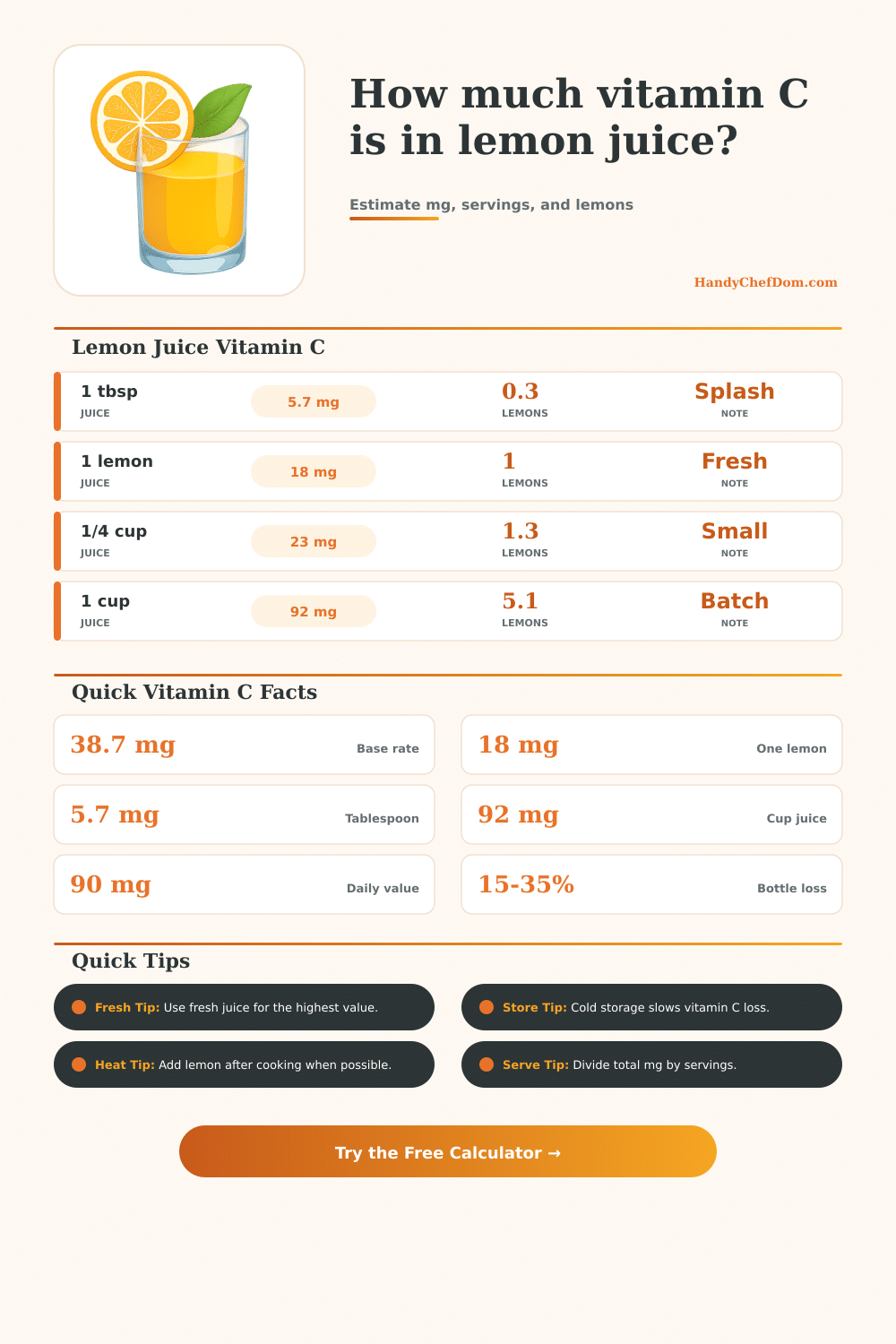
Raw lemon juice is estimated at about 38.7 mg vitamin C per 100 g or ml, and one average lemon contributes about 18 mg. Storage, bottled juice, heat, and dilution lower the usable estimate.
| Citrus Juice | Vitamin C per 100 ml | 1 Tbsp Estimate | Calculator Note |
|---|---|---|---|
| Lemon juice | 38.7 mg | 5.7 mg | Main baseline |
| Lime juice | 29 mg | 4.3 mg | Lower than lemon |
| Orange juice | 50 mg | 7.4 mg | Sweeter citrus |
| Grapefruit juice | 31 mg | 4.6 mg | Varies by color |
| Meyer lemon juice | 32 mg | 4.7 mg | Softer estimate |
| Lemon Type | Typical Juice | Vitamin C Each | Best Calculator Use |
|---|---|---|---|
| Small regular lemon | 30 ml / 2 tbsp | 12 mg | Tea wedge or garnish |
| Medium regular lemon | 46 ml / 3 tbsp | 18 mg | Average whole lemon |
| Large regular lemon | 60 ml / 4 tbsp | 23 mg | Juicy lemons |
| Meyer lemon | 45 ml / 3 tbsp | 14 mg | Sweeter lemon type |
| Custom lemon | Your ml entry | Calculated | Weighed or measured juice |
| Storage Situation | Approx Retention | Loss Used | Use This When |
|---|---|---|---|
| Fresh squeezed, same day | 100% | 0% | Juiced and used cold |
| Fresh juice, 1-2 days cold | 94-98% | 2% per day | Covered in fridge |
| Fresh juice, 3-5 days cold | 88-94% | 2% per day | Meal prep pitcher |
| Bottled refrigerated | 75-85% | 20% base loss | Opened bottle estimate |
| Shelf-stable bottled | 60-75% | 35% base loss | Processed bottle estimate |
| Heated or simmered | 60-90% | 10-40% | Warm drinks or sauces |
| Lemon Juice Amount | Approx Vitamin C | Medium Lemons | Percent of 90 mg |
|---|---|---|---|
| 1 teaspoon | 1.9 mg | 0.1 lemon | 2% |
| 1 tablespoon | 5.7 mg | 0.3 lemon | 6% |
| 1 medium lemon | 18 mg | 1 lemon | 20% |
| 1/4 cup | 22.9 mg | 1.3 lemons | 25% |
| 1/2 cup | 45.8 mg | 2.5 lemons | 51% |
| 1 cup | 91.6 mg | 5.1 lemons | 102% |
Lemon juice provide vitamin C to the body. However, the amount of vitamin C that lemon juice provides to the body depend on three specific factors. These factors includes the volume of the lemon juice, the source of the lemon juice, and the storage of lemon juice.
Without taking these factors into account, the amount of vitamin C that lemon juice provides to the body could be miscalculate. The first factor to consider is the volume of the lemon juice. One medium lemon will yielding approximately three tablespoons of lemon juice.
Three Things That Affect Vitamin C in Lemon Juice
Small lemons will yield less lemon juice then medium lemons. Since the liquid of lemon juice contains vitamin C, the volume of lemon juice is the most important measurement of lemon juice to consider when calculating the amount of vitamin C that lemon juice provides to the body. It is important to measure lemon juice in tablespoon or milliliters.
This is the most accurately measurement of lemon juice rather than counting how many lemons is being used in a recipe. Recipes may ask for specific amounts of lemons. However, since the amount of lemon juice yielded from lemons can vary, the total amount of lemon juice in the recipe may change from the amount of lemons stated in the recipe.
The second factor to consider in relation to the vitamin C content of lemon juice is the source and storage of lemon juice. Lemon juice contains vitamin C. However, vitamin C content are sensitive to heat and time. Therefore, lemon juice that is bottled contains less vitamin C than fresh lemon juice.
Bottled lemon juice has less vitamin C than fresh lemon juice because the processing of lemon juice into bottled lemon juice remove some of the vitamin C from the lemon juice. Additionally, lemon juice that sits in the refrigerator for extended periods of time will contain less vitamin C. Lemon juice that is heated to the pan will also contain less vitamin C. Therefore, lemon juice that is stored in the refrigerator for long periods or bottled lemon juice will have less vitamin C than lemon juice that is freshly squeeze and consumed soon after squeezing the lemon for juice. The third factor to consider is the dilution of lemon juice and the serving size.
Lemon juice can contain a large amount of vitamin C. However, there are instances in which individuals consumes small amounts of lemon juice. For instance, lemon juice can be added to large amounts of water. In these instances, the serving size of lemon juice must be consider.
The more lemon juice that is divided into servings, the less lemon juice and vitamin C that each serving will contain. The dilution percentage of lemon juice can help individuals to calculate how much lemon juice is contained in a given amount of liquid to which lemon juice was added. Many people make mistakes in calculating the vitamin C that lemon juice contain.
For example, people may assume that all lemon juice product are the same. However, lemon juice that is squeezed from lemons is not the same as bottled lemon juice. People may assume that lemon juice contains the same amount of vitamin C regardless of how long the juice is stored.
However, lemon juice that is stored for long periods contains less vitamin C than freshly squeezed lemon juice. Additionally, people may also assume that lemon juice will contain the same amount of vitamin C if it is divided into a number of serving. However, if lemon juice is divided into many servings, each serving will have less vitamin C than the total amount of lemon juice that was originally squeezed from the lemon.
To calculate the vitamin C content of lemon juice accurately, follow a few simple steps. First, calculate the volume of lemon juice in the amount of tablespoons or milliliters. Second, determine whether the lemon juice is fresh or bottled.
Third, consider how long the lemon juice was stored or whether it was heated to the pan. Fourth, determine the number of servings of lemon juice that will be prepare. By considering each of these step, the amount of vitamin C in lemon juice can be more accurate calculated and understood.