Milk Substitute Calculator
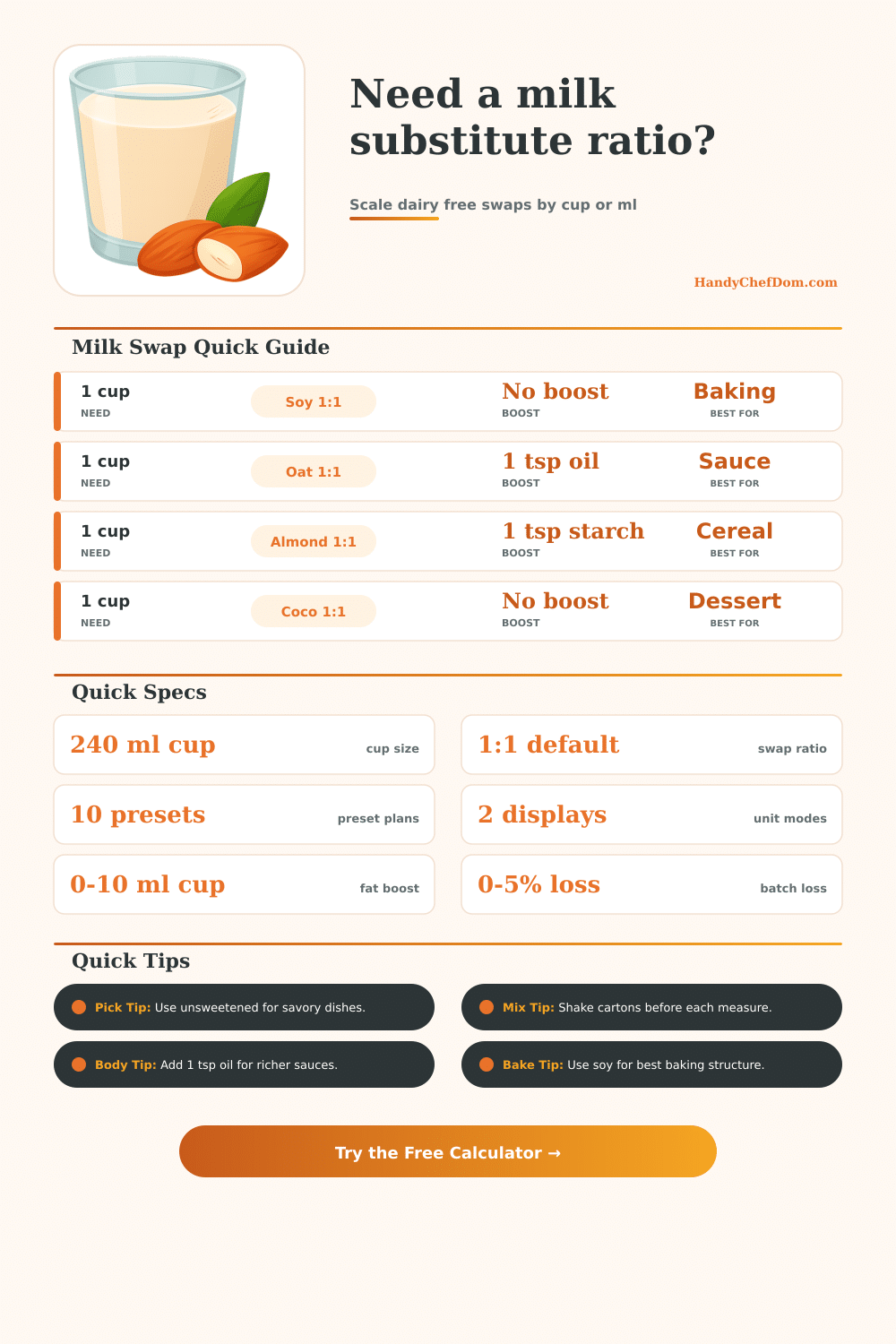
Scale dairy milk swaps by volume, substitute type, recipe role, and richness so your batter, sauce, cereal, or drink keeps the body and nutrition you expect.
| Profile | Swap ratio | Protein / 100 ml | Best fit |
|---|---|---|---|
| Soy milk unsweetened | 1:1 | 3.3 g | Baking and batters |
| Oat milk plain | 1:1 | 1.0 g | Coffee and cereal |
| Almond milk unsweetened | 1:1 | 0.6 g | Low calorie drinks |
| Coconut milk beverage | 1:1 | 0.3 g | Desserts and curries |
| Rice milk plain | 1:1 | 0.2 g | Sweet sauces |
| Cashew milk plain | 1:1 | 0.8 g | Creamy soups |
| Pea milk protein blend | 1:1 | 4.8 g | Protein recipes |
| Lactose free dairy milk | 1:1 | 3.4 g | Closest dairy profile |
| Use case | Body factor | Boost ml per cup | Note |
|---|---|---|---|
| Baking batter | 1.00 | 0 | Default 1:1 replacement |
| Savory sauce | 1.05 | 5 | Improves mouthfeel |
| Cold drink | 0.98 | 0 | Lighter and clean pour |
| Cereal bowl | 1.00 | 0 | No extra thickening needed |
| Mashed potatoes | 1.08 | 8 | Richer finish and body |
| Custard base | 1.06 | 6 | Use stable heat profile |
| Target | Milliliters | Cups | Fluid ounces |
|---|---|---|---|
| 1/2 cup | 120 ml | 0.5 cup | 4.1 fl oz |
| 3/4 cup | 180 ml | 0.75 cup | 6.1 fl oz |
| 1 cup | 240 ml | 1 cup | 8.1 fl oz |
| 2 cups | 480 ml | 2 cups | 16.2 fl oz |
| 4 cups | 960 ml | 4 cups | 32.5 fl oz |
| 2 liters | 2000 ml | 8.33 cups | 67.6 fl oz |
Milk substitute are important because they change the way that liquids behaves under heat and acidity. Using the wrong type of milk substitute can result in cooking disaster such as sauces that split or cakes that fail to rise proper. A milk substitute calculator prevents you from guessing whether a specific type of milk substitute will work as well than dairy milk for your recipe.
The first step in using a milk substitute calculator is to enter the original amount of milk that the recipe require. This original amount of milk is important because the original milk contain specific amounts of water, fat, and protein. Without maintain this ratio of components to liquid in your recipe, the texture of your cooked food will change.
How to Use a Milk Substitute Calculator
After you enter the original amount of milk, you must select the specific type of milk substitute that you will use. For example, if a recipe requires milk, you can use soy milk, oat milk, almond milk, coconut milk, rice milk, or other types of milk substitute. Each type of milk substitute has a different amount of protein and heat stability.
For example, soy milk contain a high level of protein that create structure in baked goods. Oat milk contains starches that add body to a recipe but can become thin if simmermed for too long. Almond milk is light in flavor and contains very little fat; oil must be added to recipes if using almond milk.
Coconut milk contains fat but can separate from the mixture if cooked with high heat; emulsifiers must be added to recipes using coconut milk. The milk substitute calculator takes into account the multiplier of each type of milk substitute to allow for easy recipe substitution. Another necessary step in using a milk substitute calculator is to select the role of the recipe that you are making.
The role of the recipe is important because the behavior of liquids change based on whether the recipe is for baked goods, simmering liquids, or liquids that will be chilled. Baking recipes can use a one-to-one replacement for milk substitute. Simmering and savory sauce recipes require more volume to compensate for the fat content in dairy milk.
Recipes for mashed potatoes and custards requires more volume in the same way. The milk substitute calculator allows you to enter the role of the recipe to add the proper amount of volume to the recipe to ensure that the texture of the final product is correct. Another feature of a milk substitute calculator is the ability to adjust the target richness of the recipe.
If the recipe require a lighter flavor, then the base liquid can be adjusted to take away from the total volume of liquid in the recipe. For example, reducing the amount of the base liquid will result in fewer calorie and fat in the recipe. The sweetness mode of the calculator is important for recipes that use milk substitute with added sugar.
If your recipe is savory in flavor, using a sweetened milk substitute can change the flavor of the food. The heat plan feature is important because some milk substitute will separate or “break” if the recipe is boiled. The milk substitute calculator include the loss factor and batch count of the recipe.
Many liquid will be lost when pouring the liquid into the measuring cup or when simmering the liquid. If you are preparing a large batch of a recipe, more liquid will be lost when transferring the liquids between containers. By setting the batch count in the calculator, you can ensure you have enough of the liquid for your recipe.
The nutrition snapshot feature show the number of calories, protein, fat, and carbohydrates that will be in the recipe if all the calculated amount of each type of milk substitute is used in the recipe. You should choose your milk substitute according to the way in which you will use the milk substitute. For example, unsweetened soy milk is good to have on hand if you bake often because it contains the protein that create structure in baked goods and it can tolerate acidity in the recipe.
Oat milk is good for coffee or breakfast recipes because it is naturally sweet and stable in hot liquid. Almond milk is best used in cold beverage because it has a light flavor. Coconut milk is used in dessert or curry recipes because it contains fat but can separate when frozen; it must be prepared with a stabelizer.
Rice milk is used when you want a neutral flavor to food; it has a thin consistency. Lastly, pea protein milk substitute are used if you are looking for the highest amount of protein per milliliter of liquid. Individuals who do not understand the way that they behave in different recipe often use milk substitute incorrectly.
For example, using oat milk in a béchamel sauce will result in a sauce that is not as thick as if dairy milk had been used. Using sweetened vanilla almond milk in a recipe for mashed potatoes will result in the flavor of the mashed potatoes being incorrect. These mistake can be avoided by adding a teaspoon of oil or a pinch of starch to the sauce to compensate for the lack of protein, fat, and thickening power that these milk substitute contain.
The best way to prepare for these issue is by always using the unsweetened version of each type of milk substitute. The milk substitute calculator will not stir your pot for you, but it will calculate the math for you in order to make your cooking as easy as possible. The more that you use the milk substitute calculator, the more you will begin to understand how each type of milk substitute can affect the other ingredient in your food.
For example, you may notice that using soy milk in your cake will keep the crumbs tender and that using oat milk for your pancakes will give them a chewy texture. You may also find that using almond milk for your smoothie will keep the smoothie low in calories. With this knowledge, you can use the milk substitute calculator to make informed decision about how you will prepare your meal.
The milk substitute calculator automates the arithmetic involved in calculating the amount and type of milk substitute that is needed for your recipes, making the recipe substitution process simple and easy.