🍜 Miso Paste Per Cup of Water Calculator
Estimate tablespoons, grams, per-cup ratio, and sodium for white, yellow, red, or awase miso in broths, marinades, and glaze bases.
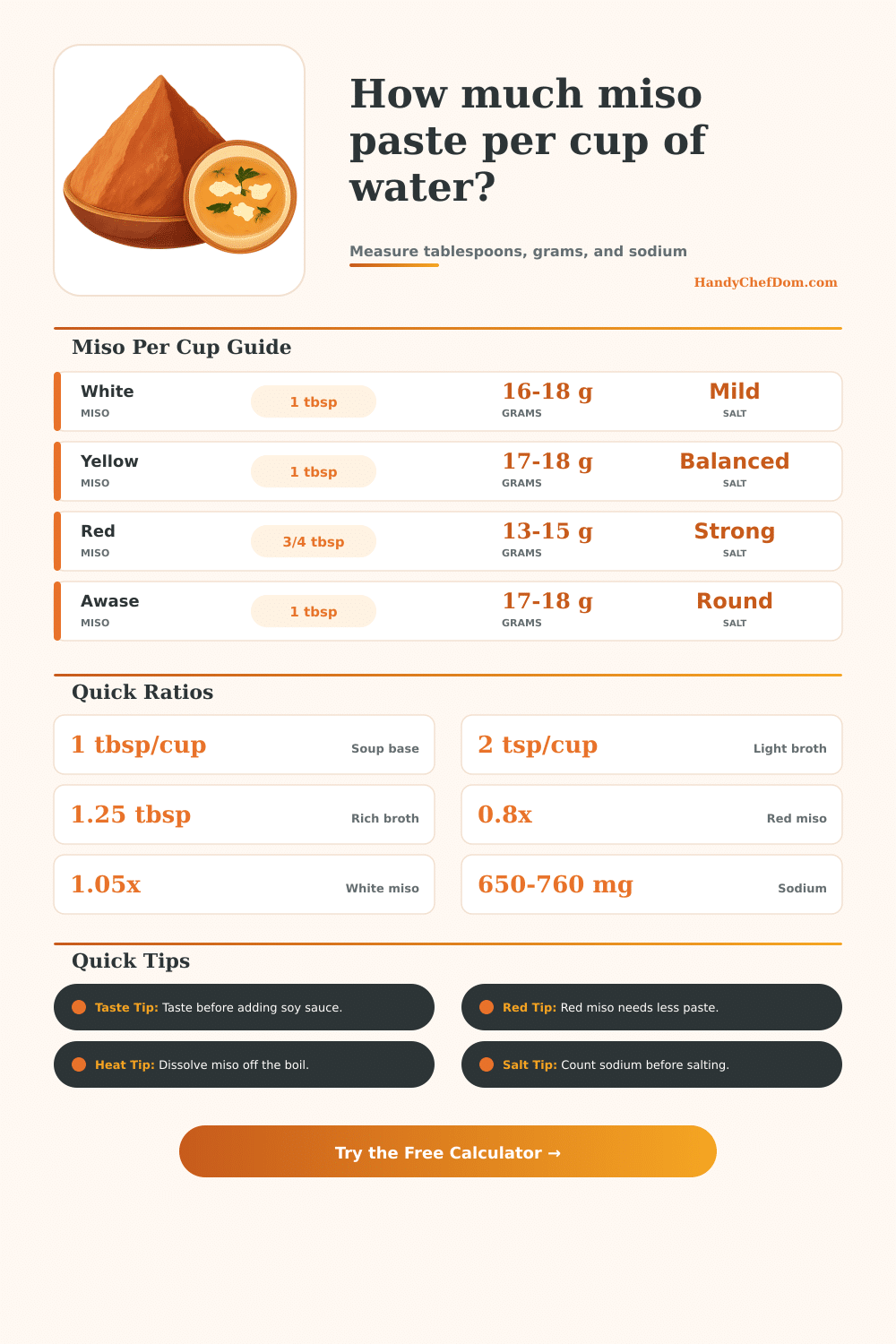
A standard soup starting point is about 1 tablespoon miso per cup of water or dashi. Red miso is stronger and saltier, so this calculator reduces it when needed.
| Miso Type | Best Starting Ratio | Approx g per Tbsp | Approx Sodium per Tbsp |
|---|---|---|---|
| White miso | 1 to 1.15 tbsp per cup | 16 to 18 g | 620 to 660 mg |
| Yellow miso | 0.9 to 1 tbsp per cup | 17 to 18 g | 650 to 700 mg |
| Red miso | 0.65 to 0.85 tbsp per cup | 18 to 19 g | 730 to 800 mg |
| Awase miso | 0.85 to 1 tbsp per cup | 17 to 18 g | 680 to 730 mg |
| Paste Measure | White Miso | Yellow Miso | Red or Awase Miso |
|---|---|---|---|
| 1 teaspoon | 5 to 6 g | 6 g | 6 g |
| 2 teaspoons | 11 to 12 g | 12 g | 12 g |
| 1 tablespoon | 16 to 18 g | 17 to 18 g | 18 to 19 g |
| 1/4 cup | 65 to 72 g | 68 to 72 g | 72 to 76 g |
| Intensity Setting | Starting Tbsp per Cup | Flavor Result | Best Use |
|---|---|---|---|
| Light broth | 0.65 tbsp | Gentle and sippable | Clear broth or breakfast bowl |
| Classic broth | 1 tbsp | Balanced restaurant-style base | Soup cup or noodle bowl |
| Rich broth | 1.25 tbsp | Full miso flavor | Vegetable-heavy soup |
| Bold base | 1.5 tbsp | Concentrated and salty | Marinade or glaze starter |
| Use Style | Dilution Target | Typical Ratio | Result Note |
|---|---|---|---|
| Soup or sipping broth | Fully diluted | 0.65 to 1.25 tbsp per cup | Taste after the paste dissolves |
| Noodle bowl base | Broth plus toppings | 0.9 to 1.35 tbsp per cup | Add-ins soften the salt |
| Marinade base | Concentrated | 1.2 to 1.8 tbsp per cup | Usually mixed with acid or oil |
| Glaze or finishing base | Very concentrated | 1.6 to 2.4 tbsp per cup | Use less liquid and taste early |
Miso is a fermented paste that can be used to flavor liquids, and miso is a food that contains a high amount of sodium. Because miso contain a high amount of sodium, it is necessary to measure the amount of miso that will be added to the liquid to ensure that the liquid isnt made too salty as a result of the addition of the miso. The amount of miso that is used in a liquid depends upon the type of miso that is used, and the volume of the liquid that is to be flavored.
For example, white miso is a milder flavor type of miso, and often contains a slight sweetness to its flavor. Red miso is a darker type of miso that contains more sodium per spoonful then white miso. Yellow miso and blended awase miso is of a middle range in both flavor strength and sodium content.
How Much Miso to Use in Broth
In order to calculate the amount of miso that should be added to a liquid, it is necesary to utilize a calculator. The amount of water that will be used, the type of miso that will be used, and the intensity of the flavor that is to be create are all variables that the user will enter into the calculator. The intensity of the flavor will allow the calculator to determine the strength of the flavor that the broth should create.
The use style of the broth will allow the calculator to distinguish between different types of broths, such as those that are to be sipped versus those that are to be used as a marinade. The volume of other ingredients that are to be added to the liquid must also be considered. Broths contain ingredients like vegetables, noodles, and tofu that will absorb the liquid.
Therefore, the use of such ingredients will change the saltiness of the broth, and the amount of miso that is added to the liquid will have to take this change into account. Another consideration in the creation of broth that contains miso is the tracking of the sodium content of the broth. Broth and other liquids contains miso products that have many milligrams of sodium contained in every tablespoon of the product.
Many other ingredients contain sodium as well, such as dashi powder and soy sauce. If a target amount of sodium is to be set for the broth, the calculator will respect such a target for the user. The adjustment field will be used if the other ingredients that are utilized in the broth already contain some of the flavor and sodium content of the broth.
Different brands of miso contain different amount of sodium. Furthermore, the sodium content of the miso may change with the addition of heat. Therefore, it is best to start at eighty percent of the amount of miso that is suggested for the recipe.
After adding the miso to the liquid, the cook should taste the broth to determine if more miso should be added. The reference tables provided on the page contain information regarding the grams of each type of miso, as well as the sodium content of each type of miso. These tables can be used to verify the calculations made by the calculator to the specific types of miso that lives in the refrigerator.
The tables also contain information regarding the different types of intensity settings, the amount of miso that should be used when creating a broth of each type of intensity. These ratios can be used to prepare a recipe that is prepared in amounts larger than the original recipe. It is important to note that broth with added miso should not be prepared in the same manner as salt is often added to a broth.
If broth is prepared with miso, that miso cant be removed from the broth once the miso has been added to the liquid. If the broth is too salty once prepared, another error that should of been avoided is adding more miso to the broth once the broth has boiled to the desired temperature. If these recipes are prepared according to the calculations made by the calculator, these errors can be avoided and the flavor of the broth will be balanced.