🧀 Nutritional Yeast to Substitute for Parmesan Cheese Calculator
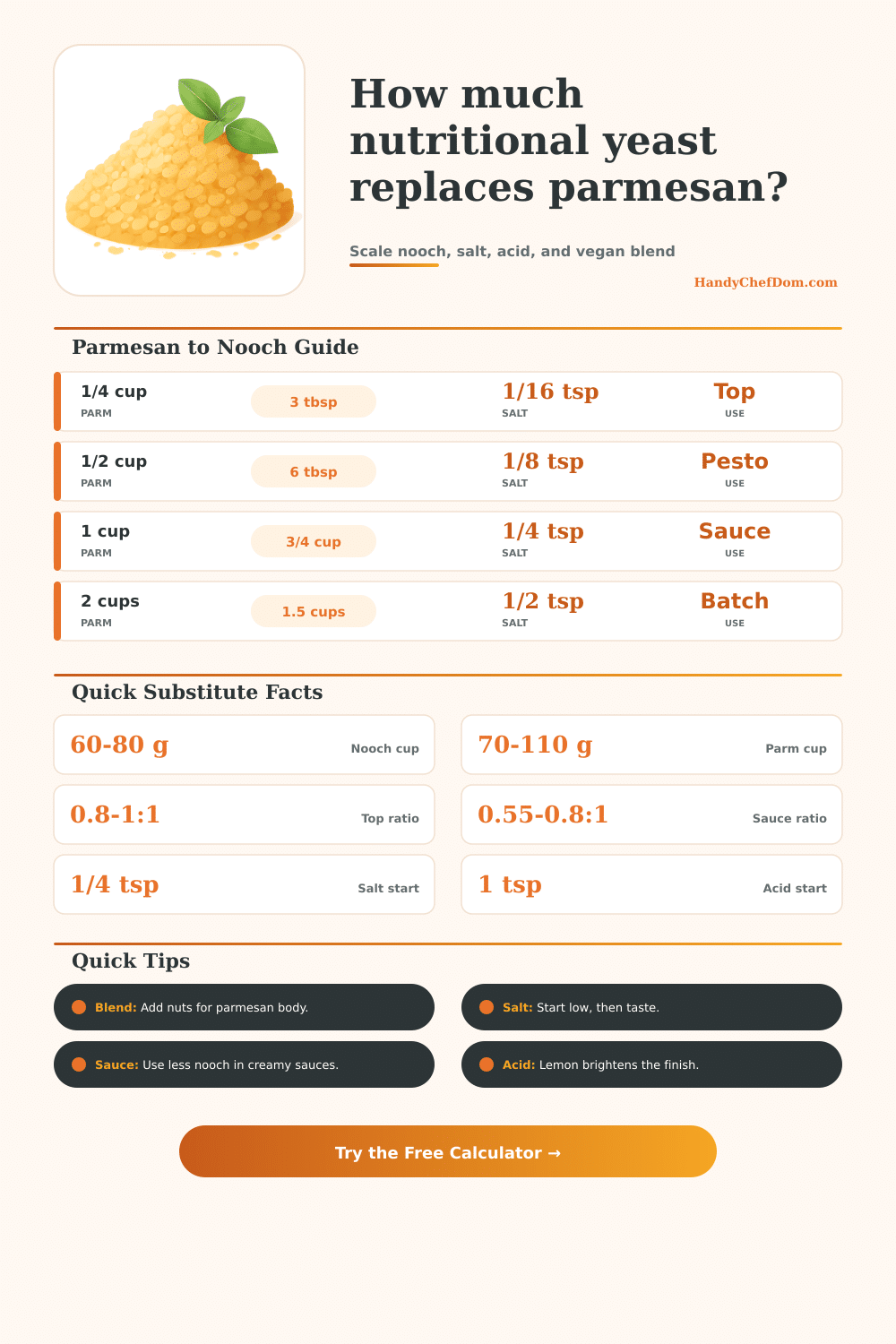
Convert parmesan cups, tablespoons, grams, or ounces into nutritional yeast, salt booster, acid booster, and optional vegan parmesan blend by recipe type, texture, umami target, and servings.
Parmesan brings salt, fat, sharp lactic tang, and dense umami. Nutritional yeast brings savory flavor but is lighter, drier, and usually less salty, so this calculator separates the nooch dose from the salt, acid, and blend texture needed for each use.
Starting Ratios by Recipe Type
| Recipe type | Nooch per 1 cup parmesan | Salt booster | Acid booster | Best texture cue |
|---|---|---|---|---|
| Pasta or salad topping | 0.85 to 1.05 cup | 1/4 tsp fine salt | 1 tsp lemon juice | Keep flakes dry and loose |
| Pesto or herb sauce | 0.65 to 0.85 cup | 1/4 to 3/8 tsp | 1 to 2 tsp lemon juice | Add nuts for parmesan body |
| Caesar or dressing | 0.50 to 0.70 cup | 1/4 tsp plus briny ingredient | 2 tsp lemon or vinegar | Blend until smooth |
| Creamy pasta sauce | 0.55 to 0.75 cup | 1/8 to 1/4 tsp | 1 tsp lemon juice | Hydrate before simmering |
| Baked topping | 0.80 to 1.00 cup | 1/4 tsp | 0 to 1 tsp | Blend with crumbs or nuts |
| Snack seasoning | 1.00 to 1.25 cups | 3/8 tsp | Citric pinch optional | Powder finer for cling |
Density and Cup Conversion Table
| Ingredient style | Grams per cup | Tablespoon grams | Flavor intensity | Calculator effect |
|---|---|---|---|---|
| Microplane parmesan | 70 g | 4.4 g | Light and airy | Lower cup density |
| Fine grated parmesan | 90 g | 5.6 g | Classic sharp | Baseline conversion |
| Shredded parmesan | 85 g | 5.3 g | Milder surface area | Slightly more nooch |
| Packed grated parmesan | 110 g | 6.9 g | Dense and salty | More salt and umami |
| Large flake nooch | 60 g | 3.8 g | Light savory | More volume, less weight |
| Powdered nooch | 80 g | 5.0 g | Concentrated | Less volume needed |
Vegan Parmesan Blend Builders
| Blend style | Nooch share | Filler share | Texture result | Best use |
|---|---|---|---|---|
| Pure nutritional yeast | 100 percent | 0 percent | Dry and intense | Sauces and quick toppings |
| Nooch + cashew meal | 70 percent | 30 percent | Buttery grated body | Pasta, pesto, salads |
| Nooch + almond flour | 72 percent | 28 percent | Fine nutty powder | Garlic bread and topping |
| Nooch + hemp hearts | 68 percent | 32 percent | Rich and slightly seedy | Grain bowls and salads |
| Nooch + panko crumbs | 60 percent | 40 percent | Light crunchy crumb | Baked casseroles |
| Nooch + miso powder | 78 percent | 22 percent | Deep umami and salt | Dressings and sauces |
Salt and Acid Booster Guide
| Booster | Per 1 cup parmesan replaced | Flavor job | When to reduce | When to increase |
|---|---|---|---|---|
| Fine salt | 1/8 to 3/8 tsp | Replaces parmesan salinity | Salty pasta water or miso | Popcorn or dry topping |
| Lemon juice | 1 to 2 tsp | Bright sharp finish | Dry sprinkle blends | Dressing or pesto |
| White wine vinegar | 1 to 1.5 tsp | Clean tang in dressings | Creamy sauces | Caesar-style blends |
| Lactic acid powder | 1/8 to 1/4 tsp | Dairy-like tang | Small topping batches | Vegan cheese sauces |
| Citric acid | 1/16 to 1/8 tsp | Sharp snack-style pop | Warm cream sauces | Popcorn seasoning |
A popular parmesan substitution is nutritional yeast. However, it’s not an equal swap: Parmesan have a salty bite, some fatty richness, and that tangy zing from being aged, whereas nutritional yeast give more of a light-savory flavor. Depending on your intended use, account for this when measuring out how much you need.
Enter the type of parmesan (texture!), the type of nutritional yeast (style), and how you’re using it (serving size) into the calculator, and it spit out the proper ratio for you. Why? Big flakes of cheese act differntly in a sauce than fine powder will, and grating cheese with a microplane beforehand make it weigh less then a packed block. It also separate the nutritional yeast from the other ingredients.
How to Use Nutritional Yeast Instead of Parmesan
You might need to adjust things like the added salt or acid to keep flavor close to what you intended. When using nutritional yeast, many people use too little salt because the flakes is very low in sodium. Salt levels here are a starting place (shown on the calculator), enough to prevent flatness of flavor but leaving room to adjust by taste at mixing time.
Same goes with acidity: In recipes where flavor is up front (pestos, dressings) a dash of vinegar or lemon juice can stands in for parmesan’s bright edge. The swap may not work out texture-wise, too. You can sprinkle nutritional yeast over cooked pasta. Great. Putting that same amount into a rich cream sauce? Grainy.
That’s why the calculator prompts you to describe the type of recipe (moisture level, etc.), it will then reduce volume accordingly for blended recipes, such as sauces. When you’d prefer the mix to look like grated cheese better, add some crumbs or nut. There are reference tables to show your options from various scenarios; you don’t need to test them all.
It all comes down to how it’s served. For stirring into things while they’re still hot: add less volume and include a little fat (from some olive oil or nuts) to mimic mouthfeel of parmesan. Use it as an un-stirred topping over salads or popcorn to add more volume and keep the flakes mostly whole, which will make it drier. This math should of been done for you in the calculator, leaving you free to make those calls.
After seeing how the parts work, you stop thinking about it as swapping. You start to think about it as a kitchen trick, something you know how to do with confidence.