Paella Pan Size Rice Quantity Calculator
Match pan diameter, rice type, and broth ratio to the right paella batch.
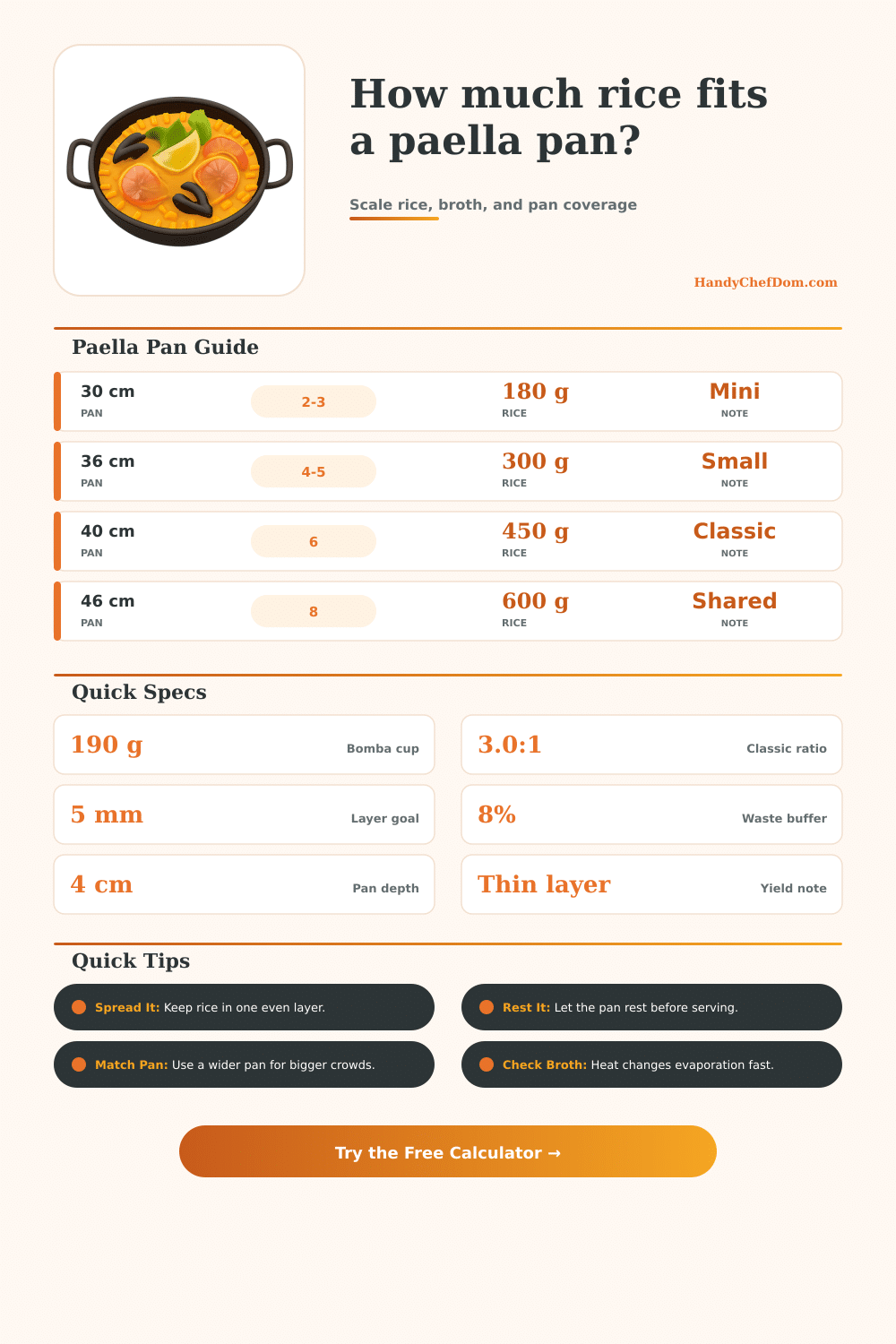
| Pan | Servings | Rice | Note |
|---|---|---|---|
| 30 cm | 2-3 | 180 g | Mini |
| 36 cm | 4-5 | 300 g | Small |
| 40 cm | 6 | 450 g | Classic |
| 46 cm | 8 | 600 g | Shared |
| Rice | g/cup | Ratio | Note |
|---|---|---|---|
| Bomba | 190 | 3.4:1 | Firm |
| Calasparra | 192 | 3.2:1 | Classic |
| Senia | 200 | 2.8:1 | Softer |
| Arborio | 195 | 3.0:1 | Creamy |
| Mix | Base g | Ratio | Note |
|---|---|---|---|
| Seafood | 78 | 3.0:1 | Bright |
| Chicken | 82 | 3.1:1 | Steady |
| Mixed | 86 | 3.2:1 | Party |
| Veg | 72 | 2.9:1 | Light |
| Heat | Factor | Loss | Note |
|---|---|---|---|
| Burner | 1.00 | 3% | Steady |
| Grill | 1.04 | 5% | Open |
| Open fire | 1.08 | 8% | Bold |
| Oven | 0.97 | 2% | Gentle |
To prepare paella correctly, the amount of rice to be cooked have to be matched with the size of the paella pan in which it will be cooked. The size of the paella pan will determine how much rice can be cooked within it. Additionally, the amount of rice that will be cooked will have an impact on the texture of the rice while it is being cooked; if the layer of rice is thinner than five millimeters it will dry out during cooking, but if the layer is too thick the rice in the center of the pan will remain raw while the rice on the edges of the pan may burn during cooking.
The diameter of the paella pan is the most important factor in determining how much rice can be cooked within it. For instance, a 30-centimeter paella pan may be small enough to only hold approximately 180 grams of rice for two people, but a 46-centimeter paella pan are large enough to hold 600 grams of rice for eight people. The larger the diameter of the pan, the more rice that can be cooked in a thickness of five millimeter.
How to match rice and pan size for paella
The depth of the pan is also important in that it determines the amount of liquid that can be contained within it without spilling over the edge. The type of rice to be used also has an impact upon how much liquid is to be added to the pan. For instance, bomba rice is known to be very absorbent and requires three and a half times the volume of rice in broth in order to cook proper; Calasparra rice requires three parts of liquid to one part of rice.
Senia rice requires two and eight-tenths parts of liquid to one part of rice. Because of the difference in liquid requirement of these different rice varieties, the amount of broth for paella will change according to the type of rice that is to be cooked. Additionally, because the weights of rice varieties differ for a given cup of rice, the rice will need to be measured in grams to ensure that the correct amount of rice is cook.
The number of servings of paella that are to be prepared will also impact the amount of rice that must be prepared. For example, if the meal to be prepared will be a light seafood meal 66 grams of rice can be used per person; however, if the meal is to be hearty and contain meat 102 grams of rice per person can be used. Thus, a family of six can use 450 grams of rice within a 40-centimeter paella pan; however, a party of ten would require more rice and broth to be prepare.
The heat source also impacts the amount of liquid that is to be added; because open flames will cause more evaporation of the broth compared to a steady burner flame, the recipe will require that you add an extra eight percent of broth to the paella pan to prevent it from becoming too dryly. After the rice has been cooked it must be spread flat within the pan. The back of a wooden spoon can be used to level the rice within the pan before it is cooked; if the rice is piled high in the center of the pan it will cook uneven.
When the paella is done cooking it should be allowed to rest on a burner free of heat for five minutes; this resting of the rice allow for the steam within the rice to distribute, and allows the center portion of the rice to firm. Finally, some rice may be wasted during the cooking process; some cooks may want to account for this with an eight percent buffer in the amount of broth in the paella; however, for a large party a twelve percent buffer in the amount of liquid may be desire. Thus, by following these step and considering each factor that may impact the cooking of the rice, the rice will be cooked into an even layer within the paella pan, and contain the correct amount of liquid within the body of the dish.
To prepare paella correctly, the amount of rice to be cooked have to be matched with the size of the paella pan in which it will be cooked. The size of the paella pan will determine how much rice can be cooked within it. Additionally, the amount of rice that will be cooked will have an impact on the texture of the rice while it is being cooked; if the layer of rice is thinner than five millimeters it will dry out during cooking, but if the layer is too thick the rice in the center of the pan will remain raw while the rice on the edges of the pan may burn during cooking.
The diameter of the paella pan is the most important factor in determining how much rice can be cooked within it. For instance, a 30-centimeter paella pan may be small enough to only hold approximately 180 grams of rice for two people, but a 46-centimeter paella pan are large enough to hold 600 grams of rice for eight people. The larger the diameter of the pan, the more rice that can be cooked in a thickness of five millimeter.
The depth of the pan is also important in that it determines the amount of liquid that can be contained within it without spilling over the edge. The type of rice to be used also has an impact upon how much liquid is to be added to the pan. For instance, bomba rice is known to be very absorbent and requires three and a half times the volume of rice in broth in order to cook proper; Calasparra rice requires three parts of liquid to one part of rice.
Senia rice requires two and eight-tenths parts of liquid to one part of rice. Because of the difference in liquid requirement of these different rice varieties, the amount of broth for paella will change according to the type of rice that is to be cooked. Additionally, because the weights of rice varieties differ for a given cup of rice, the rice will need to be measured in grams to ensure that the correct amount of rice is cook.
The number of servings of paella that are to be prepared will also impact the amount of rice that must be prepared. For example, if the meal to be prepared will be a light seafood meal 66 grams of rice can be used per person; however, if the meal is to be hearty and contain meat 102 grams of rice per person can be used. Thus, a family of six can use 450 grams of rice within a 40-centimeter paella pan; however, a party of ten would require more rice and broth to be prepare.
The heat source also impacts the amount of liquid that is to be added; because open flames will cause more evaporation of the broth compared to a steady burner flame, the recipe will require that you add an extra eight percent of broth to the paella pan to prevent it from becoming too dryly. After the rice has been cooked it must be spread flat within the pan. The back of a wooden spoon can be used to level the rice within the pan before it is cooked; if the rice is piled high in the center of the pan it will cook uneven.
When the paella is done cooking it should be allowed to rest on a burner free of heat for five minutes; this resting of the rice allow for the steam within the rice to distribute, and allows the center portion of the rice to firm. Finally, some rice may be wasted during the cooking process; some cooks may want to account for this with an eight percent buffer in the amount of broth in the paella; however, for a large party a twelve percent buffer in the amount of liquid may be desire. Thus, by following these step and considering each factor that may impact the cooking of the rice, the rice will be cooked into an even layer within the paella pan, and contain the correct amount of liquid within the body of the dish.