🍝 Pasta Calorie Calculator
Calculate exact calories for any pasta type, serving size & sauce combination
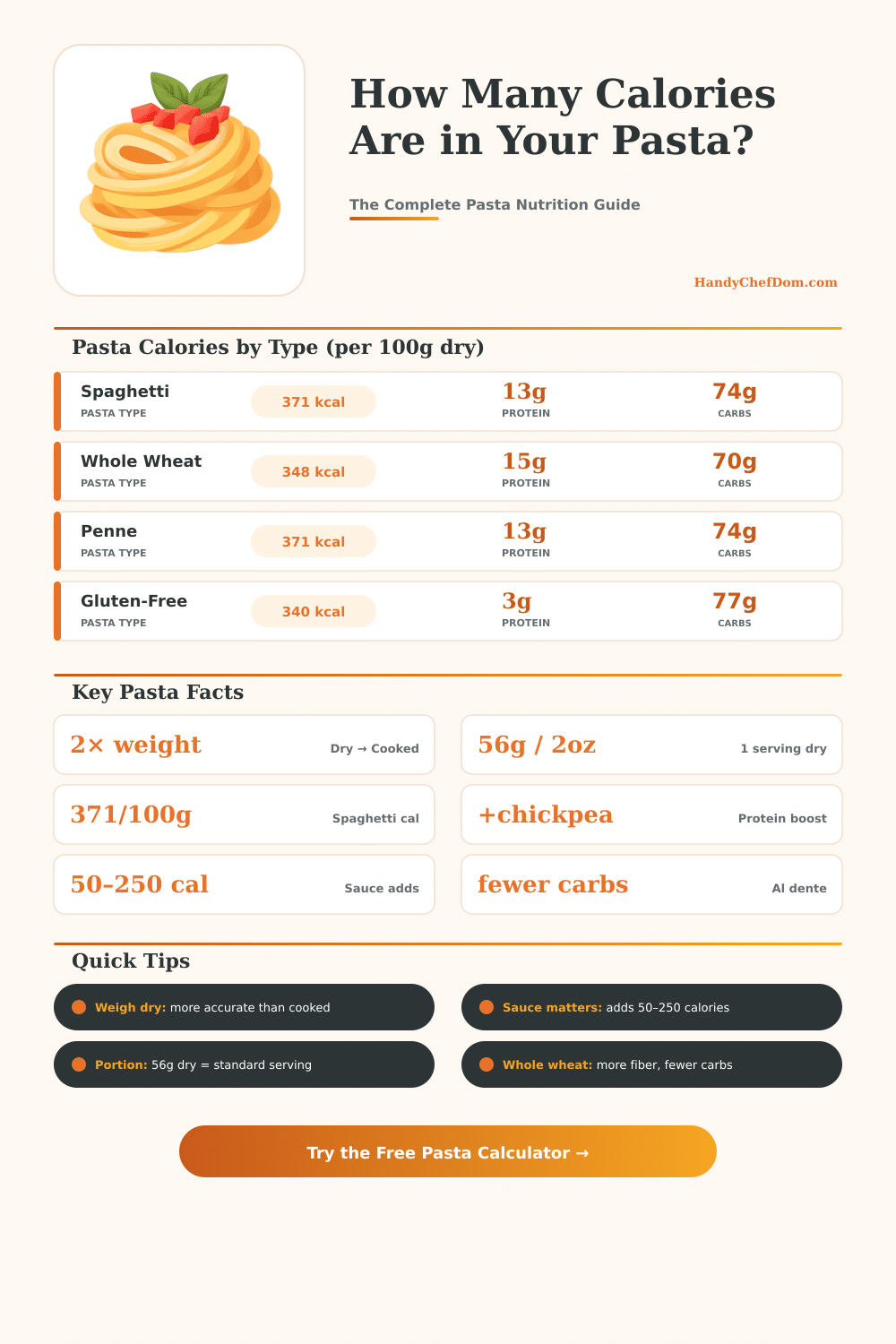
| Pasta Type | Calories | Protein | Carbs | Fat | Fiber |
|---|---|---|---|---|---|
| Spaghetti (white) | 371 kcal | 13.0g | 74.7g | 1.5g | 2.5g |
| Penne (white) | 371 kcal | 13.0g | 74.7g | 1.5g | 2.5g |
| Fettuccine (white) | 370 kcal | 12.8g | 74.5g | 1.4g | 2.4g |
| Rigatoni (white) | 371 kcal | 13.0g | 74.7g | 1.5g | 2.5g |
| Fusilli (white) | 372 kcal | 13.0g | 74.8g | 1.6g | 2.5g |
| Whole Wheat Pasta | 348 kcal | 15.1g | 70.3g | 1.9g | 8.0g |
| Gluten-Free Pasta | 340 kcal | 3.0g | 77.0g | 1.5g | 2.0g |
| Chickpea Pasta | 360 kcal | 21.0g | 58.0g | 5.0g | 11.0g |
| Lentil Pasta | 350 kcal | 23.0g | 55.0g | 3.0g | 10.0g |
| Lasagna Sheets | 371 kcal | 13.0g | 74.7g | 1.5g | 2.5g |
| Sauce | Calories | Protein | Carbs | Fat |
|---|---|---|---|---|
| Marinara (tomato) | 68 kcal | 1.8g | 10.0g | 2.5g |
| Bolognese (meat) | 155 kcal | 10.5g | 8.0g | 9.0g |
| Alfredo (creamy) | 230 kcal | 5.0g | 5.0g | 21.0g |
| Pesto | 310 kcal | 8.0g | 5.0g | 29.0g |
| Arrabiata | 72 kcal | 1.8g | 10.5g | 2.8g |
| Carbonara | 245 kcal | 11.0g | 4.5g | 19.5g |
| Olive Oil & Garlic | 380 kcal | 0.5g | 1.5g | 42.0g |
| Vodka Sauce | 145 kcal | 3.5g | 9.0g | 10.5g |
| Cheese Sauce | 190 kcal | 7.0g | 8.0g | 15.0g |
| No Sauce / Plain | 0 kcal | 0g | 0g | 0g |
| Dry Weight | Dry (oz) | Cooked Weight (g) | Approx. Calories |
|---|---|---|---|
| 56g (1 serving) | 2 oz | ~112g | ~208 kcal |
| 80g | 2.8 oz | ~160g | ~297 kcal |
| 100g | 3.5 oz | ~200g | ~371 kcal |
| 150g | 5.3 oz | ~300g | ~557 kcal |
| 200g | 7.1 oz | ~400g | ~742 kcal |
Pasta is made of dough from wheat flour, mixed with water or eggs, formed in sheets or shapes, later cooked by boiling or baking. Before you used only durum wheat for it. It comes in many kinds as spaghetti, round tubes, butterflies and short kinds.
Classical forms as spaghetti and penne always dominate the world of dry pasta
Making and Cooking Pasta
Fresh pasta is entirely simple to prepare at home. It requires only four bases: flour, eggs, olive oil and salt. One recipe takes one egg for every 100 grams flour, a bit of salt and hot water for the mix.
Other ways mix all-purpose flour with semolina, eggs, olive oil and salt, later kneads the dnuogh during five minutes. During decades families prepare pasta: first with knives on cutting boards, later with a crank machine and now with Kitchen Aid attachments. It is work from love, a family event with children.
Fresh pasta cooks more quickly than dry. Rolled fresh pasta requires special dough, while extruded requires another. Homemade extruded pasta commonly lacks the texture of factory dry.
Expensive pasta passes through bronze instead of teflon, which gives a better surface. Drying is a hard process, that ensures better texture after cooking.
For cooking pasta suffices some basic rules. Use a big pot with a lot of boiling water, not just simmering. The water must be saltay as the sea.
Even a tiny mistake, as too long cook or adding too early, can destroy an Italian dinner and turn it into mediocre food.
One serving of dry pasta weighs around two ounces, which matches a cup cooked. Measuring two ounces is tricky with little shapes as bow ties or macaroni. According to the kind it almost doubles volume during cooking.
In Italy you commonly ask, how many grams you want to eat. Pasta serves usually as a first course, followed by a second plate with meat, seafood or vegetables.
Pasta with salt, olive oil and something from the refrigerator makes a wonderful meal. A simple summer recipe cuts cherry tomatoes in halves, marinates them with olive oil, basil, garlic, salt and pepper, later mixes with warm pasta and grated parmesan. Even tri-colored spirals become favorites thanks to colors and vegetables inside.