🥜 Fat in Peanut Butter Calculator
Estimate total fat, per-serving fat, calories from fat, and daily target share for creamy, crunchy, natural, reduced-fat, or powdered peanut butter.
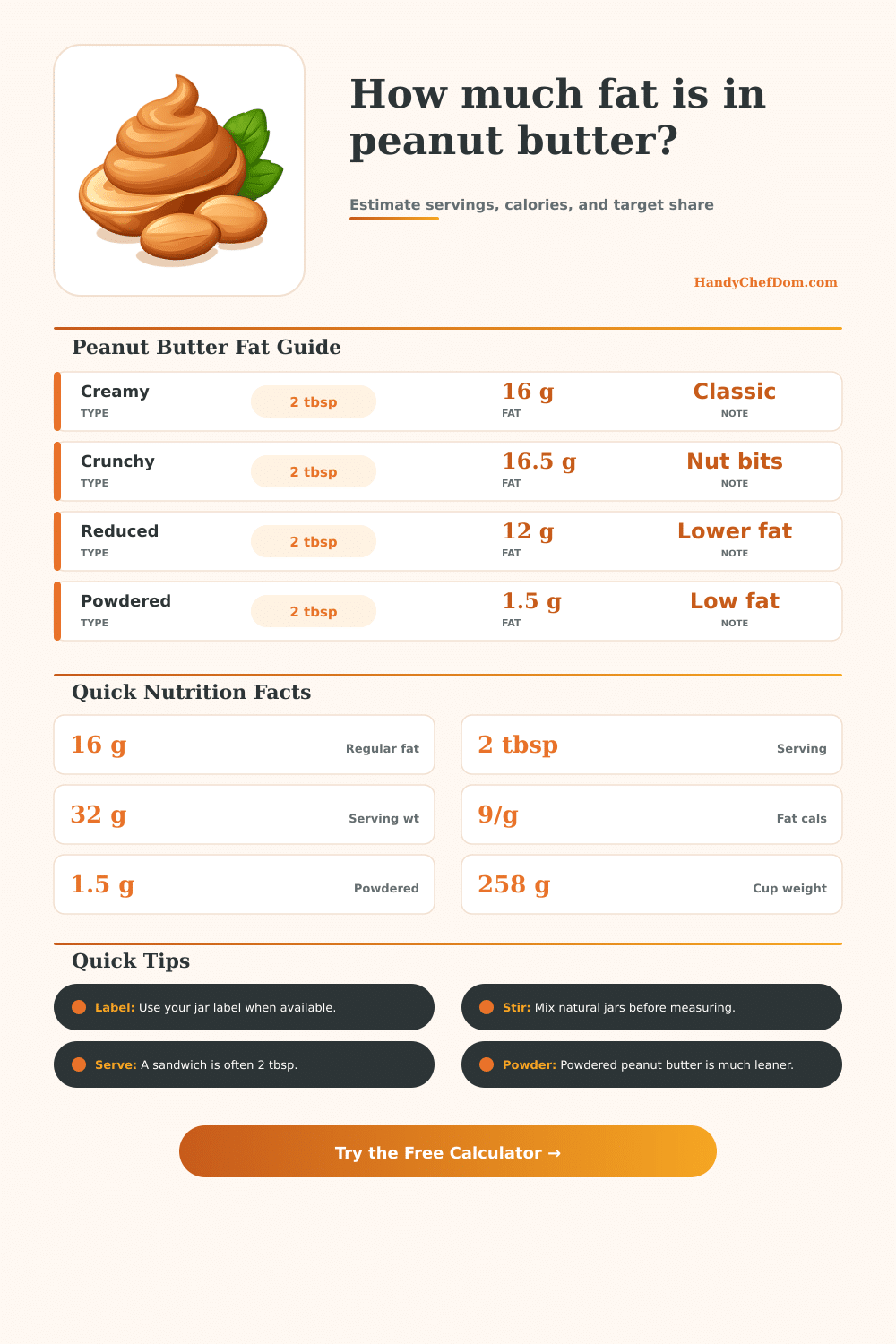
Use the jar amount you plan to eat or add to a recipe. Regular peanut butter is estimated near 16 g fat per 2 tbsp or 32 g, while powdered peanut butter is much lower.
Leave at 0 to use the calculator's reference data.
| Peanut Butter Type | Label Serving | Estimated Fat | Best Use |
|---|---|---|---|
| Natural peanut butter | 2 tbsp / 32 g | 16 g fat | Toast, sandwiches, sauces |
| Regular creamy peanut butter | 2 tbsp / 32 g | 16 g fat | Smooth spreads and baking |
| Regular crunchy peanut butter | 2 tbsp / 32 g | 16.5 g fat | Texture in snacks and cookies |
| Reduced-fat peanut butter | 2 tbsp / 32 g | 12 g fat | Lower-fat sandwiches |
| Powdered peanut butter | 2 tbsp / 12 g | 1.5 g fat | Shakes, oatmeal, light sauces |
| Serving Conversion | Regular PB Weight | Powdered PB Weight | Fat Estimate |
|---|---|---|---|
| 1 teaspoon | 5.3 g | 2 g | About 2.7 g regular |
| 1 tablespoon | 16 g | 6 g | About 8 g regular |
| 2 tablespoons | 32 g | 12 g | About 16 g regular |
| 1/4 cup | 64 g | 24 g | About 32 g regular |
| 1/2 cup | 129 g | 48 g | About 64 g regular |
| 1 cup | 258 g | 96 g | About 129 g regular |
| Nut Butter | Typical Serving | Fat Per Serving | Notes |
|---|---|---|---|
| Peanut butter | 2 tbsp / 32 g | 16 g | Balanced pantry standard |
| Almond butter | 2 tbsp / 32 g | 18 g | Slightly higher fat |
| Cashew butter | 2 tbsp / 32 g | 15 g | Often milder and creamy |
| Sunflower butter | 2 tbsp / 32 g | 16 g | Seed-based alternative |
| Tahini | 2 tbsp / 30 g | 16 g | Sesame paste for sauces |
| Recipe Use | Common Amount | Regular PB Fat | Portion Note |
|---|---|---|---|
| Thin toast spread | 1 tbsp | 8 g | Good for a light breakfast |
| Full sandwich spread | 2 tbsp | 16 g | Standard label serving |
| Apple dip portion | 1.5 tbsp | 12 g | Snack-style serving |
| Smoothie spoon | 1 tbsp | 8 g | Blends into shakes |
| Cookie batch addition | 1/2 cup | 64 g | Divide by cookie count |
| Satay sauce base | 1/4 cup | 32 g | Divide by sauce servings |
Peanut butter is a food that contains fat. Peanut butter is also a food that people use in many different meal. For instance, people can add peanut butter to oatmeal or they can add peanut butter to toast.
Each of these foods contain fat, but the amount of fat that is added to the meals increases the amount of fat that the individual that eat those meals consume. It is, therefore, important to understand how much fat is contained within a portion of peanut butter. The amount of fat that is contained within a portion of peanut butter can depend upon the type of peanut butter that is purchased and how the peanut butter is measuring.
How Much Fat Is in Peanut Butter
For instance, natural peanut butter can contain the oil from the peanuts that are used to make the peanut butter. The oil can separate from the solids within the peanut butter such that the portion of peanut butter that is sold in jar will have oil contained within the portion of the jar that is in contact with the liquid while the portion of the jar that contains the solids will have less oil. In contrast, creamy peanut butter and crunchy peanut butter will not contain oil in the same way as natural peanut butter.
However, the crunchy peanut butter may contain fat from the crunchy pieces of peanuts that are contained within the product. Reduced fat peanut butter will contain less oil than peanut butter that is not reduced in fat. As a result, the reduced-fat peanut butter will have less fat in the product.
Additionally, powdered peanut butter will have less fat than traditional peanut butter because the manufacturer removes the fat from the peanut butter prior to packaging the powder. Each of these type of peanut butter will alter the fat content of the meals to which they are added. The calculator can be used to calculate the fat content of the meals to which peanut butter is added.
The portion of the calculator that allows for the entry of the amount of peanut butter that will be used in the meal allows for the entry of the amount of peanut butter in terms of tablespoons, grams, ounces, or cups. In addition to the amount of peanut butter that will be used, the calculator also allows for adjustments to account for whether the peanut butter that is to be used is stirred or separated peanut butter. Additionally, you can make adjustments to the meal to which the peanut butter is to be added (whether the peanut butter is to be spread, shake, or baked) in the calculator.
Additionally, there is a field within the calculator where you can enter the exact fat content of the peanut butter that will be used because different brands of peanut butter can have different amount of fat. The calculator will reveal the total amount of fat that will be contained in the meal if the amount of peanut butter is included, the amount of fat that will be contained in each portion of the meal, the calories that will be contribute to the meal from that fat, and what percentage of the daily target for fat that meal represents. Each of the fields within the calculator can be used for different goal.
For instance, the field that asks for the number of servings of the meal will allow for adjustments to meals that are to be prepared for a number of individuals because that field will indicate how much fat each individual will consume from the meal. In addition to the serving count field, the recipe use field can be changed but that change will not alter the fat content of the peanut butter. Finally, the daily target for fat can be entered to show the relationship between the portion of peanut butter that is use and the fat-related goals for the individual.
Thus, each of these fields will not alter the fat content of the peanut butter, but they will alter the way the number are presented to the individual. In cooking, there are variable to the addition of peanut butter to meals that cannot be accounted for in any mathematics calculation. For instance, recipes may call for two tablespoon of peanut butter to be added to a meal.
However, the actual amount of peanut butter that may be used can be more or less depending off the skill of the individual that uses the knife to cut the peanut butter. Portions of peanut butter may differ between children and adults. Additionally, if peanut butter is added to a sauce, for instance, the sauce may be divided into many serving, but the fat content per portion of that sauce will be less than the total amount of fat that is contained within the sauce.
Thus, while the calculator will provide an estimate of the amount of fat that will be added to a meal by the use of peanut butter, the individual must make a decision as to whether the estimate is appropriate for the number of portions of the meal that will be prepared. One of the most common mistakes in the use of the calculator is in assuming that each tablespoon of peanut butter is the same as any other tablespoon of peanut butter. For instance, reduced-fat peanut butter will contain fewer grams of fat than regular peanut butter.
However, the calories from the fat within the reduced fat peanut butter may not be less than that in regular peanut butter because the manufacturers may add sugar to the reduced fat peanut butter. Additionally, powdered peanut butter must be mixed with water. Thus, the addition of water will alter the weight and texture of the powdered peanut butter.
Furthermore, natural peanut butter must be stirred before it is measured because otherwise, only the oil from the peanut butter will be measured. Thus, stirring the natural peanut butter will ensure that the fat content of the portion that is measured is the same throughout the portion of natural peanut butter that is measured. The reference tables that are provided on this page allow individuals to compare the fat content of peanut butter to other nut butter.
For instance, almond butter tends to have a higher fat content than peanut butter. However, cashew butter may contain less fat than peanut butter. Additionally, sunflower butter and tahini may contain amounts of fat that are similar to those that are contained within peanut butter.
Thus, these tables allow individuals to prepare meals in which peanut butter is replaced with another nut butter while maintaining the same amount of fat within the meals that are prepared. Additionally, individuals can use these tables to understand how much peanut butter they should use based upon their goals for the meal. For instance, individuals who are athletes who wish to recover from strenuous physical activity may desire meals that contain more fat.
Thus, they may use more peanut butter than an individual who desires a meal that is lower in fat. Thus, the same jar of peanut butter can be used to accomplish different goals depending upon the amount and the type of peanut butter that is used. The individual who prepares the meals can best utilize the information within this calculator and these reference tables by measuring the amount of peanut butter that will be used.
The individual should note the type of peanut butter that is to be used in the meal and allow the numbers within the calculator to reflect the portions of peanut butter that are actualy used in the meal. Thus, the most practical use of the information within the calculator is for individuals to measure the peanut butter that they use in their meals.