🥩 Pork Chop Protein Calculator
Estimate edible pork chop protein, calories, fat, and cooked yield from chop weight, bone type, cooking state, servings, and trim level.
Use raw or cooked weight. The calculator removes bone and trim, applies cooking yield, then estimates edible protein, calories, fat, and per-serving nutrition.
| Pork Chop Label | Protein / 100 g | Calories / 100 g | Fat / 100 g |
|---|---|---|---|
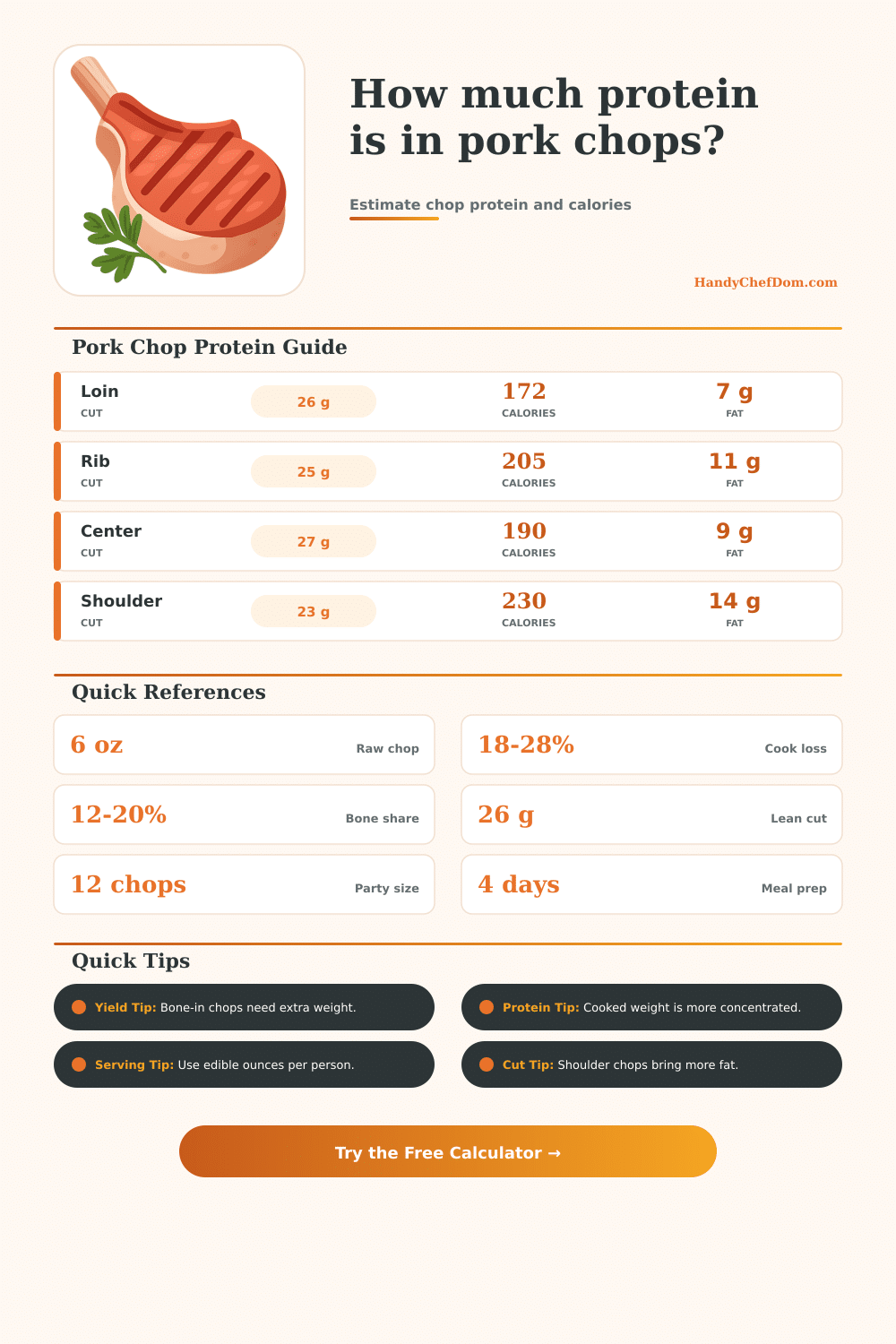
| Boneless loin chop | 26 g | 172 | 7 g |
| Bone-in loin chop | 26 g | 185 | 8 g |
| Bone-in rib chop | 25 g | 205 | 11 g |
| Center-cut chop | 27 g | 190 | 9 g |
| Sirloin chop | 24 g | 210 | 12 g |
| Shoulder blade chop | 23 g | 230 | 14 g |
| Thin pork cutlet | 27 g | 165 | 6 g |
| Porterhouse chop | 26 g | 198 | 10 g |
| Bone / Trim Choice | Edible Raw | Bone Trim | Best For |
|---|---|---|---|
| Boneless | 100% | 0% | Cutlets and loin |
| Small bone | 90% | 10% | Thin bone-in chop |
| Standard bone | 85% | 15% | Rib and loin chop |
| Large bone | 78% | 22% | Porterhouse chop |
| Extra lean trim | 94% | 6% | Visible fat removed |
| Cooking State | Yield | Raw 6 oz Becomes | Nutrition Note |
|---|---|---|---|
| Juicy chop | 82% | 4.9 oz | Moisture loss is lower |
| Standard chop | 76% | 4.6 oz | Typical cooked estimate |
| Well-done chop | 70% | 4.2 oz | Nutrients concentrate |
| Braised shoulder | 68% | 4.1 oz | More rendered fat loss |
| Cooked entered | 100% | 6.0 oz | Use known cooked weight |
| Serving Plan | Servings | Raw Boneless | Raw Bone-In |
|---|---|---|---|
| Solo lunch | 1 | 5 oz | 6 oz |
| Dinner for 4 | 4 | 20 oz | 24 oz |
| Family of 6 | 6 | 30 oz | 36 oz |
| Meal prep | 8 | 40 oz | 48 oz |
| Party platter | 12 | 60 oz | 72 oz |
When most people shop for pork chops, they looks at them, not weigh them. So maybe you spot a nice, big bone-in rib chop. It’s large, so you figure there must be a lot of protein in there. Nope. Your gut feeling are incorrect. The bone is filling space and weighing something down, but isn’t doing anything nutritionally for you. And that fat cap you’re seeing? That’s just calories, and it won’t help build your muscles back up again.
Guessing doesn’t work out well if you have macro goals or even if you’re just cooking for four and don’t want food waste on your hands at dinnertime. You’ll either find yourself eating too little because you didn’t account for shrinkage, or you’ll overeat to ensure you’ve got plenty of protein.
Why You Should Weigh Your Pork Chops
Each cut of pork has its own density coefficient that makes calculating cooked weight easy, if you could remember them all. However, the math get done for you automatically when you input your chops’ weights and type using the calculator above.
It begins with removing what won’t be eaten. Even after cutting off any unwanted parts, you can expect to lose fifteen to twenty percent of a typical bone-in chop weight to the bone alone. Once you cook it, a few more ounces will dissapears as moisture evaporates. Plug a raw chop’s weight into the calculator, select its bone structure from a dropdown menu, and it will instantly deduct these losses. That’s how a six-ounce, bone-in chop could easily end up providing much less actual meat then a six-ounce boneless loin cut, despite their equal appearance on the package.
Yield varies greatly with cooking style. Slow cooking (braising) removes more water, which will decrease overall yield while increasing concentration of nutrients. Conversely, quickly searing things preserves moisture better so yields is higher and protein per-ounce-by-volume are lower. To account for this, you can select among three different “profiles” for your meal, juicy, well done, or standard.
Why? Because if you log all your food by its raw weight, but then consume it as cooked, you’ll always be off by a certain amount. You weighed your pork. But now you’re eating pieces without any of the water they contained when you weigh them. By switching to cooked instead of raw when entering the meal, your protein intake will match what’s happening in real life.
But there are other trade-offs with different chops too. Loin chops has far less fat and a simple, clean protein profile. Shoulder blade chops have a bit more flavor because they are higher in intramuscular fat, but that means a few more calories. So it’s preference vs. Tracking (if you’re watching calorie intakes), then the thin cutlet or boneless loin would of been appropriate. Want something a bit richer but don’t care about the energy density? Then go for the porterhouse or rib chops. The chart on the page breaks down the reference information nicely: higher in slightly fewer grams of protein per gram, but those higher cuts will shoot up your daily fat intake.
It’s also influenced by trimming habits: Fat caps adds rich flavor but heavy calories. Remove them and calorie count gets shifted into all-protein territory. You can set your trim level in the calculator, and it will change to match what happens when you’re cooking at home. (Home cooks may like to indulge on weekends; meal prep chefs may go super-thin so all cut is consistent.)
The biggest pitfall for many is portion control. That massive chunk may look like one serving, but it could be two or more if the piece is heavy or has many bones. By dividing the edible yield into how many servings you’re going to have, you avoid eating too much by accident. Hunger becomes something you can measure in terms of what you’ve eaten.
This helps eliminate guessing from our meal planning and grocery shopping, no more purchasing an excess amount of meat because you’re worried it’ll shrink down to nothing! Instead, you know actualy how to cook confidently with whatever is on your plate. Next time you purchase a package of chops, take a moment to consider that trim and that bone before you reach for the register. When you do this little bit of extra focus, you’ll watch as that precise protein number appears on your screen, transforming an opaque label into concrete information we can use.