Soft-Boiled Egg Altitude Calculator
Map elevation, egg size, and cooking style into one clean soft-boiled plan, so the whites set neatly and the yolk stays lush, even when the air gets thin.
Altitude Presets
Topic Labels
Soft-Boiled Breakdown
Reference Tables
| Size | Wt | Soft | Jammy |
|---|---|---|---|
| Small | 38 g | 5.5-6 | 6-6.5 |
| Medium | 44 g | 5.75-6.25 | 6.25-6.75 |
| Large | 50 g | 6-6.5 | 6.75-7.25 |
| XL | 56 g | 6.25-6.75 | 7-7.5 |
| Jumbo | 63 g | 6.75-7.25 | 7.5-8 |
| Ft | Add | Boil | Cue |
|---|---|---|---|
| 0-999 | 0.0 | Fast | Settle |
| 1k-2k | +0.25 | Soft | Gentle |
| 2k-4k | +0.50 | Longer | Watch |
| 4k-6k | +1.00 | Calm | Lower |
| 6k+ | +1.25 | Slow | Stay low |
| Start | Method | Delta | Use |
|---|---|---|---|
| Fridge | Cold start | +0.50 | Most eggs |
| Cool | Cold start | +0.25 | Short wait |
| Room | Hot drop-in | 0.00 | Quick boil |
| Warm | Hot drop-in | -0.25 | Fastest |
| Any | Steam | -0.50 | Clean shell |
| Age | Chill | Score | Note |
|---|---|---|---|
| Fresh | Ice bath | 3/5 | Tighter peel |
| Week | Ice bath | 4/5 | Sweet spot |
| Older | Ice bath | 5/5 | Best peel |
| Fresh | Cold rinse | 2/5 | Short stop |
| Fresh | No chill | 1/5 | Carryover |
Comparison Grid
Altitude Tips
Use this calculator when you want soft-boiled eggs that match your elevation, not someone else's sea-level timing.
Cooking eggs at high altitude require some adjustments to the cooking process. The boiling point of water change based on the number of feet above sea level. At sea level, the boiling point of water is 212 degrees Fahrenheit.
However, as the elevations above sea level increases, the boiling point of water begins to decrease. For instance, at 5,000 feet above sea level, the boiling point of water is 203 degrees Fahrenheit. Since the boiling point of water is lower at high altitudes, there is less heat that will be transfered to the eggs while boiling.
How to Boil Eggs at High Altitude
Because there is less heat being transferred to the eggs, the eggs will require more time to reach the desired level of doneness if boiled at high altitudes. If you dont increase the cooking time for eggs that are boiled at high altitudes, the eggs will be undercooked. The size of the eggs also play a role in the time it takes for the eggs to reach the desired doneness.
A small egg will cook more fast than a jumbo egg due to the mass of each type of egg. Furthermore, if the eggs that is used for cooking are cold from the refrigerator, the cooking time will be longer than if the eggs were at room temperature prior to cooking. The method used to cook the eggs will also impact the result of the cooking process.
One method to cook eggs is the cold start method. This method require placing the eggs into cold water and simmer the water to cook the eggs. Using the cold-start method will require longer cooking times than the hot-drop method in which the cook drops the eggs into already boiling water.
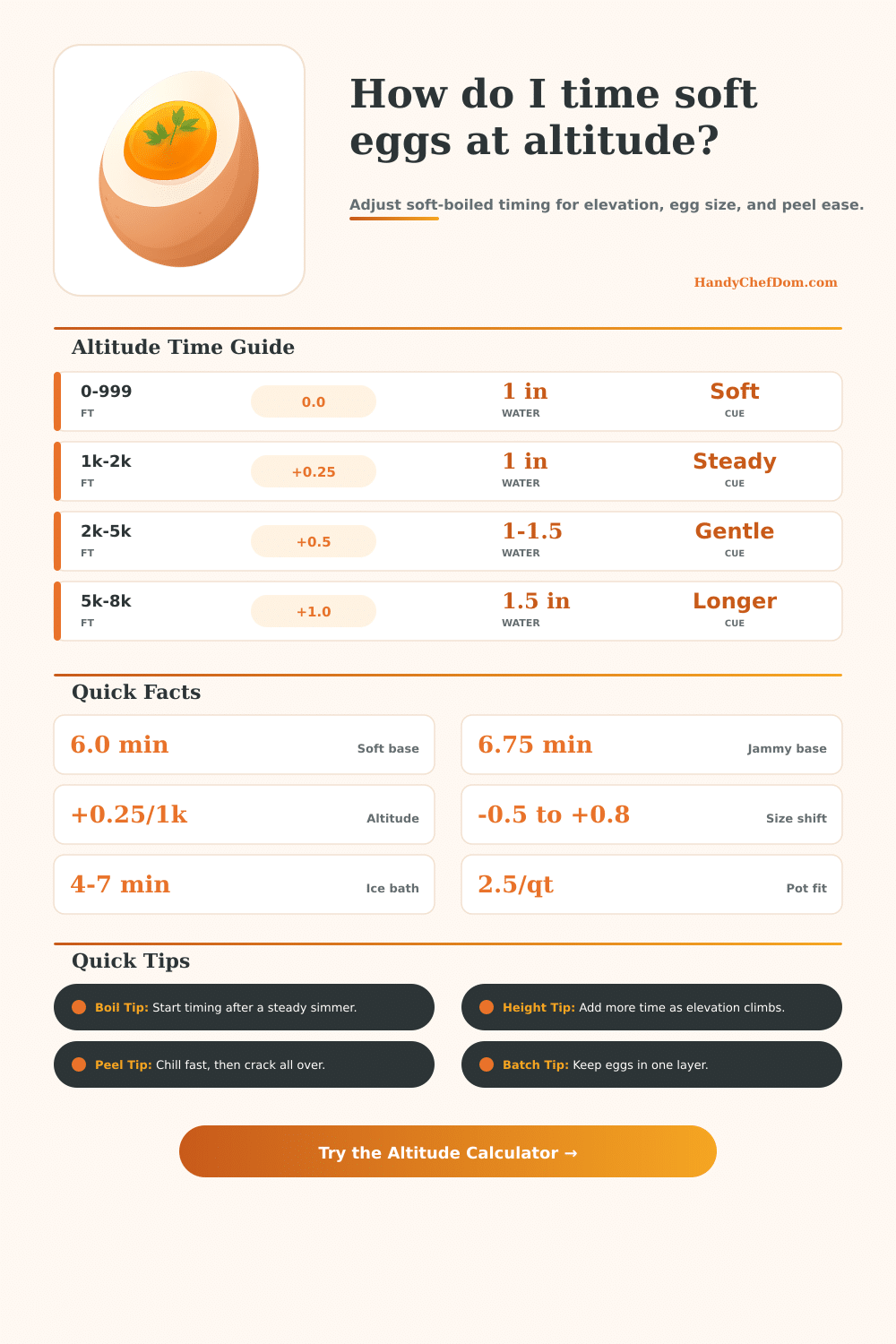
Altitude also require adjustments to the cooking time of the eggs. For instance, if the altitude is between 1,000 and 2,000 feet above sea level, the cooking time for the eggs should be increased by 15 seconds. Between 5,000 feet and higher altitudes, the cooking time should be increased by one minute.
Furthermore, the number of eggs to be cooked also requires adjustments to the cooking time. If many eggs is to be cooked in the same pot, the temperature of the water will drop significant when you add the eggs to the pot. Therefore, you should cover the eggs by at least one inch of water to minimize the impact of the eggs on the water temperature.
Another step in the cooking process of the eggs is the peeling of the cooked eggs. The age of the eggs will impact the ease with which you can peel the cooked eggs. As the eggs age, the membranes that adheres to the cooked eggs will not adhere to the shell as strongly as fresh egg.
An ice bath consist of water and ice that will be used to cool the cooked eggs. The cook will place the cooked eggs into the ice bath once the cooking process is complete. Using the ice bath will stop the cooking process of the eggs.
If the eggs are not cooled in the ice bath, the residual heat will continue to cook the eggs, which will lead to chalky yolk. In order to properly cook the eggs, the simmer and the ice bath should be monitored. The timer should not be started until the water simmers steady; otherwise the eggs will cook for too short of a time.
Additionally, the eggs should simmer in the ice bath for four to seven minute to ensure that the cooking process is completely halted. By adjusting the cooking time for the altitude, size, and temperature of the eggs, the texture of the cooked eggs will be correct throughout the eating process.