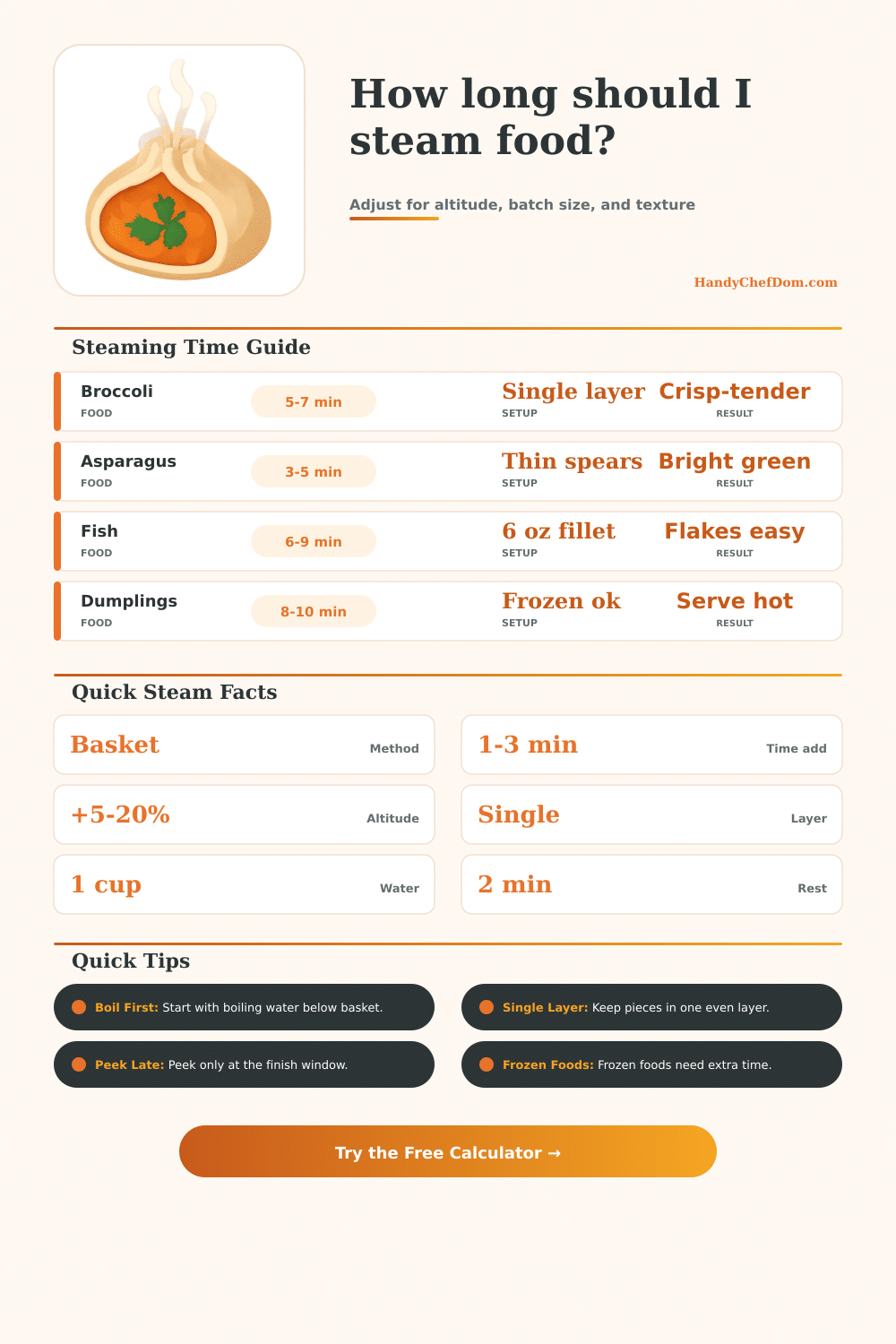
Steaming Time Calculator
Plan crisp-tender vegetables, seafood, and dumplings with altitude, layer depth, and texture adjustments.
Steam time depends on the food, the cut size, the starting temperature, and how tightly the basket is loaded.
| Food | Base Time | Portion | Note |
|---|---|---|---|
| Broccoli | 5-7 min | 1 lb | Crisp-tender |
| Asparagus | 3-5 min | 1 bunch | Thin spears |
| Green beans | 6-8 min | 1 lb | Bright green |
| Carrots | 8-12 min | 1 lb | Slice even |
| Cauliflower | 8-10 min | 1 head | Florets cook |
| Baby potatoes | 12-18 min | 1 lb | Fork-tender |
| Seafood | Time | Amount | Note |
|---|---|---|---|
| Fish fillets | 6-9 min | 6 oz | Flakes easy |
| Shrimp | 3-4 min | 1 lb | Just pink |
| Dumplings | 8-10 min | 8 count | Frozen ok |
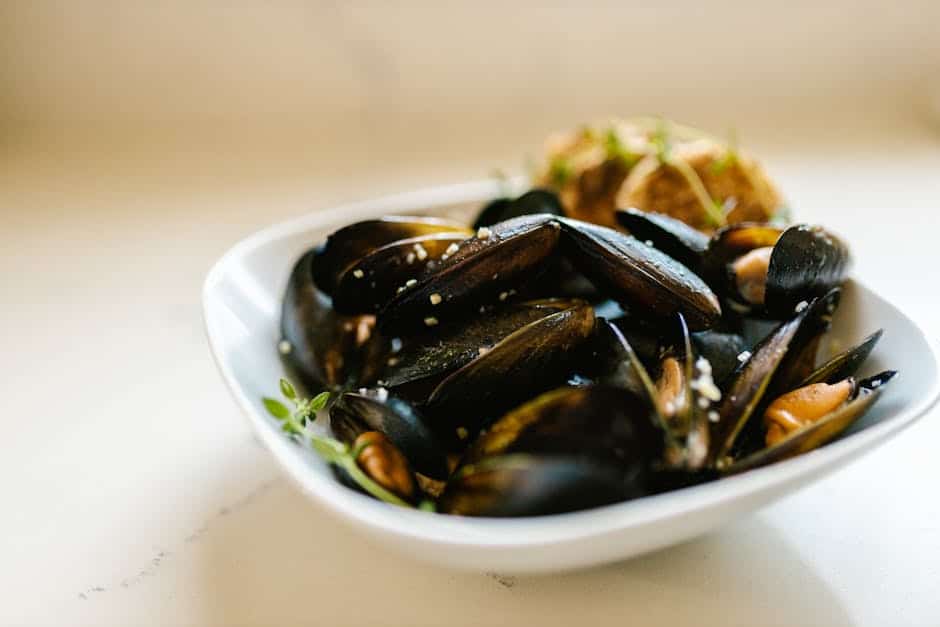
| Mussels | 5-7 min | 2 lb | Shells open |
| Altitude | Factor | Add | Use |
|---|---|---|---|
| Sea level | 1.00x | 0% | Base timing |
| 2,000 ft | 1.05x | 5% | Small add |
| 5,000 ft | 1.12x | 12% | Noticeable |
| 8,000 ft | 1.20x | 20% | High add |
| Setup | Factor | Best For | Note |
|---|---|---|---|
| Basket | 1.00x | Veggies | Most common |
| Bamboo | 1.05x | Dumplings | Gentle steam |
| Electric | 0.95x | Fast jobs | Even heat |
| Rack | 1.10x | Big pots | Slower load |
Steaming is a method of cook food with hot steam. Steaming is a method of cooking that can produce different texture in the food depending upon how the cooks manages the heat of the steam and the length of the cooking process. If the cooks dont manage these variables correct, the resulting food may have undesirable textures; it may be too soft or undercooked.
Many people find value in use the steaming method of cooking. For instance, steaming help to retain the nutrient that are naturaly contained within vegetables, as compared to boiling the vegetables. In addition, steaming helps to retain the moisture that natural resides within seafood, as compared to grilling the seafood.
How to Steam Food Correctly
There are a few variable in the steaming cooking method that may impact the cooking process and the length of time that the food is cooked. The altitude at which the food is being prepared impacts the temperature of the steam. At sea level, steam reach temperatures of 212 degrees Fahrenheit.
At higher altitudes, the boiling point of water is lower, which results in lower steam temperature. The density of the food to be steamed also has an impact upon the length of time that the food is cooked. Foods that contain small piece of food will typically cook faster than foods that contain large pieces of food of the same type.
For example, small piece of broccoli will cook faster than large pieces of broccoli, and shrimp that are small in size will cook faster than shrimp that are large in size. The starting state of the food can also have an impact upon the length of time that the food is cook while steaming. For instance, food that is cooked with vegetables that is fresh will cook faster than vegetables that are cooked with frozen vegetables.
This is due to the fact that the frozen vegetables will contain ice crystal that will absorb some of the heat from the steam that is cooking the vegetables. An additional variable in the cooking method is the layering of the food within the steamer. If the cooks place the food in a single layer within the steamer, the steam will readily contact the food.
However, if the food is placed in a series of layers within the steamer, the steam will not readily contact the food that is placed in the bottom of those layers. An additional variable that should of been considered is the maintenance of the temperature within the steamer. The lid that cover the steamer should be kept in a closed state; if the lid is opened during the cooking process, some of the steam and heat that is contained within the steamer will exit the steamer.
The release of the steam and heat will cause the food to take longer to fully cook; thus, the lid should be kept closed to retain the heat. Another variable is the amount of water that is placed into the steamer. An adequate amount of water should be added to the steamer such that the water can create steam for the entire cooking process of the food.
If there isnt enough water to create steam, the water will evaporate before the cooking process is complete; if the water evaporates, the food will not cook proper. Thus, the cooks should calculate the amount of water that is placed into the steamer based off the length of time that the food will be cooked and how much of that water will evaporate during the cooking process of the food. In addition to considering these variables, cooks may also wish to use physical test to ensure that the food has been cooked correctly.
For instance, when steaming vegetables, a cook could use a fork to test the vegetables to ensure that they are tender; when cooking fish, the cook could test the fish to ensure that it will readily flake when touched. Additionally, testing the mussels to ensure that there shells has opened can ensure they are cooked. These physical tests will help cooks to know when the food is cooked, and will allow cooks to avoid overcooking the food that is being prepared.
Finally, cooks should prepare the food in a way that ensure that all of the food will cook at the same rate. For instance, if vegetables are of different size, the smaller vegetables will be cooked for longer period of time. Thus, cooks should ensure that all of the vegetables are of the same size; if they are of the same size, the vegetables will cook at the same rate and will have the same texture after cooking.
By following these steps for preparing and cooking food, cooks can successfully use the steaming method of cooking to prepare food that is cooked correct and retains its nutrient.